


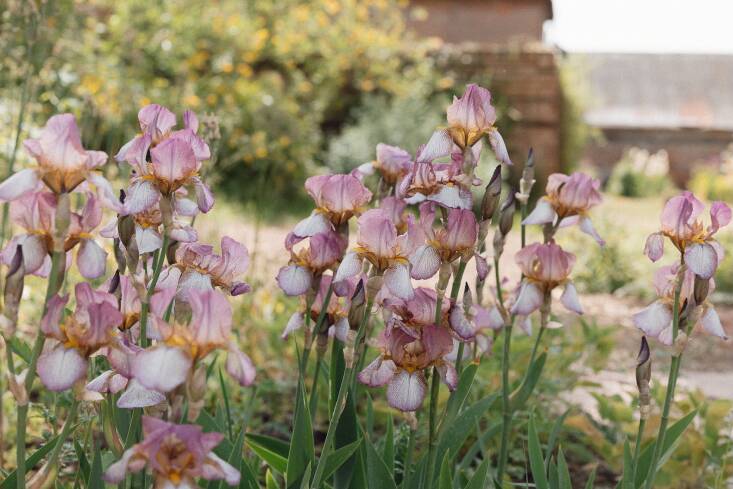
About 40 years ago, the gate was closed on a garden in Suffolk that had been a magnet for a certain kind of person: if you were an artist, poet, flaneur, composer, or freewheeling gardener or cook, you may have found yourself sitting around the dining room table at a rather unusual art school called Benton End. It was run by two urbane men, former stars of the art world in London and Paris, Arthur Lett-Haines (“Lett”) and Cedric Morris. In a crumbling Elizabethan mini manor, Lett did the cooking and Cedric did the gardening—as well as collecting plants from long winter holidays around southern and eastern Europe and introducing and naming specimens that are popular today. It is his irises, however, cross-pollinated with a paintbrush and steered into colorways that can only be described as “midcentury British,” that have gained him cult status.
After four decades of activity, Lett and Cedric died, and Benton End was sold, the garden left to slumber for another four decades. During that time, Cedric Morris’ status as a painter of flowers and landscapes gained considerable momentum (prices have tripled and even quadrupled since the Garden Museum put on a show of his paintings with the Philip Mould Gallery in 2018). And his iris hybrids have become nearly impossible to acquire. It is in this atmosphere of Cedric-centric excitement, which shows no sign of abating, that the garden at Benton End has been revived, after a pair of philanthropists with vision bought the property when it came up for sale and part-gifted it to the Garden Museum.
This past Saturday, we went along to the opening celebration.
Photography by India Hobson.
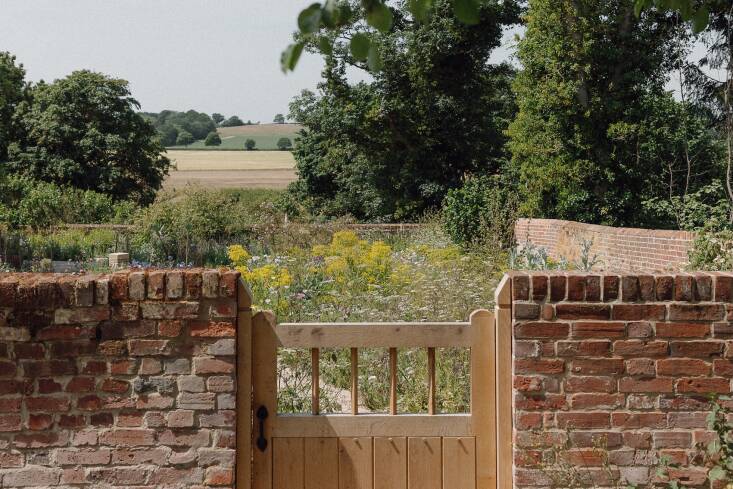
After the donation, the Garden Museum’s then-head gardener Matt Collins moved in and began to unearth treasures in the walled garden during the pandemic. There were hints of life in the continuing presence of shrubs that Cedric introduced, including Euphorbia wulfenii, and a sprawling silverberry, now known as Eleagnus ‘Quicksilver’.
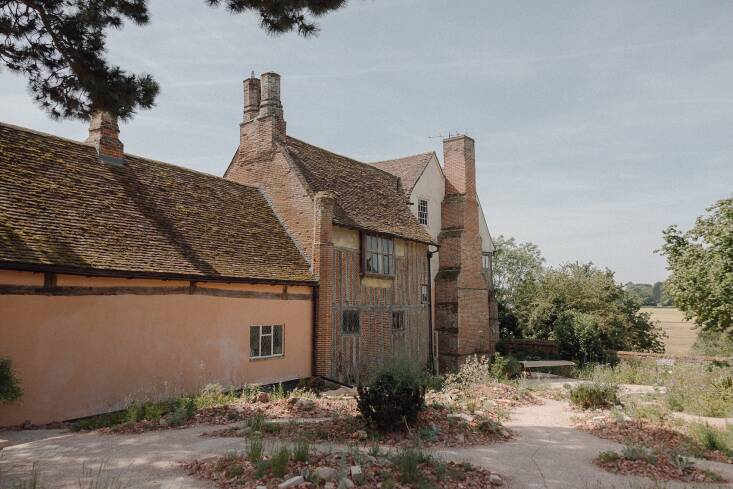
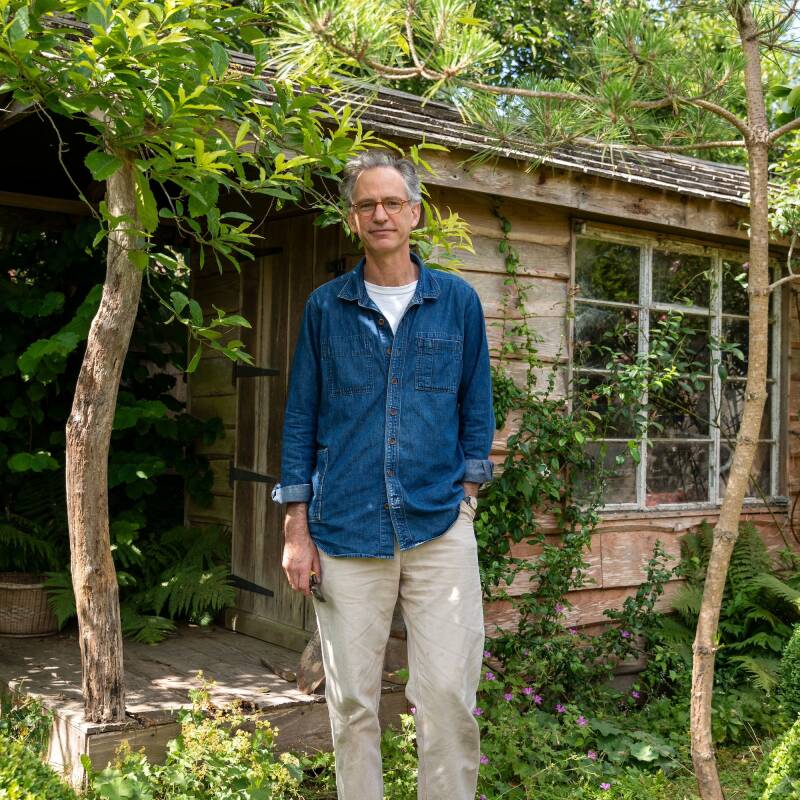
More unearthing and “site analysis” was later carried out by new head gardener, James Horner, formerly of Great Dixter (read about his exquisite plantsmanship in Studio Visit: James Horner and His Rootless Garden). His first task was to un-tangle the garden, while making a plan. At the same time, Sarah Price, who is a creative consultant at Benton End, designed a Chelsea Flower Show garden inspired by the property, which raised awareness while funding was sought. She and James looked at Cedric’s landscape paintings for clues on the garden layout and at his flower paintings for a sense of the plants he grew.
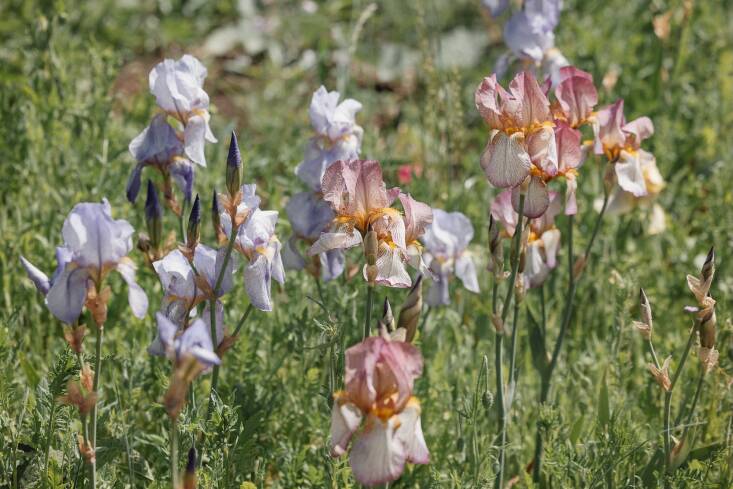
Cedric Morris’ iris breeding days were mainly in the 1930s. He named over 90 hybrids, and in one year there would be over a thousand iris seedlings in the main part of the walled garden. It took three years for a plant to flower, before it was rejected—or occasionally kept—if it was good enough. Another key person in putting the garden back together has been Sarah Cook, former head gardener at Sissinghurst who has spent at least the last 15 years bringing Cedric’s irises to public attention, possibly with more success than she might have predicted, after exhibiting them in the Great Pavilion at Chelsea in 2015. Many designers spotted them there for the first time, and many designers clamor over them now. (We spotted them even earlier; see The Mystery of the Missing Irises: Have You Seen Any of These Varieties?)
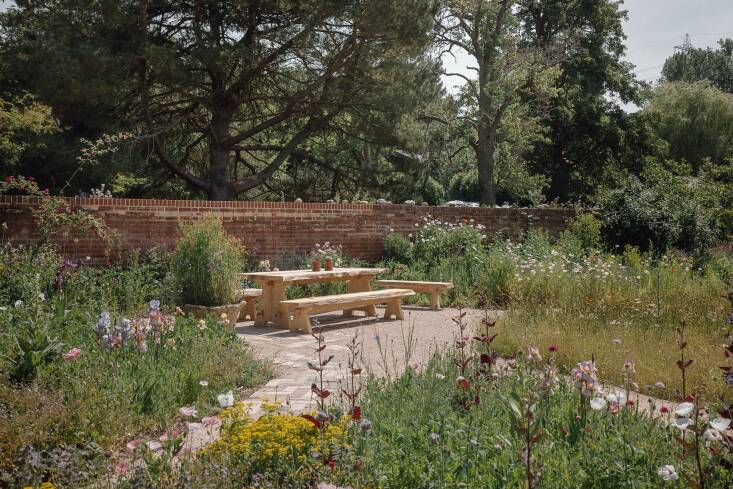
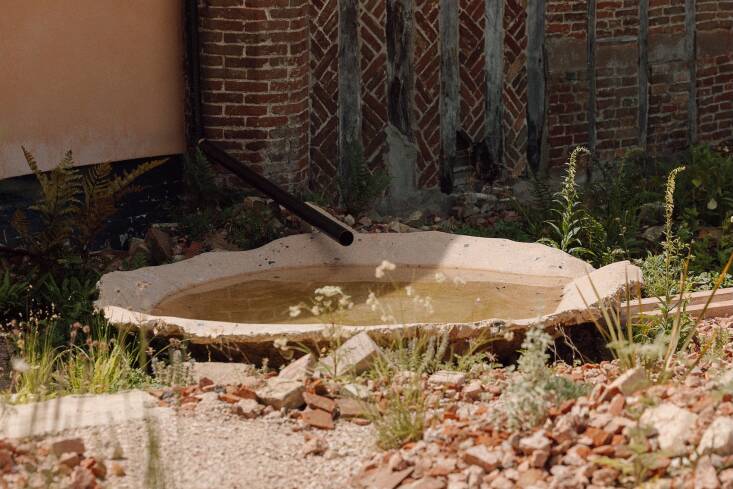
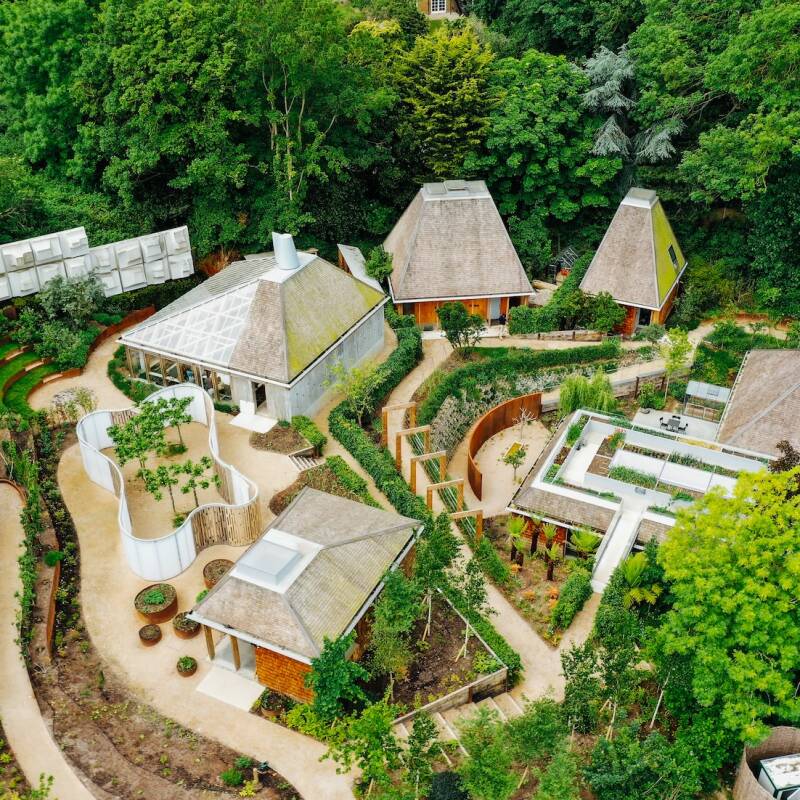
James describes the next phase at Benton End as an “incredibly creative period” in which the small garden team were able to improvise, without a drawn plan, deciding, for instance, where to put the “brick rugs” (the patches of herringbone paving that were so memorable in Sarah Price’s show garden). The hardscaping and engineering was the work of ace builder Mark Whyman.
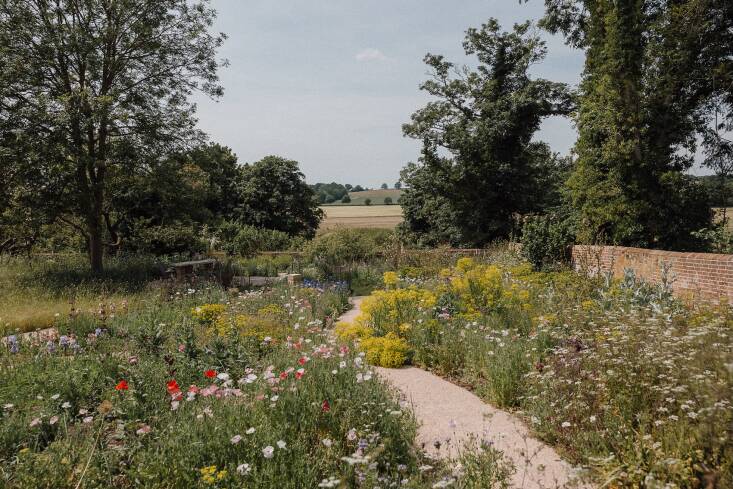
“Cedric was a naturalistic gardener, and that’s something we want to continue,” says James. “These meadow plantings, brushing up against areas that are tended and planted, are really exciting to us.”
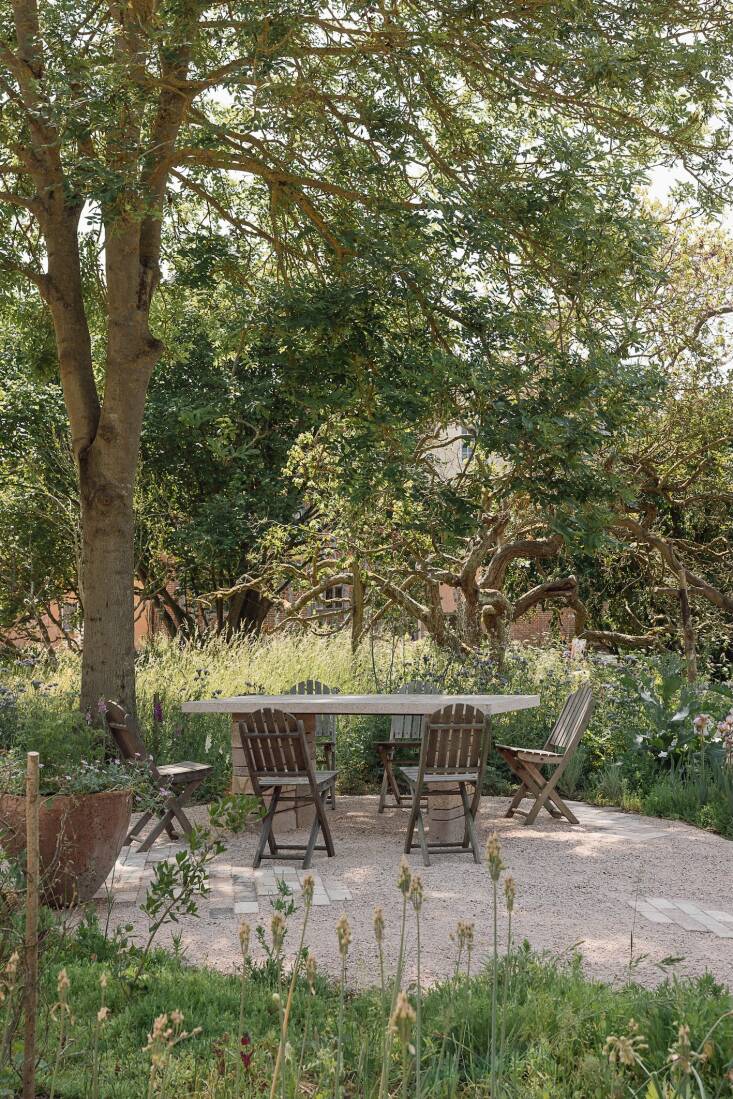
“A lot of the bulbs, which we call Cedric’s ghosts, have survived in this area because of the trees,” says James. A ride-on mower was most likely used during the slumber years, and it couldn’t get under the canopies. Bulbs include fritillaries from Turkey and the Pyrenees, such as the yellow-rimmed, glaucous purple Fritillaria pyrenaica ‘Cedric Morris’.
Benton End is open for garden visits, booked in advance. Fundraising is underway to restore the Elizabethan house and secure its foundations.
The Garden Museum’s new show, Benton End: A Paradise of Pollen and Paint, opening today, is on until September 20.
See also:
- Cult of the Bearded Iris
- 10 Garden Ideas to Steal from Vita Sackville-West at Sissinghurst Castle
- Garden Visit: Ashington Manor, Home of Isabel and Julian Bannerman


Have a Question or Comment About This Post?
Join the conversation