


A “Bannerman garden” is hard to confuse with a landscape designed by anyone else. Husband-and-wife duo Isabel and Julian Bannerman bring so much knowledge and such a natural feeling for history, archeology, botany, and straight-up design, that any project designed by I & J Bannerman is an immediate seduction. Their garden philosophy was explained in candid detail by Isabel in her first book, Landscape of Dreams, written when the pair lived in a medieval castle in Cornwall. They later moved to Somerset, where their creative process has been repackaged into appealing segments by Create Academy, available as an online course filmed last summer at Ashington Manor. We had the privilege of visiting in real life last week. Join us on a tour.
Photography by Rebecca Goddard for Create Academy.
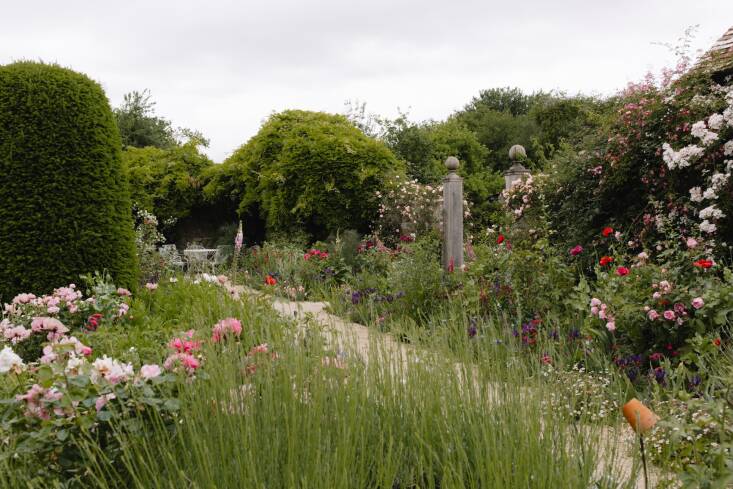
The blurb that Isabel wrote for the course describes how a Bannerman garden responds to the architectural history and landscape around it. The result is a “a garden that’s lush, scented, and a little bit unruly—just as it should be.” The first thing they did, when the Bannermans moved to Ashington, was to put in sympathetic gravel, particularly on the straight drive up to the front of the house. Then they added scent: “We arrived here in April. We started planting philadelphus and lilacs immediately,” recalls Isabel. (An authoritative and entertaining writer, she has written two books inspired by the importance of scent in a garden, Scent Magic and The Star-Nosed Mole.) On either side of the drive, generously bordered by bulbs in long grass, stone walls are smothered with roses, philadelphus and, pumping out divine spring scent from chunky lilac flower heads, Syringa vulgaris ‘Katherine Havemeyer’ and ‘Prince Wolkonsky’.
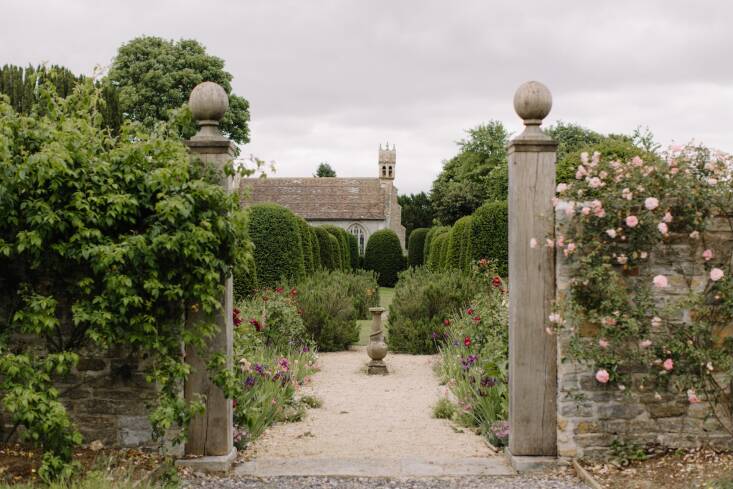
Vistas are a key feature, radiating from the buildings that comprise Ashington, including a cottage and the winter garden (which looks like an orangery but is intended for those who need to keep gardening, year-round, like Julian). A church leaning over a yew hedge makes a classic English country garden scene, and the effect has been heightened by the presence of giant beehives of yew, which the Bannermans bought at size.
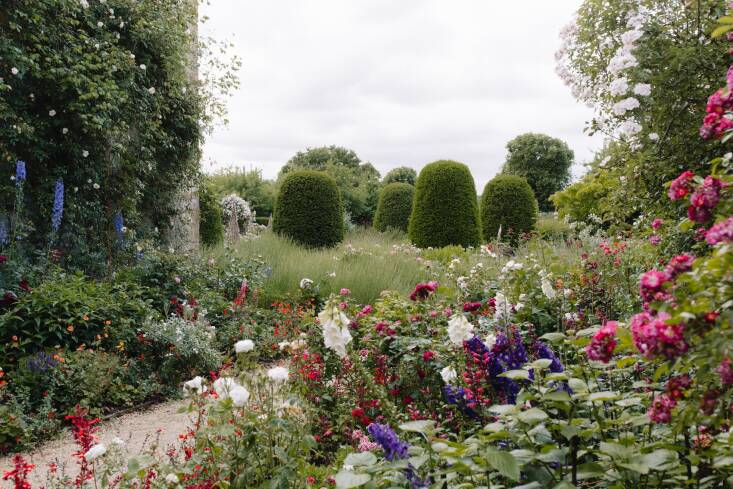
“Julian said that he wouldn’t buy the house unless we put in the yews, because it was so barren,” says Isabel. “These were so ancient; they just changed everything.” They are skirted by lavender and rosemary, the latter bought from B&Q (read: Home Depot) during the pandemic.
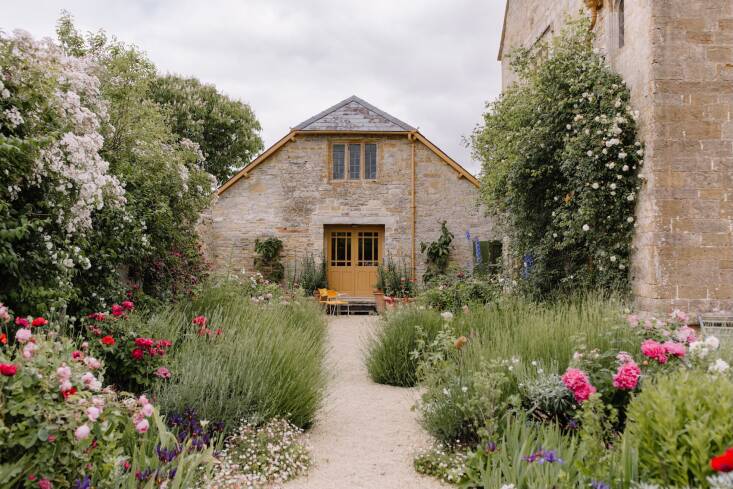
The Bannerman approach to color is highly persuasive, not only in planting but house decoration. Take the buff yellow that shows up on doors, kitchen shelves, and flowers. It’s part of a yellow idea; roses on the sunny, west facade of the house are buttery Rosa Mermaid and Lady Hillingdon, which are kept low so as not to obscure the architecture.
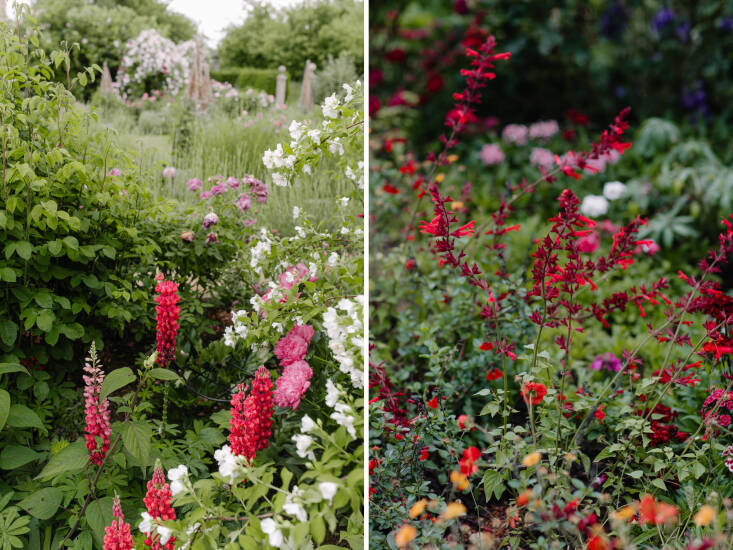
“Julian really doesn’t like anything peachy,” says Isabel, choosing Rosa x odorata ‘Benghal Crimson’ over the mutating shades of Rosa x odorata ‘Mutabilis’ (the latter is nicely faded in Italy, she says). Lilies are yellow-orange with red streaks (Lilium African Queen Group) and angel’s trumpets are faded orange (Brugmansia x cubensis ‘Charles Grimaldi’). The colors they use are deconstructed peach: a spectrum of yellow and red, which mingle as separate plants rather than being mixed into one color.
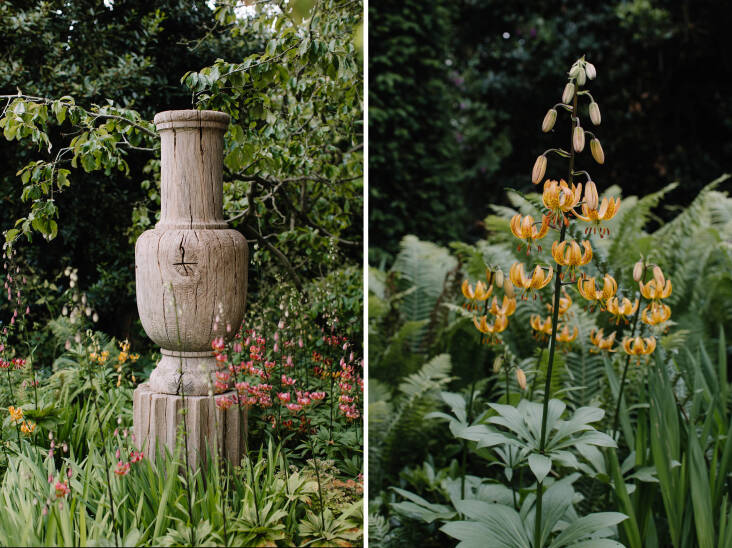
The Bannermans came upon the idea of carving structures from green oak (beginning with the temple they made for the then Prince of Wales at his Highgrove garden) when they saw a model of a Greek temple made from cork. The carved features have a trompe l’oeil effect. At Trematon, the motte and bailey castle in Cornwall, they had oak canons facing out toward the bay. Here at Ashington Manor, a commissioned oak porch distracts from a wonky doorway, providing an appropriate sense of relaxed grandeur, and oak is used as tall gate posts (without gates) to mark the garden’s numerous entryways.
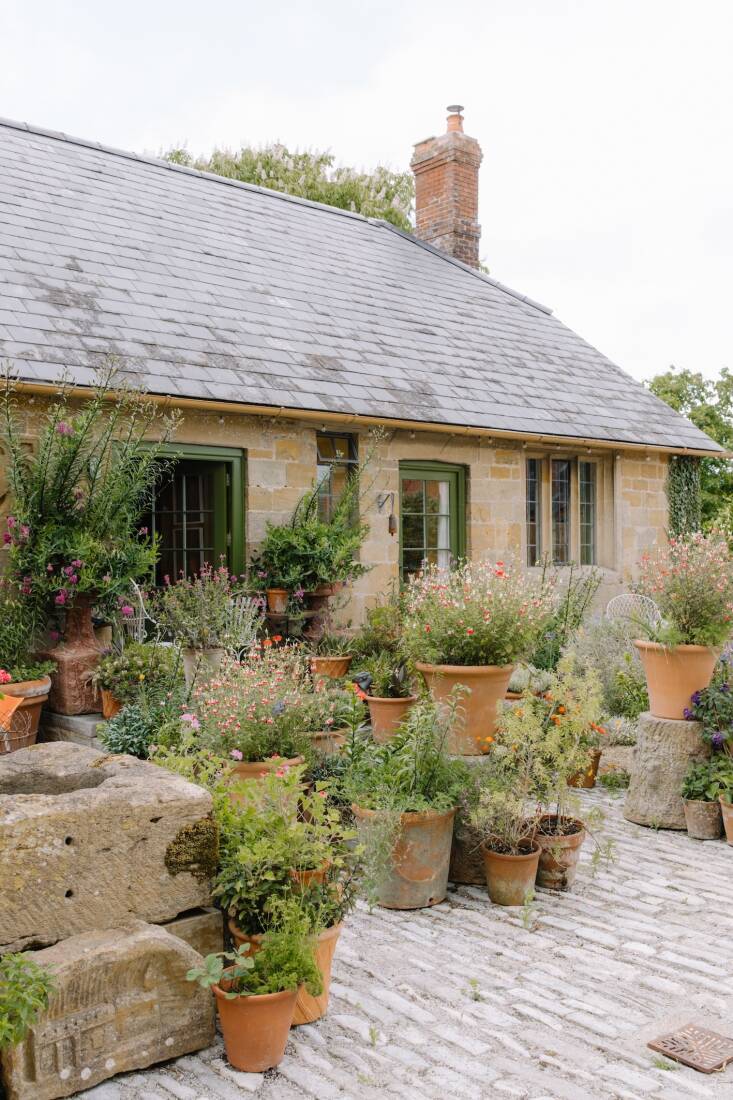
Previous owners of Ashington Manor were concrete magnates. One concrete expanse has been repaved with narrow cobbles, and the courtyard sports a myriad of pots as well as reclaimed pieces of stone that add structure. Both Julian and Isabel love buying antiques, and their son is an antique dealer. “Antiques are my great pleasure,” says Isabel.
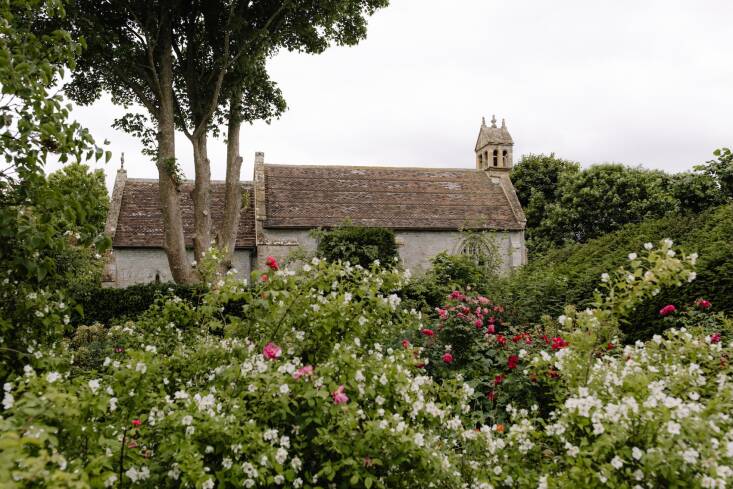
Roses are another Bannerman specialty—the more rambling, oversized, and fragrant the better. Instead of being twisted and twirled, they are cut back when they get too long and unruly. For more Bannerman rose effects, see: In Appreciation of the Old Roses at Asthall Manor.
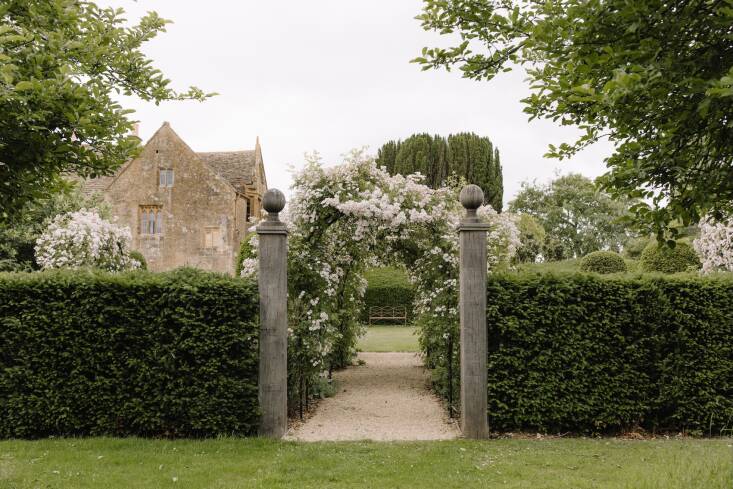
Horizontals of yew hedging provide tantalizing glimpses of the effusive garden on the other side. Romping over a shop-bought frame (from Harrod Horticultural) is the notoriously vigorous Rosa Mulliganii, usually seen in Sissinghurst’s White Garden (and shown here at only three-years old). “We planted one of the fastest-growing roses I’ve ever seen,” says Isabel. “And because we’re always in a hurry, it’s brilliant.”
See also:
- 10 Garden Ideas to Steal from Vita Sackville-West at Sissinghurst Castle
- 10 Ideas to Steal from English Cottage Gardens
- Garden Visit: 9 Ideas to Steal from the Bravura Planting at Gravetye Manor in Sussex


Have a Question or Comment About This Post?
Join the conversation