

Rambler roses have been enjoying a reputation repair: No longer thought of as just the monster versions that you send up trees—although this is still an option—their flexible stems and little-to-no pruning requirements are making them a good choice for more relaxed gardens, and many come in at a mere 15 feet. The pay-off for a less controlled rambling rose, tumbling over a wall or hanging down from a pergola, is the most spectacular, limited engagement show for about six weeks in early summer. (You might choose to lengthen a rose display by giving a rambler pride of place with a chorus of repeat-flowering climbers.) And there’s more: they provide fantastic cover for song birds, all year round.
We visited the hundreds-strong collection of rambler roses at Moor Wood garden, owned by Henry and Sue Robinson, in the Cotswolds—and walked away with a renewed love for these spirited blooms.
Photography by Britt Willoughby for Gardenista.
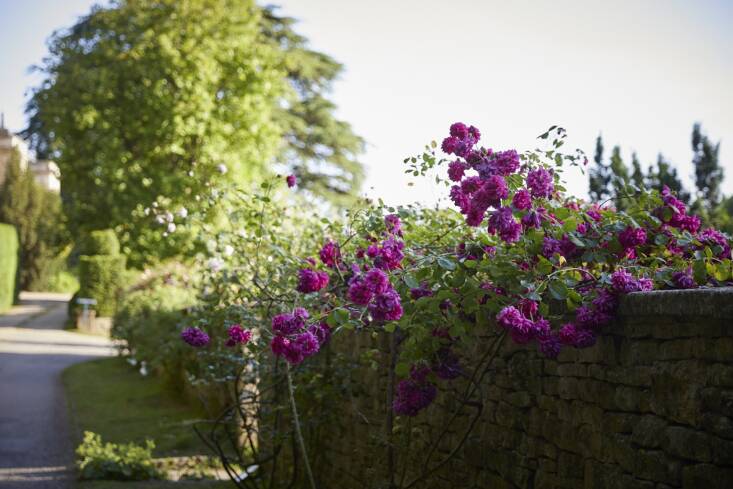
Popular with the laissez-faire gardener, rambler roses are simply less work. On planting, separate the stems, fanning them out. Leave the long whips that appear during the growing season; these will produce next year’s flowers (you can tie them back if you want to). Otherwise, you are free to prune old stems any time. Reading a 10-page leaflet produced by Peter Beales Roses, I was fortified by this brusque advice: “Ramblers going into trees etc may be difficult to get to, in which case why worry?”
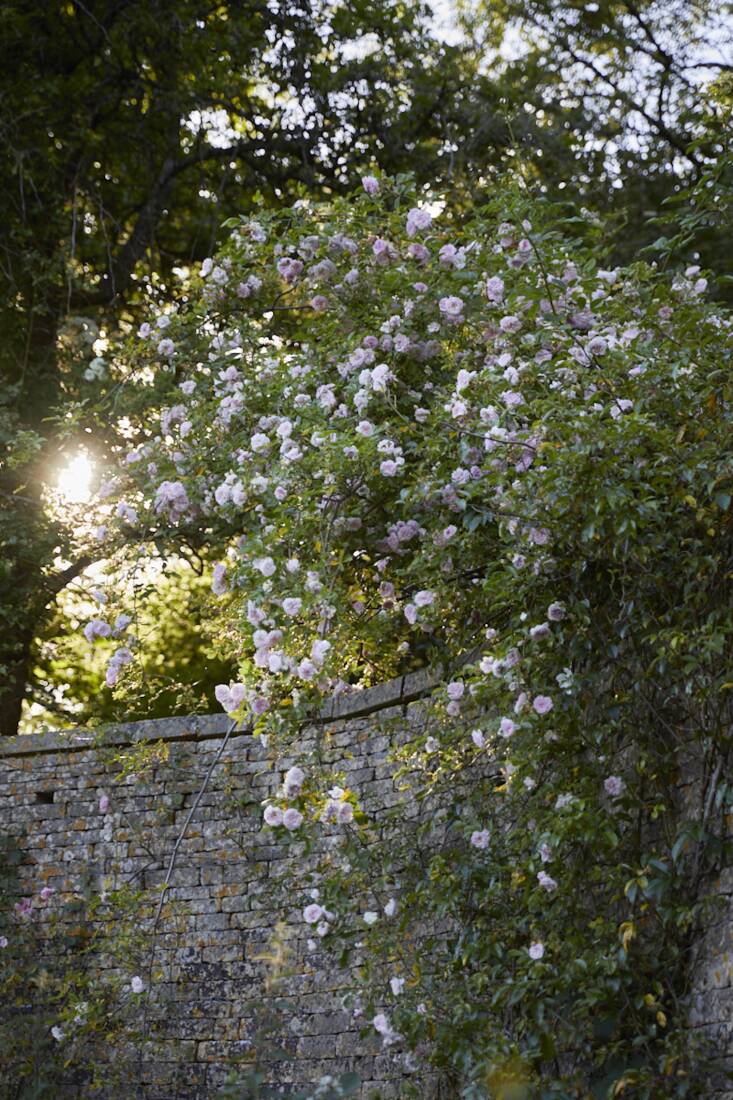
Growing a rose that produces hips in the fall is reason to avoid dead-heading, or pruning at all until winter. Rose hips on ramblers are small and abundant, with Rosa ‘Kiftsgate’ producing delightful, pale orange clusters (Kiftsgate, which grows to 60 feet, is described by Peter Beales in the book Classic Roses as “that incredible hulk”). Smaller, popular ‘Rambling Rector’ (at 25 feet) has masses of red hips.
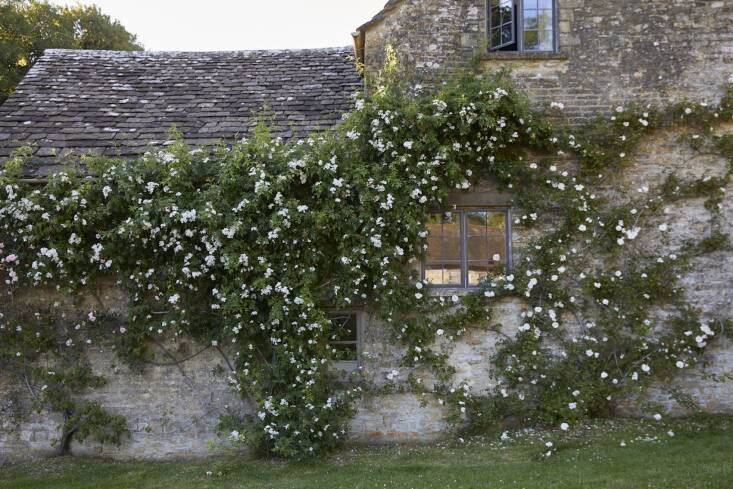
Rambling roses hit their stride after about three years, the less vigorous ones reaching the gutter of a regular sized house by then. Choose one of the many ramblers that come in at 10 to 15 feet, such as Rosa ‘Phyllis Bide’ (15 feet). Since a rambler’s stems are more flexible than a climber’s, they are easier to twirl in the manner of Jenny Barnes (see Ask the Expert: Jenny Barnes’ Way with Roses), in case you wanted to torture your fingers. Growing a rambler on a pergola will create a tunnel, which has its advantages; just one plant to cover the whole thing, with blooms dropping down on all sides like a curtain (Rosa ‘Adelaïde d’Orléans’ does this well). Just don’t expect to grow grass underneath.
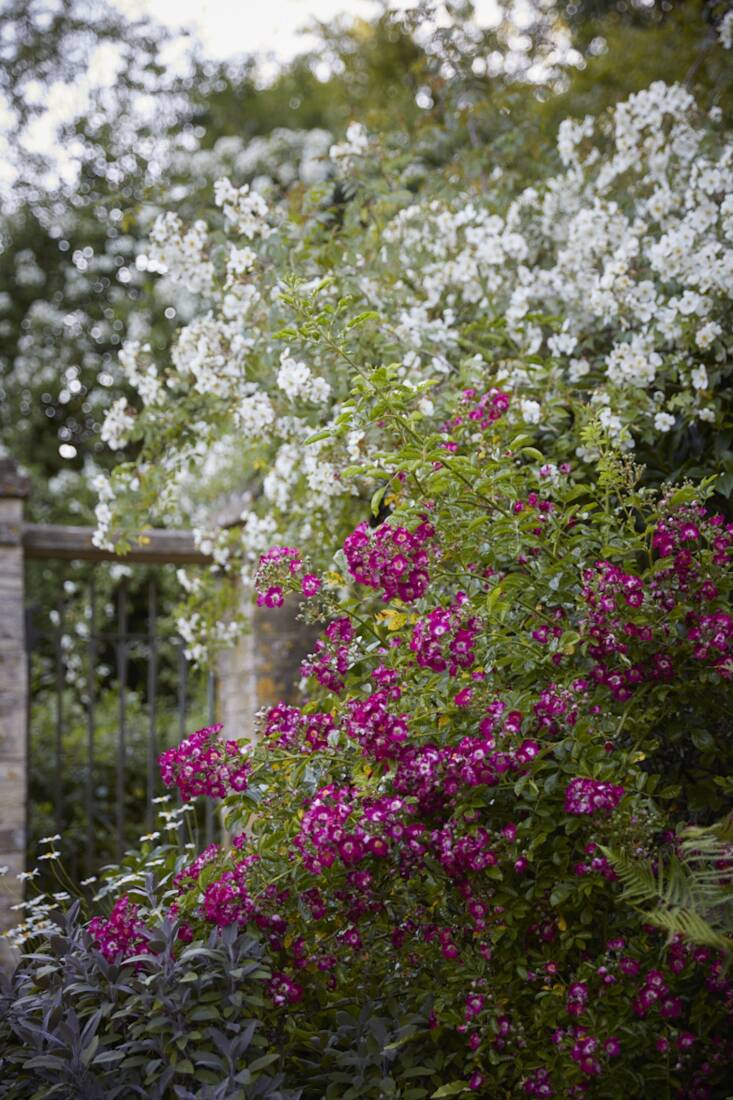
Another plus for ramblers is their good disease resistance; they are not as highly bred as other cultivars and descend directly from wild, species roses. Check the rootstock: US or Canada readers should avoid roses grafted on to multiflora (and check for multiflora parentage if you are in doubt) since this can be a highly invasive species rose and is prohibited in areas of North America. In the rambler group, multiflora is outnumbered by wichuraiana hybrids, such as ‘American Pillar’, ‘François Juranville’, ‘Emily Gray’ and ‘City of York’, all at 15 feet.
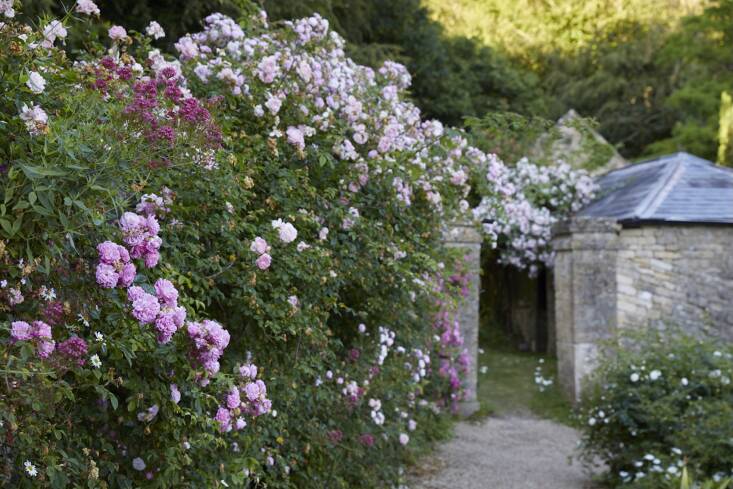
The legendary plantswoman and designer Gertrude Jekyll had some practical advice on how to improve a “ready-made” garden shelter (not that there are any at Moor Wood): “By covering it with an outer skin of ramping roses (read: rambling) it may in about three years be made a beautiful thing, instead of an eyesore.” She adds, “Not only will it be beautiful, but the deep masses of leafy and flowery branches will keep off the sun heat, which, without such a shield, makes these small wooden buildings insufferably hot in summer.”
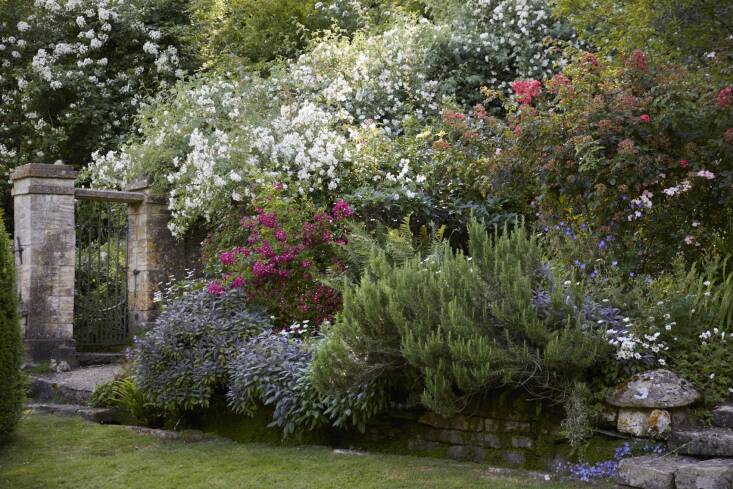
Many old ramblers are becoming more scarce; at Moor Wood, some of the best ramblers have been worth the long search. Which have been the most rewarding? “Rosa ‘Janet B. Wood’ is a really good white rambler, in a world with many white ramblers,” says Henry Robinson. “‘Ghislaine de Féligonde’ has gorgeous apricot buds and then fades to cream; it is very special. If you like pink roses, and I do, then ‘François Juranville’ is lovely. Dr. W. Van Fleet was one of the parents of ‘New Dawn’ (the classic 1930 climber), and it shows.”
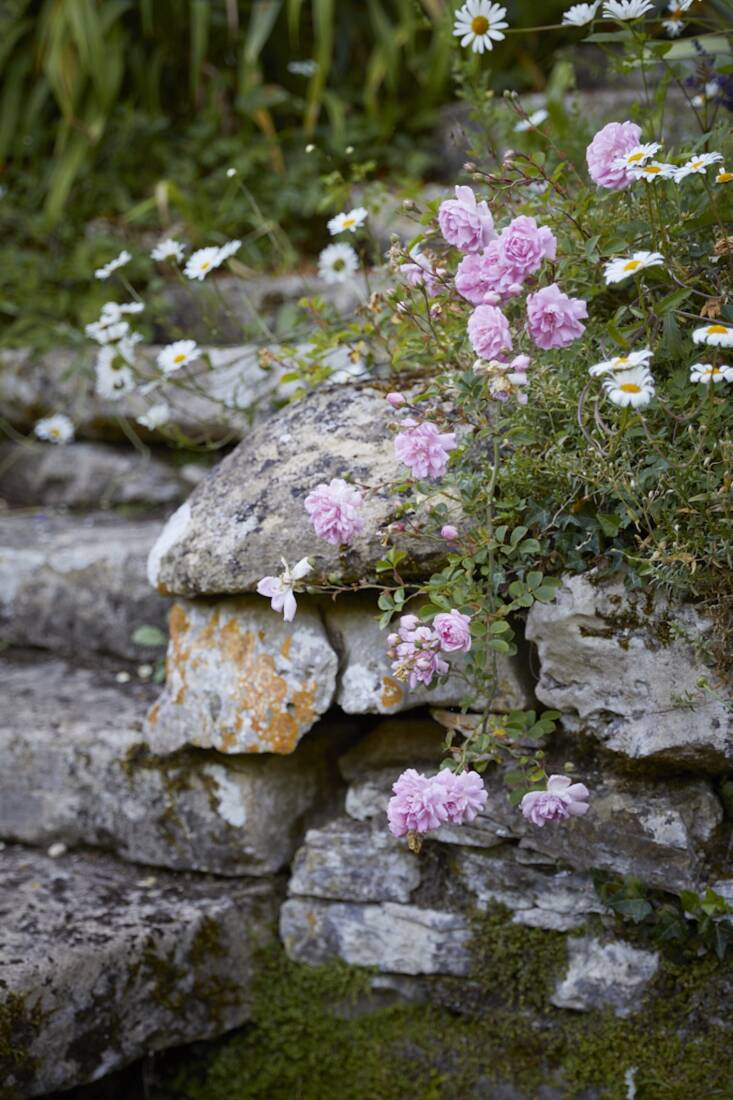
We went to Moor Wood on a hot day last month, and the roses were peaking earlier than they used to. Some ramblers flower later, which could stagger the display if you have room. Says Henry Robinson: “The best of the ‘late’ ramblers are ‘Blushing Lucy’, ‘Ethel’, ‘Super Excelsa’, ‘Pink Showers’ and ‘Snowdrift’.
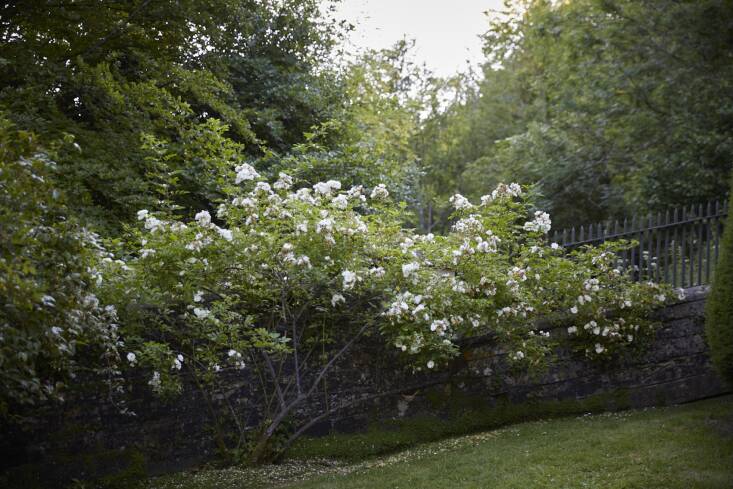
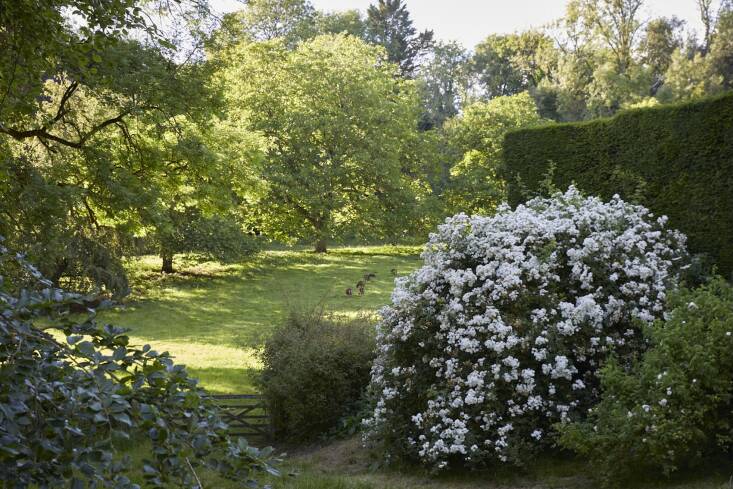
If you don’t have enough walls and structures to support an ever-growing collection, ramblers can be self-supporting shrubs. Gertrude Jekyll helped to popularize rambling roses when they were first bred toward the end of the 19th century. She was very attached to ‘The Garland,’ which she described as an “old cluster rose.” She liked it for covering an arbor but “best of all as a natural fountain, growing without any restraint or support.”
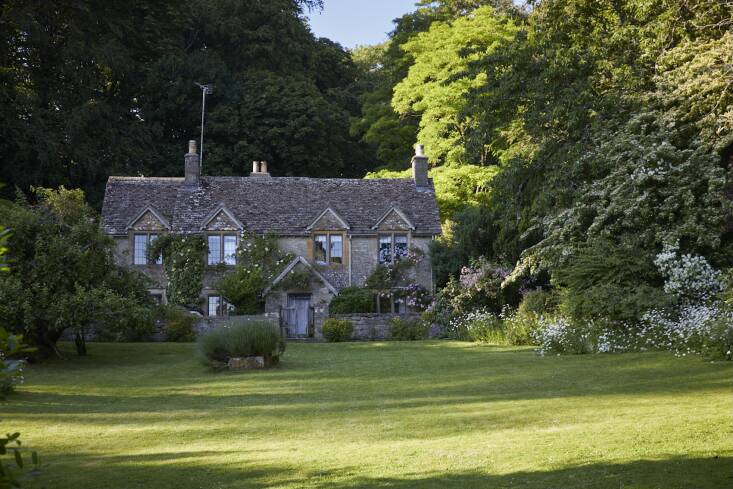
Last note: Planting a rambler to climb up a tree? “You don’t need to help them. They find a way to climb up themselves,” says Sue Robinson.
See also:
- Ramblers: The Most Romantic Rose
- New Dawn Roses: From Trellis to Vase on Cape Cod
- The 7 Best Climbing Roses for Your Garden



Have a Question or Comment About This Post?
Join the conversation