


When the publisher, Hoxton Mini Press, asked if I wanted to write a book on garden visits, I didn’t hesitate for long. After working on Gardenista: The Low-Impact Garden for three years, the challenge here was to cover the UK in three months—which I chose to do mainly by public transport. After all, what is the point in reaching a zen state while enjoying a garden, only to be stuck in traffic afterwards?
It is impossible to condense the country’s “best” gardens into a small list (or book), so the choices were framed from the perspective of the garden-curious—maybe younger, maybe more urban—who might be dipping their toes into the world of cultivation for the first time, on their own terms. A great discovery was that gardens that are open to the public, either for a couple of days in the season or year-round, are getting better and better.
Here are five, all of which make appearances in my new book, Britain’s Best Gardens, available in the UK now and published in the US on August 4.
Photography by Kendra Wilson, except where noted.
1. Kew Gardens, London
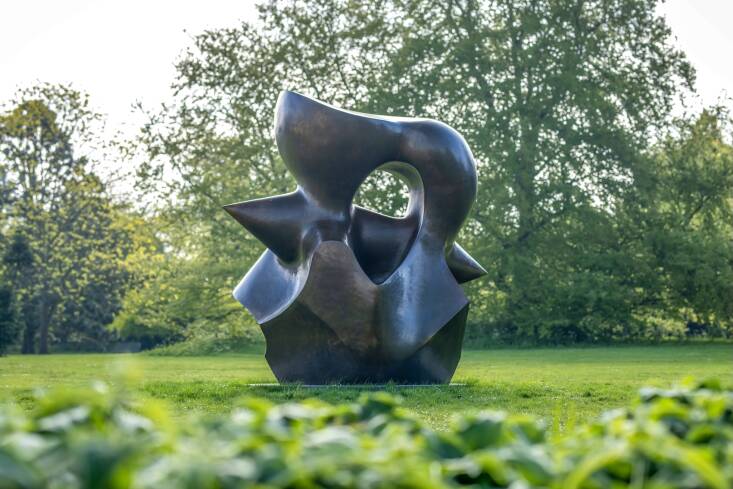
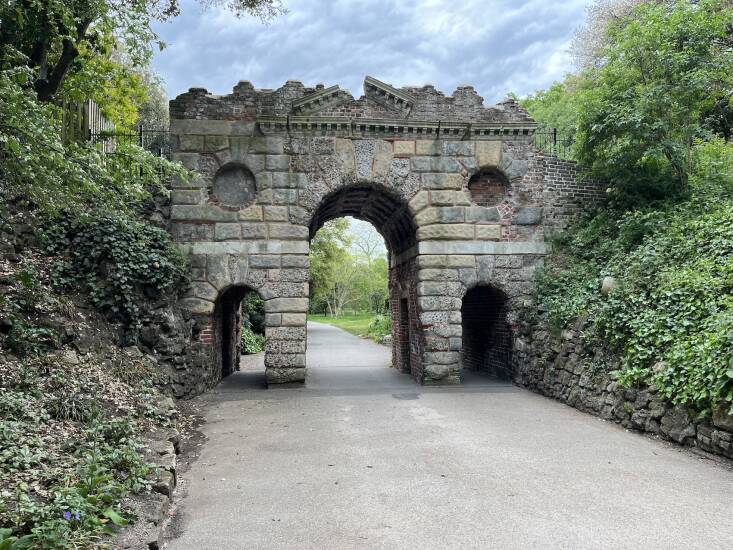
World famous Kew Gardens might seem like a predictable choice but there is much more going on across this 320-acre site in Southwest London than Victorian greenhouses. The plant collections are beautifully presented (see the Rhododendron Dell, set out in the 18th century by Capability Brown) and there is a strong sense of countryside in the city when you venture farther away from the main attractions. The gardens were developed and appreciated by the Royal Family during its German phase (18th to 19th centuries), with a cottage orné designed by Queen Charlotte, set like Hansel and Gretel’s cottage in the middle of a bluebell wood. Follies and temples, commissioned by Princess Augusta and her son George III, add to the sense that here is a private garden, its doors thrown open to the public. An added offering this summer is a comprehensive exhibition of Henry Moore’s outdoor works, sensitively placed to react with the sprawling landscape.
Getting there: Kew Gardens tube station is in one of London’s more charming “villages” and the gardens are a pleasant saunter away. The Westminster to Kew river boat service is another option. Book ahead for the gardens; it’s cheaper.
2. Lullingstone Castle, Kent
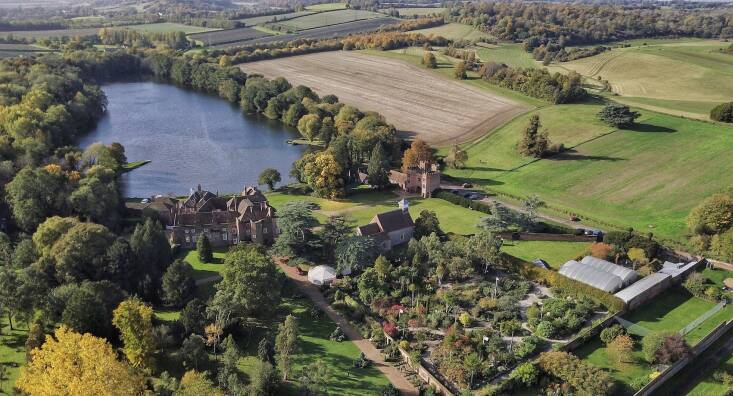
After hearing the story of the World Garden at Lullingstone Castle, it is difficult to resist visiting. In brief: the castle has been home since the early 14th century to members of the Hart Dyke family. Its scion, Tom, became a gardener at the hands of his Granny (whose mulberry trees were responsible for the silk worms that provided raw materials for Queen Elizabeth II’s wedding dress). A serious plant collector, he ventured into the Colombian jungle with a friend in 2000 and was immediately kidnapped. On being told that he was about to die, he busied himself on his last night planning a garden that would represent all the plants in the world, with all the continents contained within the old walled garden at home. Fast forward: Tom was miraculously freed, and in 2005 the World Garden opened, which vividly illustrates what plant comes from where. The North American planting palette, by the way, is demonstrably rich, while the British selection is meager in comparison.
Getting there: Take the train to Eynsford from Blackfriars, and get a cab or follow the public footpath through fields.
3. Coton Manor, Northamptonshire
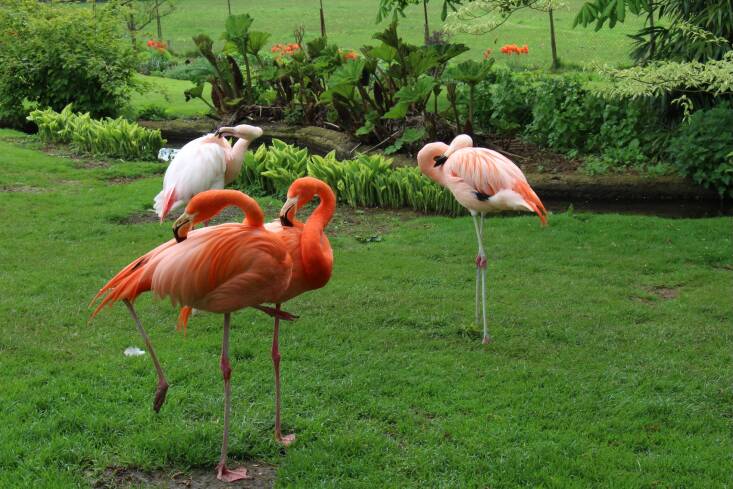
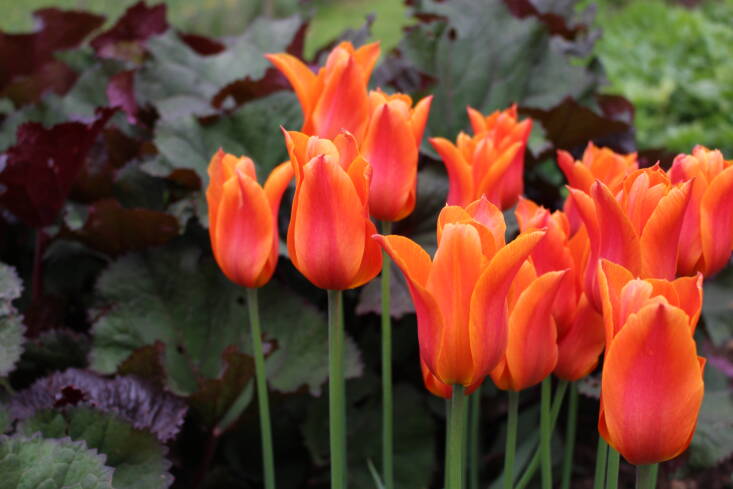
An English flower garden par excellence, achieved with intense hard work, and to a very personal vision, masterminded by the owners. When Susie Pasley-Tyler moved here after her husband inherited the manor from his parents, the garden was a menagerie, with sea lions and exotic birds. Flamingos remain as a reminder of more eccentric times, but the focus now is on the highest standards of horticulture, as well as plant buying (the nursery is a destination in itself). For sloping lawns, deep, color-themed borders, and fluffy Barbu d’Uccle hens wandering about, Coton Manor has got it all. Still very much a family house, the superb tea room is outdoors in the stable yard.
Getting there: It is possible (and very time-consuming) to get to Coton by train and bus, but it is set in a triangle of fantastic gardens, with Cottesbrooke Hall and Kelmarsh Hall (former home of Nancy Lancaster) within an easy driving distance. Any combination of these is worth driving up the M1 for.
4. Sezincote, Gloucestershire
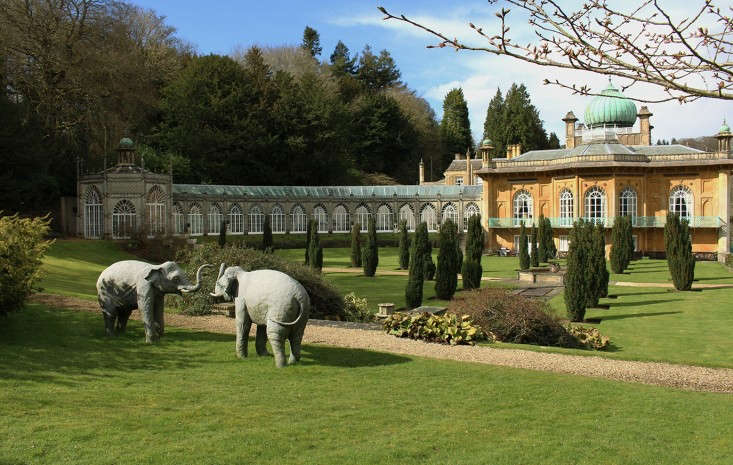
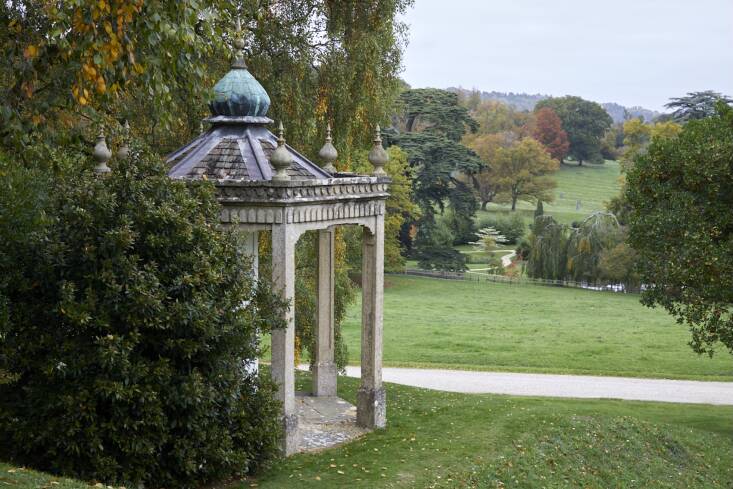
It shouldn’t work but it does: Sezincote was designed as a small Mughal palace, built in copper-washed Cotswold stone and topped by minarets and onion domes. The setting aids the fantasy: panoramic views span hills and valleys to the east, the house illuminated by the morning sun. An impressive selection of venerable trees guide the eye over the landscape and on the beautifully paced mile-long private drive up to the house. The great “picturesque” designer Humphry Repton made the lake in the early 19th century, while architectural details, such as the double decker bridge with stepping stones through the stream below, are contemporary with the house. Planting has moved into the 21st century, with layers of history visible at every turn. The whole effect is warmed by a bohemian atmosphere.
How to get there: Take the train from Paddington to Moreton-in Marsh, then get a cab from the town. Sezincote is across the road from Batsford Arboretum, former home of Algernon Bertram Freeman-Mitford, grandfather of the Mitford Sisters. The town is classic Cotswolds and worth a wander.
5. Plas Brondanw, Wales
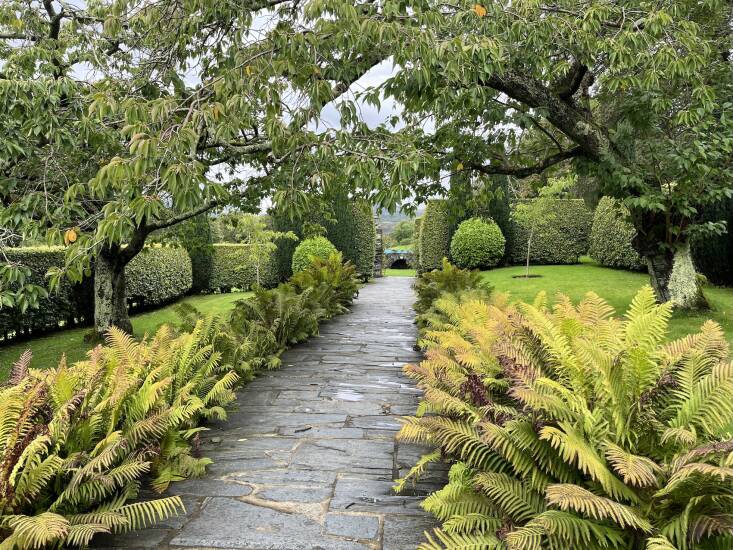
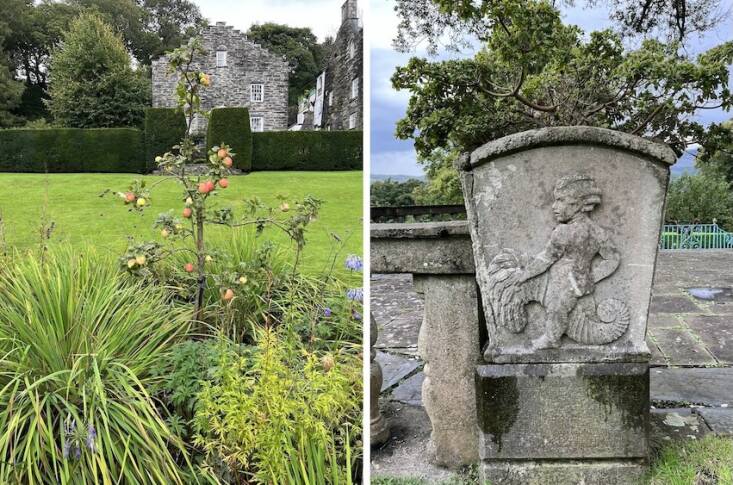
Designed by William Clough-Ellis, architect of nearby Portmeirion—the famous and deeply whimsical Italianate hill village—this house was his own home, and his life’s work. With its generous use of local stone set against green architecture, the effect is disciplined and exuberant at once. Borders are filled with shrubs and small trees and topiary is monumental, to complement the vertical dimensions of the house. Hedged enclosures contain fountains and spirited statuary but with its inclines and harmonizing greens, the garden holds its own against the mountainous backdrop of Snowdonia National Park. It also pays homage to its surroundings: paths radiate out from a central point toward tall gates, painted in signature turquoise, that give the view some extra theater. There is a refreshing lack of signs and crowds; the entrance fee is paid via an “honesty box.” There is also a very good café, on certain days.
Getting there: Snowdonia is on the edge of the British Isles; there are no easy ways to get there except by car.
Britain’s Best Gardens is available in the UK now and is published in the US on August 4.
See also:
- 100 Gardens to Visit Before You Die
- Required Reading: ‘The English Gardenener’s Garden’
- 9 Ideas to Steal from Britain’s Up-and-Coming Garden Designers





Have a Question or Comment About This Post?
Join the conversation