


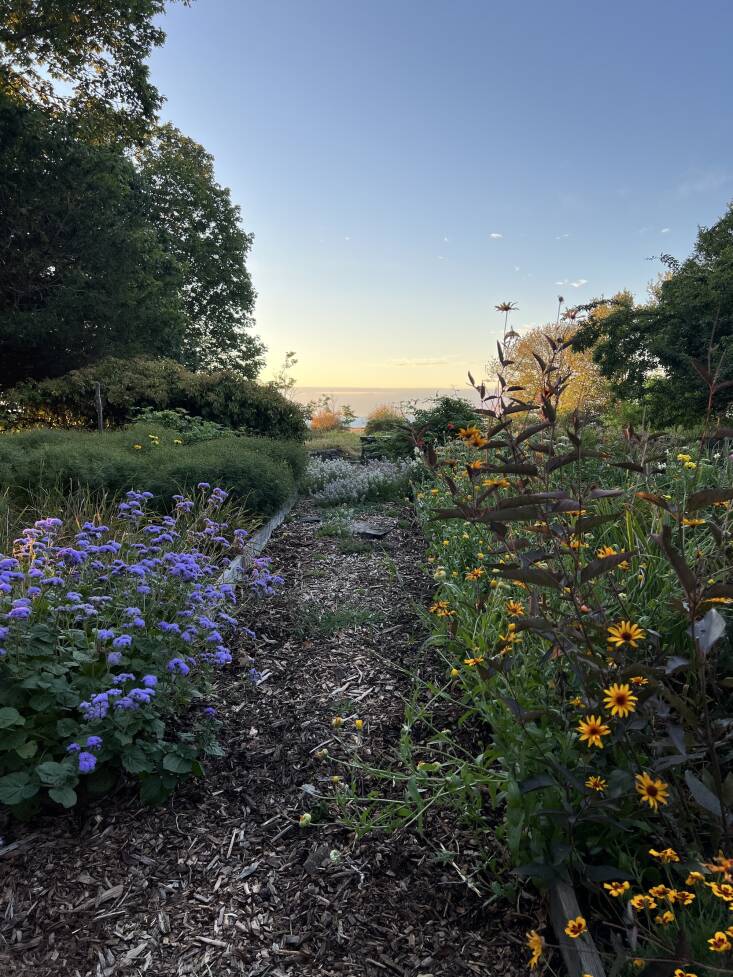
Take an old, overgrown property, plant it with a thoughtful mix of perennials, almost like adding furniture, fill each “room” with a single color—and you have Wild Knoll Foundation Garden, artist Carly Glovinski’s now five-year-old living artwork, planted on the literal foundation of author and life-long gardener May Sarton’s former home in York, Maine.
Carly fell in love with the place in 2021, when she spent time there as an artist in residence through Surf Point, a non-profit arts organization. Inspired by Sarton’s journal-style book House By the Sea and deep love of gardening, she came up with the idea to “rebuild” Sarton’s house, which had been torn down in 2020, using only plants. Guided by the site’s architectural drawings, she assigned each former room a single color: For example, orange blooms now grow in the area where the kitchen once stood, yellow in the living room, pink in the front room, and so on. She considered bloom times and the blocks of color compositions as well. “I approached the environment as an ecosystem, and the composition and concept as an art installation,” she explains.
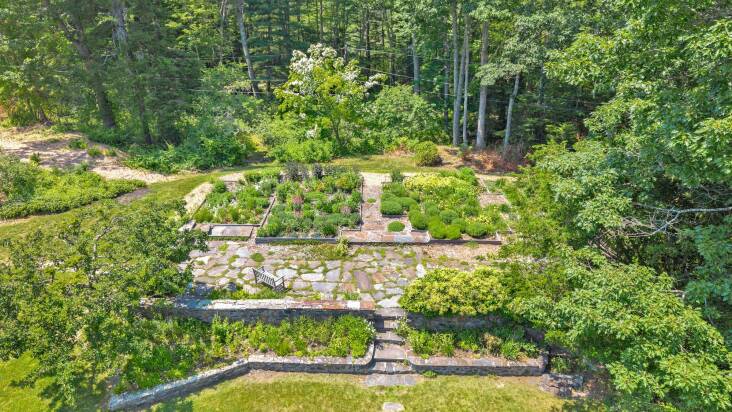
One might assume an undertaking this ambitious would require a horticultural background. It didn’t. “No horticultural training, but a big love for watching things grow and tending to plants,” Carly says. “Previously, this was always in my tiny backyard space, or in pots on the porch.” What she did have was the mindset of an artist and a deep appreciation for process. “I love diving in, learning new things, and experimenting with all kinds of materials. For me, most of the learning happens in the ‘doing’, for better or worse.”
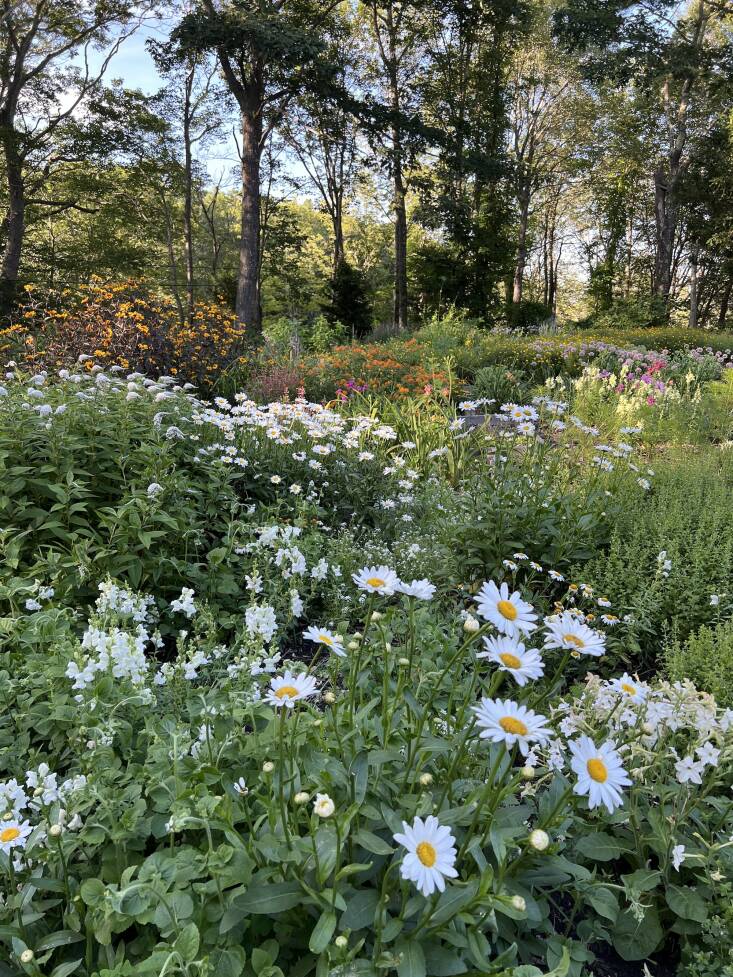
Carly also had help. For the project’s initial phase, Carly collaborated with her friend, gardener and author Acadia Tucker, whose deep botanical knowledge and belief in the idea of “right plant, right place” guided the initial plant choices. Carly also forged a friendship with Elizabeth Brown, a gardener and author who grew up down the street and remembers waving to Sarton as she drove by. “It was Elizabeth who helped me tend the garden in the first few years,” Carly says, “and I learned so much from her, from pinching plants and buying plugs to being present and making space for the act of gardening to be less task-oriented and more soulful.”
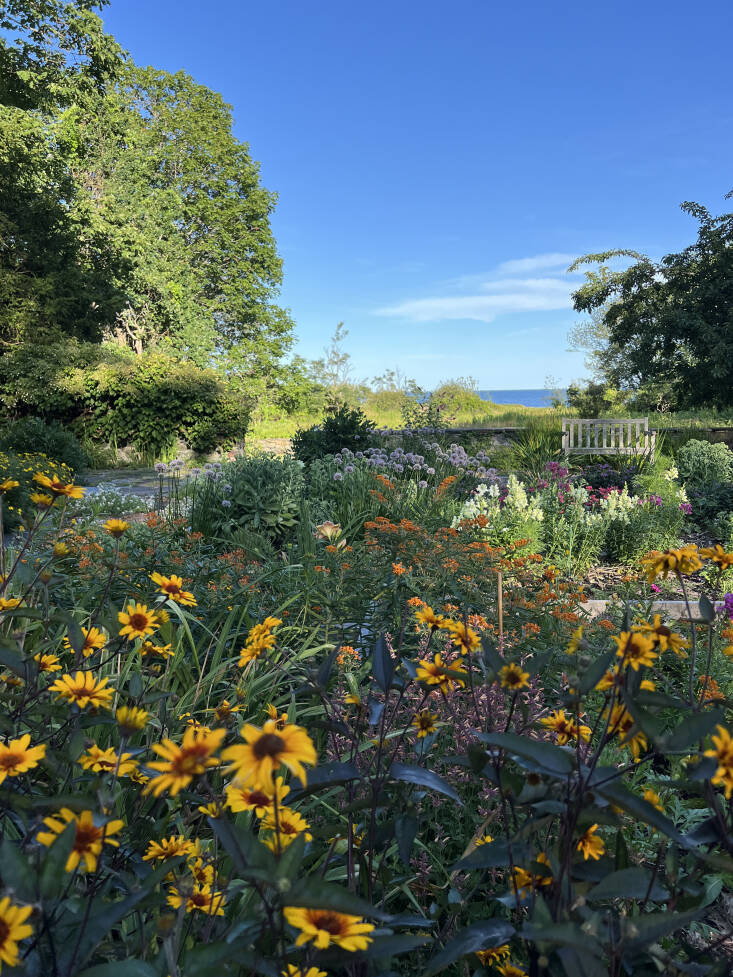
Even with help, the site possesses many challenges. First, no direct water source exists. Second, deer, among other wildlife friends, are an ever-present reality. Five years later, many plants from the original garden still thrive, though there were some casualties. Rudbeckia, phlox, coneflowers, salvias, and asters proved irresistible to the local groundhogs. “I have learned to work with the conditions, not force my way,” Carly says. “It is much more like a negotiation and collaboration now.” She fills gaps with a few annuals—cosmos, marigolds, snapdragons, alyssum, ageratum—most of which now self-seed, and plants lots of walking onions among the flowers as a deterrent.
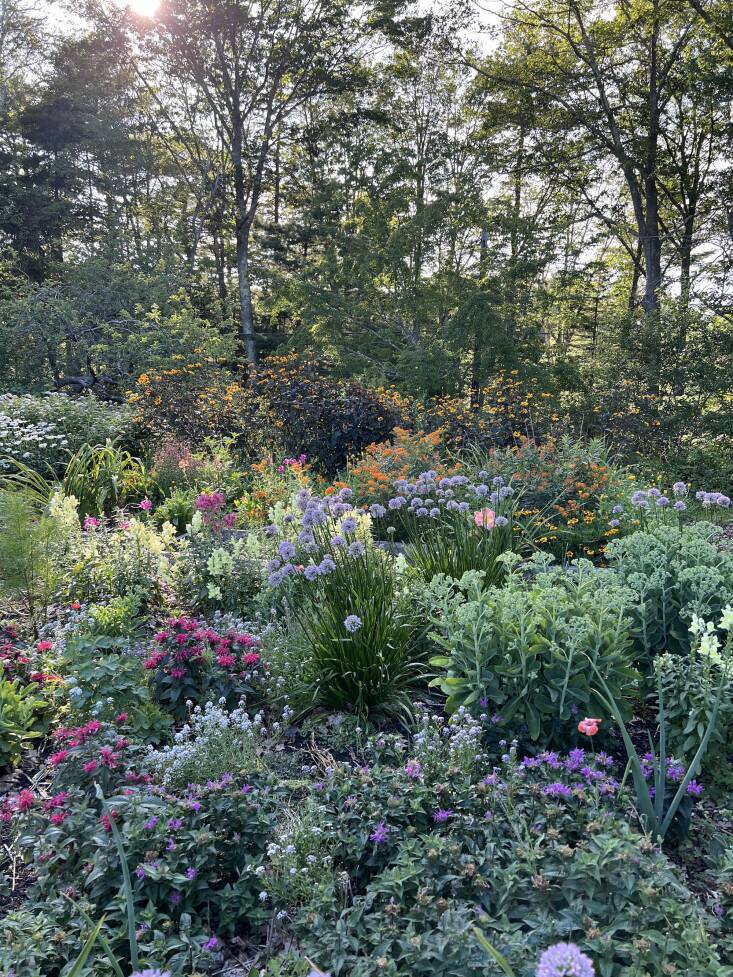
These days, Carly is leaning more into native plants to build an even stronger ecosystem, adding butterfly weed, thread leaf coreopsis, blue vervain, yarrow, Canada anemone, and spiderwort. Wild Knoll, through thoughtful design, now needs less maintenance and little to no extra water. “It has learned to live well where it is, and I have learned to let it lead.”
Beyond the garden built from scratch, Carly is also restoring the site’s original terrace beds. “This process has been slower, more like an archeological dig.” She’s removing weeds and invasive plants such as mint and uncovering and learning what was planted long before her. “Some things, like peonies and irises, are more obvious, while others have been a slow reveal. When you dig in these beds, there are fistfuls of bulbs, so I wait and see, and go carefully.”
Naturally Wild Knoll has become a creative incubator for Carly’s work, including Almanac, a massive botanical-inspired installation at Mass MoCA, and Opelske, a three-story mosaic and pollinator garden in the Boston Seaport. Both works highlight imagery of large-scale pressed flowers gathered from the garden. “The dirt and the paint are inseparable under my fingernails,” shares Carly. “This garden is directly entwined with the last five years of my art practice. When I first began the garden, I thought of it as a separate project from my studio work, but over time I realized that gardening and art-making were teaching me the same lessons about attention, patience, care, and collaboration with natural forces beyond my control.”
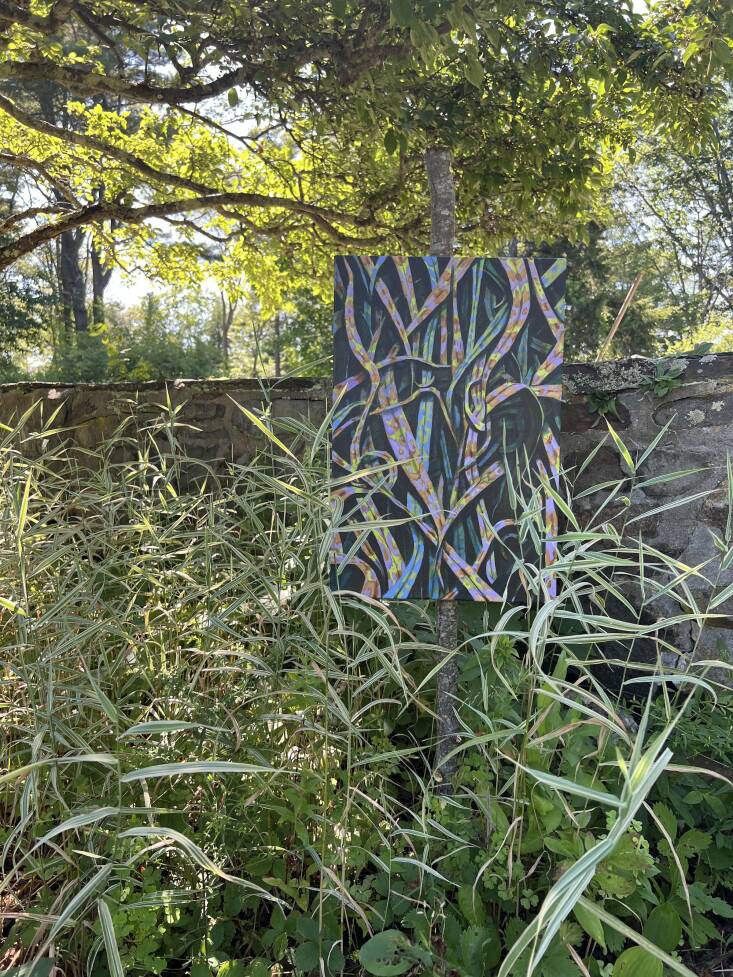
Interest in Wild Knoll has inevitably spread beyond the site and a community around it is growing. Participator on-site events, plant sales and tours are open to everyone and compliment Surf Point’s broader community days programming. Plus, it has become an alternative exhibition venue. Each summer, Carly invites an artist to “activate” the garden with their work. For those interested in Sarton’s life and work, Wild Knoll has become a destination and a sort of pilgrimage site.
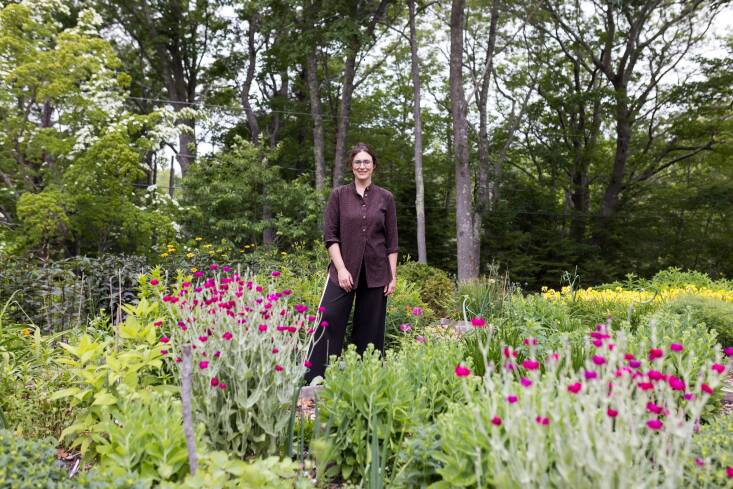
Unexpectedly, the garden has lured Carly into a lineage: writer-gardeners like May Sarton and Celia Thaxter, women who discovered that the creative life and gardening are not separate but a way into each other. Carly explains, “In many ways, I often say that I had to build a garden to understand how to make the work I’m making now.”
See also:
- Required Reading: Artist Robert Dash’s Garden Finally Gets Its Own Book
- ‘Not Really a Garden at All’: Artist John-Paul Philippe’s Lightly Edited Landscape in Connecticut
- Garden Visit: At Home in Rhode Island with Painter Georgia Marsh

Have a Question or Comment About This Post?
Join the conversation