


When we caught a glimpse of the garden for sculptor David Harber at the Chelsea Flower Show, we instantly wanted to know more. The camera panned past what appeared to be a living fence. We weren’t the only ones who were intrigued by Hollander Design’s willow weaving project: An earlier video on Instagram racked up nearly 4 million views when they shared it.
The idea for living structures came from Hollander Design’s landscape designer Melissa Reavis, who had been searching for a solution to a problem in her home garden. Craving a little separation between her vegetable garden and the neighbors’ backyard, Reavis went down a research rabbit hole that led her to the work of Howard Peller of Living Willow Farm. Peller, who grows willow on a 12-acre farm in Roseville, Ohio, creates fences, domes, tunnels, play huts, and even sculptures from living willow.
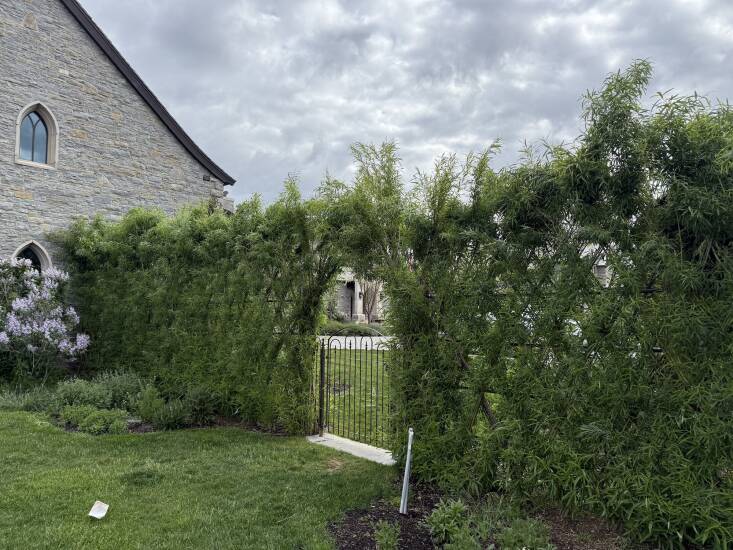
Peller sent Reavis some dormant willow rods and instructions for how to plant them. Every one of them took and Reavis grew her own fence. “This just goes to show how easy this process is,” says Reavis. She describes her first DIY experience with the medium as “a very terrible version” of live willow weaving, but it sparked her curiosity and spurred her to consider live willow weaving in her professional work at Hollander Design. “It created just this beautiful lacy level of privacy where I could still see through it and it didn’t shade out my vegetable garden,” she says.
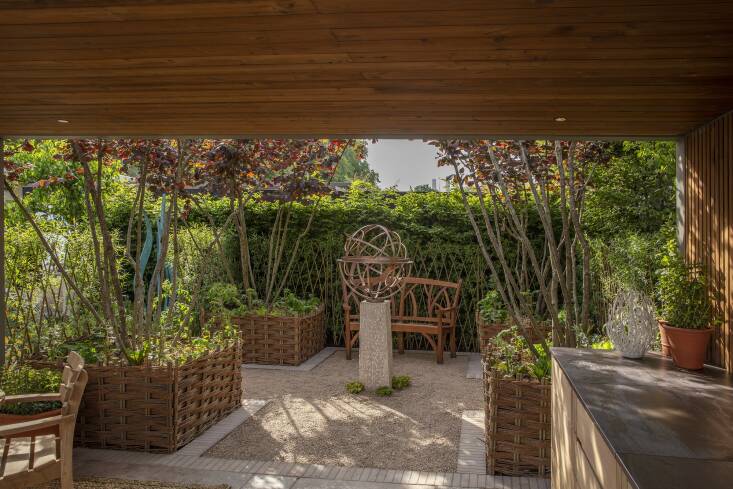
Both Peller and Reavis love live willow weaving for its ever-changing beauty. Peller admires “the sculptural qualities, how it was changing in the seasons—it’s not static.” Reavis agrees: “It’s beautiful from Day One. Then as it grows and starts to leaf out more, it’s like a constantly evolving and changing sculpture. It’s beautiful in the winter when it loses its leaves and it’s beautiful in the spring when it leaves back out.”
They also both appreciate live willow structures for their ecological benefits. “Willow is one of the earliest flowers that we have in the Northeast,” says Reavis. “They support a ton of different types of pollinators. Moths and butterflies, they’re specifically laying on these different species. Bees use it, too.” On a large sculptural piece Peller and Reavis collaborated on in Southampton, New York, birds have built nests in the willow. “It ends up being something that feels more like a part of the landscape than separate from it,” Reavis says.
Because a live willow fence or structure is a plant—not a traditional man-made structure—they can also be placed anywhere in a landscape without worry about municipalities’ often-labyrinthian codes for fences, pergolas, and the like. “We have these materials that we can use in new and innovative ways and create living structures that absorb carbon dioxide, produce oxygen, and provide habitat,” enthuses Reavis. “It’s not something that’s going to degrade over time and need to be replaced. Willow is such a great thing for people who want to be greener with their construction materials.”
If hearing about this innovative technique has sparked your curiosity, read on for the basics of live willow weaving.
What is live willow weaving?
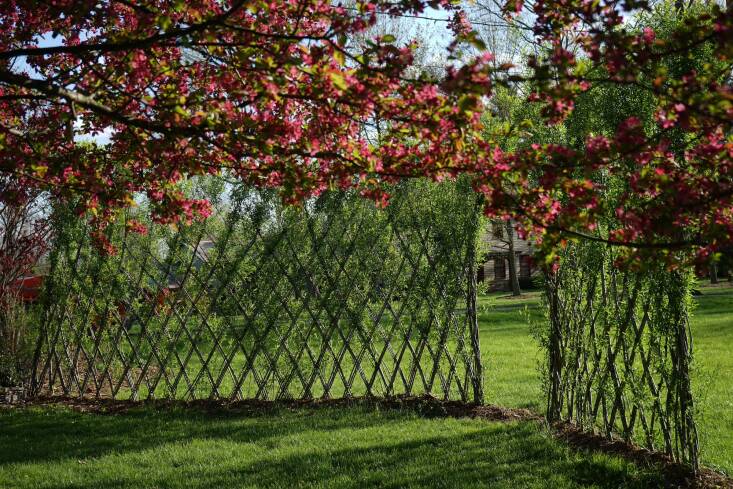
Live willow weaving involves planting living (but dormant) willow rods and weaving them together to create fences, tunnels, garden structures, and even large-scale sculptures. “Basically what you’re doing is you’re making a living basket,” says Peller. “You’re making a woven woven structure that’s alive.” Willow (Salix), which has long been used in traditional weaving, is especially well-suited to creating living structures because it is easy to propagate and grow.
What do you need to create a living willow structure?
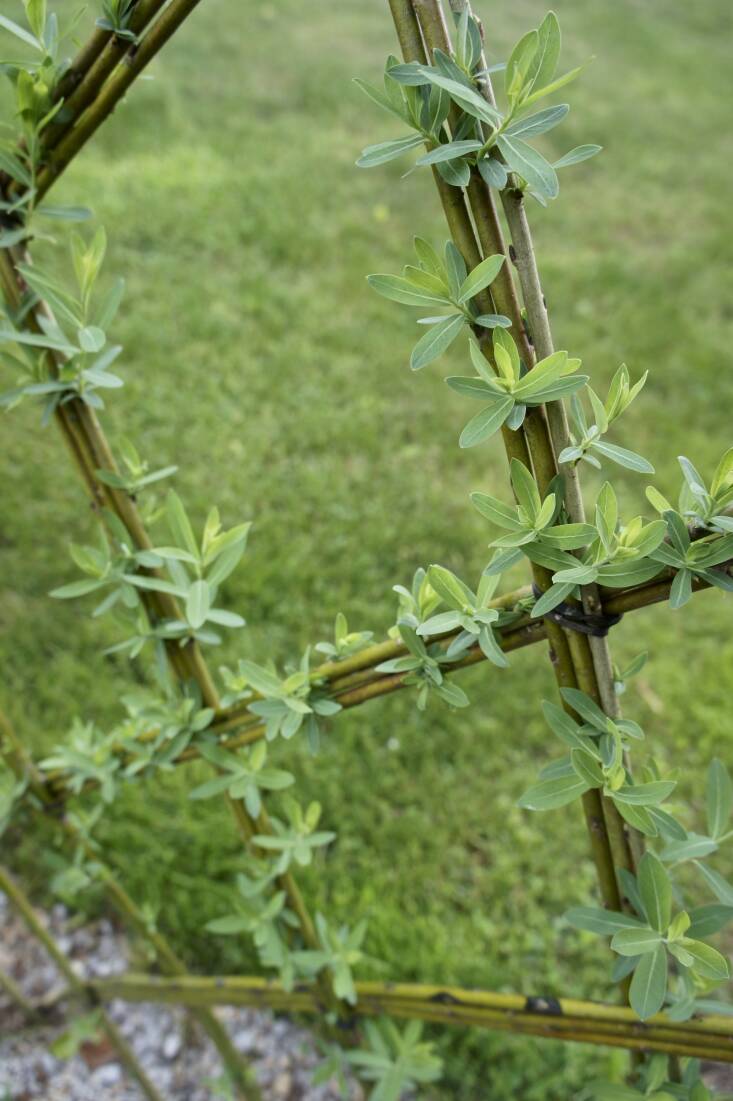
To create a live willow structure you’ll need dormant willow rods, which you can purchase from Peller or other willow farms (willow rods are often sold for erosion projects). Peller cautions that you need to start with long pieces to weave fences. “People want to put little short sticks,” he says, “But you need long rods to be able to actually do this.” You use a dowel to create holes for the rods, which need to be buried 8 to 12 inches deep to take root. Rods are planted early in the year and root out through spring.
Peller typically plants and weaves a couple rods together, so it’s not a singular whip that’s creating that basket weave. The woven rods get tied to keep their shape. (Peller’s kits includes rods and rubber fasteners that allow the plants to move.)
Where do you place them?
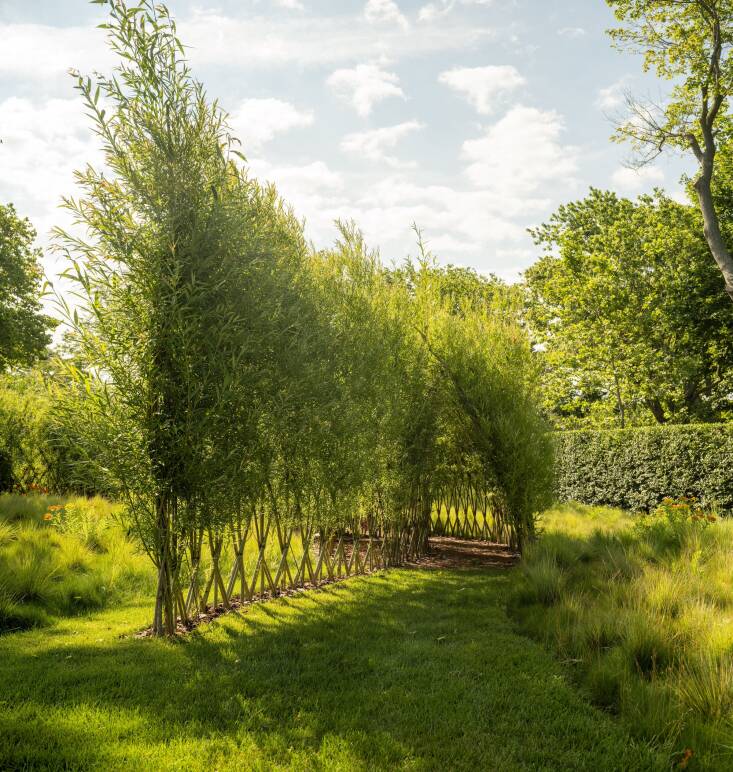
Open sky: Willow doesn’t need full sun (in fact, Peller thinks full sun can be stressful for the plants) but they need open sky overhead. “If you stand there on the ground and you look up and you can see the sky, they’re going to grow,” says Peller
No competitive roots: The willow needs nothing competing with it (even lawn) for a foot on either side. Once it’s established, you can seed lawn closer to it.
Away from structures: Don’t place willows near buildings or septic tanks. Willows have vigorous root systems that can disrupt foundations and their roots will seek out water, which can be problematic for septic systems.
Do you need to water them?
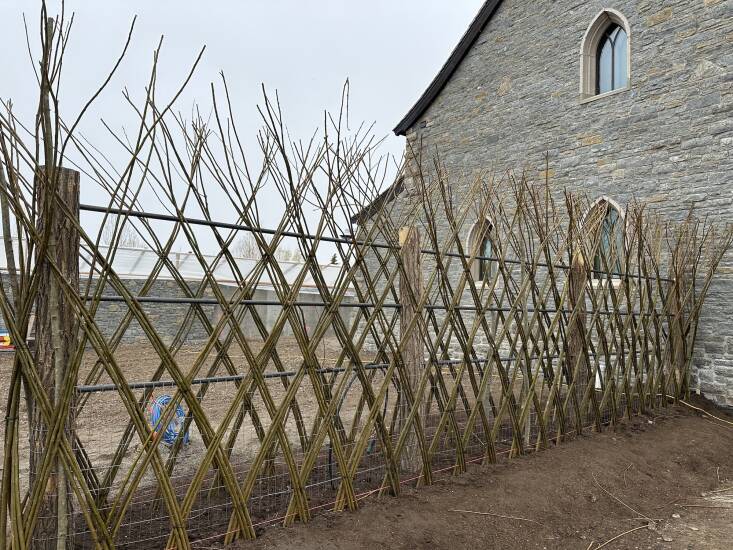
Peller says the biggest mistake people can make is not watering enough. Water for establishment: Peller recommends a drip line that’s on in the morning until the end of the day for the first year. “Not for flooding, just moist soil,” he says, adding that you should spread mulch on the drip line to keep the soil cooler. “Putting a sprinkler on it for 15 minutes is not going to do it,” he says. “You’re getting something that doesn’t have any roots or soil, so you have to establish it—that takes a drip line. The first year is the critical time.”
See also:
- Hardscaping 101: Hedges
- Hardscaping 101: Woven Fences
- 5 Favorites: Storybook Twig Playhouses for Indoors and Out



Have a Question or Comment About This Post?
Join the conversation