


This is part of a series with Perfect Earth Project, a nonprofit dedicated to ecological gardening, on how you can be more sustainable in your landscapes at home.
We’ve all seen the artificially “perfect” lawn, the pesticide signs, volcanos of mulch, the shrubs shorn so tightly nothing moves in the wind. This quest for order and control comes at high cost to our health and the health of the planet. “Conventional landscaping is a system of dependence on noise and poison that’s highly lucrative” says landscape designer and Perfect Earth Project Founder Edwina von Gal at the Grounded Conversations: Killer Lawns event at Guild Hall in East Hampton last month.
Lucrative indeed. It is estimated that the U.S. uses approximately one billion pounds of pesticides each year—80 million pounds just on our lawns. Common pesticides include herbicides like glyphosate and 2-4-D, which is common in weed and feed formulas; neonicotinoids, which are systemic insecticides targeting the nervous system of insects; and fungicides, which destroy the mycorrhizal system that keeps plants healthy. It’s a $21 billion business that is expected to reach $28 billion by 2031. And it’s poisoning us, our pets, and the wildlife around us.
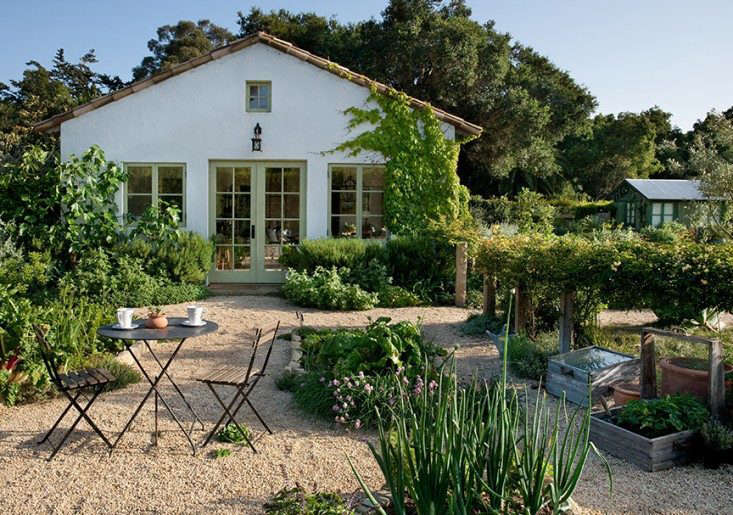
But it doesn’t have to be this way. You can have a garden that is chemical-free; full of bees, birds, and butterflies; less expensive to maintain—and incredibly beautiful. To get started, we encourage everyone to begin with the first of Perfect Earth Project’s PRFCT promises: stop using chemicals—no pesticides, no fertilizers. It’s that simple.
A panel of experts at the recent Killer Lawns event shed light on the dangers of pesticides. Dr. Ray Dorsey, co-author of The Parkinson’s Plan (2025) and founding director of the Center for the Brain & Environment at the Atria Health and Research Institute, who is working to end preventable diseases, he says, like Parkinson’s and Alzheimer’s by addressing toxic environmental exposures; Dr. Sarah Evans, associate professor in the Department of Environmental Medicine at the Icahn School of Medicine at Mount Sinai, who is studying how endocrine-disrupting chemicals affect children and is working to protect communities from toxic chemicals; Dr. Carl Safina, ecologist, author of 11 books including Alfie & Me: What Owls Know, and founder of the Safina Center, which explores the relationship between humans and the natural world; and von Gal discussed the health effects caused by landscaping chemicals and shared their wisdom on how to reduce your exposure.
Here’s what we learned:
Photography courtesy of Perfect Earth Project unless otherwise indicated.
Children are especially exposed to pesticides.
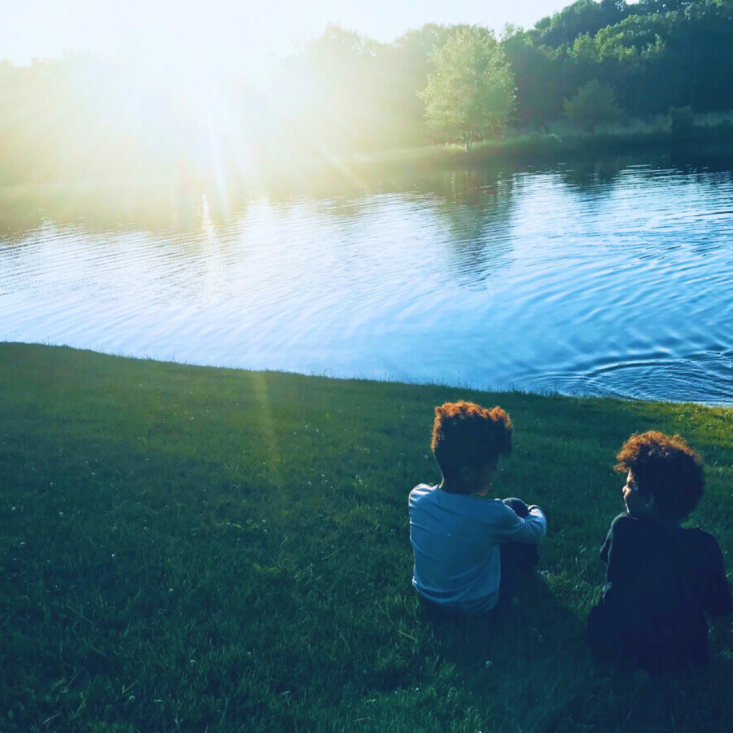
We are exposed to hundreds of chemicals on a regular basis—more than 40 of them are pesticides—and those numbers increase for children, noted Evans. “Children are uniquely vulnerable,” she said. “They are closer to the ground. They roll around on it. They put their hands and other objects in their mouths. They also breathe faster than adults.” The easiest way to protect them is to stop using pesticides at home.
Chronic diseases are increasing but preventable.
“I’ve spent the last 10 years studying the environmental causes of Parkinson’s because I had a realization that it is not natural,” said Dorsey. “If you put a mouse in a lab and allow it to age, it will never spontaneously develop Parkinson’s disease. It will never spontaneously develop Alzheimer’s disease. The only way for it to develop these diseases is if we manipulate its genes or expose it to toxic chemicals.” We need to focus on prevention, not just treatment. According to Dorsey’s book The Parkinson’s Plan, “Amateur gardeners who spend an average of 160 days with weed killers in their yard have a 70% increased risk of Parkinson’s.”
Just because it’s on the shelf doesn’t mean it’s safe.
Common pesticides have been linked to impaired cognition and behavior, respiratory problems, hormone disruption, heart disease and stroke, cancer, diabetes, Alzheimer’s, Parkinson’s, and ALS. According to Evans, our lifetime risk has doubled or even tripled for many common diseases in the past 20 years. Our regulatory system is flawed and subject to pressure from corporations. Why take the risk?
Perfection isn’t all that it’s cracked up to be.
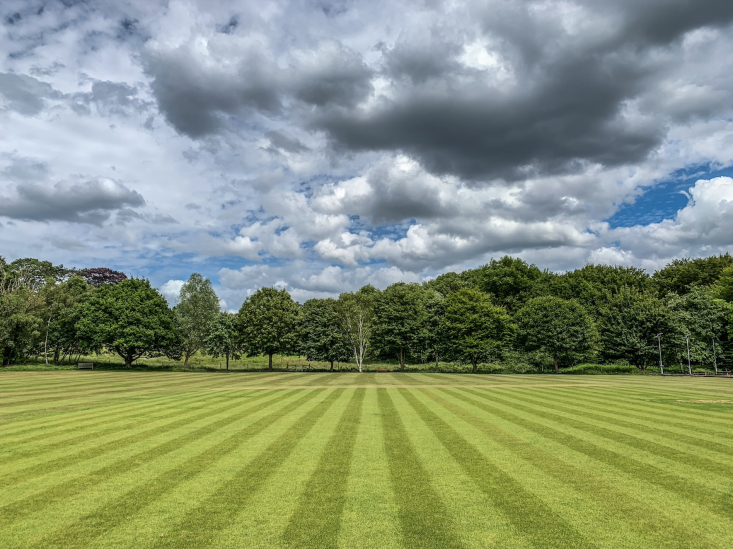
“What do we tell people who are eating organic vegetables and want to live forever, but have a whole gap in their consciousness about striving for a landscape that’s basically frozen in its tracks and are pushed to create a look that is essentially not alive?” asked von Gal. We need to change expectations and behaviors and stop striving for an unnatural and outdated aesthetic. We need to let our landscapes live, breathe, and be alive. And we allow insects to eat. Yes, that means sharing our gardens with them. “I’m not at war with where I live. I’m not trying to kill everything and make everything stand up straight,” said Safina. “Instead, I want to live in a place that says you’re welcome to live here with us. It makes things a lot nicer and it makes things a lot more alive.”
The 24-48 hour pesticides rule is a misconception.
“It’s a frustrating misconception that pesticide chemicals break down in 24 to 48 hours,” said Evans. “Most of the common chemicals that are being applied to our lawns have longer half-lives than that and breakdown depends on UV light. It depends on weather conditions. Glyphosate has been found in the soil hundreds of days after application. To say that it’s safe to go back on your lawn after 24 hours is incorrect. Once those chemicals come into your lawn through drift or by tracking them indoors, they’re going to stay there much longer than if they were outdoors.” And these chemicals detrimentally affect not just humans but also wildlife. Safina added, “Killing bugs is starving birds. That is a very direct link.” Pesticides are contributing to our biodiversity crisis, where we have lost 3 billion birds since 1970.
It’s usually not just fertilizer.
Evans often hears people say, “But I’m just using fertilizer.” She noted that most landscaping companies combine herbicides with fertilizer—a weed and feed approach. But she also pointed out that chemical fertilizers are also detrimental to our health. They often contain PFAFs and microplastics. Even organic fertilizers can contain high levels of nitrogen that impact water quality. “Too much nitrogen can cause harmful algal blooms,” said Safina, as well as the sensational-headline-making “flesh-eating bacteria” found recently in Suffolk County New York waterways.
It’s about process, not products.
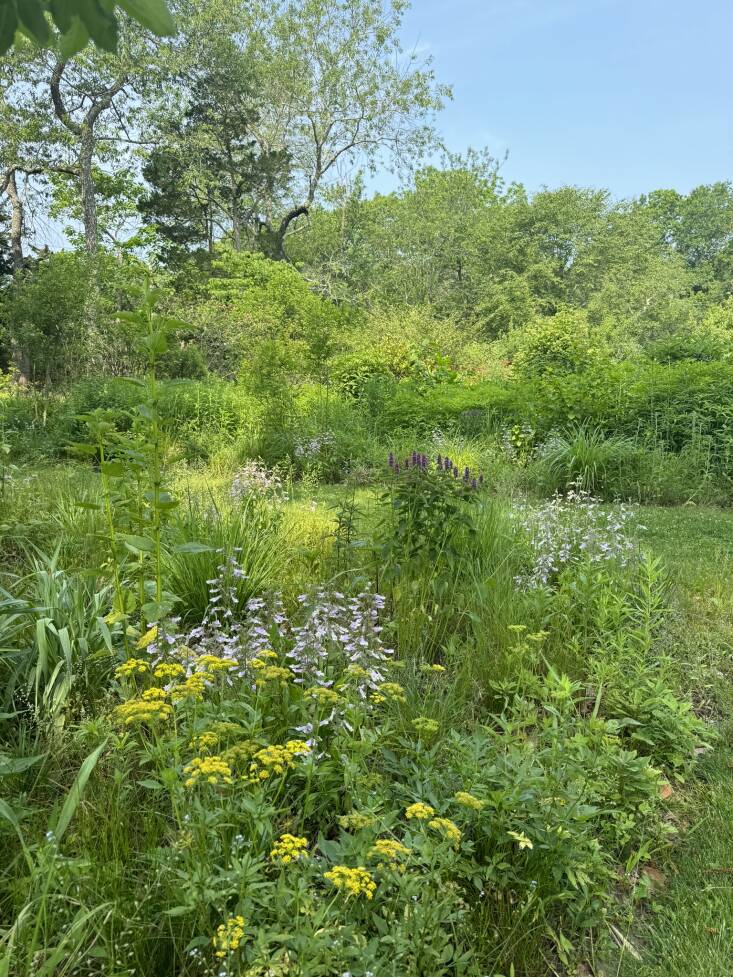
“You don’t need fertilizers to have a healthy lawn,” said von Gal. Simply mulch mow your lawn and feed it back to itself and welcome nitrogen-fixing clover. “When you allow clover in your lawn, you’ll have an automatic supply of nitrogen that will not run into your waterways.” Learn more about what to do with Perfect Earth Project’s nature-based land care practices.
You have power to change things.
Schools routinely spray pesticides on their grounds, noted Dorsey. Reach out to your school and ask them to stop spraying. “Kids don’t care about weeds,” he said. “They play with them.” Contact your local golf course. Research shows that living within one mile of a golf course was associated with 126 percent increased odds of developing Parkinson’s Disease compared with individuals living more than six miles away from a golf course. And call on your local government to demand bans on pesticides. There is reason to be hopeful. The state of Vermont just banned the herbicide paraquat. New York State took a step forward by passing the Birds and Bees Protection Act. Consumers and community members have the power to make change.
As Dorsey said, “Many pesticides are aimed at damaging the nervous system of insects. And we wonder why one in 31 eight-year old children have autism. We wonder why ALS is common among soccer players and increasingly among young women. We wonder why Parkinson’s is the world’s fastest growing brain disease. We wonder why one in three of us that live to 85 will develop Alzheimer’s disease. Diseases have causes. We should heed the words of Susan Sontag, ‘Be serious, be passionate, wake up.’ ”
See also:
- 10 Things Nobody Tells You About Organic Lawns
- Greatest Hits 2025: 10 Ideas for a Lawn-Free, Low-Impact Front Yard
- Ground Rules: Lindsey Taylor Shares Her Tips for a More Sustainable Landscape




Have a Question or Comment About This Post?
Join the conversation