


This essay is excerpted and adapted from The Gardener’s Mindset: Connecting with Nature Through Plants by Stephen Orr, out now from Clarkson Potter. All images courtesy of Stephen Orr.
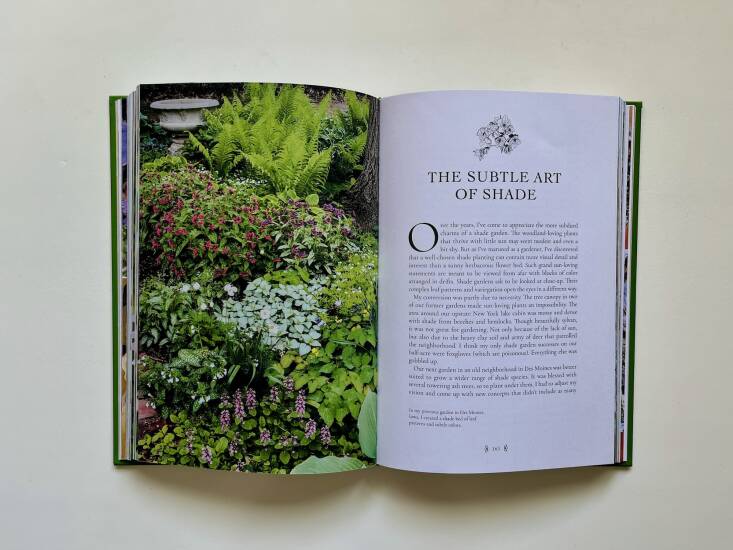
Over the years, I’ve come to appreciate the more subdued charms of a shade garden. The woodland-loving plants that thrive with little sun may seem modest and even a bit shy. But as I’ve matured as a gardener, I’ve discovered that a well-chosen shade planting can contain more visual detail and interest than a sunny herbaceous flower bed. Grand sun-loving statements are meant to be viewed from afar with blocks of color arranged in drifts. Shade gardens ask to be looked at close-up. Their complex leaf patterns and variegation open the eyes in a different way. My conversion was partly due to necessity. The tree canopy in two of our former gardens made sun-loving plants an impossibility.
Our previous garden in an old neighborhood in Des Moines was blessed with several towering ash trees. To plant under them, I had to adjust my vision and come up with new concepts. I learned to pay more attention to leaf color, pattern, and the finely wrought intricacies of tiny, graceful flowers. Shade gardening is for connoisseurs of subtlety, and there is a real artistry in leaning into that.
After removing the crushed stone the previous owners had spread beneath the ashes, I was disappointed to find exactly what I had expected—hardpan soil and a thick web of tree roots. Over the following weeks, I carefully dug around the tree’s massive roots and loosened up the earth wherever I could successfully wedge in a trowel, while adding compost and soil conditioners to support the new plantings.
I focused on identifying species that could tolerate the dry shade conditions under the trees. There were a few existing hostas but nothing else of interest. I had to let go of my fixation on flowers and explore foliage textures and patterns—all the possible options for streaks, lines, veins, spots, and striations. I landed on a mix of low-growing perennials I hoped might brighten up the front walk. It turned out to be one of my most rewarding gardening successes, and I discovered a whole new palette of plants in the process, some of which do have exceptional blooms as well as decorative leaves.
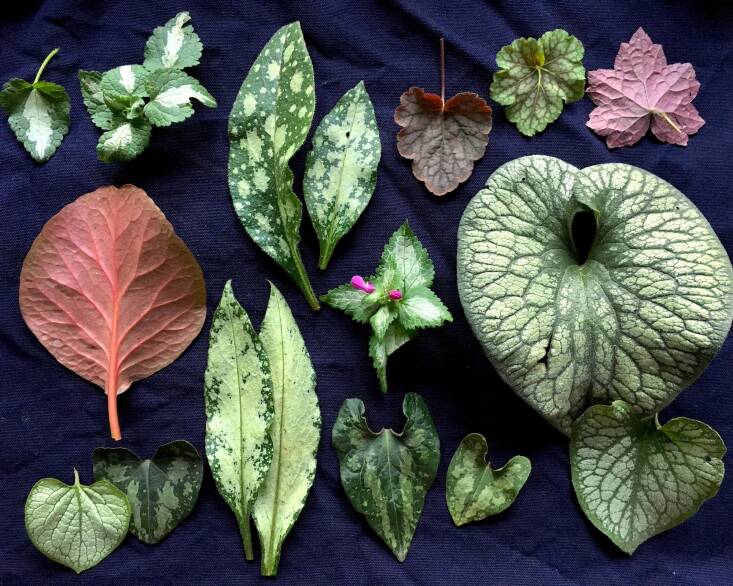
I rarely tell casual acquaintances about my obsession with lungworts—unless of course they ask for advice on shade gardening. These perennials are most known for their handsome leaves, which are spotted and lung-shaped; hence their genus name Pulmonaria. I knew about the leaves before growing them but had no idea of the magnificence of their flowers, which start off in a range of pinks or reds and then, over a few days, turn bluish-purple. The process is a pollinator-attraction strategy that occurs as the pH levels shift blossom by blossom, causing a dynamic visual effect as they change. The color range is thought to direct pollinators toward newer, more nectar-rich reddish-pink flowers and away from older blue flowers. Noticing the shifts between the fluid purple shades is one of those understated charms that can turn any gardener into a shadenista. The leaf colors are there for the rest of the growing season after the spring flowers depart. I’m partial to the silver, almost white-leaved lungworts, like ‘Moonshine’, ‘Diana Clare’, or ‘Opal’, that brighten the shade and glow at dusk.
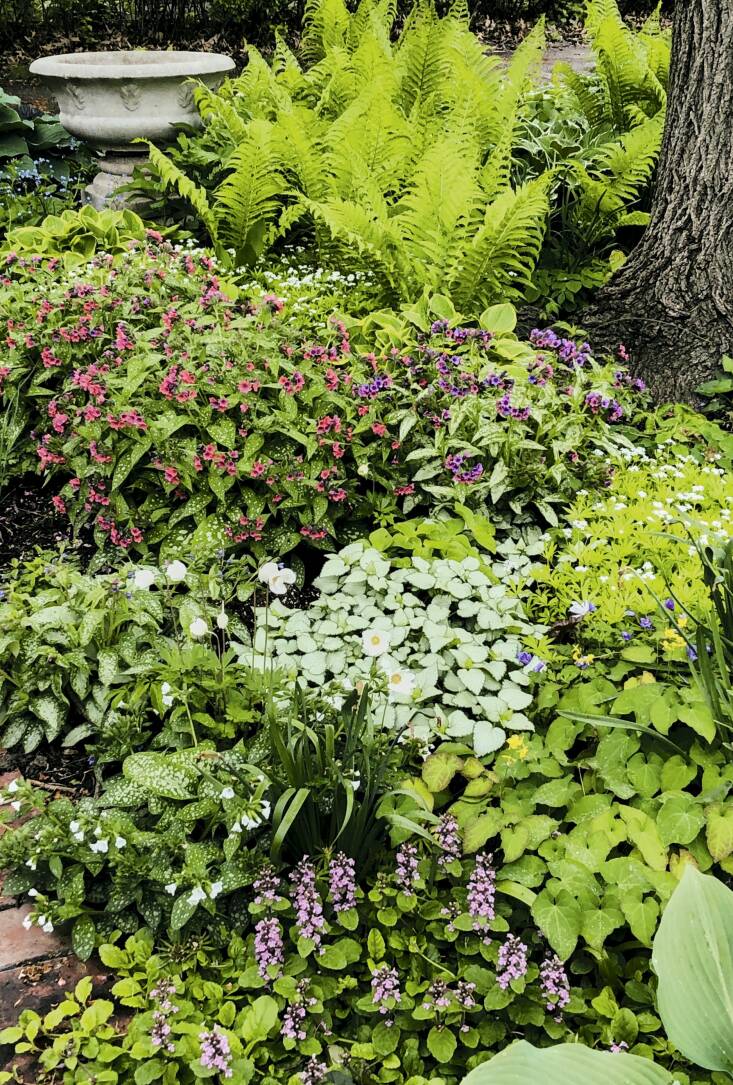
Along with the lungworts, I planted lamium or dead nettles, a plant group that could use some name rebranding. There is wide variation in their bicolor white/silver and green patterned foliage, ranging from stripes to brushy strokes, the most common of which is ‘White Nancy’. The crinkled leaf texture and square stems identify these plants as belonging to the vast mint family. And, like mint, they can spread easily but aren’t as aggressive. Under a tree, they performed as I wanted them to—filling the space with their graphic leaves and pink, white, or purple flowers. Another lamium species, yellow archangel (L. galeobdolon), has similar leaves but bears yellow flowers.
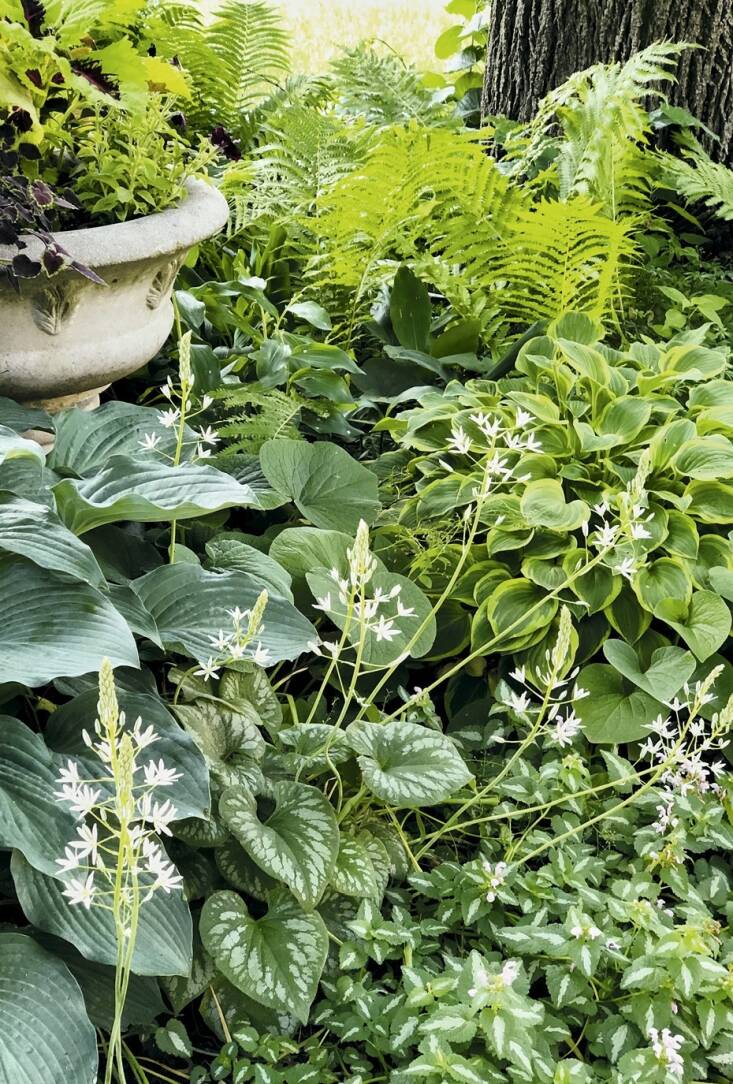
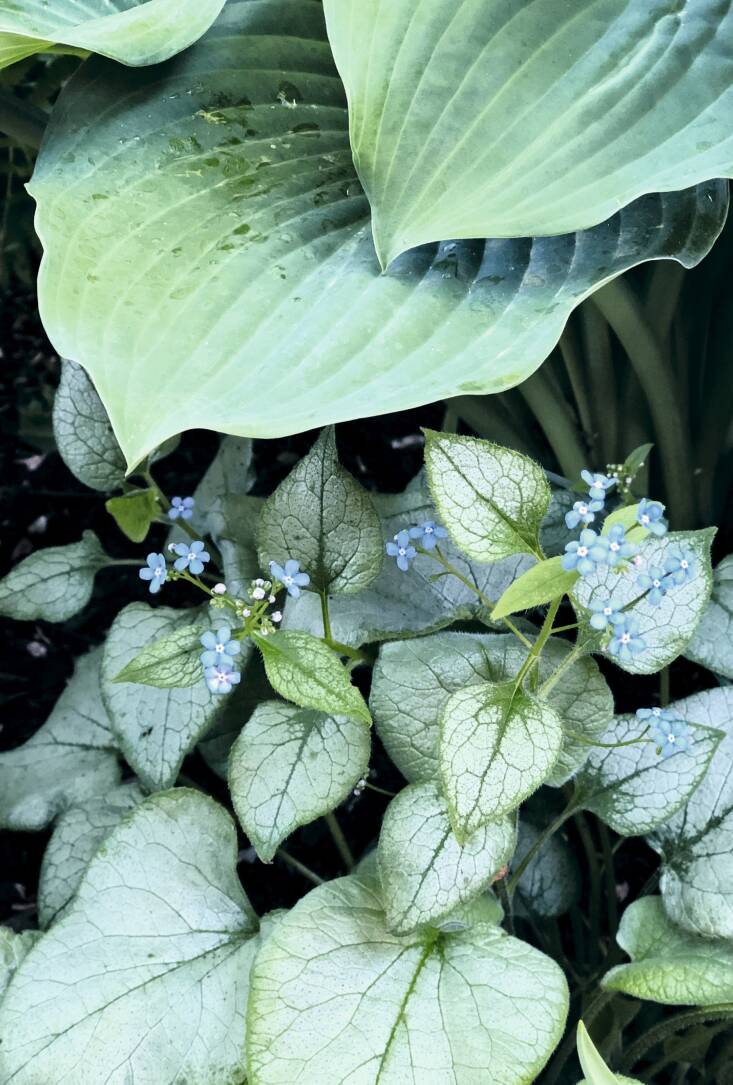
Continuing the silver and green leaf theme, I grew several hybrids of Siberian bugloss (Brunnera macrophylla), which have large white or silver-tinged leaves and sky-blue flowers that resemble clouds of forget-me-nots. I kept going with the Midwestern native American alumroot (Heuchera americana). Its jade- and white-marbled foliage that sometimes has a hint of eggplant purple blended in well with the other leaf and flower colors. These plants perform in dry shade (always a tricky spot), as do the whorled leaves of sweet woodruff (Galium odoratum). Whenever I could find them at nurseries, I added wild gingers, both the Chinese type (Asarum splendens) that are patterned with symmetrical silver on their dark green leaves and the emerald-leaved North American species (A. canadense).
I couldn’t resist including delicate white flowers like bleeding hearts, star-of-Bethlehem, and spring Grecian windflowers that bloom early but disappear by June. I needed something easy and inexpensive to fill the gaps the spring ephemerals left behind, so I reached back into my childhood and reconsidered caladiums. I probably ordered too many, tempted by the wide range of graphic leaf patterns I found at several specialty online nurseries. However, I did show some discipline by avoiding any pink tones and sticking to my silver, green, and white color scheme, leaning into the almost solid white varieties, such as ‘Moonlight’, ‘Candidum Sr.’, and ‘White Marble’.
My husband Chad and I have recently taken some of these lessons to Cape Cod, where our current property is primarily sunny. Last year, Chad cleared a wooded area alongside the driveway that was previously choked by black cherry saplings and invasive bush honeysuckle. There, under a canopy of black locusts and oaks, we put in spring bulbs, hellebores, ferns, and foxgloves the first year.v
This year, our goal has been to focus more on native shade species. I’m particularly pleased with the native cranesbill (Geranium maculatum) with its pale lilac flowers, which arrive in waves over several weeks in the early summer. Hardy geraniums of all sorts, which are not the tender geraniums (more properly Pelargoniums) that you see as summer bedding plants, are essential in a part-shade garden for their long flowering period. We also included amsonia, bowman’s root (Gillenia trifoliata), wild sweet William (Phlox maculata), and a range of trilliums and wood anemones that will keep the beds interesting from spring till frost.
As I continue to experiment with new plants and take note of ones that work and why, my connection to shade gardening grows. It’s true, abundant sun opens up a wider range of plant options, but once you dip into the enigmatic world of shade you might never want to come back into the light.
See also:
- 13 Favorite Perennials for a Shade Garden
- 13 Favorites: Native Shrubs that Don’t Mind the Shade
- 13 Favorites: Herbs that Thrive in Shade




Have a Question or Comment About This Post?
Join the conversation