


When garden historian and designer Toby Musgrave set out to write a book about kitchen gardens, he hoped to prove that edible gardens can be just as beautiful as ornamental ones—just about anywhere in the world. “I hope in some small way I can change perceptions and that readers will come to see that kitchen gardens are beautiful: to be admired and celebrated, and not hidden away at the end of the ornamental garden behind a fence or hedge,” he says. Here at Gardenista we didn’t need persuading, but if there are gardeners who need convincing, his new book The Kitchen Garden is sure to do the trick.
Featuring more than 50 gardens, The Kitchen Garden celebrates the diversity of what an edible garden can be. Musgrave told Gardenista that he hopes it will inspire readers to make a kitchen garden of their own or join in a community project. “I believe that kitchen gardening is undergoing a renaissance,” says Musgrave. “People the world over want to eat healthy and rightly have concerns about food provenance, excessive packaging, carbon footprint, pesticide residues, and conservation of heirloom varieties.”
Musgrave has included a generous introduction about the history of kitchen gardens, offering a a window into the culture and diet of earlier times and places. “Historic kitchen gardens and the period books published about kitchen gardening are wonderful sources of inspiration,” he notes. “They offer a heap of ideas about design and laid out, cultural techniques which can be updated for today (hot beds, for example), and what was grown (I am a firm believer in growing heirloom varieties).”
A gorgeous coffee table-style book, The Kitchen Garden is primarily meant to be a source of inspiration—not a “how-to” cultivation guide–but there are plenty of ideas to steal in its pages. Here are six that caught our eye:
Mix medicinal with edible plants.
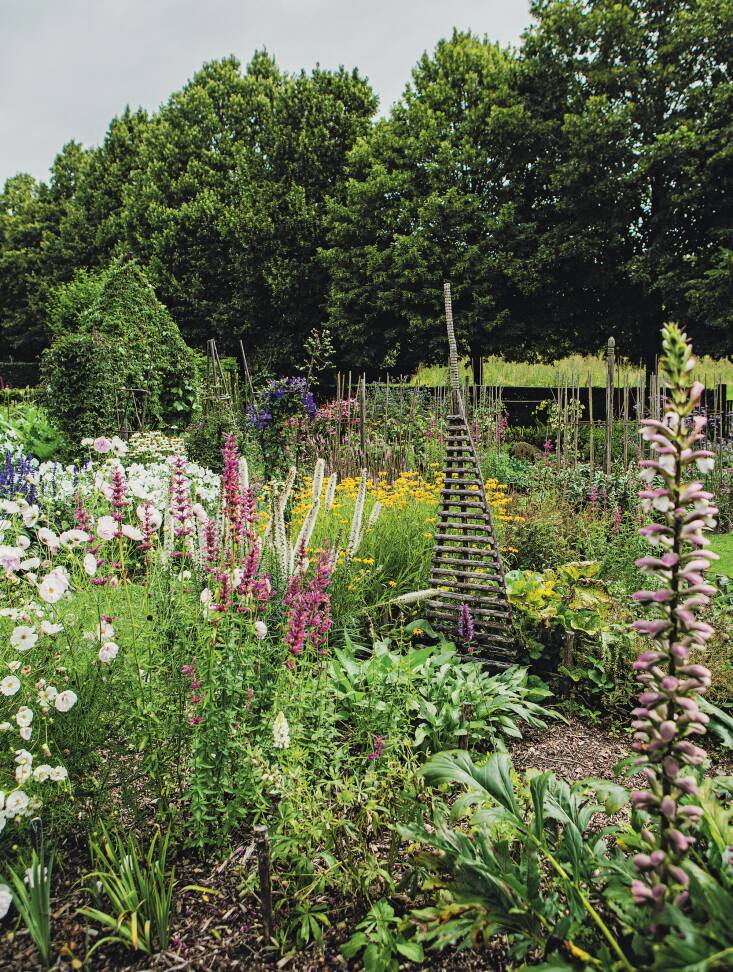
At Le Prieuré d’Orsan, the garden of Sonia Lesot and Patrice Taravella in Maisonnais, Cher, France, garden compartments of flowers, many of which had practical uses in medieval times, are interplanted with edibles to create a harmonious display that could easily be mistaken for a purely ornamental garden.
Create sculptural supports.
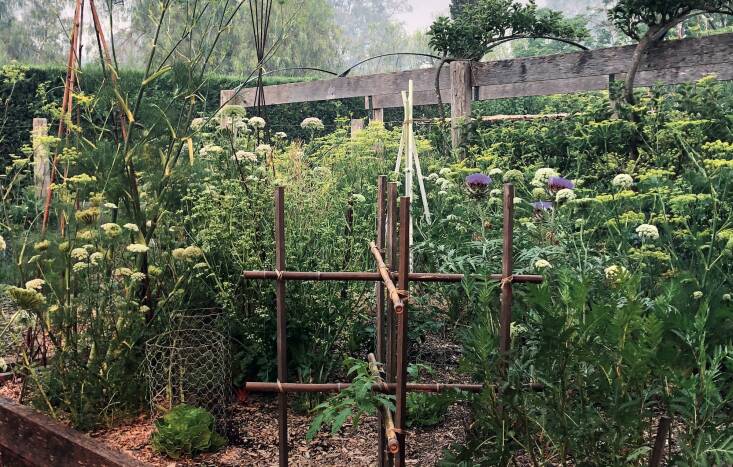
At Glenmore House in New South Wales, Australia, this raised bed reveals how interior designer Mickey Robertson crafts unusual plant supports that are both attractive and functional for her garden. Even the protective chicken wire is beautiful here!
Plant a pattern.
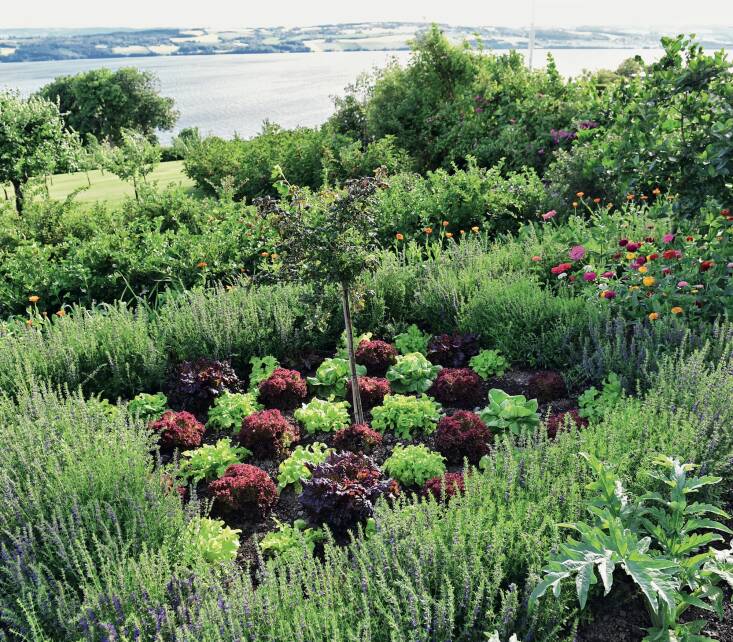
At Hovelsrud Farm in Norway, the owners Marianne Olssøn and Are Herrem devise and plant new patterns for the vegetables each year. This geometric beds planted with red and green oak leaf lettuce is one of many patterned beds, all of which are cultivated organically.
Soften the edges.
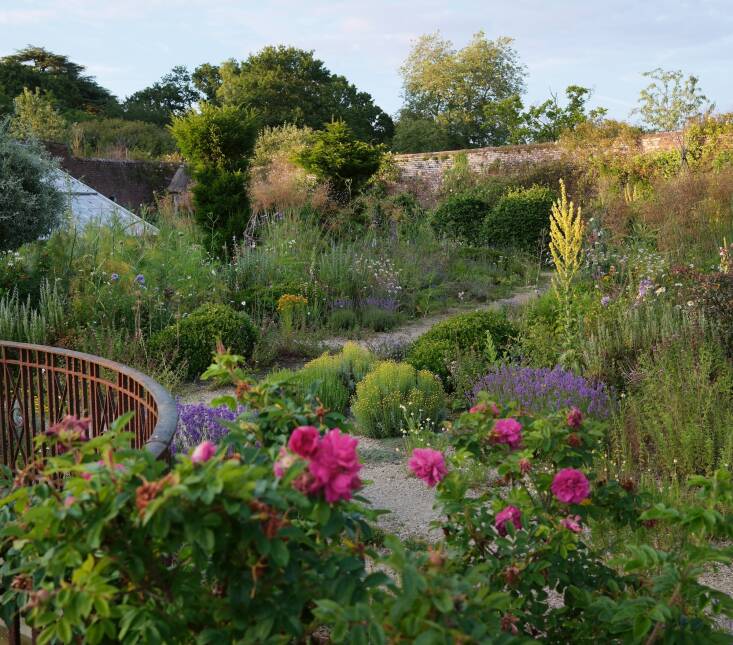
At Isabella Tree’s Knepp Castle in Horsham, West Sussex, English, the kitchen garden has been “rewilded” along with the rest of the property. The edges of the no-dig beds in the kitchen garden are blurred by the “dirty paths,” which are made by mixing soil in varying proportions with the existing crushed limestone. The beds were sown with drought-tolerant herbs that encroach on and sometimes carpet the paths. (Read more about the rewilded gardens at Knepp Castle.)
Or clean them up.
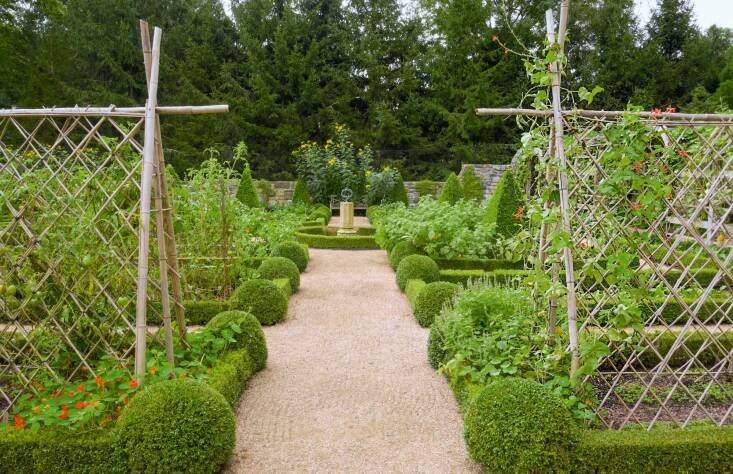
At Sleepy Cat Farm in Greenwich, Connecticut, neatly raked gravel paths, perfectly-clipped hedge topiary, and simple, streamlined plant supports give the vegetable garden a charming elegance. This garden belongs to Fred Landman and former Chez Panisse chef Seen Lippert, who worked with noted landscape architect Charles J. Stick on its design.
Welcome pollinators artfully.
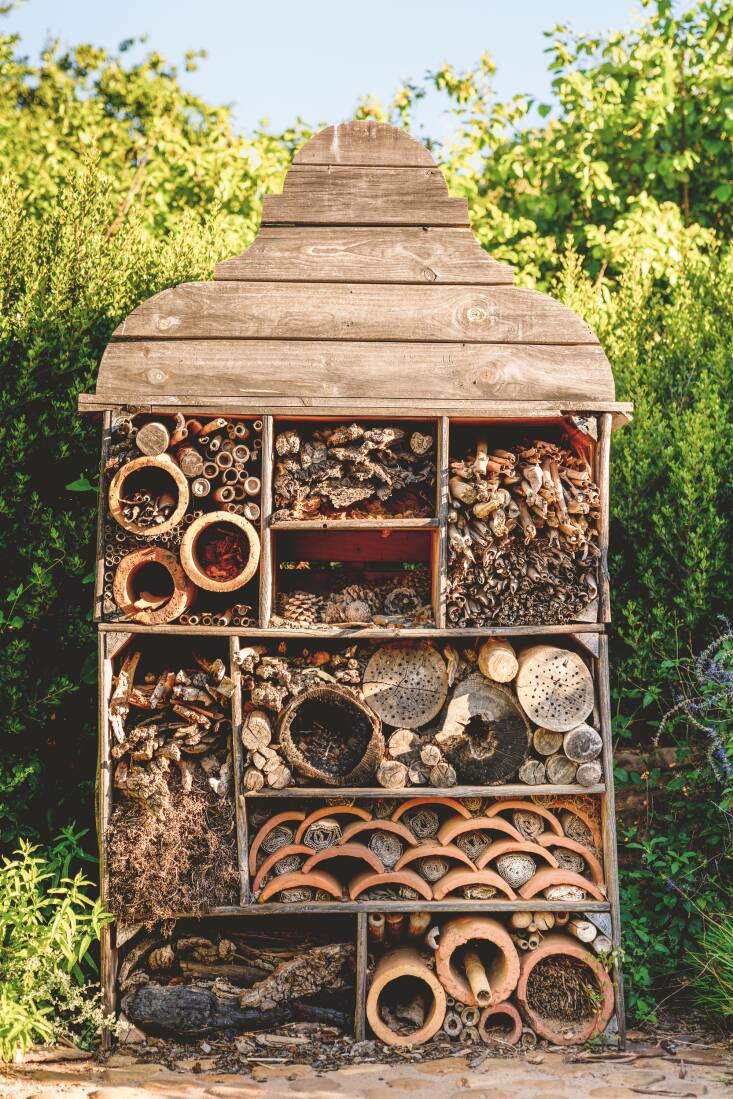
At Babylonstoren, a South African Cape Dutch farm that has been transformed into a boutique hotel, an architectural insect hotel encourages wildlife within the 10-acre potager, which is open to guests and the public. (Read more about the garden here.)
The Kitchen Garden by Toy Musgrave by is available wherever books are sold including Bookshop.org.
See also:
- Gardening on a Budget: 9 Perennials for the Edible Garden
- 10 Things Nobody Tells You About Starting a Vegetable Garden
- Edimentals Are Trending. Here’s Why You Should Include Them In Your Garden



Have a Question or Comment About This Post?
Join the conversation