


British garden designer Harry Holding first caught our eye in 2023 when he debuted his School Food Matters Garden at the Chelsea Flower Show, which won the People’s Choice award. This year, Holding is back at Chelsea with another stunning edible garden he’s calling Bring Me Sunshine, created in collaboration with the Eden Project.
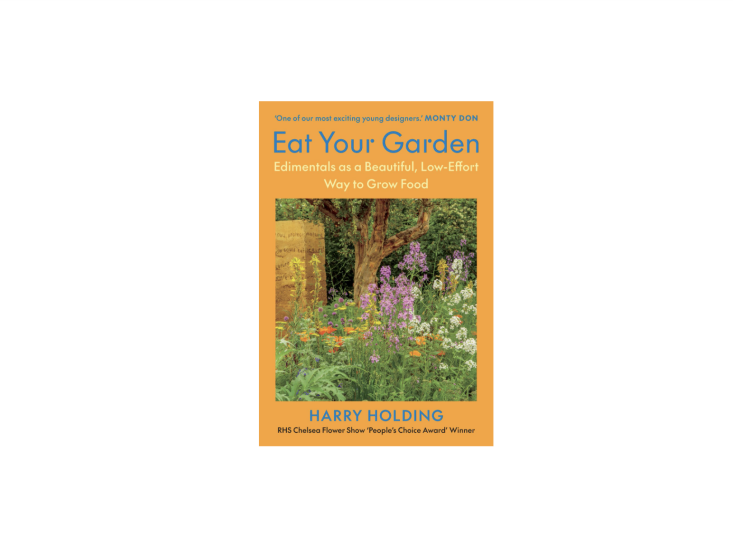
It’s been a busy year for Holding, who also has a new book Eat Your Garden: Edimentals as a Beautiful, Low-Effort Way to Grow Food out this month with Chelsea Green. “Seeing the reaction of the public and how people really responded to this style of productive planting was the catalyst for the book,” he tells us.
Holding’s book joins a long tradition of texts about edible gardening, but his spin is a little different. “There’s worlds of market gardens, allotments, and permaculturists for whom productivity is absolutely king,” he says. “I think sometimes beauty and the aesthetic aspect can be a bit lost in the discussion.”

The book explores all the different types of edible garden one might have and highlights edible gardening pioneers. It also goes deep on all the attractive ways one might weave edible plants into their garden, from edible hedges to roof gardens peppered with edible plants. “Creating gardens for a living, you’re trying to connect people with their gardens and with nature,” says Holding. “Beauty is a wonderful way to do that, but food is an equally amazing gateway to nature connection. Combining the two can be quite powerful.”
Wherever you are with your garden, Holding believes you can “take a different lens on it and start to integrate some edimentals.” Below are five ideas from Eat Your Garden for how you might weave some fruits, veggies, and herbs into your yard:
1. Edible Meadows
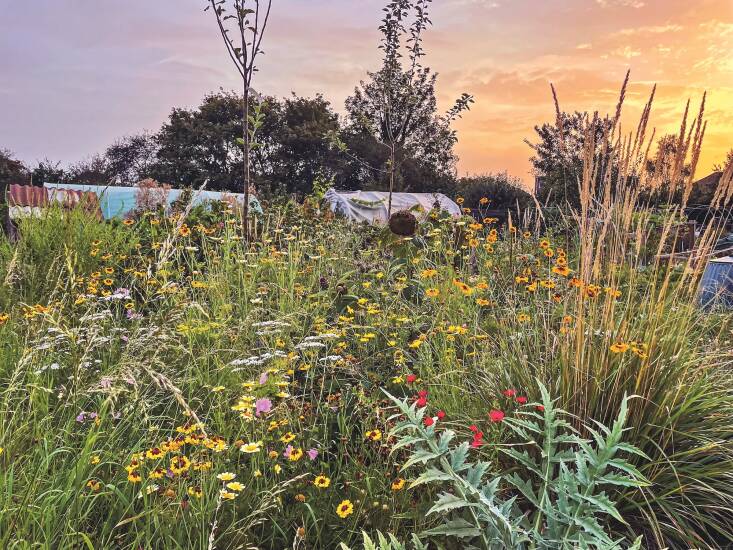
If you have (or are planning) a meadow-style garden, Holding suggests weaving a diverse tapestry of salad leaves, flowers, seeds, and tubers into the matrix. Holding says if you’re aiming to create an edible meadow, “you probably want at least about 30 percent of the species in there to be productive in a more meaningful way.”
2. Edible Roof Gardens
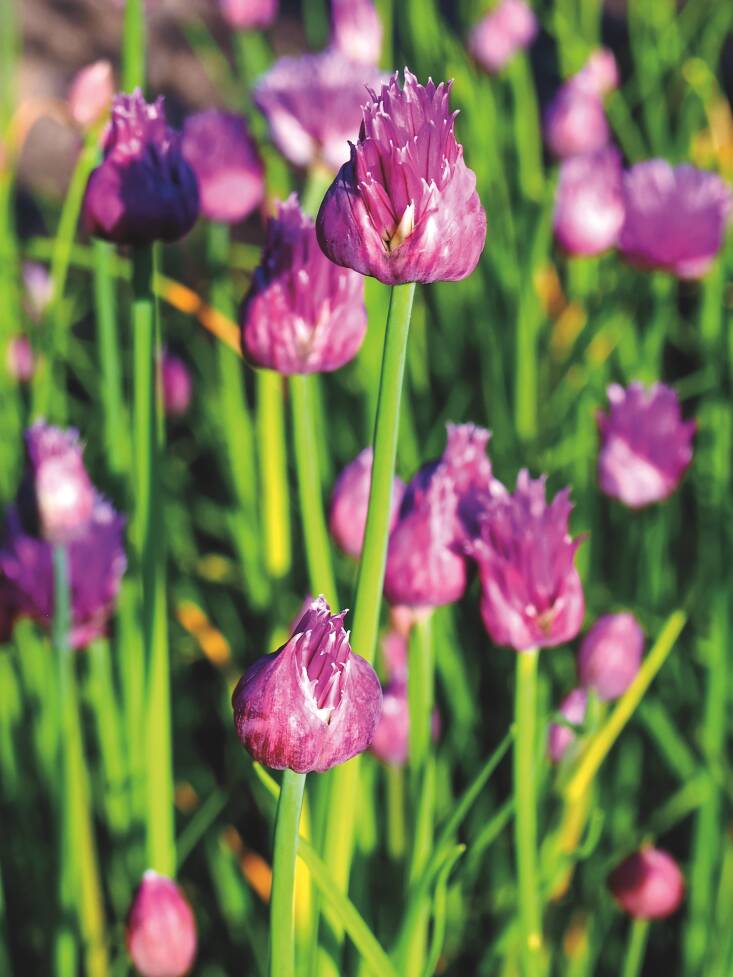
Green roofs are often planted with sedum by default, but Holdings notes that more complex plantings offer more ecological value. Working with Pictorial Meadows, a UK-based wildflower meadow and seed supplier, Holding created a wildflower meadow on just 80 millimetres (3.2 inches) of substrate, turning a client’s roof into a biodiverse habitat. Over time, he has gradually introduced edimentals including chives, thyme, and oregano into the planting.
3. Edible Path Filler
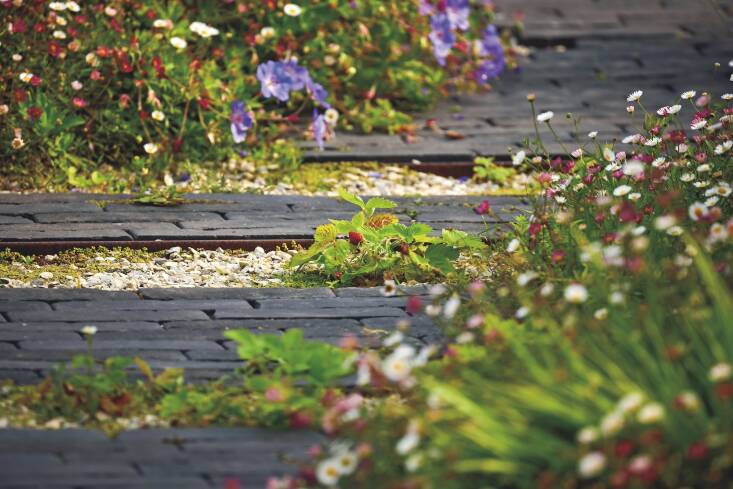
Pathways and paving cracks hold potential for low-growing edibles; for example, Holding suggests planting wild strawberries (Fragaria vesca) along pathways, writing, “Brushing past them in summer, catching their scent and spotting tiny ruby fruits nestled among the foliage is one of those quiet joys an edimental garden brings.”
4. Edible Lawn Alternative
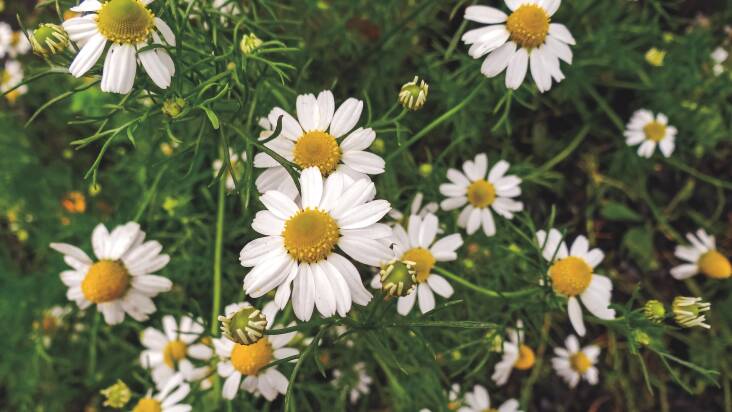
Holding says that chamomile, known for its calming qualities as a herbal tea (not to mentioned its adorable tiny flowers), makes an excellent drought-tolerant lawn alternative in free-draining soils. It could also be grown within an existing lawn. (Pssst… Many common lawn “weeds,” like dandelions, are edible too!)
5. Edible Understory Trees
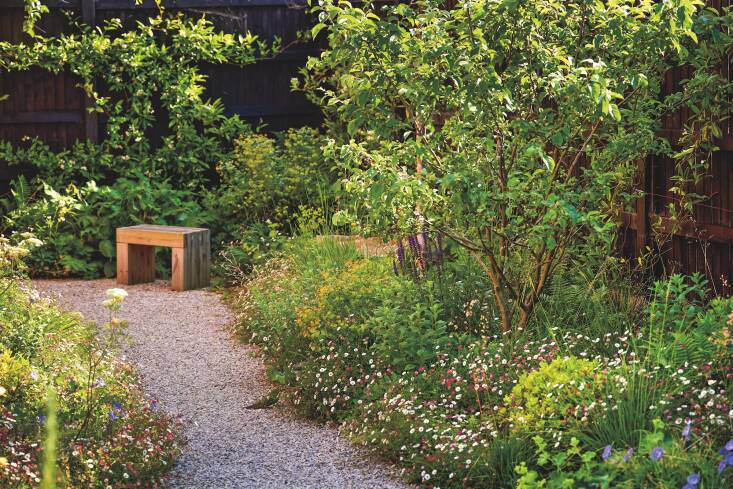
Trees add layers, depth, and structure to a garden; Holding’s attitude is, Why not use an edible one in your design? In the garden above a crab apple holds the border with seasonal interest and edible fruits. Holding suggests you can also use small trees, including crab apple (Malus sylvestris), hazel (Corylus avellana), and quince (Cydonia oblonga), as part of an edible hedge or windbreak.
See also:
- Edimentals Are Trending. Here’s Why You Should Include Them In Your Garden
- 6 Ideas to Steal From ‘The Kitchen Garden’ by Toby Musgrave
- Required Reading: ‘The Food Forward Garden,’ A Manual on How to Have Your Beautiful Yard—And Eat It Too




Have a Question or Comment About This Post?
Join the conversation