

“I heard the news today, oh boy.” Where is John Lennon when we need him? I watched television recently. I don’t own a television. It was a wall-spanning flatscreen mounted in a waiting room, where about a dozen people were held captive near it. The sound was on and ABC7 blasted us. Apart from the noise, which I tried to tune out, I was struck by the haranguing tone of ceaseless urgency. Everything was an emergency, on a loop. And even if we are not exposed to this carefully crafted doomspiel, even if we read about current events in quiet, well-written bites, we are beset by stress. Our phones, our feeds, our families, our finances. While it may sound glib, there is a way to escape, to lower our heart rates and our blood pressure, to activate the release of serotonin, and to press pause on the noise: It’s called gardening. Practitioners may call it horticultural therapy.
Here are 13 practical gardening tasks and experiences that help release stress while you help your garden, whether it is big or small.
1. Touch the soil.
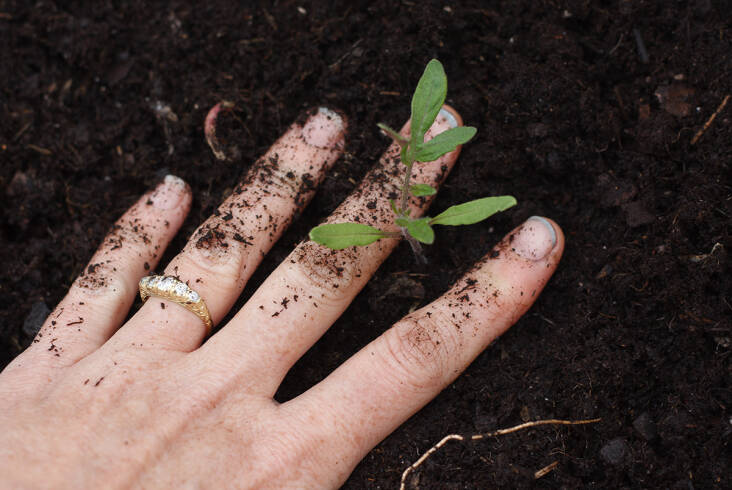
In 2007 Bristol University’s Dr. Chris Lowery published a paper linking a soil-dwelling bacterium, Mycobacterium vaccae, with a boost in serotonin production, and contact with soil with improved mental health. His work followed on the heels of work published by oncologist Dr. Mary O’Brien in 2004 who noted that her patients’ outcomes improved after being treated with the bacterium. M. vaccae is widespread. It is found in herbivore manures, compost, and healthy soil. When you sow seeds or dig a hole for a new plant, your hands are in the soil, connecting you with a teeming, wild, and incredibly diverse microbial life. Boosting our contact with myriad bacteria has been linked to increasing our skin’s and even gut’s flora-diversity. More diversity potentially means a stronger immune system, which means more resilience.
2. Grow a plant from seed.
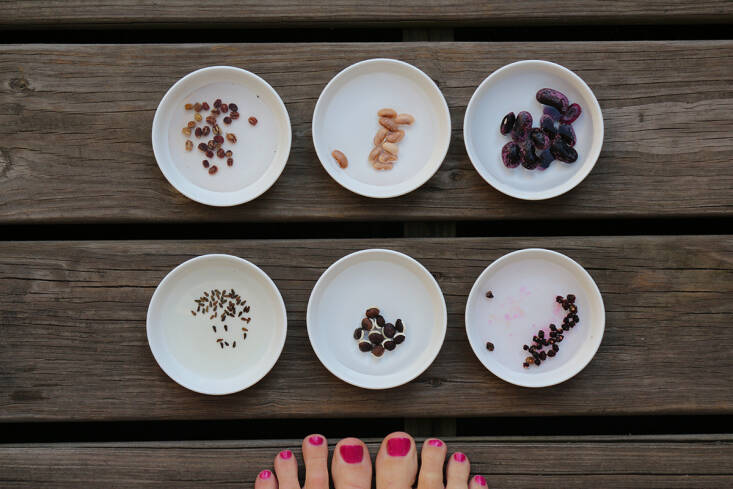
When I sow seeds, like cilantro or beans or malabar spinach, I am reminded of the sense of contentment that comes from watching a plant appear as if by magic from bare soil. Just weeks later it matures into a lacy thing where bees bounce between the flowers, or a twining vine to feed hummingbirds and humans, or broad juicy leaves to turn into edible plates.
3. Cultivate food.
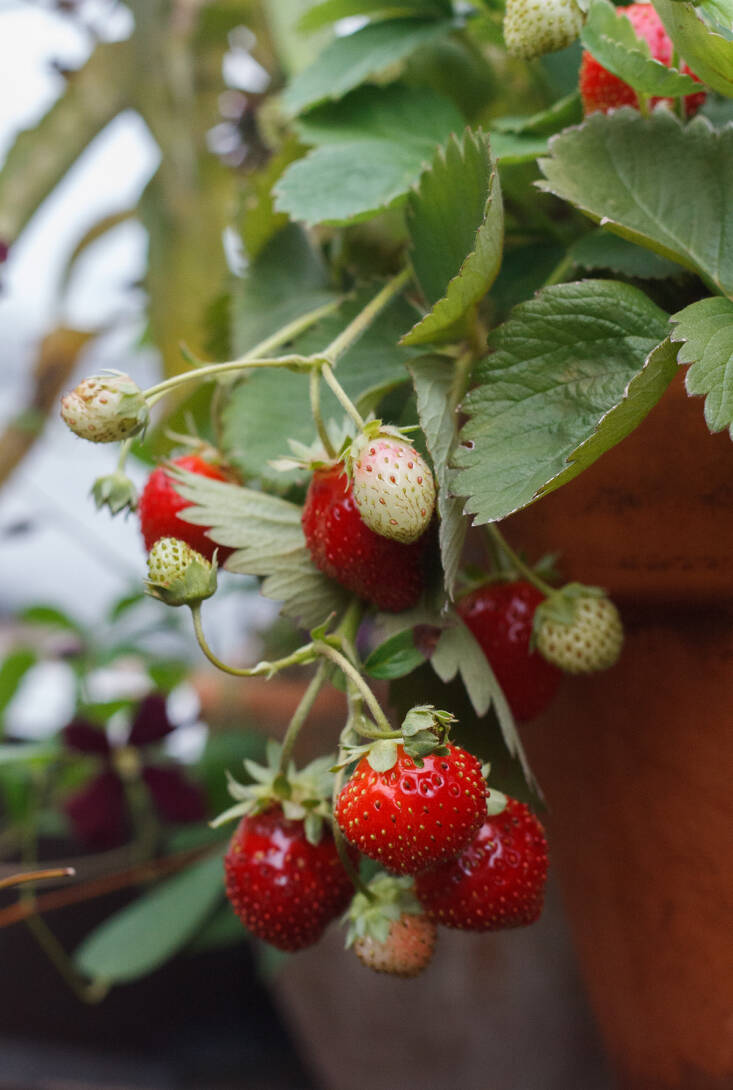
Growing food, even in a single, token container, connects us to the context of our broader food system by reminding us what plants require in order to thrive. Connecting those dots connects us to a much bigger picture.
4. Thin seedlings.
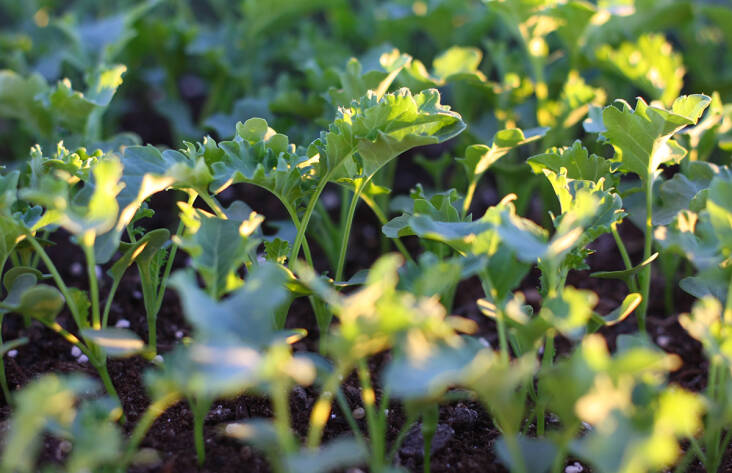
If you have sown your own seeds, you’ve likely been tempted to leave a crowd in place, but the plants will be stronger and more resilient if they have room to grow. Thin them when they are an inch to two inches high. This quiet, contemplative task reduces competition and stress, and allows airflow. (If you feel bad about thinning, you can always wash edible seedlings and toss them across across your next lunch bowl or into your next sandwich.)
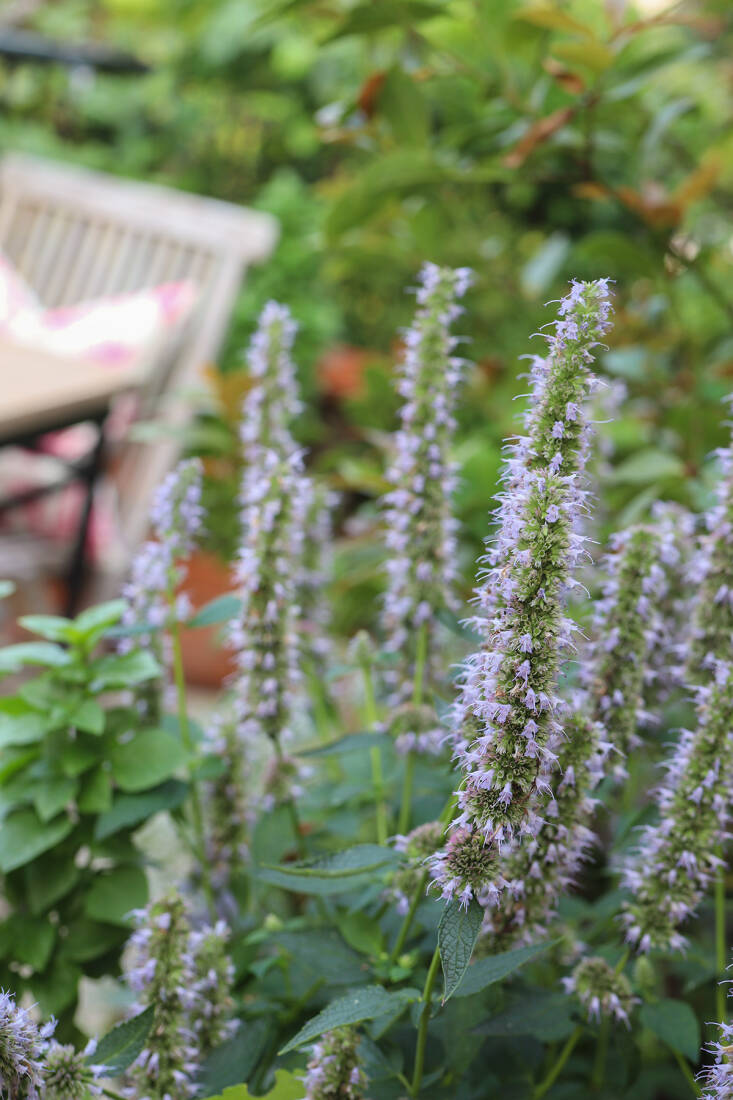
5. Do the “Chelsea chop.”
About four to six weeks before they bloom, you chop off (wack!) one third to half of a flowering perennial’s green growth. This apparently brutal treatment creates stouter stems that are less prone to flopping, and generates additional lateral buds, essentially doubling the number of its future flowers. The technique does delay flowering by a couple of weeks but makes it significantly more impactful when it happens. If you’re doing this in a large mixed border not much finesse is required, because you won’t have time. Chop away. But if your garden is smaller you can aim carefully and cut the stems just above a leaf set, where new buds will form.
Perennials that respond well to the Chelsea chop are those that can repeat bloom or that have a long flowering season. Think Achillea (yarrow), Agastache, asters, Calamintha, Coreopsis, Eupatorium, Echinacea, Heliopsis, Helenium, Monarda, Monthawk daisies (Nipponanthemum nipponicum), Nepeta, Penstemon, Phlox, Rudbeckia, Shasta daisies (Leucanthemum × superbum), Sedum (the tall ones), and Veronicastrum.
6. Pinch away.
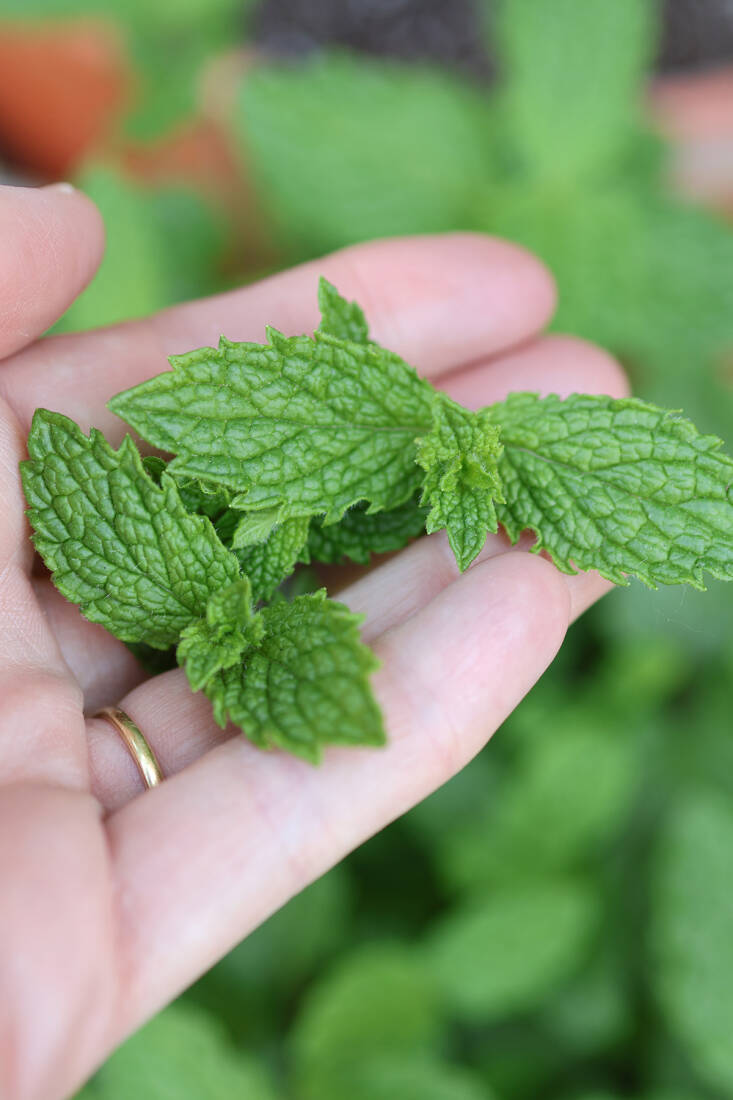
Pinching out the newest and most tender growth at the tip of a flowering stem is like a calmer, less angry, more introspective version of the Chelsea chop. It’s more fine-tuned and it takes longer. Pinching every single growing tip is a quiet, calm task. And if you are removing the new growth of herbs like mint or basil or bee balm to create fatter, fuller plants, you have the pleasure of their released scent and their edible leaves for your lunch/drink/dinner.
7. Hand water.
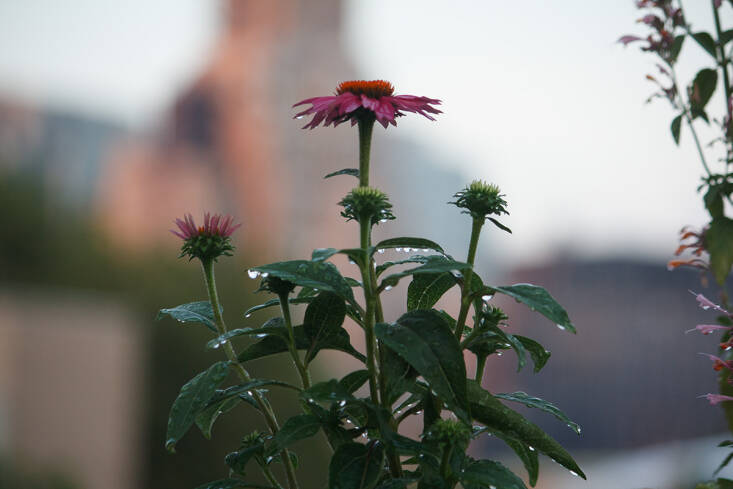
I love watering. It is a contemplative act of care for a living thing that generates a feeling of accomplishment and meaning (we all need to be needed). You can almost hear your plants drinking. Watering places us beside out plant and allows us to observe it carefully while we are standing there, focused on nothing else. Paying attention is half of successful gardening (the other half is acting on what we have noticed).
8. Sweep paths.
This spring I watched an elder whose knees would not let him bend, sweeping a herringbone brick path for an hour in the Jefferson Market Garden. Another volunteer collected his sweepings. I was moved by his expression of contemplative satisfaction as he worked. The rambunctious beds around him were made more striking by his impeccably groomed walkway. Whether you have a gravel garden, stone or brick paths, a deck, or an urban terrace with an impermeable floor, keeping the surface clear helps to declutter the garden’s surface and to focus and calm the mind.
9. Deadhead.
Snipping off spent annual flowers as well as repeat-blooming perennials encourages more flowers. Late in the season do bear in mind that some seed heads are very decorative or a potential food source for seed eating-birds, so stop deadheading when autumn approaches and allow the last flush of flowers to age naturally.
10. Clean (or create) a birdbath.
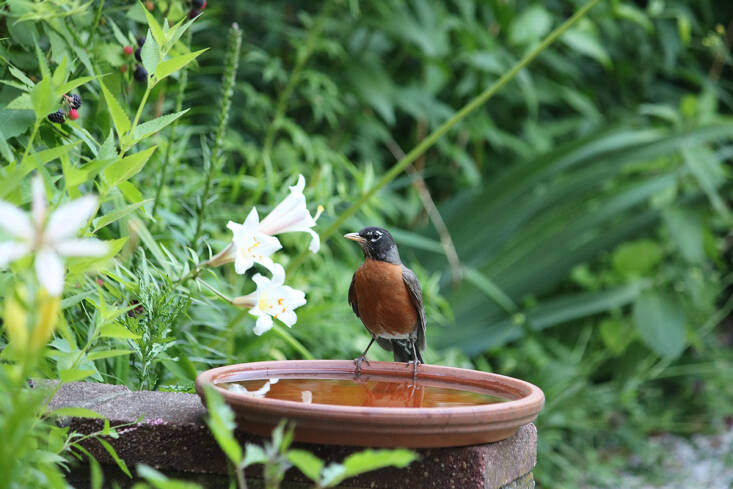
If you have a birdbath—elaborate or very simple—it needs to be cleaned regularly to keep the water fresh. Rinsing it out every day and washing it weekly will keep birds happy and healthy and keep them visiting the sanctuary you have created. Caring for your slice of the environment gives you a sense of contribution and control in a mad world. Learning to identify your local birds and listening to their songs (try the Merlin app) has been shown to boost your neuroplasticity and may delay cognitive decline.
11. Smell the flowers and herbs.
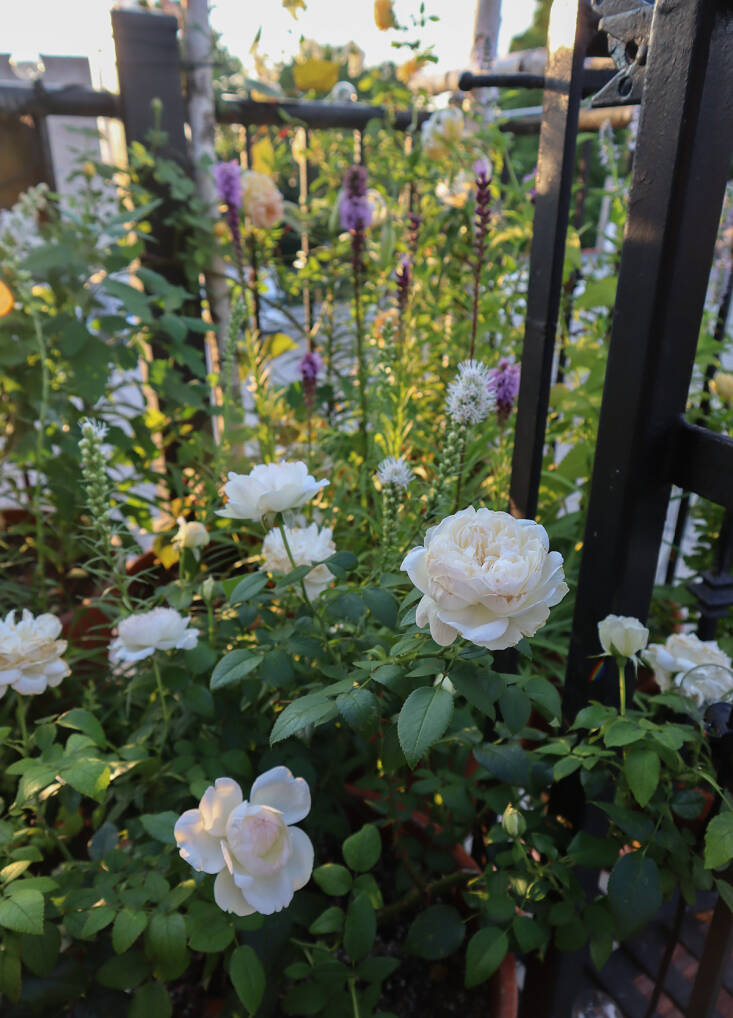
Not a task but pure reward. Growing scented flowers and herbs opens up the wide, powerful world of olfactory immersion. I grow a ‘Bolero’ rose because I have never smelled a rose as evocatively strong (the petals also makes excellent gulkand or rose jam, which preserves their perfume). Crush mint leaves, bruise your basil. Brush against the bee balm. These evocative and piercing scents are instantly mind-clearing and uplifting.
12. Bring flowers and foliage indoors.
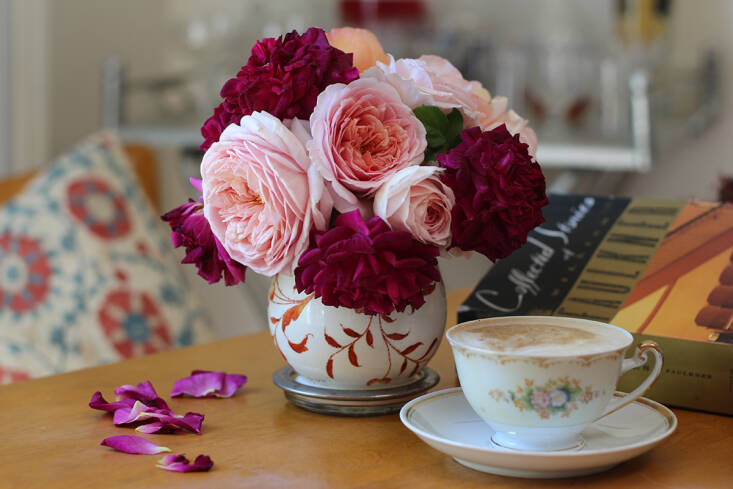
Whether it’s a tiny posy or a sumptuous bowl of roses, bring them indoors. Or keep a jug of fresh foliage where you can see it. Resting your eye on fresh plants calms and centers you and makes your home feel welcoming to you and to others.
13. Harvest your crop.
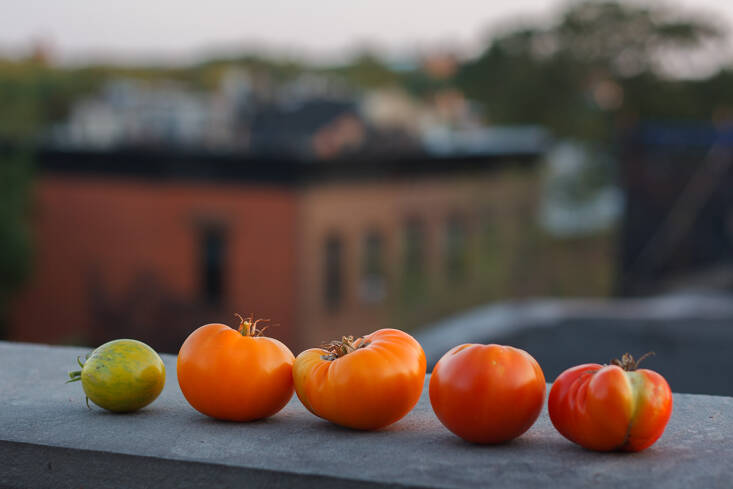
This is the reward, after planting and watering and waiting. Include your herbs in a meal. Make a salad with your windowbox greens. Sink your teeth into a whole tomato. You grew these plants and took care of them, and the satisfaction of their harvest, large or small, is unquantifiable.
Gardening will not change the nature of the news, of what is happening, or of what is to come. But it can help alter how we cope with the present and how we perceive the future. Our engagement, through gardening, with the growing world can also shape our immediate environment, and create a better one for the humans and the creatures who share with us the place where we live.
See also:
- Green Therapy: What Is It and Why You Need It for Your Health
- Ask the Expert: How to Invite More Good Bacteria Into Your Garden (And Your Gut)
- Weleda Farm Visit: What Does Soil Have in Common With Your Skin? More Than You Know


Have a Question or Comment About This Post?
Join the conversation