

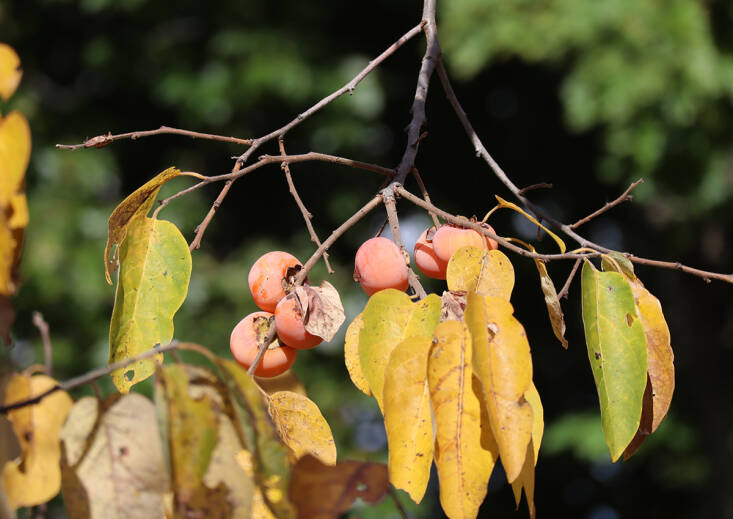
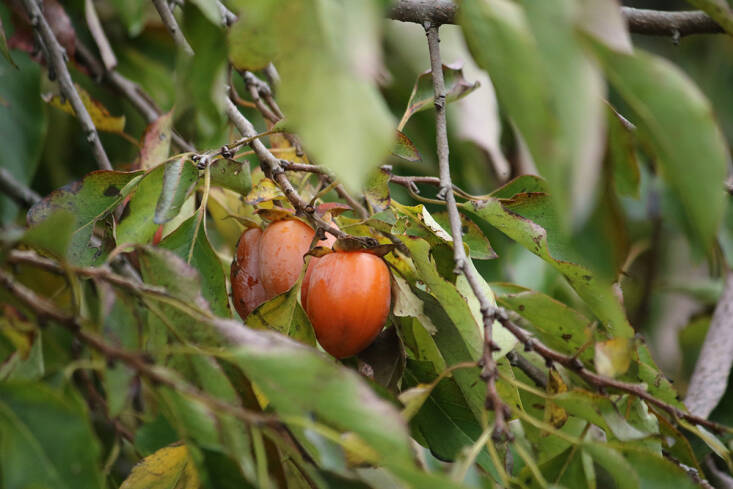
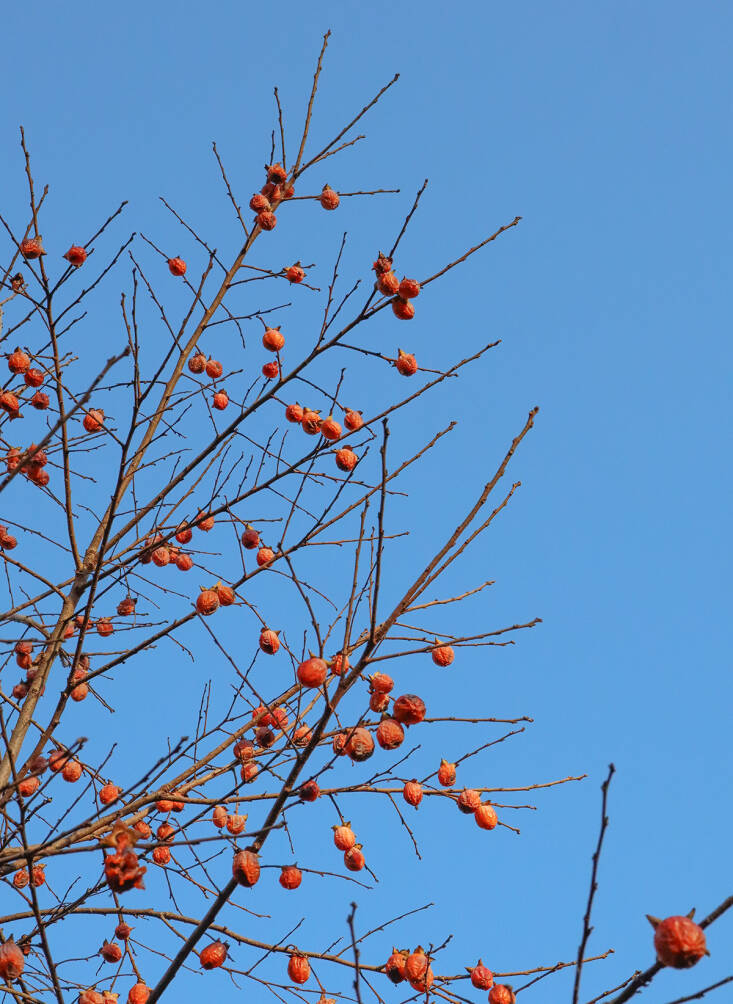
Growing American persimmon trees checks several horticultural and culinary boxes. American persimmon—Diospsyros virginiana and hybrids of this species—are very cold hardy fruit trees, with deliciously sweet fruit, and they can be grown in regions where larger fruited Asian persimmons will succumb to intensely cold winters. The native fruit differs from the East Asian D. kaki in that it is small—around ping-pong ball-sized. The deep orange little persimmons remain on the tree like glowing ornaments well into cold weather, dropping when very ripe or shaken loose by wind.
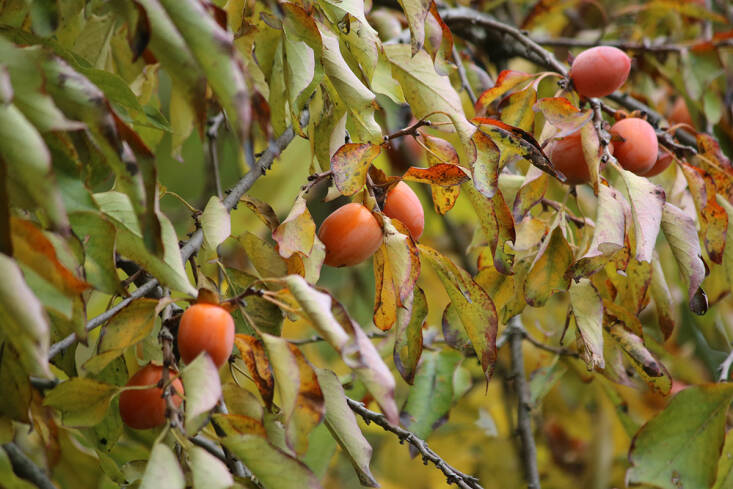
Stately American persimmon trees belong to the ebony family (Ebenaceae) and are native to the central and eastern United States. The blocky bark of mature trees distinguishes them quickly from others in the woodland, and in late fall their vivid fruit on bare branches makes them easy to spot.
The word persimmon is derived from putchamin, an Algonquin name for the native fruit.
Cheat Sheet
- American persimmons are very cold hardy, down to -25°F.
- The fruit is sweetly and fragrantly ripe when very soft.
- Generally, wild persimmons taste better after a frost; but breeders have developed cultivars that ripen before frost.
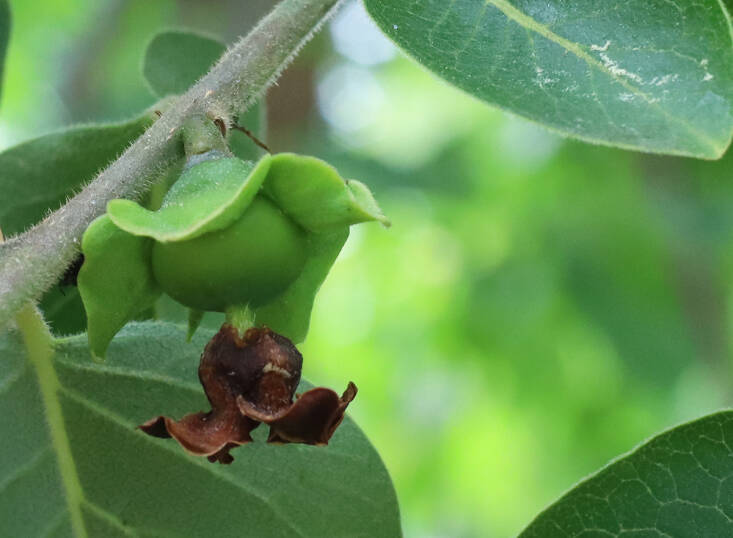
- Wild persimmons contain a few flattened seeds, as do some cultivars.
- For a seedless American persimmon, try the ‘Ennis’ cultivar.
- Persimmons can be grown from seed but it may take up to nine years for them to fruit.
- Planting saplings gives you a head start on fruit production.
Fascinating Fact and Caution
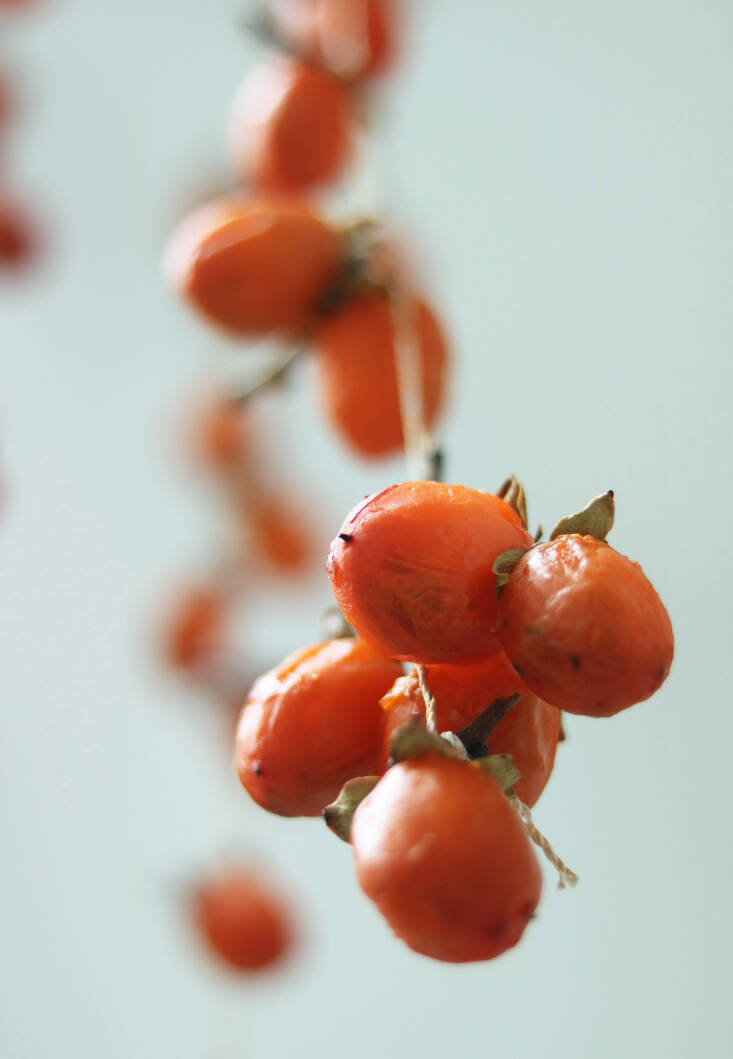
- Diospyrobezoar is a rare but serious gastric malady caused by the over-ingestion of the specific tannins in persimmon skin and in all unripe persimmons; it is a mass that can require surgery to remove. It’s all about dose: Eat only ripe persimmons, and in moderation.
(Some) Cultivars of American Persimmon
‘Prok’ is a seedless persimmon and has larger fruit.
‘C-100’ is known for having attractive red fall foliage.
‘Killen’ bears medium-sized fruit that ripens earlier.
‘Meader’ is a self-fruitful persimmon with apricot-sized fruit and leaves that turn a deep orange (versus yellow) in fall.
‘Morris Burton’ ripens early.
Keep It Alive
- Cold-hardy species American persimmons can be grown from USDA growing zones 4 to 9 (plant Asian cultivars if you live in a higher zone).
- Some cultivars and grafted hybrids will be less cold tolerant, usually to zone 5 or 5b.
- Some cultivars are self-pollinating, others require a male tree nearby.
- Diospyros virginiana is a very tall tree (think 80 feet); but several varieties are bred to be smaller.
- American persimmon will grow in semi shade but produces more fruit in full sun.
See also:
- Hoshigaki: A Persimmon Delicacy
- Sweet Season: Persimmons, from Fall through Frost
- Persimmons: A Seasonal Spice Bread Recipe to Celebrate




Have a Question or Comment About This Post?
Join the conversation