


Wisteria tumbling from trees and walls and arbors is a deliciously scented confirmation that spring is here to stay. On the Palisades Parkway, the sumptuously green interstate connecting New Jersey and New York high above west shore of the Hudson River, I see its amethyst panicles festooning tall trees. The impressive length of those flower clusters identifies them as Wisteria sinensis, the garden ornamental that has now become an ecological headache in the Northeast. Along with W. floribunda, these arrestingly beautiful introduced vines can topple trees and create tangles whose complex knock-on effects alter local ecologies. In gardens, regular pruning and disciplined care can contain wisteria. But long term, the better choice is to grow a native wisteria like Wisteria frutescens. The compact clusters of Wisteria frutescens are distinctive, appearing after the vines have leafed out, and a little later than the Asian species, which bloom on bare wood.
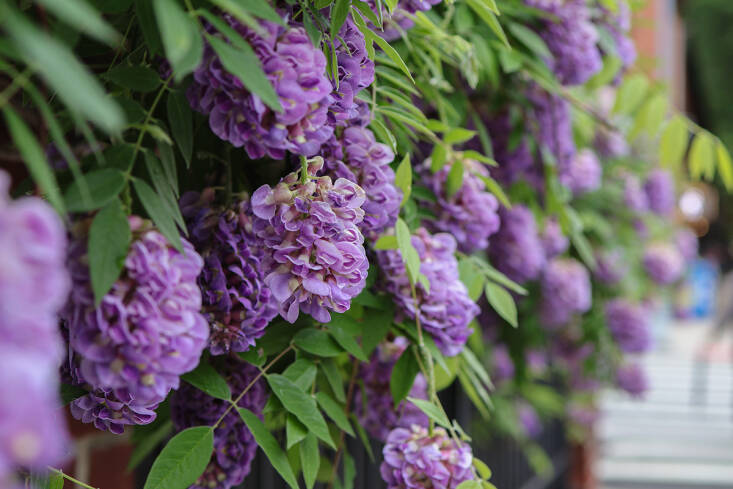
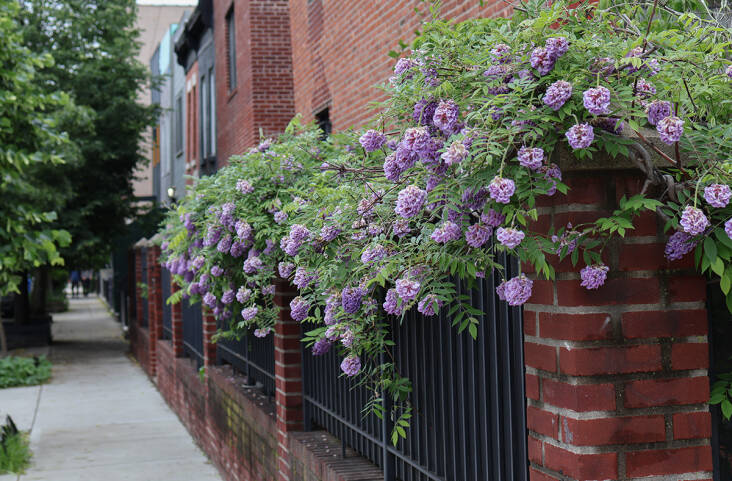
While by no means a shy climber, native wisteria—often called American wisteria—is less vigorous than the introduced species, and is easier to contain by pruning. While all wisteria vines spread by seeds and by stolons (which can run many feet beneath the soil giving rise to new, clonal plants), American wisteria grows more sedately than the exotic species.
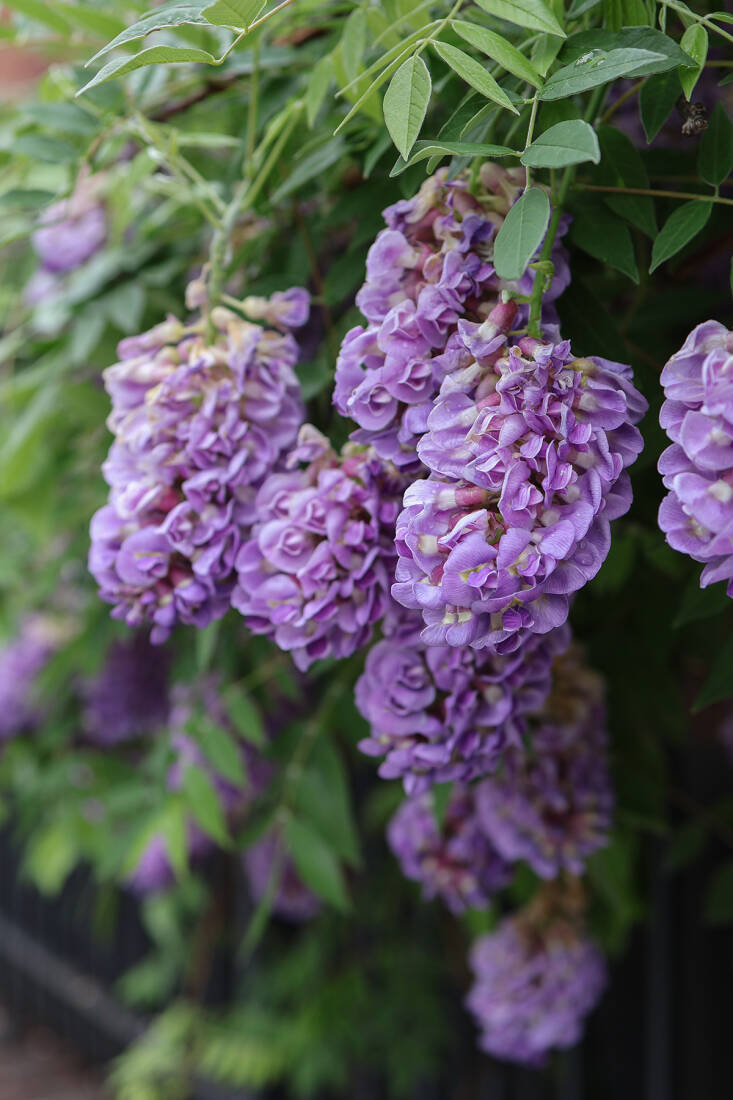
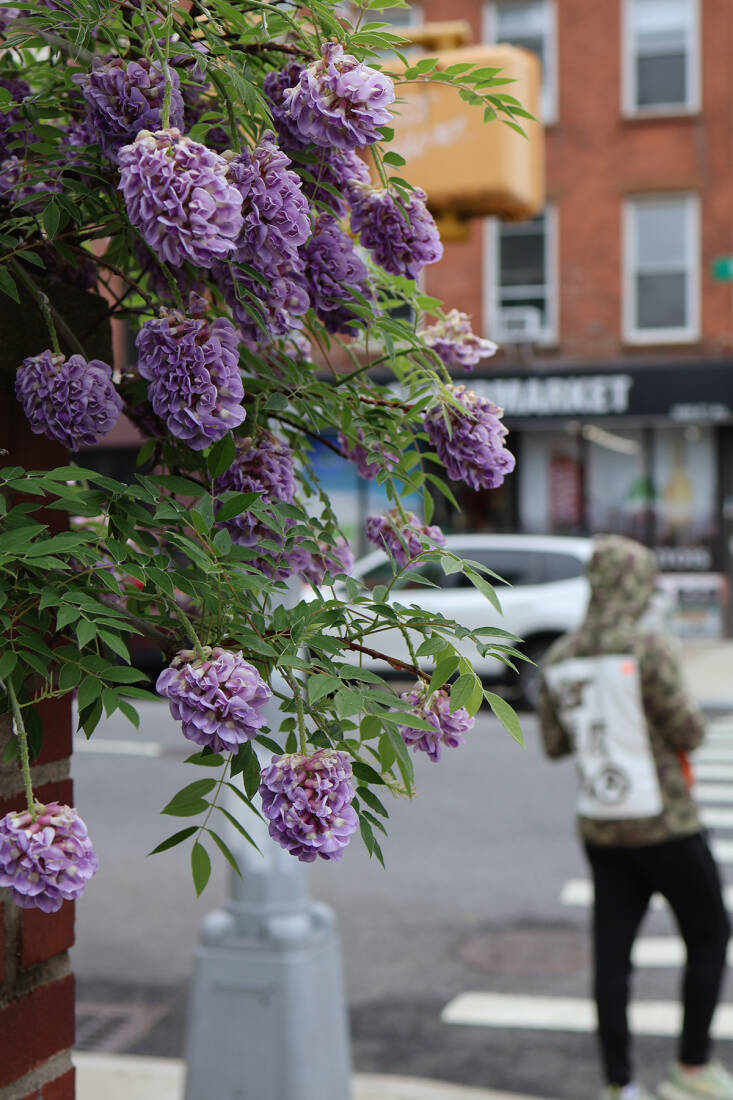
Native wisteria blooms a few weeks after the Asian species. Its flower clusters are distinctively blocky, offset vividly against new foliage.

Cheat Sheet
- American wisteria is the common name of Wisteria frutescens.
- Wisteria frutescens and W. sinensis (Chinese wisteria) twine in a counterclockwise direction, but W. floribunda (Japanese wisteria) twines clockwise.
- Native wisteria blooms at about two years’ maturity, whereas Asian species may take more than five to flower.
- Unlike Asian species, native wisteria blooms on new wood, in mid spring, after its foliage emerges.
- It can bloom again in summer, especially if pruned soon after spring flowering.
- Wisteria blossoms are edible (green parts and seeds are toxic).
Wisteria syrup can be made from the flowers of native or invasive species of wisteria.
Keep It Alive
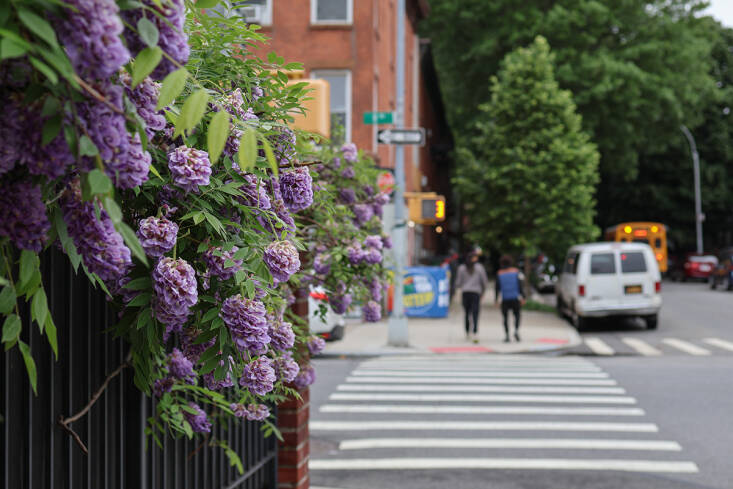
- Native wisteria is hardy from USDA growing zones 5 to 9.
- It will bloom best in full sun.
- Slightly acidic soil is best.
- Regular pruning encourages more flowers.
- Prune in late winter and again in early summer.
- It is best planted in-ground since it outgrows pots quickly.
See also:
- Wisteria: How to Make It Flower
- 13 Pretty Plants You May Not Know Are Invasive
- The Dirty Dozen: 12 Invasive Plants to Avoid (and What to Grow Instead)



Have a Question or Comment About This Post?
Join the conversation