


At the Chelsea Flower Show a few years ago, the top prize went to an installation called “A Rewilding Britain Landscape.” The word “landscape” was telling: judges were impressed with the meticulous planting but it left visitors wondering where the garden was. A rustic nature blind at one end was a concession to people: hidden there, they could observe nature without getting in the way. Other than that, there was no human element except for a plank bridge over a dammed stream—and a soundscape of beavers munching. It became known as “the beaver garden.”
This year, a similarly nature-first garden designed by Melanie Hick for the Bat Conservation Trust has a large sculpture to signify a bat but it is also people-focused. Show gardens have the potential to explain one idea very clearly and this one indicates that our needs, and those of a bat, are not that different when it comes to outdoor space. Soft lighting? Yes, please. Aromatic plants and a burbling fountain? Of course! In other words, there is a recognizable design element at play in the bat garden. Coexistence is the aim.
Here are five pointers for enjoying the outdoors with your favorite flying mammals.
Photography by Jim Powell for Gardenista.
1. Mix up flower shapes.
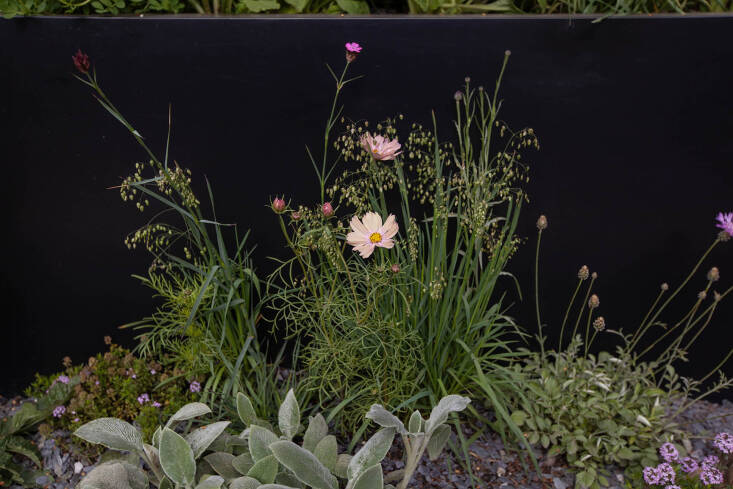
Bats can eat thousands of mosquitoes or midges in a night, which make up just part of their diet. Mosquito reduction is reason alone to attract bats, not just to swoop over your garden but to live there. Grow plants that attract a bat’s prey: flat and open daisy-shaped flowers are easy to land on for pollinators; umbellifers such as valerian and Bishop’s flower (yes, you can leave some in as ground cover) are suited to a variety of flies and other short short-tongued insects. Tubular flowers are designed for long-tongued bees by day and moths by night. Diversity in plants attracts a greater mix of moths, beetles, and night flies and therefore more diversity in bat species. Bats are generalist insectivores.
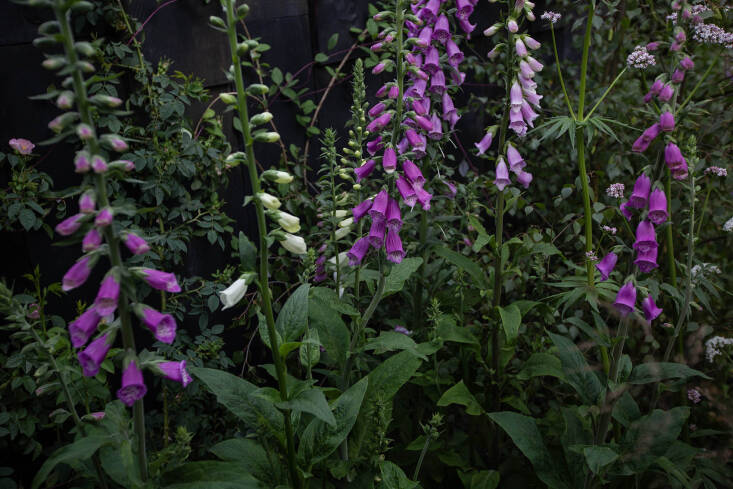
2. Make it expressive.
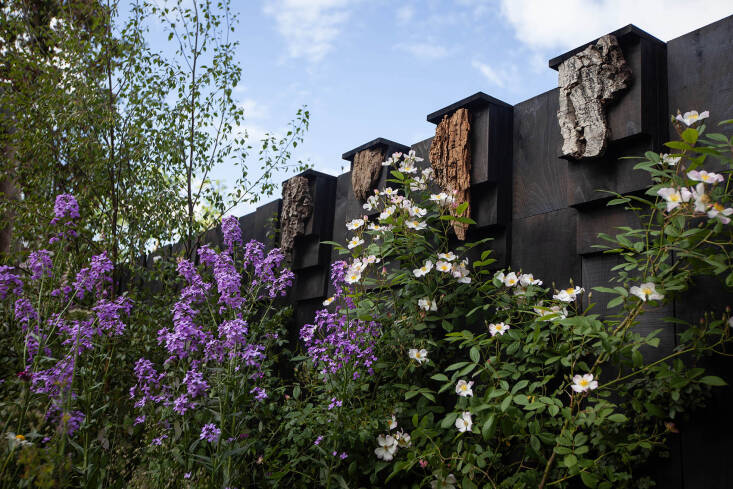
Melanie has spent much time poring over decaying wood, the equivalent of skip diving “but in woodlands.” Attaching the most interesting, salvaged pieces to bespoke bat boxes and underplanting them with tall or climbing flowering plants means that bats have a food source next to where they sleep. The pieces of dead wood are a reminder that “there’s more life in a dead tree than a living one,” and while you might not be ready for a dead standing tree in the garden, a fallen, rotting log provides wonderful habitat. Leaf litter left under the shadiest canopies adds to the mix; a patch of long grass left standing all year allows a moth to complete its lifecycle.
3. Keep it bumpy.
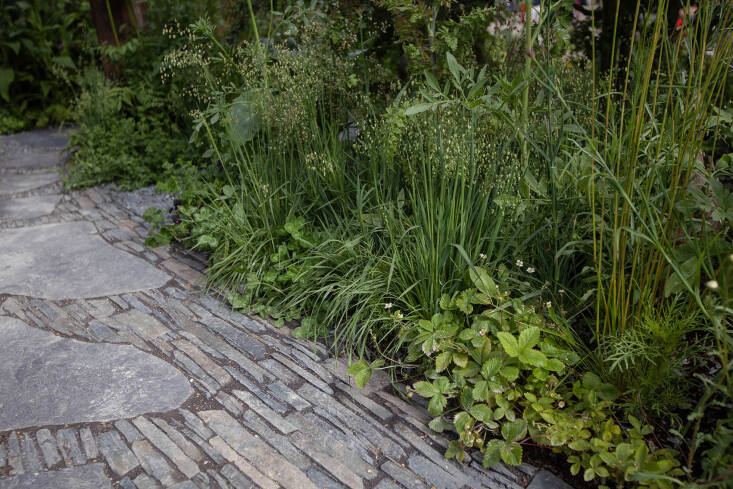
Undulating topography gives movement to a garden and holds more life than a static and flat space. Changes in level create an opportunity for nooks and crannies in the steps and pathways of Welsh slate, while trees and shrubs bring a variety of shapes and volume (as well as blossom, berries, and more habitat). Cecilia Sandrini of Plant Based Gardens is the planting consultant on the Bat Conservation Trust garden: “There’s movement throughout and there’s always something going on,” she says. “We have places to crawl into, like holes in the slate. We have areas that are just mounds of leaf litter. Some places are bare, others are very highly density.” About two thirds of the plants here are native.
4. Trap scent.
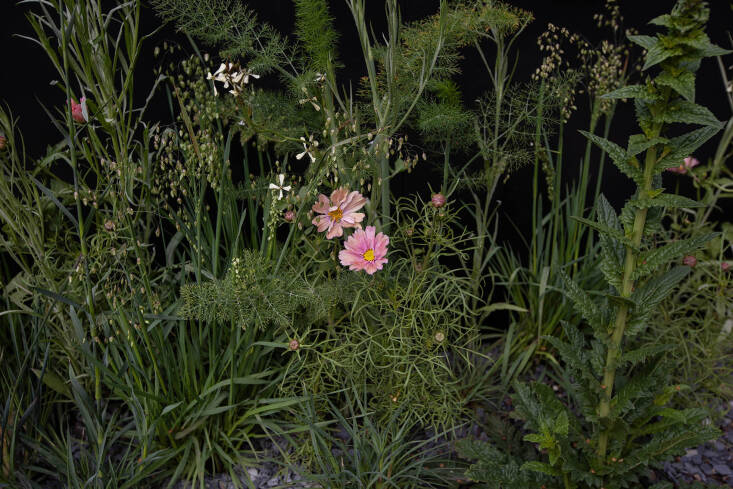
Enclosed areas, protected from wind, will keep scent nearby. Night-scented stock (the wan cruciform flower shown here) is stronger than it looks; other aromas include evening primrose, honeysuckle, ornamental tobacco, and roses that do not have double blooms (which are more difficult for insects to access). Native species roses are generally single. And don’t forget: early flowers provide food for early insects, and scrappy climbers do provide shelter over winter.
5. Give it definition (for people).
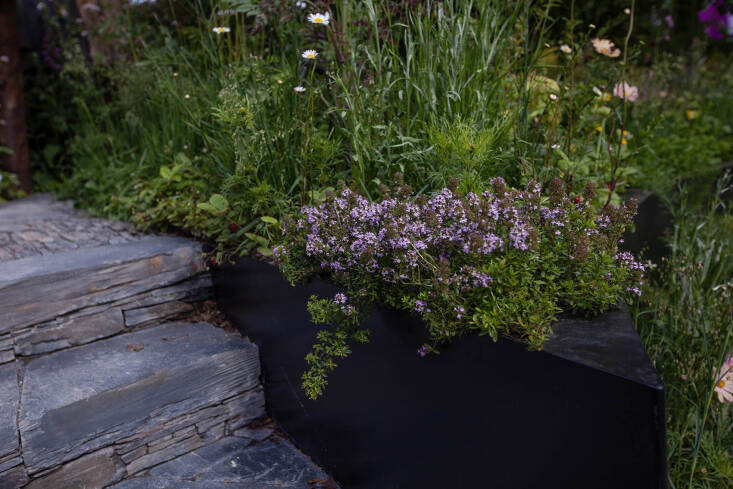
Herbs such as thyme (shown here), oregano, and fennel all feature in the Bat Conservation Trust garden, and they are all highly aromatic. “It’s a garden,” Cecilia reminds us. “You can have a garden for nature that is still very much a garden. It can be beautiful, it doesn’t have to be messy.”
See also:
- Garden Pros Love a Black House. Here’s Why
- The Beauty of Imperfection: A Favorite Garden at the 2026 Chelsea Flower Show
- What’s Trending at the 2025 Chelsea Flower Show?



Have a Question or Comment About This Post?
Join the conversation