

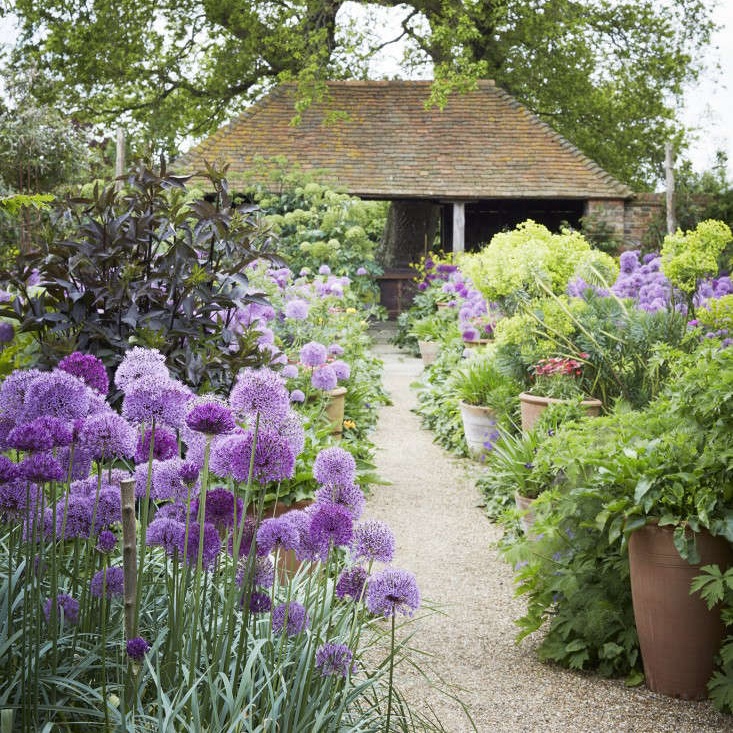
Though tulips are highly prized for a spring bloom, they do have their drawbacks, among them the need for a team of gardeners planting thousands every autumn to achieve the ideal look. Also, they die disgracefully. Alliums, on the other hand, are the most versatile of bulbs, taking on multiple personalities, channeling elegance with the best of them. They last forever, multiplying among themselves, and are a fraction of the price of the needy tulip.
Photography by Kendra Wilson, unless otherwise noted.

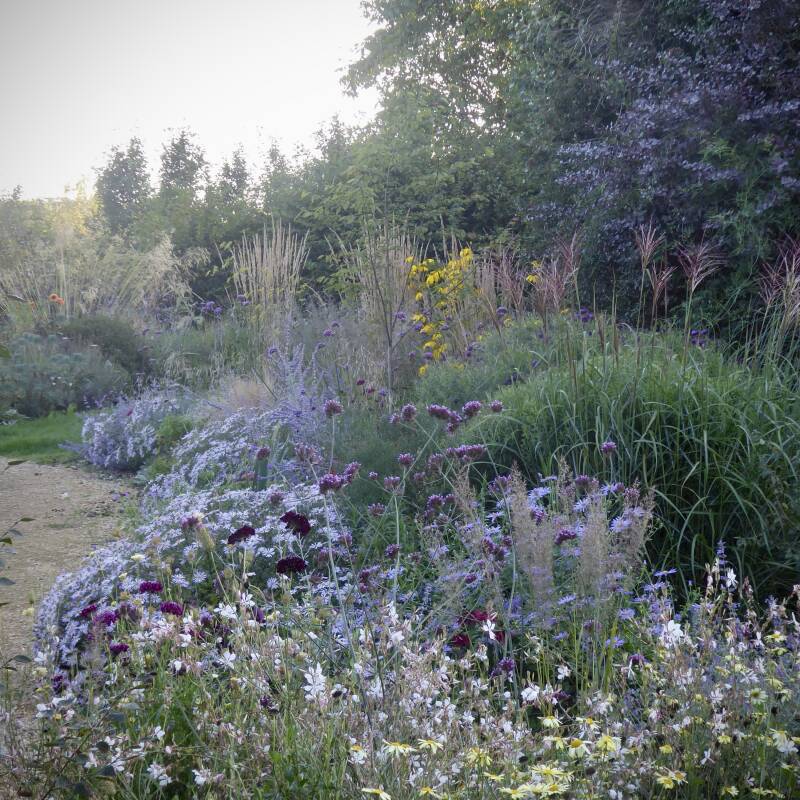
Allium is a sociable bulb, making friends wherever it goes. It thrives in the company of silver or gold, feathery or spiky, in a gravel garden or formal border. The bulbs are not fussy and the seed heads are so attractive that they stay in place, multiplying the population at the same time. Tulips? What are they?

Allium christophii is the horticulturalist’s favorite, its starry, metallic flowers complementing all of its neighbors. A pack of 15 Allium christophii bulbs is €8.85 at J.Parker’s. In the US, they are $19 for 12 at White Flower Farm.

There is one caveat which needs to be dealt with sooner than later. The leaves look lovely in the bare earth of early spring but they shrivel later—allium needs to be have an understory.

For a crowd of alliums, ‘Purple Sensation’ is the one, flowering over a long period from May. ‘Purple Sensation’ bulbs are widely available. In the UK, Crocus has them starting from £6.79 for 10 bulbs (£9.99 for 5 organic bulbs). In the US, the bulbs are $20 for 12 at White Flower Farm.

Tulips are the glamor flower of late spring. Well, Allium siculum–also known as Allium bulgaricum–has wonderfully wafting green/cream/plum blooms that rival the elegance of tulips. Overlapping with tulips in May, the pendulous flowers are doing interesting things in July, like reaching straight upwards, as they turn into seed heads.


Different heights and colors of allium mix well together. Allium varieties planted in this English seaside garden in Kent include A. nigrum, ‘Mount Everest’, and A. atropurpureum.

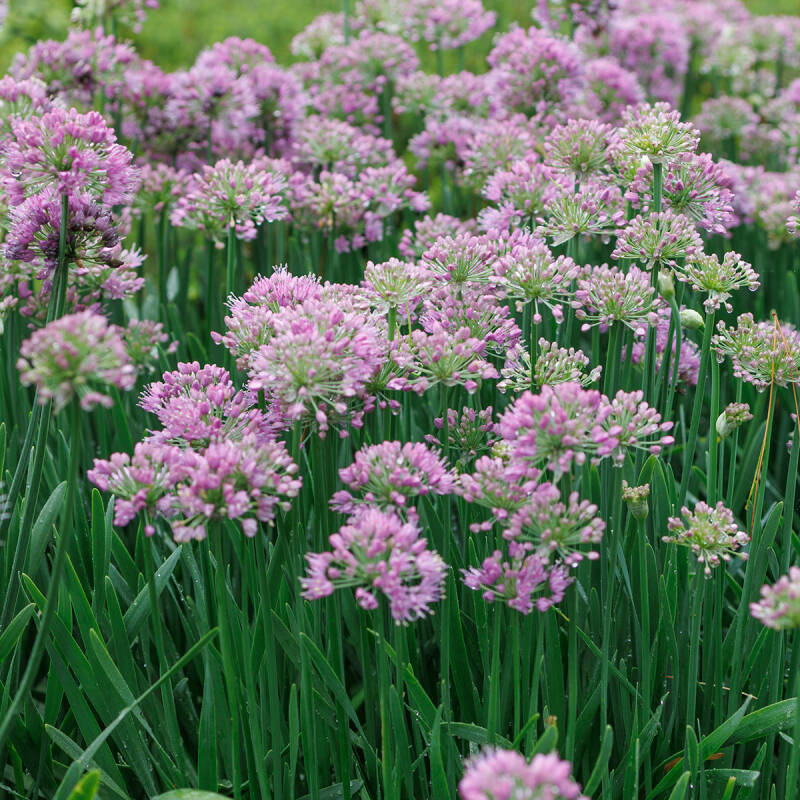
Allium has an uncanny way of adjusting color as the season progresses. The shorter, later-blooming Allium sphaerocepholon (above), reaching about two feet, begins its bud life as a green drumstick before slowly turning claret red.

Months after tulips have acted out their protracted slide into dormancy–or death–the allium is entering its next phase.

See also:
- Allium ‘Millenium’; 101: An Effortless Ornamental Onion
- Bulb Season: 14 Reasons to Plant Alliums Now
- Ask the Experts: The Best Bulbs to Naturalize in Spring
N.B.: This post was first published October 2013; it has been updated with new images, links, and prices.




Have a Question or Comment About This Post?
Join the conversation