

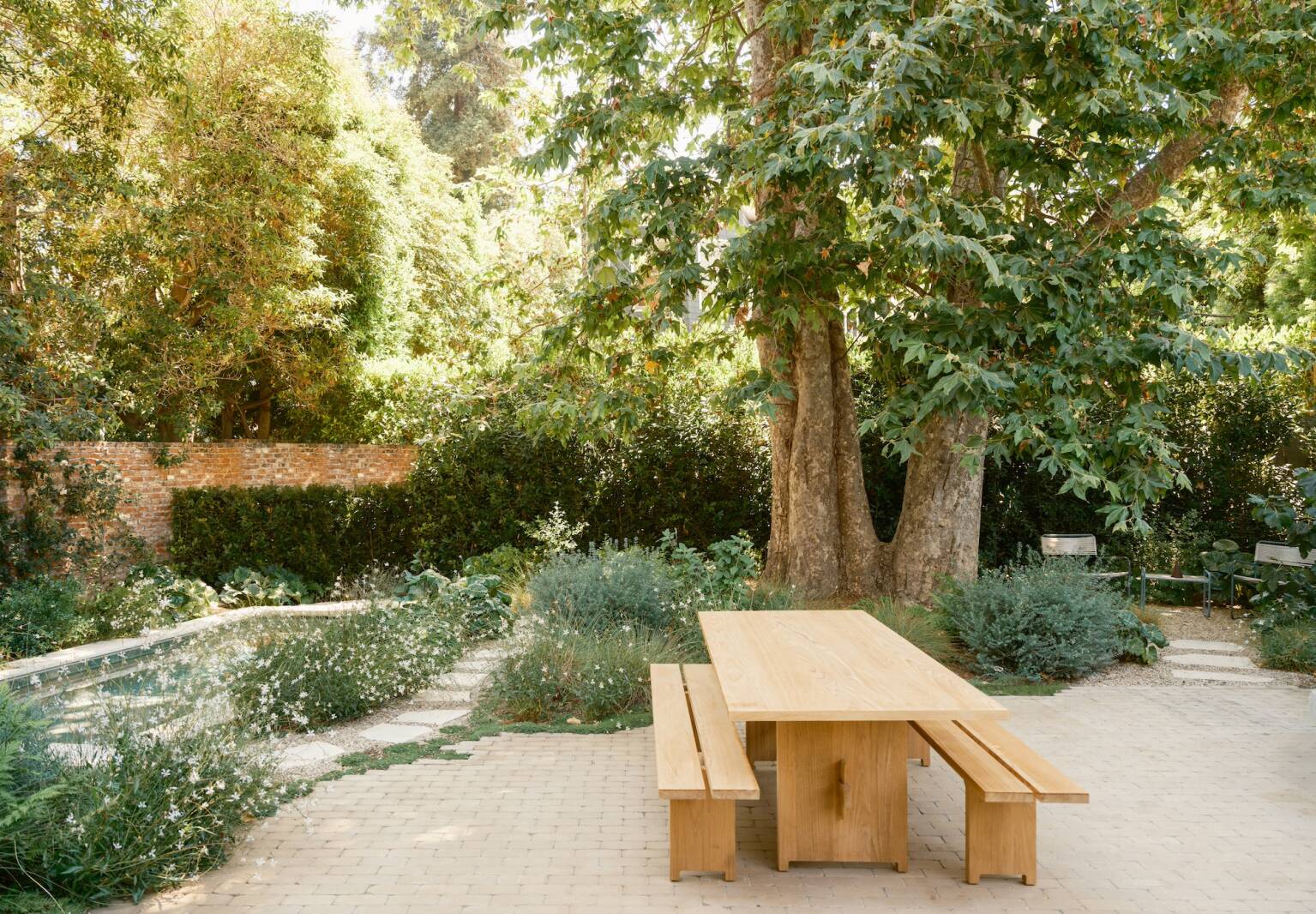
For those familiar with Los Angeles, the words “Santa Monica” will likely conjure up a very Californian version of the all-American idyll: an iconic pier and long stretches of boutiques surrounded by tree-lined streets and quaint homes with tidy lawns and the occasional shrub or agave. The scene is so picturesque that you can’t blame most homeowners for choosing to simply cut and paste these same elements onto their own landscapes.
So when Molly Sedlacek, the founder of ORCA, was contacted by two prospective clients seeking a Mediterranean-inspired garden for their Santa Monica property, she was intrigued. And when they mentioned the idea of ripping up the existing driveway and replacing it with more garden, she knew immediately she would accept the job. In the world of landscape design, it’s typically the designer finding, and sometimes fighting for, more green space—not the other way around.
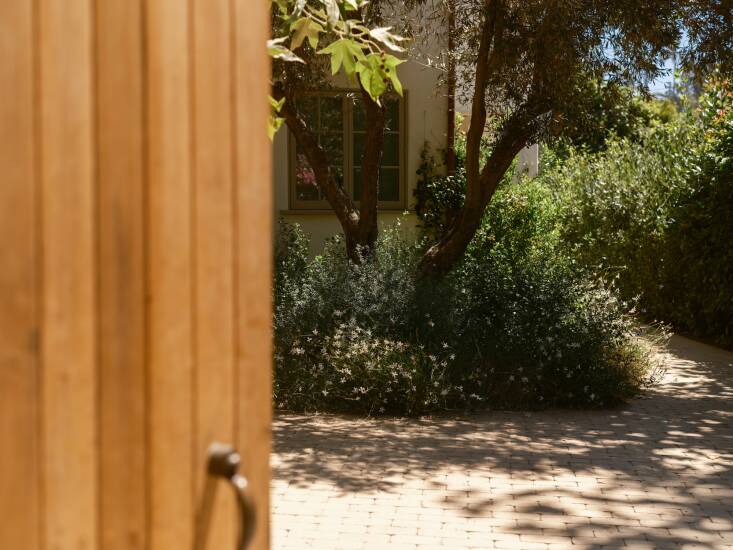
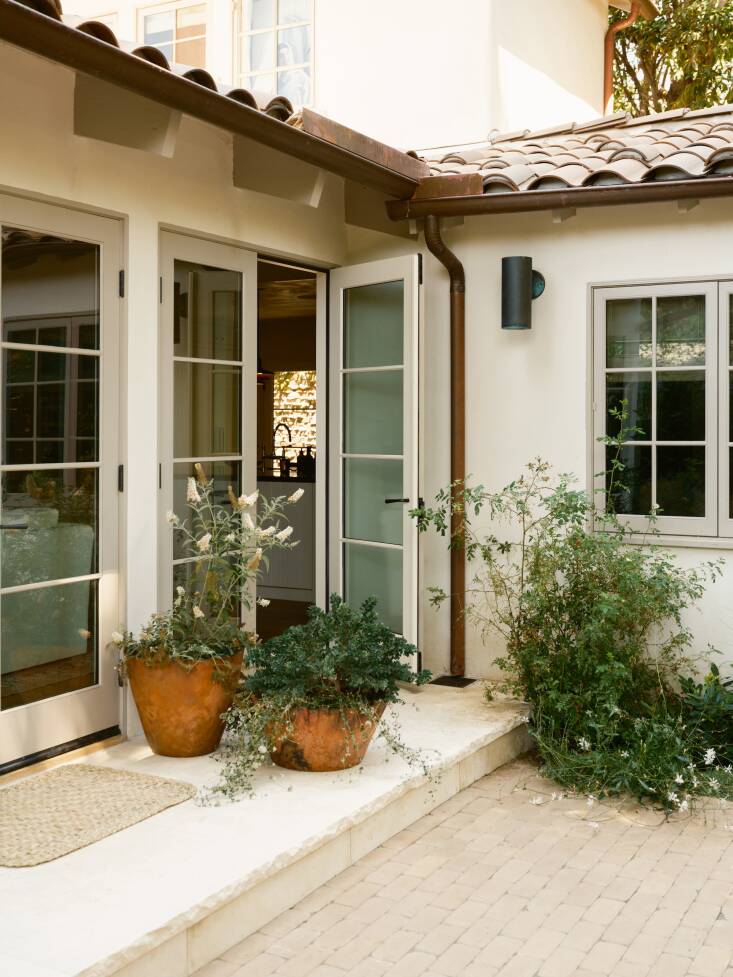
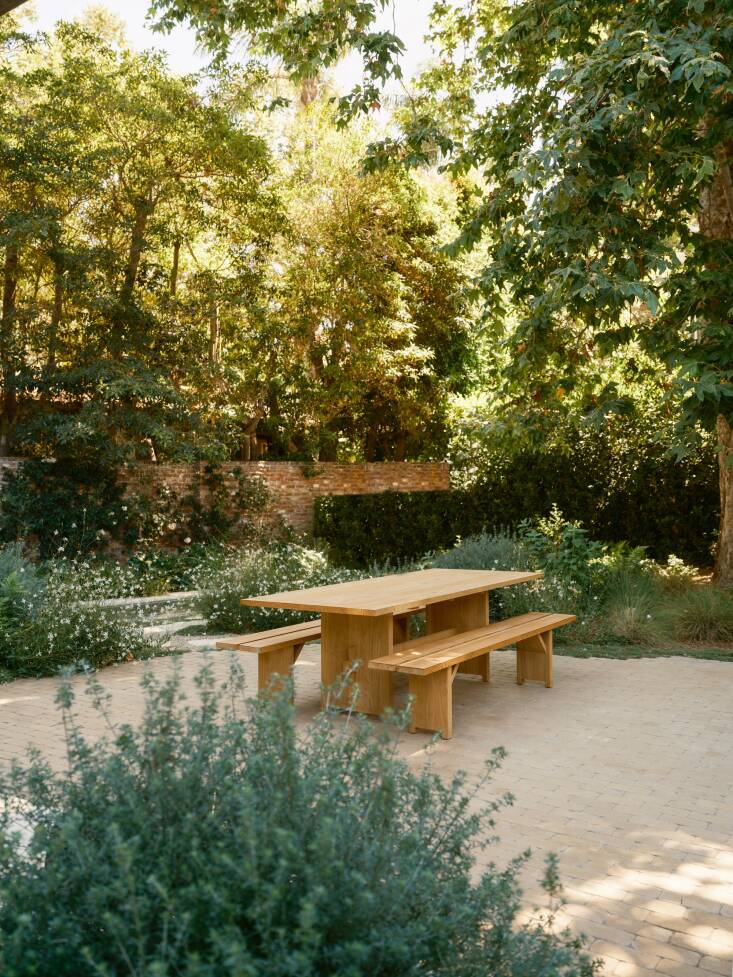
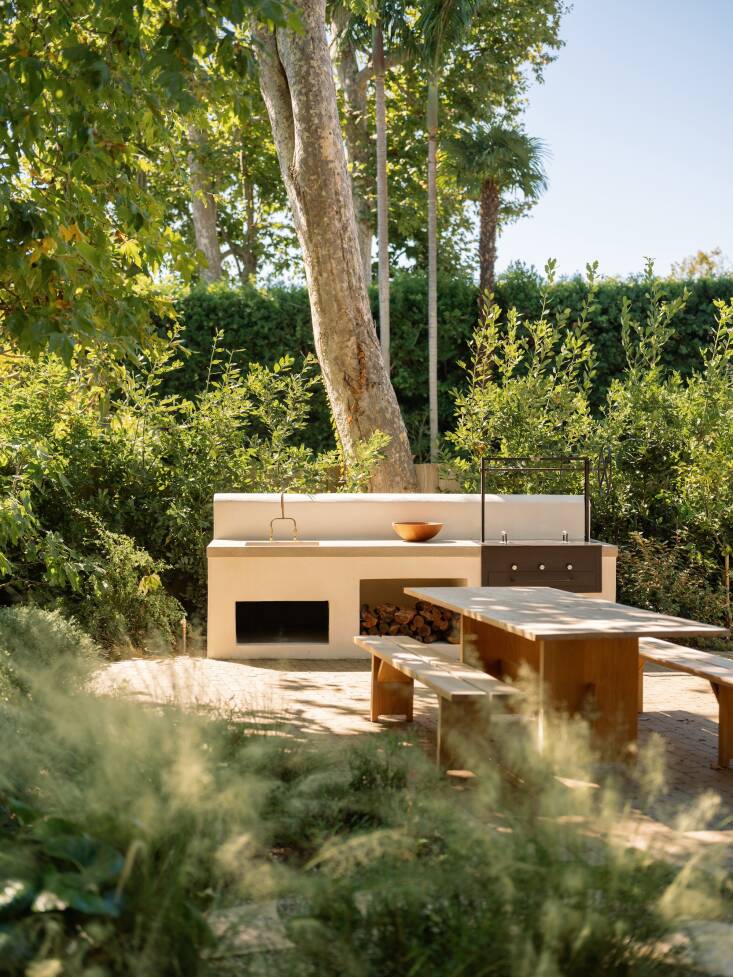
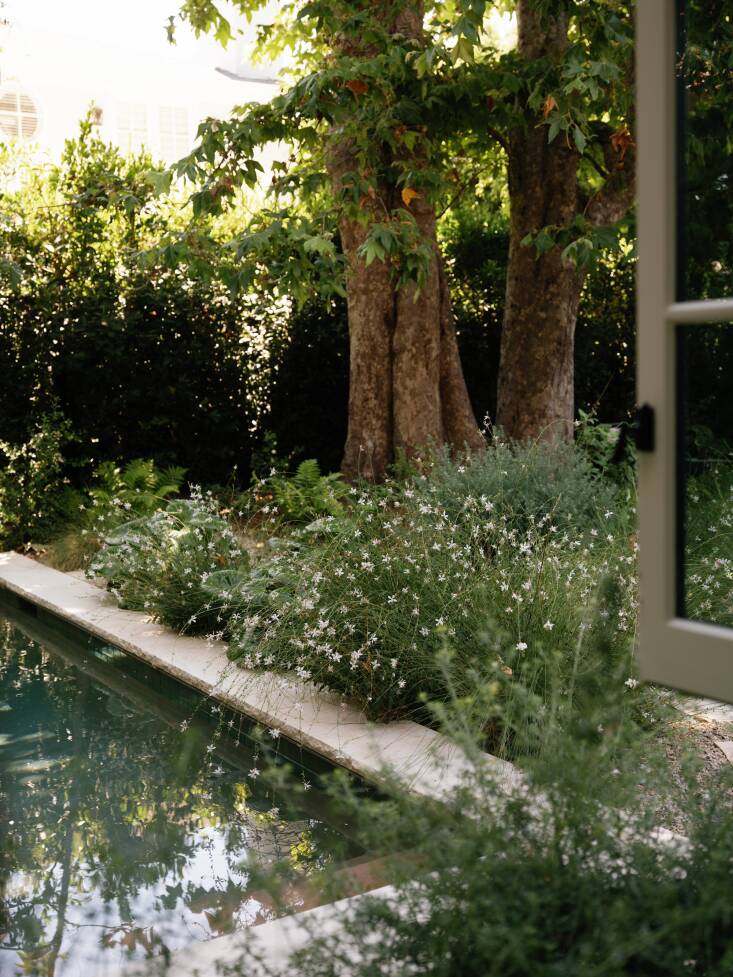
What proved problematic was the site itself. A relatively small footprint meant that every square inch, including the aforementioned old driveway, had to be put to good use, especially since a new outdoor kitchen would also be required. So Sedlacek went about designing programmatic areas that would blur the lines between each other and the home’s interior. “The client needed a garden that is connected to their everyday lives: an art room that spills into the entry courtyard, a living room that opens up onto the dining patio, and a dining room that overlooks the pool.” To better define these areas, Sedlacek leaned heavily on the home’s existing white stucco and Spanish-influenced exterior to select hardscaping elements that would feel “naturally weathered” and right at home on a Balearic island.
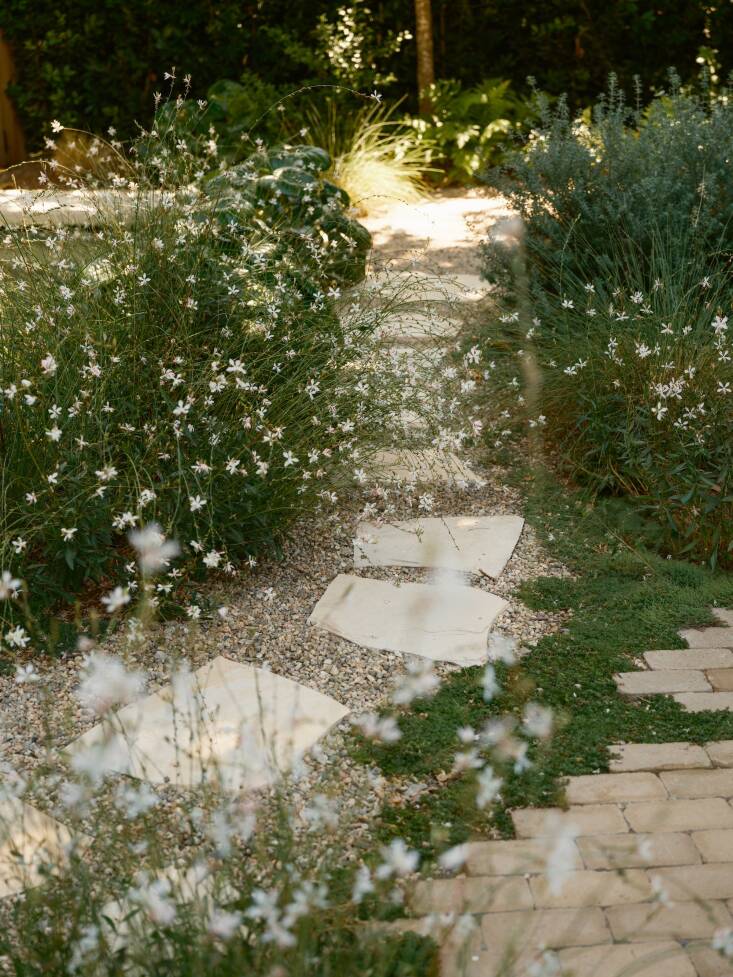
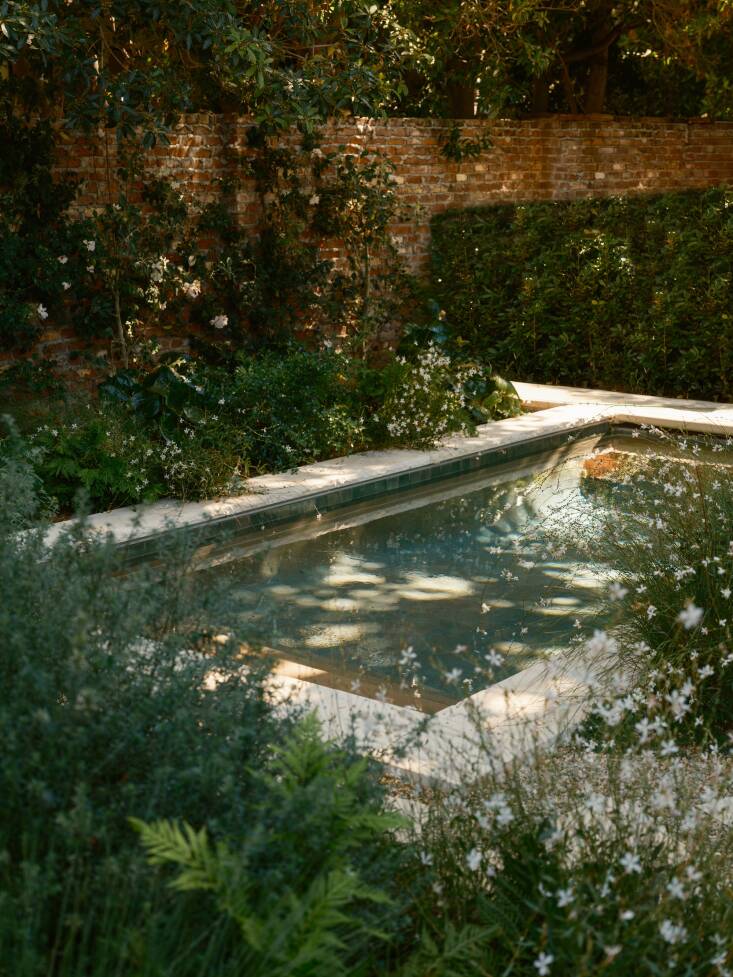
Her inspiration: Potter’s House Mallorca, the retreat made instagram-famous by European garden designer Luciano Guibbelei. “We studied it for plants colliding with the water’s edge, groundcovers feeling very effortless, and also the use of fruit trees, bees blossom, and Ligularia dentata.” But while the resulting garden may look just like an arid landscape pulled from the coast of Gibraltar, it is primarily composed of U.S. natives and nativars, with a sprinkling of Mediterranean species for effect. Sedlacek and team brought in deep-green species like Ceonathus ‘Snow Flurry’, Frangula californica and Dryopetris arguta to contrast with the lighter palette, while Oenothera lindheimeri and Carex pansa create languorous drifts in sunnier areas.
The whole effect is of something wild and slightly forgotten. Sedlacek’s favorite element is tucked in the back corner of the garden, next to the site of a brand new pool, where the native Rosa californica clambers up a brick wall from the early 20th century to form a near-perfect simulacrum of an old European villa. “Seeing something built in 2025 that highlights something that has [already] lived here for a century is very special.”
Photography by Justin Chung, courtesy of ORCA.
For more on ORCA, see:
- Garden Visit: A Historic House by Iconic Southern California Architect Cliff May Gets the ORCA Glow-up
- Ask the Expert: Molly Sedlacek of ORCA, on Permeable Hardscaping
- Landscape Designer Visit: A San Francisco Backyard Where ‘Surf Life Meets Ancient Rituals’



Have a Question or Comment About This Post?
Join the conversation