

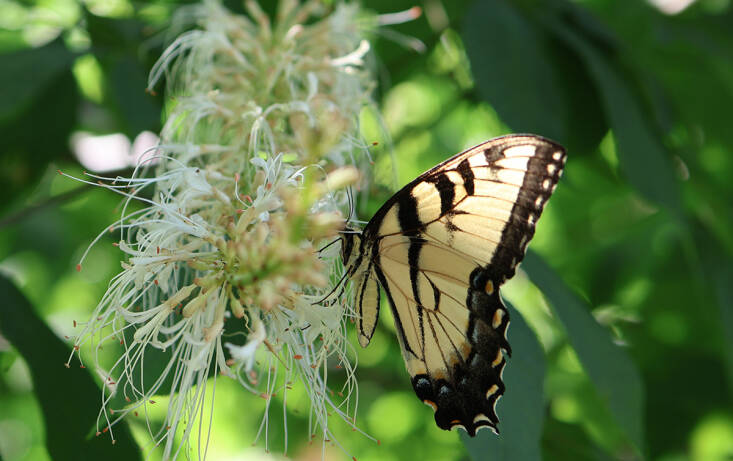
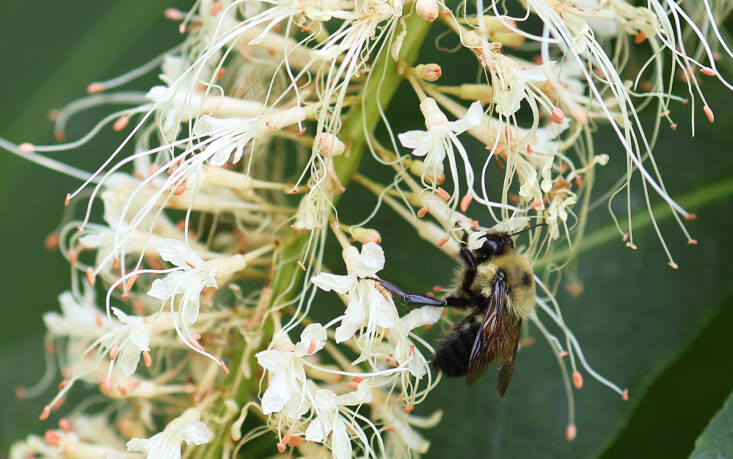
Recently, on my daily sanity-walk, I paused in Brooklyn’s Prospect Park and sniffed the air very appreciatively. What was that wonderful scent? A rich, Southern magnolia-suggestive perfume. Like a botanical bloodhound I followed my nose to a conspicuous collection of familiar white spires, the easily identifiable white panicles of bottlebrush buckeye. While I have admired this summer flowering shrub in the past for its structurally spectacular flowers, until this moment on a very hot day I had never understood how good it smells. And I was not alone. Bumblebees, honeybees, swallowtail butterflies, and small, darting skippers danced around the branches. I stood and watched, drenched in equal parts bottlebrush buckeye scent and July humidity.
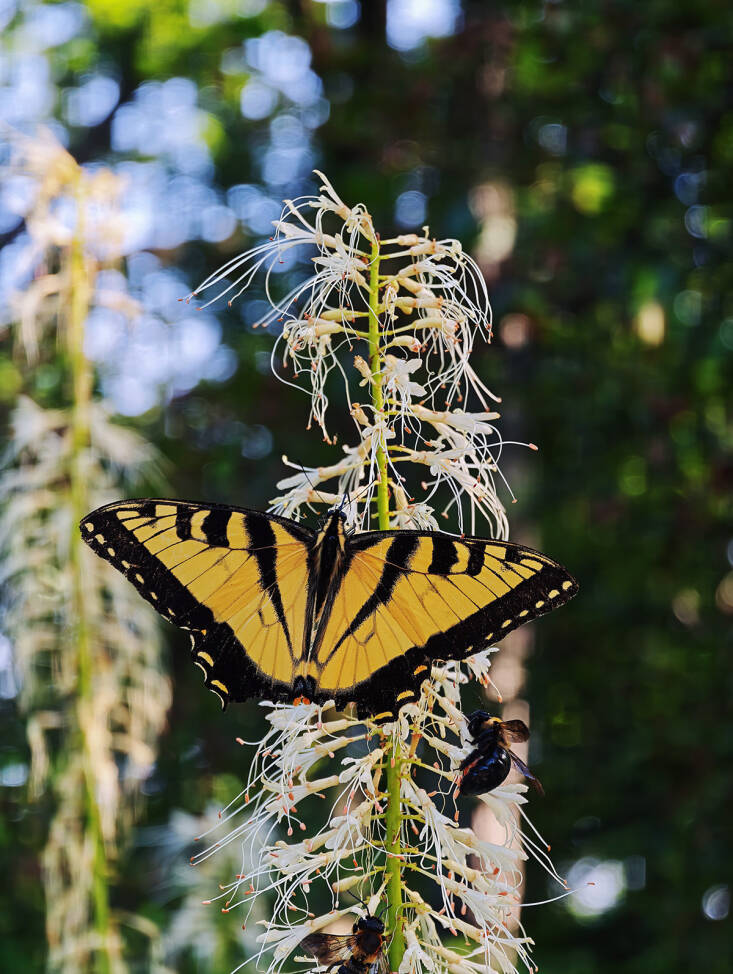
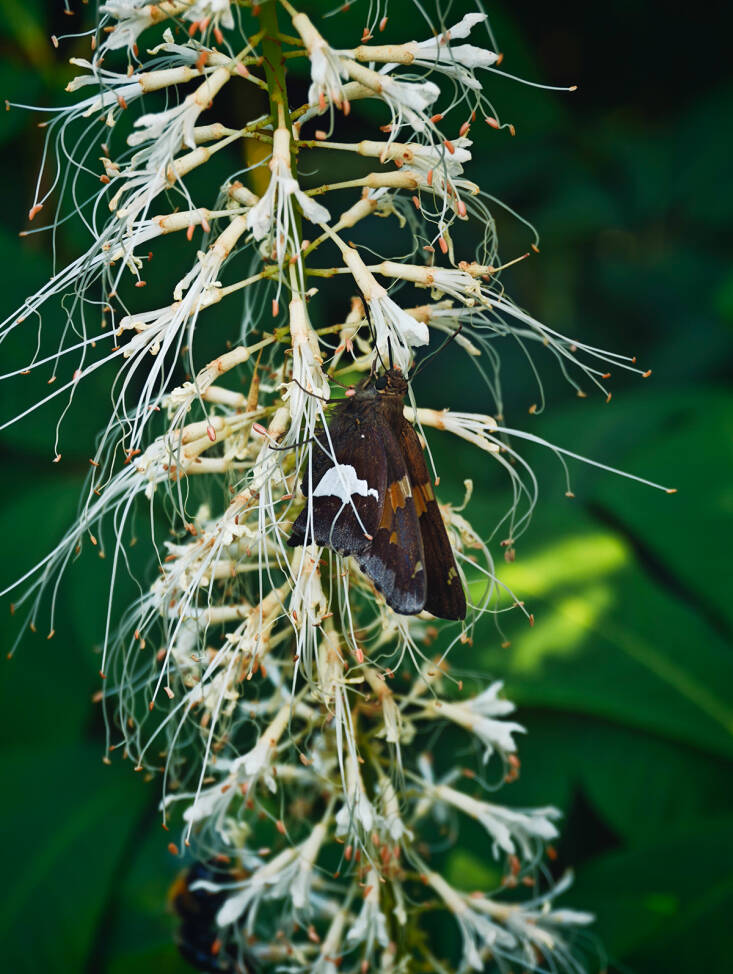
The swirl of diverse pollinators around the buckeye flowers mirrored the flight patterns above the city’s ceaseless air traffic. Recognizing only the dazzling eastern tiger swallowtails flitting to feed on the tiny flowers, I had to whip out my iNat app to identify a host of other insects.
Cheat Sheet:
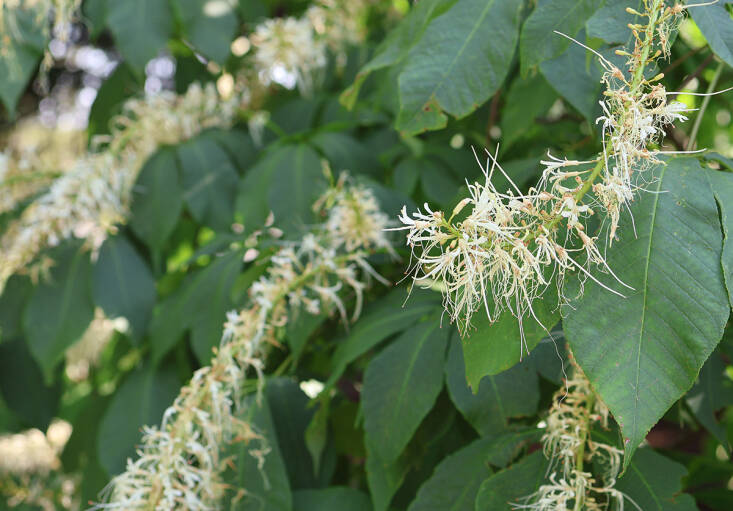
- Bottlebrush buckeye is native to limited areas of the southeastern United States, where its conservation status in the wild ranges from Vulnerable to Critically Imperiled.
- Wild populations grow in shaded woodlands and ravines.
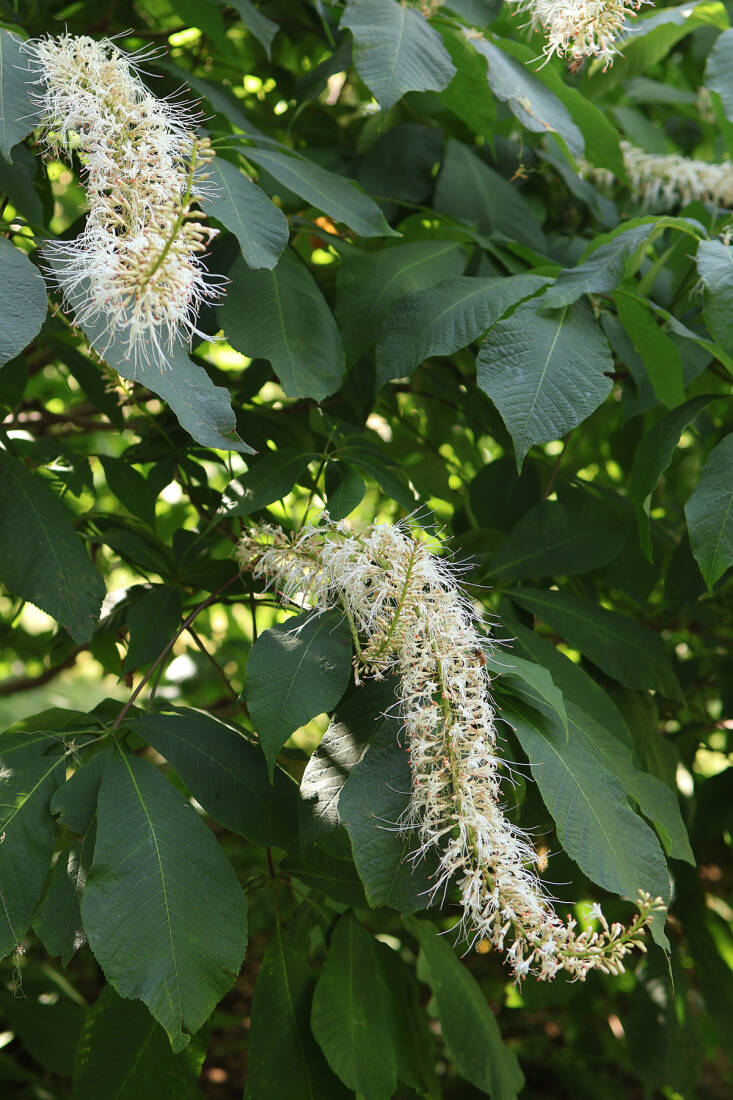
- It is a suckering shrub, which distinguishes it from the Ohio buckeye (Aesculus glabra), which is a spring-blooming tree.
- Bottlebrush buckeye’s small white flowers have red anthers whose pollen makes bees’ pollen baskets (corbiculae) bright red.
- The flowers attract hummingbird moths, numerous other moths, butterflies, bees, and hummingbirds.
- The scented shrubs bloom for weeks in mid to late summer, after other native shrubs like button bush (Cephalanthus occidentalis) and before summer sweet (Clethra alnifolia).
Keep It Alive:
- Bottlebrush buckeye is hardy from USDA growing zones 4 to 9.
- It grows well in dappled shade and part shade (morning or afternoon shade).
- Planted in full sun it is perfectly happy if it receives ample water.
- Give it room: with time, this slow-growing shrub grows wide.
See also:
- In the Night Garden: How to Help the Moth, a Vital and Underrated Pollinator
- Common Milkweed 101: Grow this Beautifully Chaotic Native Perennial
- California Dreaming: An All-Native Garden in West Marin by Terremoto


Have a Question or Comment About This Post?
Join the conversation