

”What are those things? Weeds?”asked an interested observer when I was rooting around in a garden bed at Alice Austen House, the Staten Island museum and gallery where I garden twice a week. “No,” I said, “they’re not weeds. They’re white snakeroot.” The name didn’t help. There are also resident snakes in the garden. “They look like weeds,” he said. His untended garden is full of them. It is also full of autumn-active pollinators.
Fall-blooming white snakeroot is a brightening froth of white that lights up gardens and parks just when nights begin to lengthen and birds gather to leave their summer residences. So let’s keep the plant, instead of yanking it. While it self-seeds readily, it can be managed.
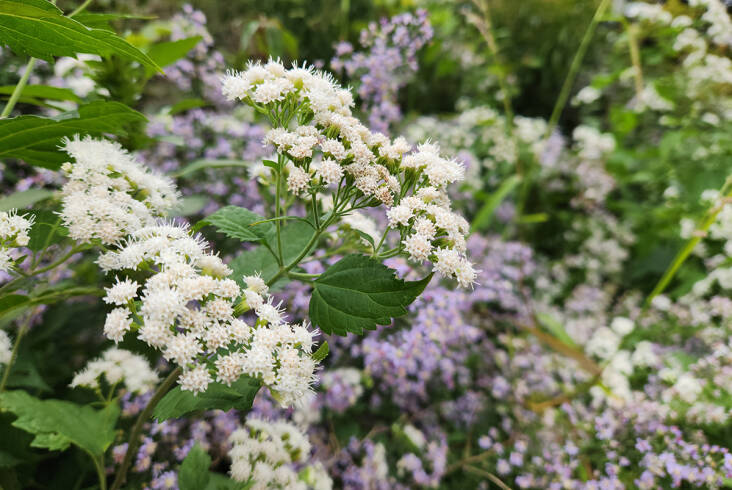
White snakeroot (Ageratina altissima) is very adaptable—highly tolerant of dry conditions, flowering in shade and in sun, and not minding damp roots, either. It seems to be designed for a world shaken by climate chaos. It will look after itself if you let it, and is the native gift that keeps on giving. The best time to manage new seedlings is in mid-spring when they are easy to spot and pull.
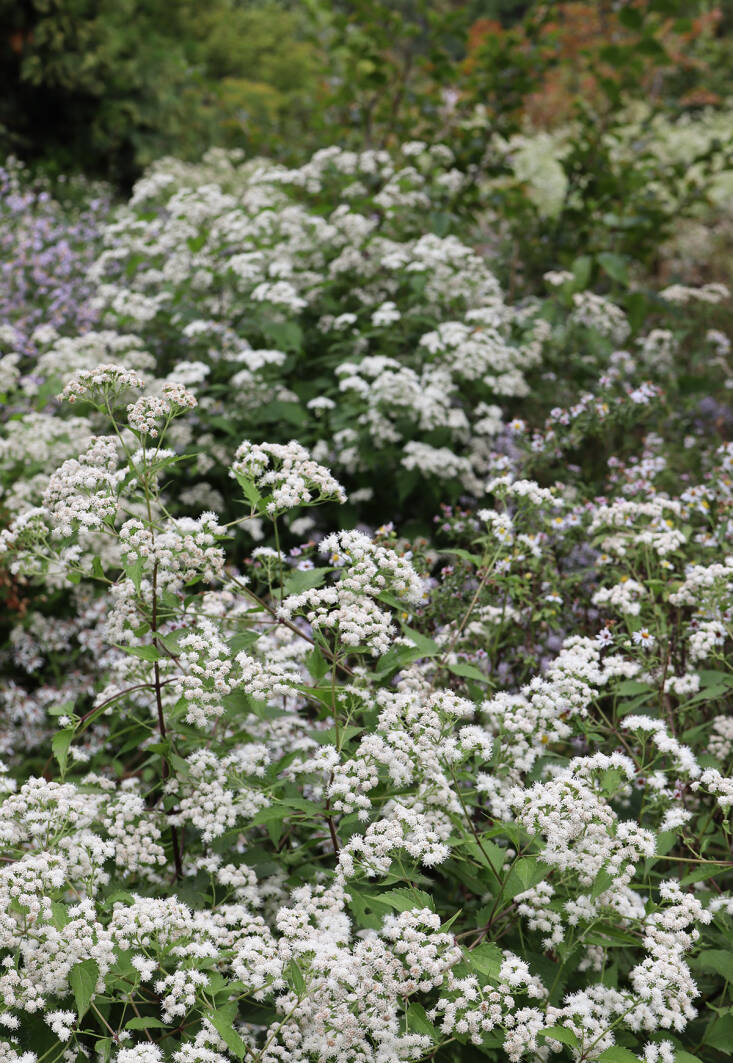
Altissima, the species name, refers to the stature of the plant, which can reach heights of five feet, although one-to-three is more usual. Blend masses of white snakeroot with asters and boneset for fall-blooming thickets of flowers.
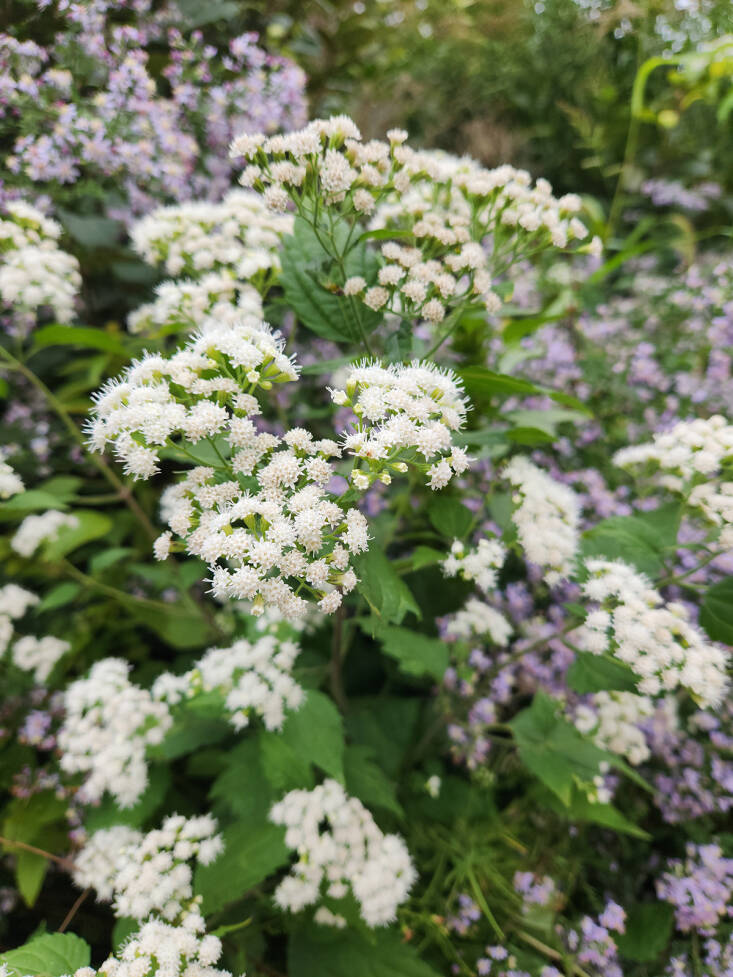
Fascinating Facts:
- As a forager, I point out young plants to people who attend my botanical walks in mid-spring: They resemble nettles to the uninitiated. Unlike nettles, though, the stems and leaves have no stings, which is a very quick tell. Also unlike nettles, white snakeroot is toxic.
- Milk sickness: In the early 19th century, American colonists in the Midwest who drank milk from cows that had ingested white snakeroot became very ill. Thousands (including Abraham Lincoln’s mother) died before the cause was identified publicly by a midwife, “Dr.” Anna Pierce Hobbs. Apocryphal stories suggest strongly that Hobbs learned about the plant’s toxic properties from a Shawnee woman.
Cheat Sheet:
- Ageratina altissima is the botanical name of white snakeroot.
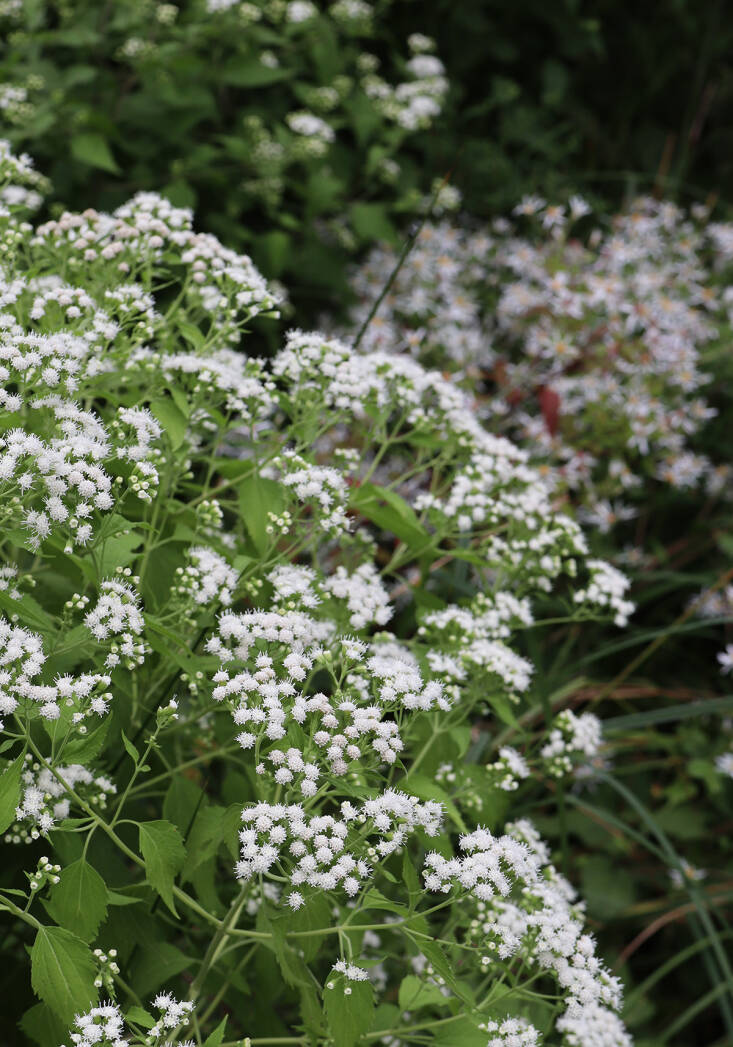
- It is a native American perennial that reaches peak bloom in early to mid autumn.
- White snakeroot caused milk sickness in cows, whose tainted milk killed both calves and humans.
- The profuse flowers attract a multitude of insects, from wasps to flies to bees, butterflies and aphids. This makes white snakeroot a very valuable plant in gardens where integrated pest management (IPM) is practised.
- The flowers last well when cut and kept in water (be mindful of their toxic properties if you have a nibbling cat).
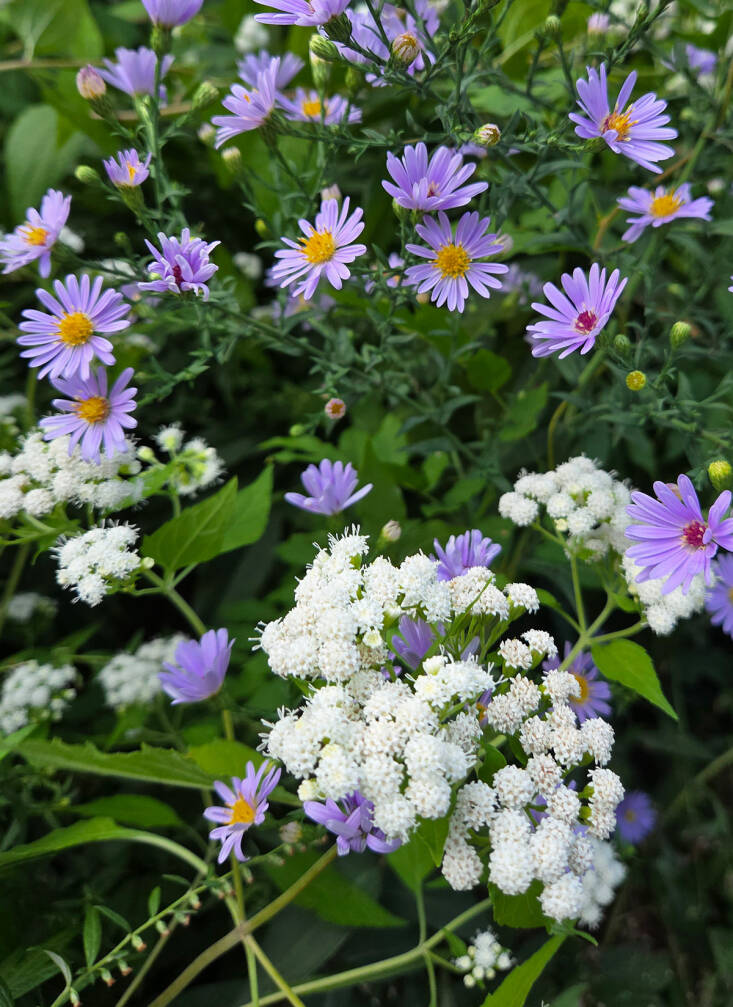
Keep It Alive (Psst: Not Hard):
- White snakeroot is very cold-hardy: It grows in USDA zones 3 to 8
- The plants grow from three to five feet tall and are most effective when massed.
- It is very tolerant of dry conditions when it is growing in high shade or woodlands.
- When planted in full sun, drought conditions will cause the leaves to yellow.
See also:
- 5 Favorites: Unusual (and Low-Maintenance) Perennials for Late-Season Interest
- Butterfly Weed 101: Growing Asclepias Tuberosa
- Annual Fleabane 101: A Boon to Pollinators and a Natural Pest Control





Have a Question or Comment About This Post?
Join the conversation