

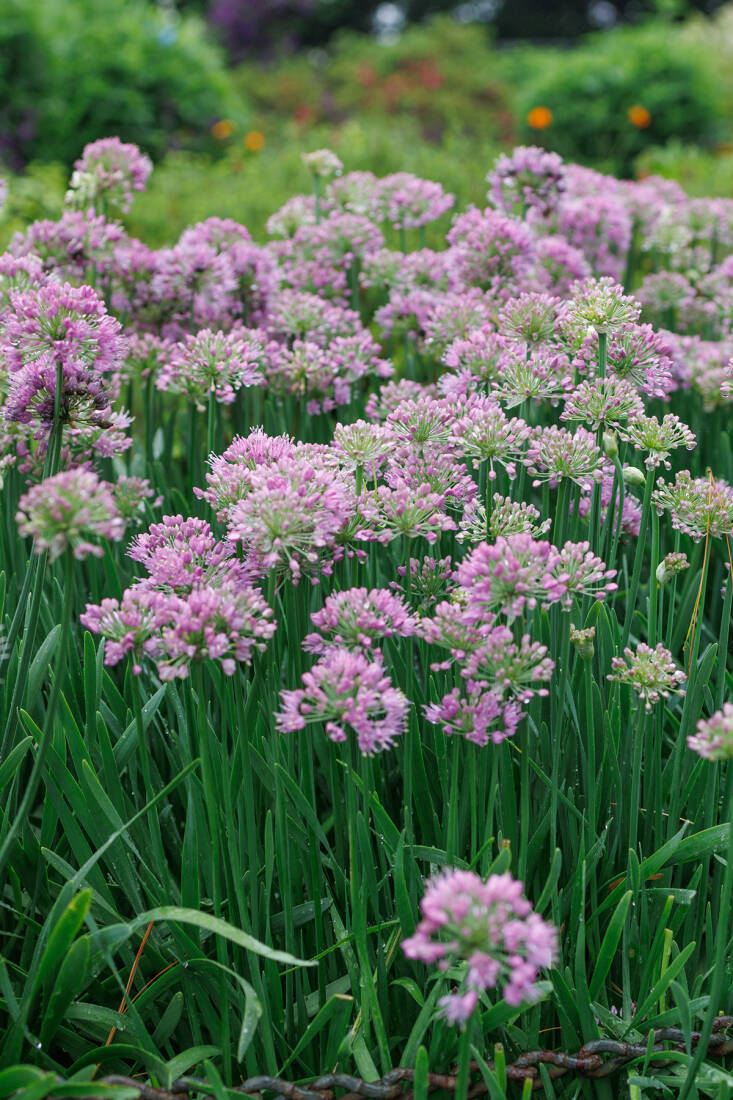
The cellpacks of Allium ‘Millenium’ that I ordered last fall for the Alice Austen House garden on Staten Island arrived in April this year. They did not look promising. Beneath stubby leaves their roots were so crowded that each rootball was a rigid white cube. I planted them anyway, in the garden that faces the The Narrows, the tidal strait that separates Staten Island from Brooklyn. For weeks they sulked, rigid and unchanged. But as spring broadened and temperatures rose, the plants relaxed visibly, sending up new, distinctively upright leaves. By late June there were buds. They began to bloom just as the slender-stemmed drumstick alliums (A. sphaerocephalon) nearby were beginning to set seed. After a record-slayingly hot July and the muggiest of early Augusts, ‘Millenium’ is still flowering. I am impressed.
Here’s why to grow Allium ‘Millenium’, with a little myth-busting on the side.
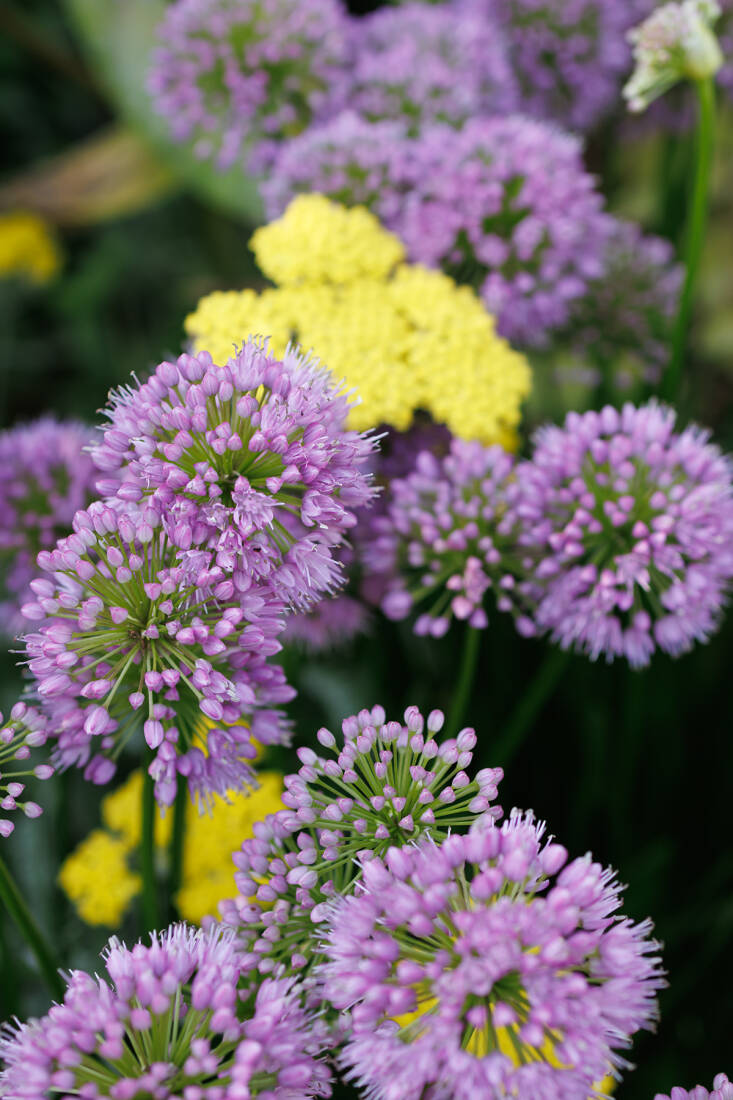
There are probably over 900 species of Allium (sources differ), not counting hybrids and cultivars. ‘Millenium’, a clumping, strap-leafed garden favorite, originated as a seedling in the Massachusetts garden of self-described “onion man”, breeder, horticultural researcher, and architecturally-trained software-administrator-by-day, Mark McDonough. In 2000 (the millennium*, lest we overlook the obvious) he sent his hybrid, without patent or trademark, to Plant Delights Nursery, where it slipped into the the gardening world. In 2018 Allium ‘Millenium’ was named Perennial of the Year by the Perennial Plant Association.
* If your internal spell-checker is having a fit, yes, you are right: Millenium is a misspelling, originally used by McDonough and retained officially for taxonomic consistency.
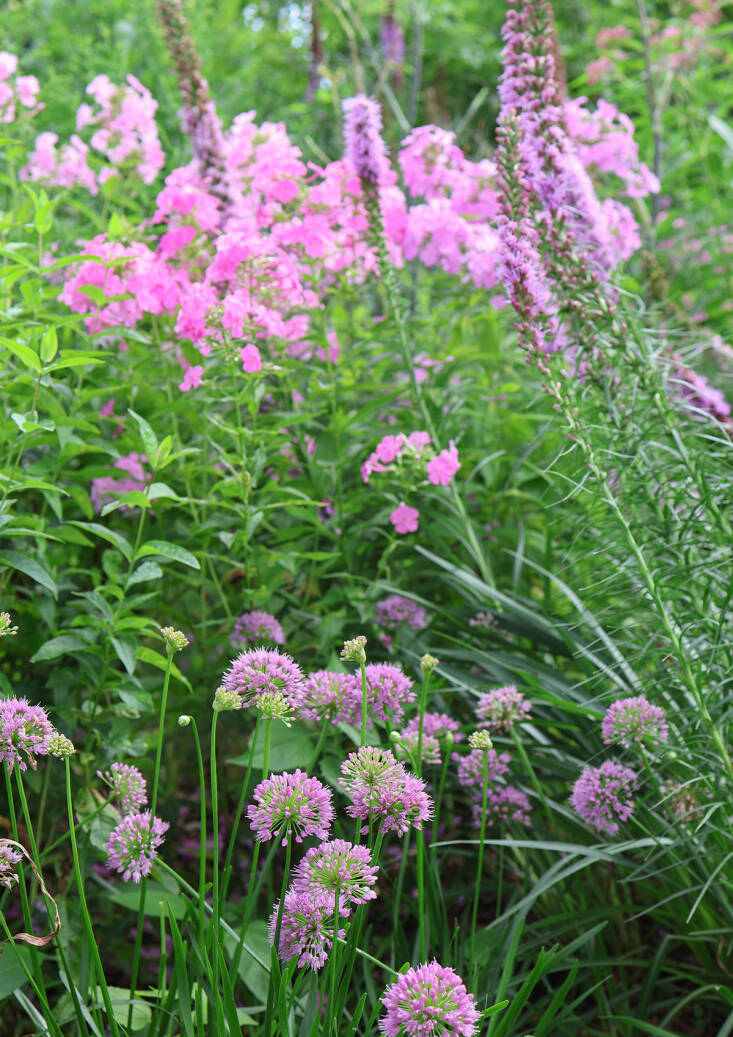
‘Millenium’ Myths:
In 2025, in a typically unassuming comment in a Facebook group dedicated to Alliums (named geekily after their plural, Alliorum), Mark McDonough noted two widespread (and contradictory) misconceptions about ‘Millenium’—both often used as selling-points for this ornamental:
- Allium ‘Millenium’ is not sterile. “The claim is not true,” he wrote. “The plant is indeed fertile and makes seed.”
- However: Those seeds will not be true to the parent. “…while some ‘Millenium-ish’ plants will result, unless [it] is propagated via vegetative division, the seedlings will not be true,” said McDonough.
Not all Alliums are bulbous (like onions, or the fat purple Globemaster-type ornamentals). ‘Millenium’, like chives (Allium schoenoprasum), is rhizomatous and reproduces best asexually. And it explains those rooty cellpacks that gave me pause in April. I had been expecting bulbs. The solid mass of white roots are part of the plant’s success—it establishes quickly.
Cheat Sheet:
- Allium ‘Millenium’ is an Allium nutans hybrid, made available in 2000 to the gardening world by Mark McDonough, via Plant Delights Nursery.
- It does not grow true from seed.
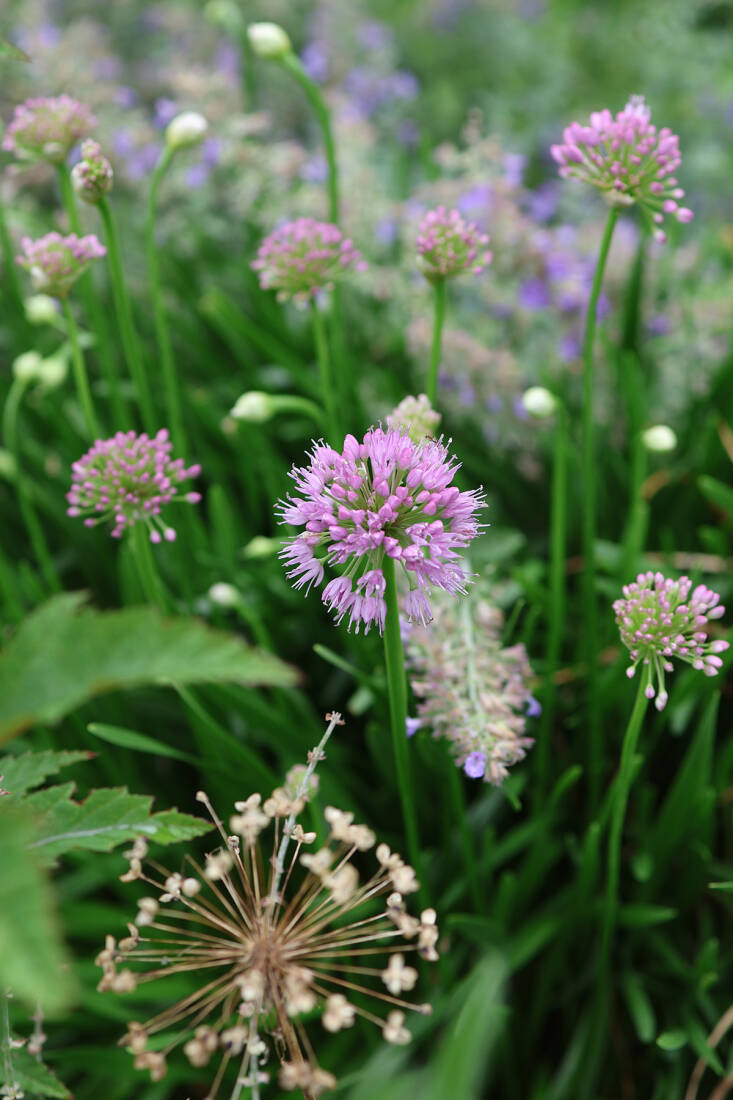
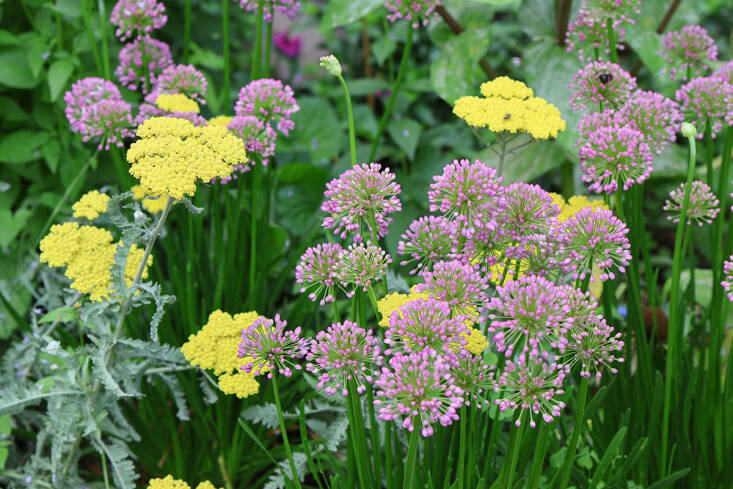
- Its leaves are held upright and flowers are born just above them: luxurious lilac pompoms two inches across.
- Butterflies and bees are attracted to nectar in the flowers
- It is a deer-resistant favorite.
- They are superb cut flowers, lasting weeks in a vase before drying.
- Almost two decades after being released by Mark McDonough, ‘Millenium’ was named Perennial of the Year in 2018.
Keep It Alive:
- ‘Millenium’ is hardy from USDA growing zones 4 to 8.
- Plant in full sun for maximum blooms.
- The plants tolerate clay soils and are excellent at erosion-control on slopes.
See also:
- Butterfly Weed 101: Growing Asclepias Tuberosa
- Gardening 101: The Low-Maintenance Fireworks of Liatris spicata
- Annual Fleabane 101: A Boon to Pollinators and a Natural Pest Control





Have a Question or Comment About This Post?
Join the conversation