

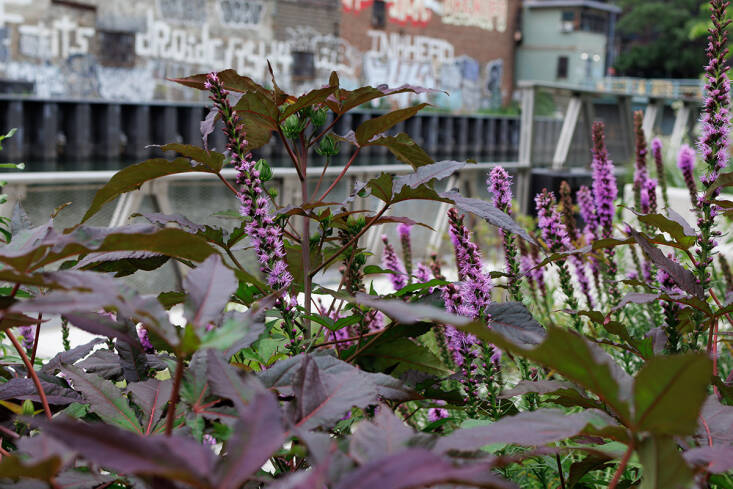
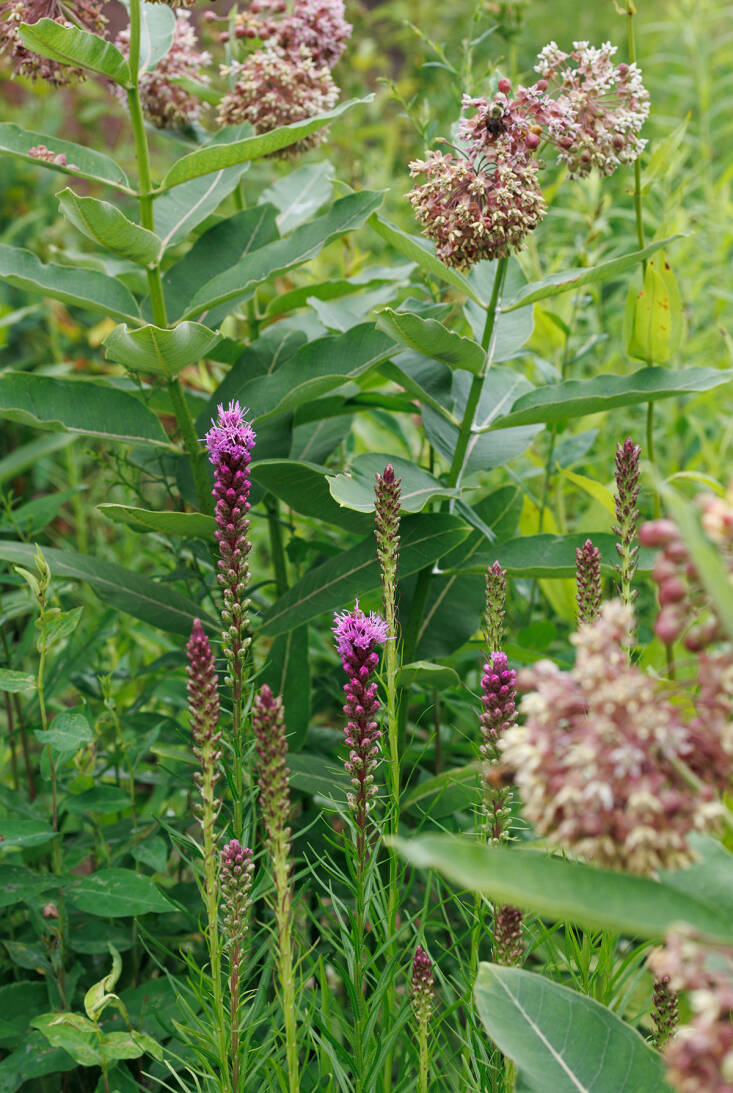
The feathery, festive blazing stars—the common name for species of Liatris—are some of summer’s most spectacular North American perennials. Tall stems, vivid electric-purple flowers, and a ceaseless rotation of pollinators feeding on their nectar make them easy focal points in both tame and wild gardens, and in both small or extensive spaces. Liatris spicata (dense blazing star) is the first of the species to bloom, and it remains ornamentally interesting for weeks. It is as happy planted in a pot as it is in-ground, as long as the water supply is steady. It is the most widely available species of Liatris, and there is every reason to grow it.
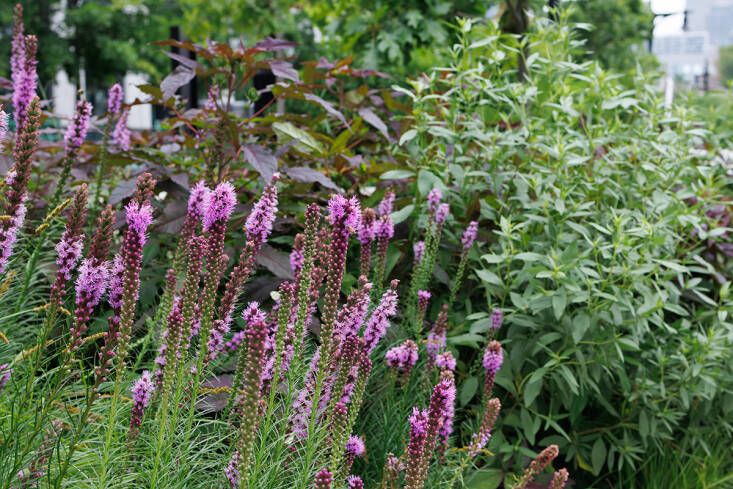
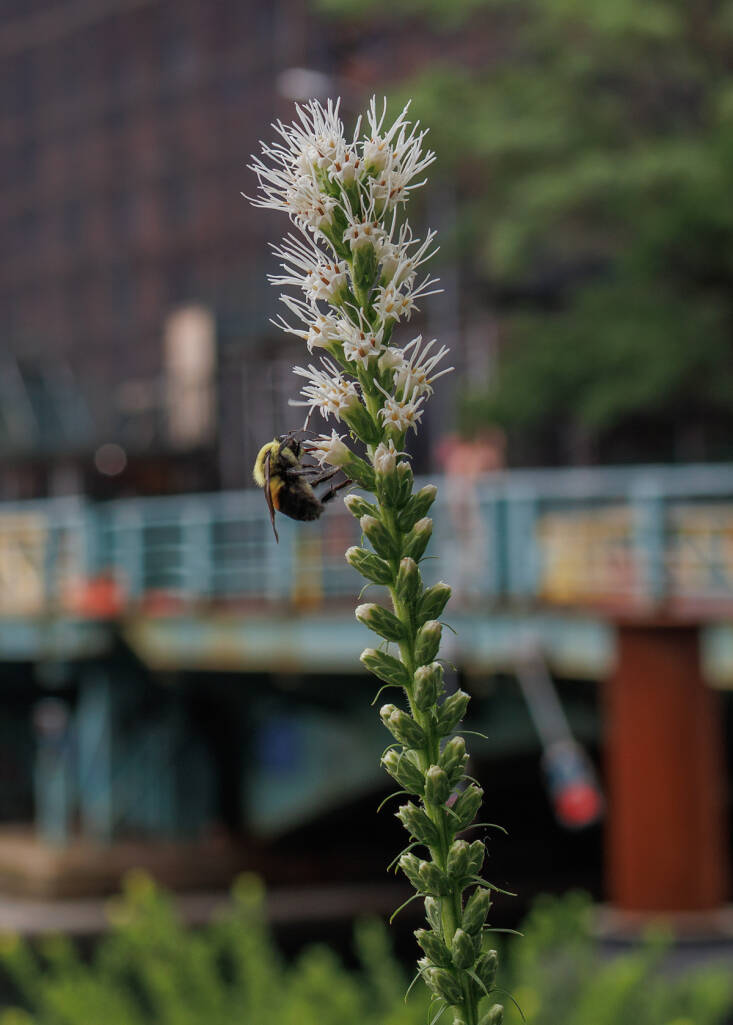
Dense blazing star’s vertical, slender stems begin to stipple with buds in early summer. Color drenches the flower-spikes from the tips down, and petals open progressively, with clusters of flowers opening over a period of weeks. They are like rocket-bursts in slow motion, with the tightly buttoned, budded stems transformed gradually into exuberantly feathery wands.
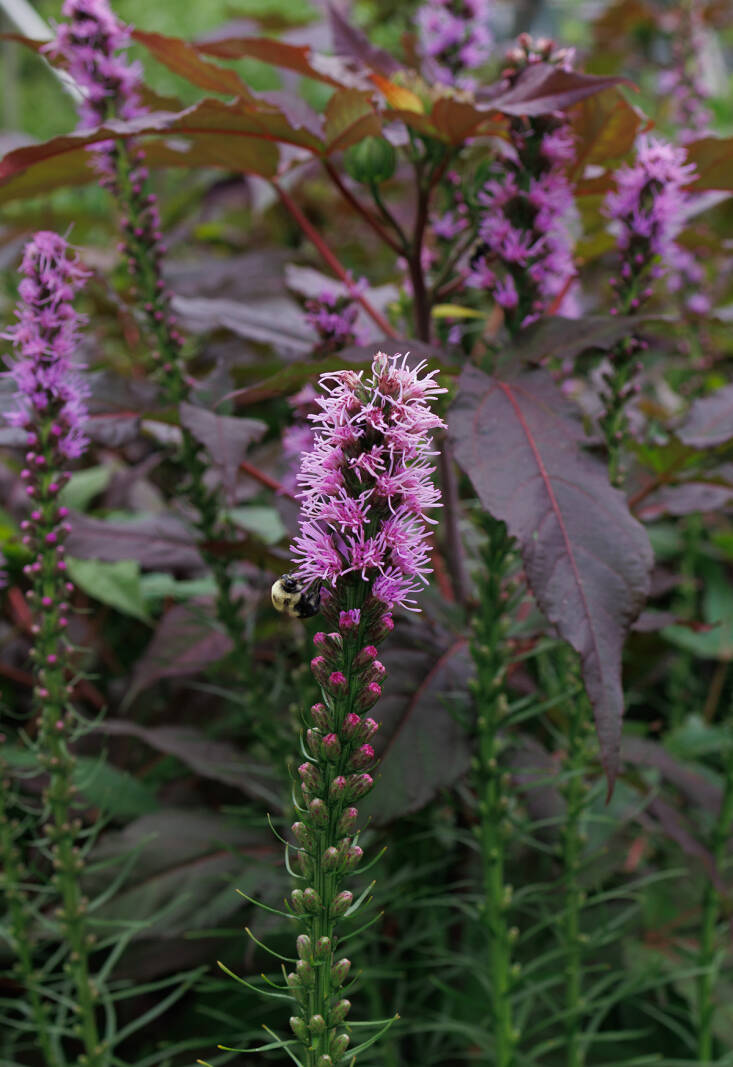
Liatris as a genus contains high levels of phenylacetaldehyde, a volatile compound that is a constituent of floral scent, whose role is to attract specific pollinators.
Cheat Sheet
- There are about 40 species of Liatris, all native to Eastern North America, and Central and Southeastern United States.
- The genus belongs to the Asteraceae family.
- Liatris spicata is commonly known as dense blazing star, marsh blazing star, and gayfeather.
- Dense blazing star is the first of the species to bloom in summer.
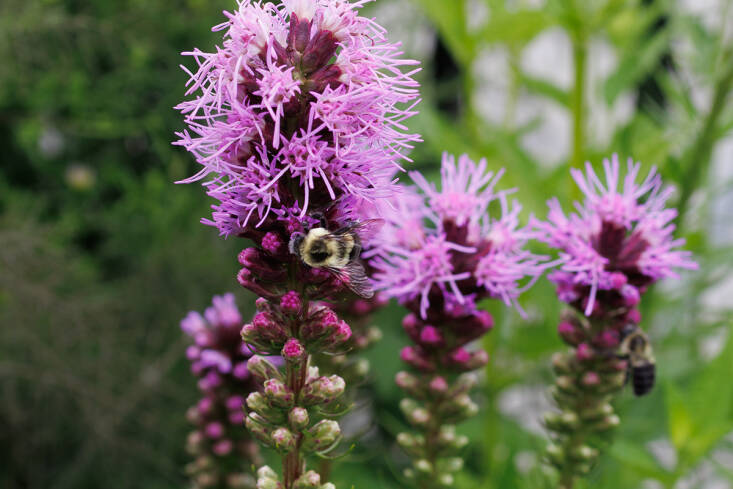
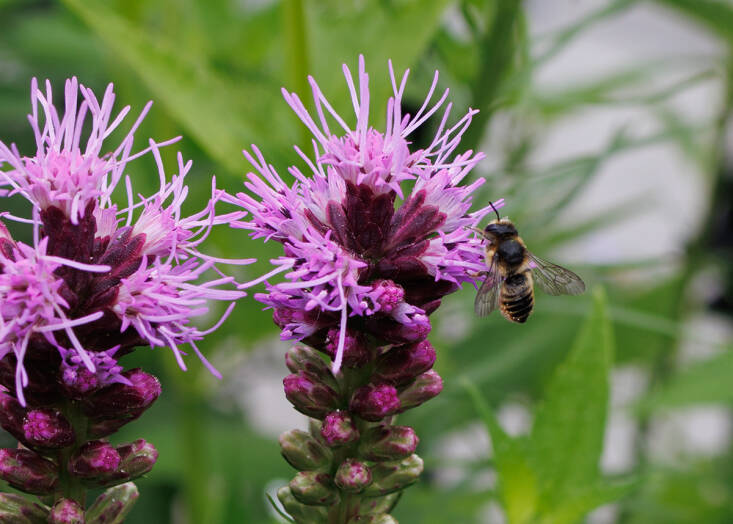
- Liatris are pollinator magnets and support native nectar-feeders.
- Don’t deadhead! The spent flowerheads are good food for seed-eating birds.
Keep It Alive
- Liatris spicata is hardy from USDA growing zones 3 to 8.
- The corms should be planted in fall.
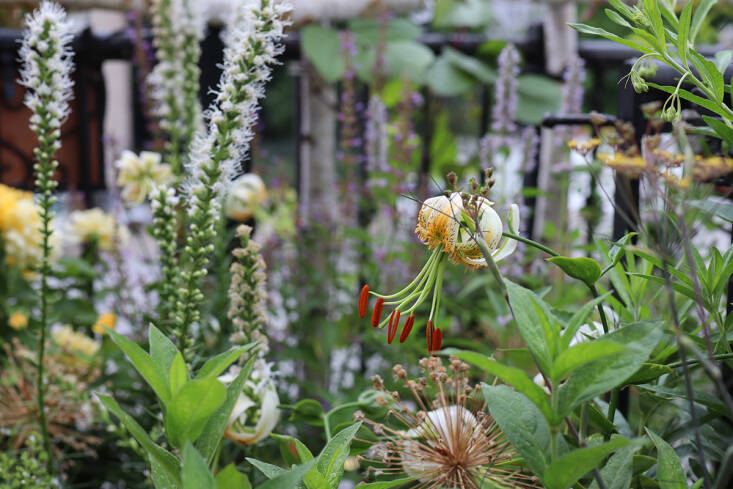
- Plant the corms in pots or in ground, in full sun.
- Dense blazing star relishes ample water and reacts poorly to drought stress (flower stems and leaves will wilt rapidly when dry).
See also:


Have a Question or Comment About This Post?
Join the conversation