

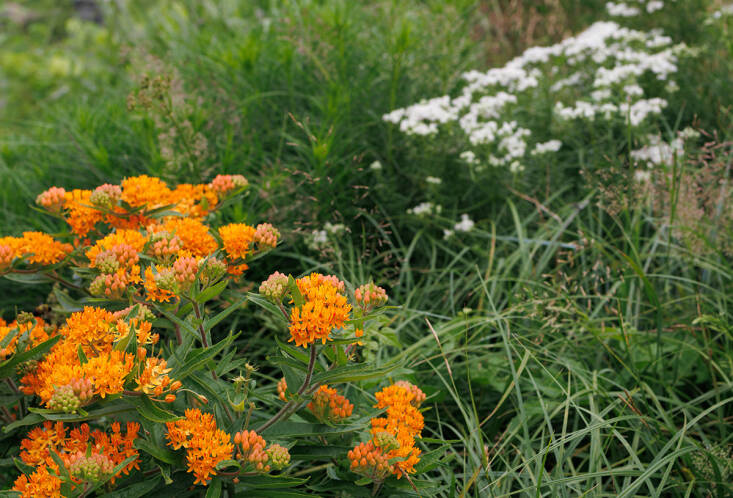
Attention-centric butterfly weed is a bit of a line jumper among milkweeds, managing to snag the qualifying common name that every species of Asclepias deserves (and some more others). If you’re looking for a vivid North American milkweed that stays where you plant it (unlike roaming common milkweed, whose runners send up new plants at random) and that suits gardens small and large, this fiery-flowered perennial is a conspicuous and focusing addition to green spaces that meet its full-sun requirement. For months from early to late summer, let butterfly weed’s electric presence be a beacon in a sea of green.
And there is an interesting caveat: This is not the milkweed that monarch butterflies are looking to lay their eggs on. Read on to find out more.
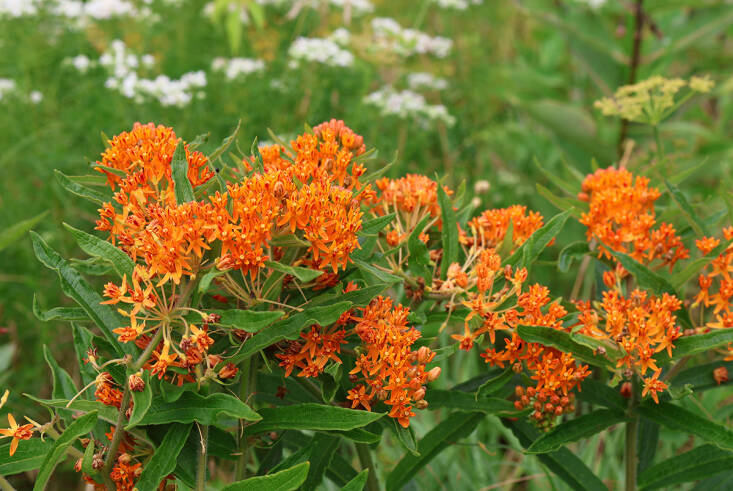
Butterfly weed has a taproot and spreads via seeds, rather than runners, like common milkweed. It stays put and forms low mounds, making it a happy choice for small as well as container gardens.
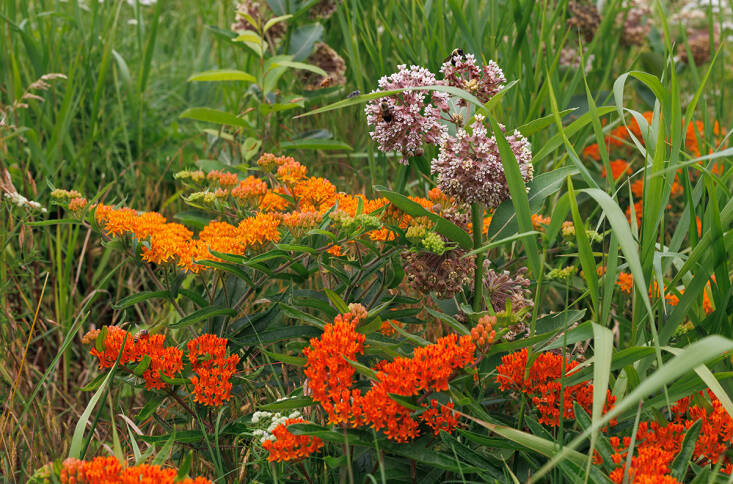
While butterflies and other pollinators are drawn to feed from its bright, nectar-filled flowers, butterfly weed does not seem to be the milkweed of choice for monarch butterflies when it comes to their crucial egg-laying. (Eggs give rise to caterpillars, caterpillars eat the milkweed leaves. Caterpillars pupate, and after 8 to 15 days inside a chrysalis, a new butterfly emerges.)
Until fairly recently there has been little data to illuminate which Asclepias species might be favored among monarch butterflies, whose famous migration takes place over multiple generations and a large geographic area. But one milkweed study, led by researcher Victoria Pocius, and published in 2018, found that swamp milkweed (A. incarnata) and common milkweed (A. syriaca) averaged the highest number of eggs in a group of nine species that included butterfly weed. Given a choice, the monarchs chose the other milkweeds.
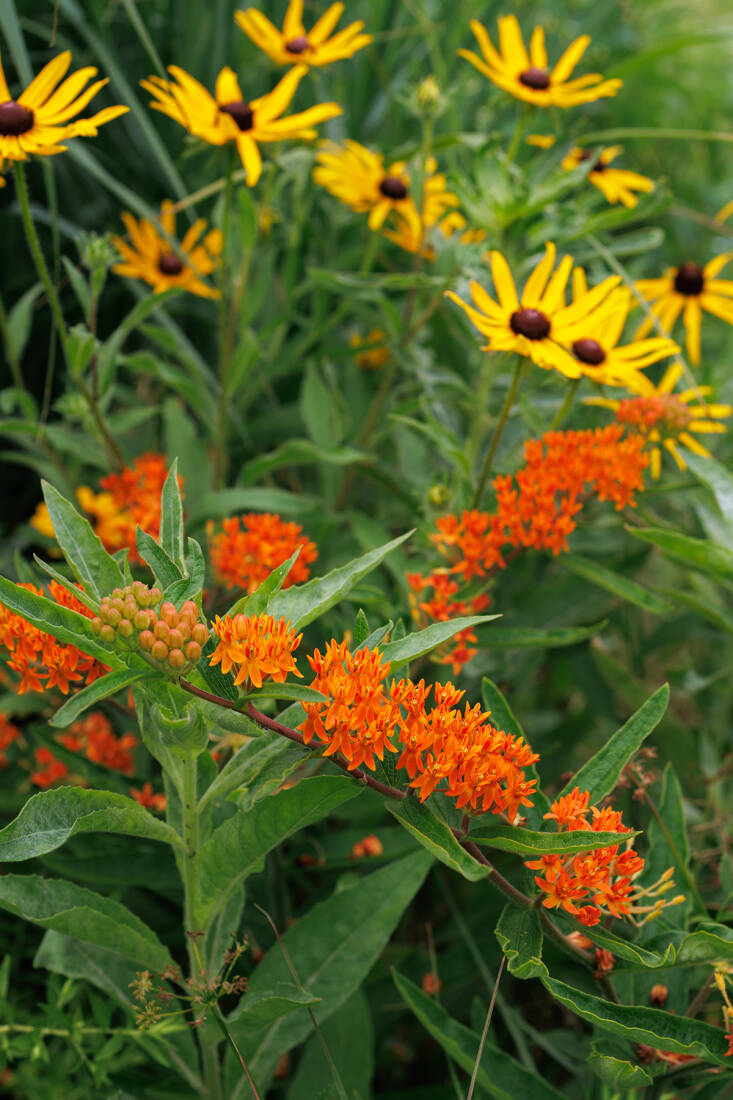
Butterfly weed’s wild native range is wide. It grows in eastern Canada, across the Midwest and the Great Plains, from Maine to Florida, in the Southwest, and across the South, and into Mexico.
The plants relish sunny, dry, open sites. Reproduce these conditions for them at home or in a rewilded landscape, and they will be yours to keep, self-seeding happily.
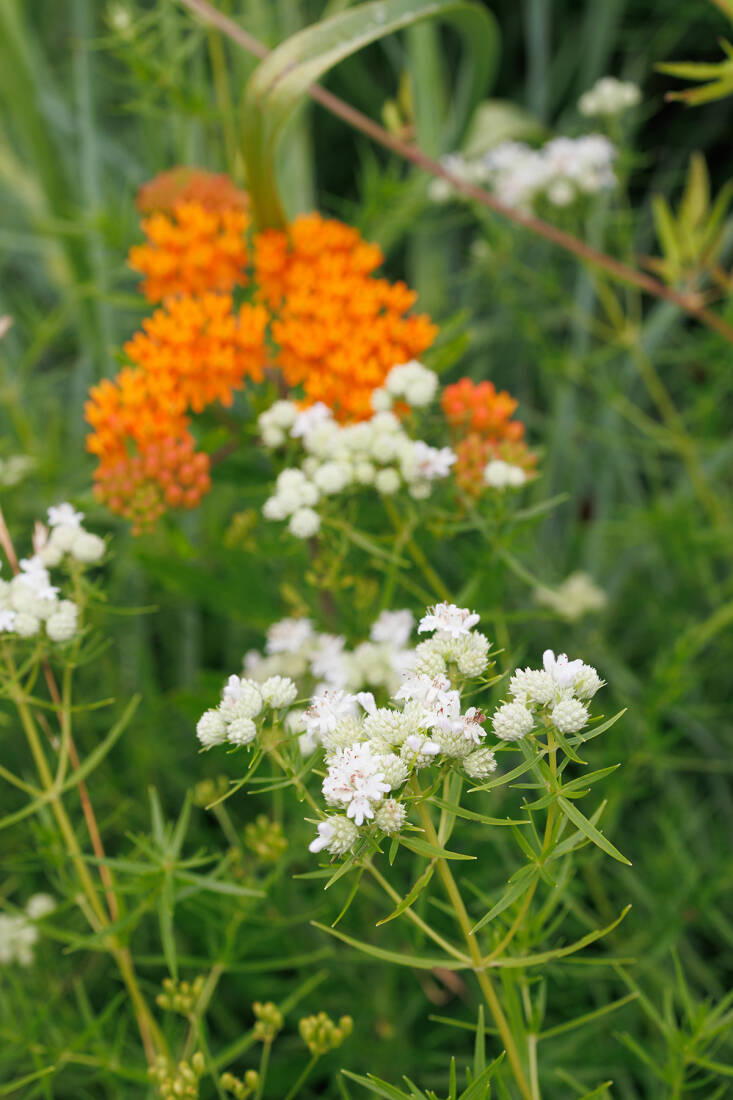
Cheat Sheet:
- Butterfly weed’s botanical name is Asclepias tuberosa.
- Other common names are orange milkweed and pleurisy root (the plant was used by Native Americans to treat chest ailments).
- While it is attractive to pollinators, this is not the milkweed of choice for monarch butterflies to lay eggs on. Plant a variety of Asclepias species to support them.
- Butterfly weed does not reproduce via runners, like common milkweed, but will self-seed.
- This milkweed produces no latex. Its sap is clear.
Keep It Alive:
- Butterfly weed is hardy from USDA growing zones 3 to 9.
- It requires full sun and good drainage.
- Established plants can be challenging to transplant, because they have a taproot. Disturb that root as little as possible if transplanting nursery-grown specimens.
- Once established, it is relatively drought-tolerant.
See also:
- Common Milkweed 101: Grow this Beautifully Chaotic Native Perennial
- Milkweed Pods: A Native Summer Vegetable to Grow, Cook, and Eat
- Gardening 101: Vernonia ‘Iron Butterfly’; ‘Plant of the Year for 2026’




Have a Question or Comment About This Post?
Join the conversation