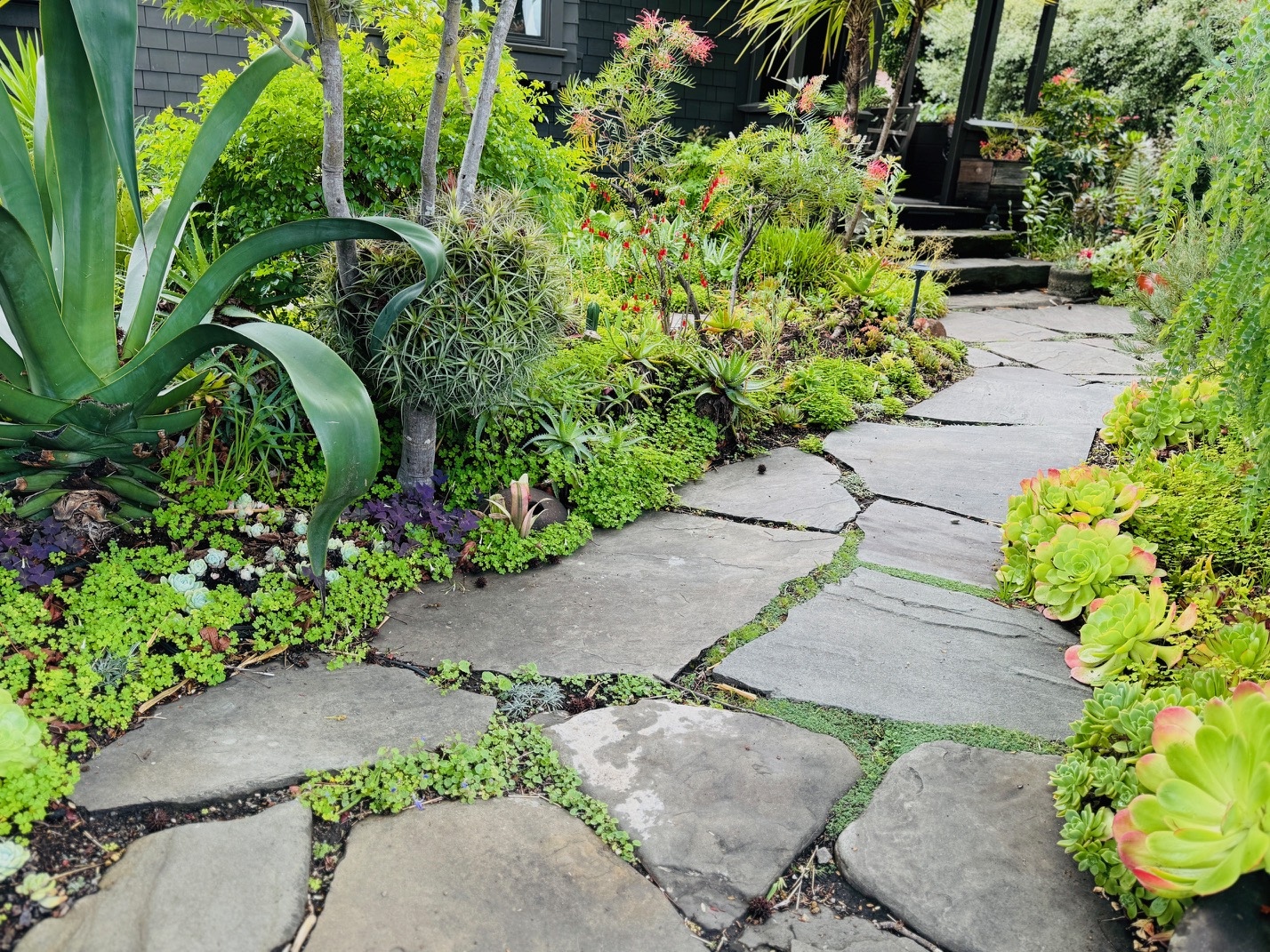


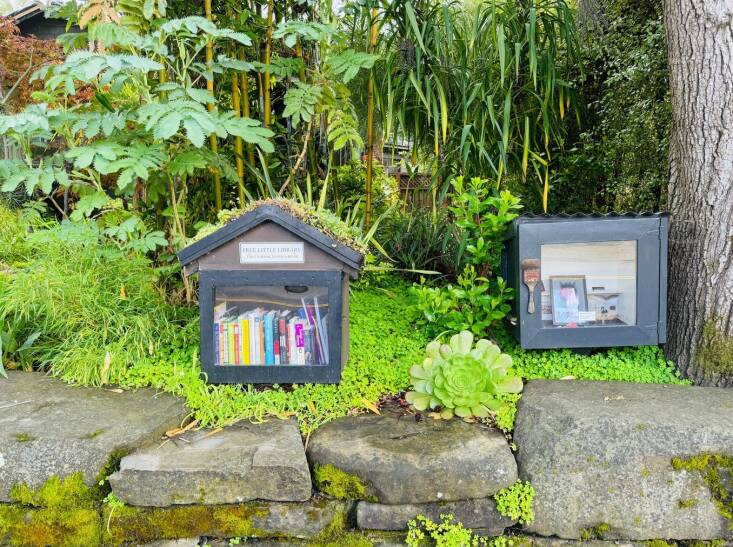
I’ve always loved the classic Christmas story where Rudolph and his friend Hermey encounter the Island of Misfit Toys. Now that my garden, too, has become an orphanage for castoffs—leftover plants, rescued objects, gifted materials, all pieces that have found a second life outdoors—that story feels even more relevant. Of course, I have a few store-bought, must-have specimens, but in general most everything in my garden is a hand-me-down. My pots, ornaments, furniture, bird baths, are all recycled from somewhere. Even my two free libraries out front (Little Free Art Gallery and the Little Free Library) are crafted from recycled materials that my contractor husband had in his yard.
Photography by Kier Holmes.
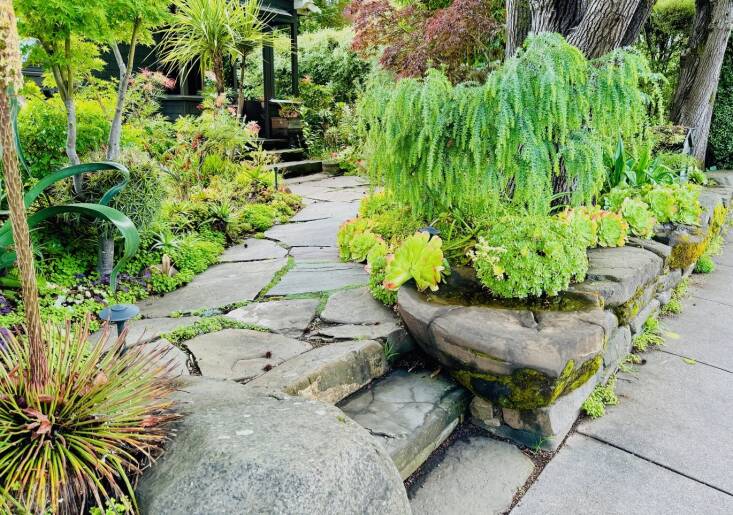
The only large purchased items are the extremely heavy river slabs that make up our front rock wall. This pony wall is one of my favorite features on our property. It acts as a bench for passersby who need a break in the shade or want to linger at the libraries. The wall even has an oversized rock with a natural indentation that serves as a watering hole for dogs, crows, and probably fastidious raccoons. My garden welcomes all creatures.
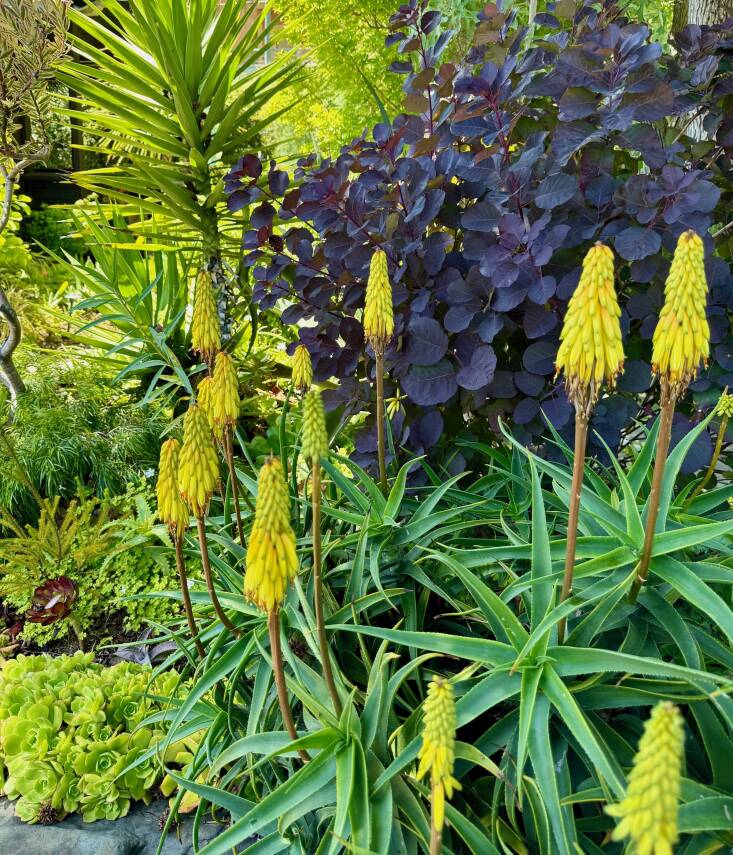
What I appreciate most about my decidedly eclectic outdoor space is that it is very personal and always in flux. Nasturtiums, hollyhocks, and California poppies reseed willy-nilly. And unlike with my client’s gardens, I can change things as often as I need or want to—which, it turns out, is quite a bit. My garden is relatively low-maintenance because, well, it has to be. I take care of a long list of client gardens, so there is rarely time left for me to tend to my own. When I do have time to spend in my own garden, I’m usually gathering flowers for casual arrangements or hand-watering my plants.
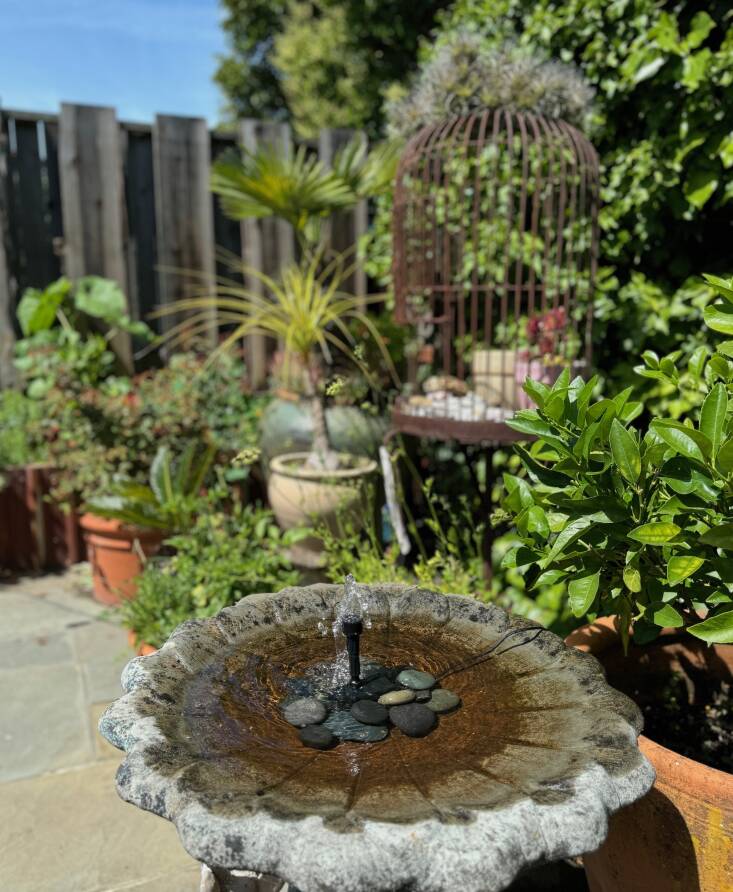
My garden is not a designer showpiece, nor will it win any awards, but luckily that is not what I am striving for. What I seek from my garden is an evolving collection and a place to experiment; a safe haven for pollinators; an assortment of flowers that can be cut and brought inside; a place for birds to make nests, bathe, or drink; and a sanctuary where I can slow down and appreciate the curious and wildly wonderful world in my garden.
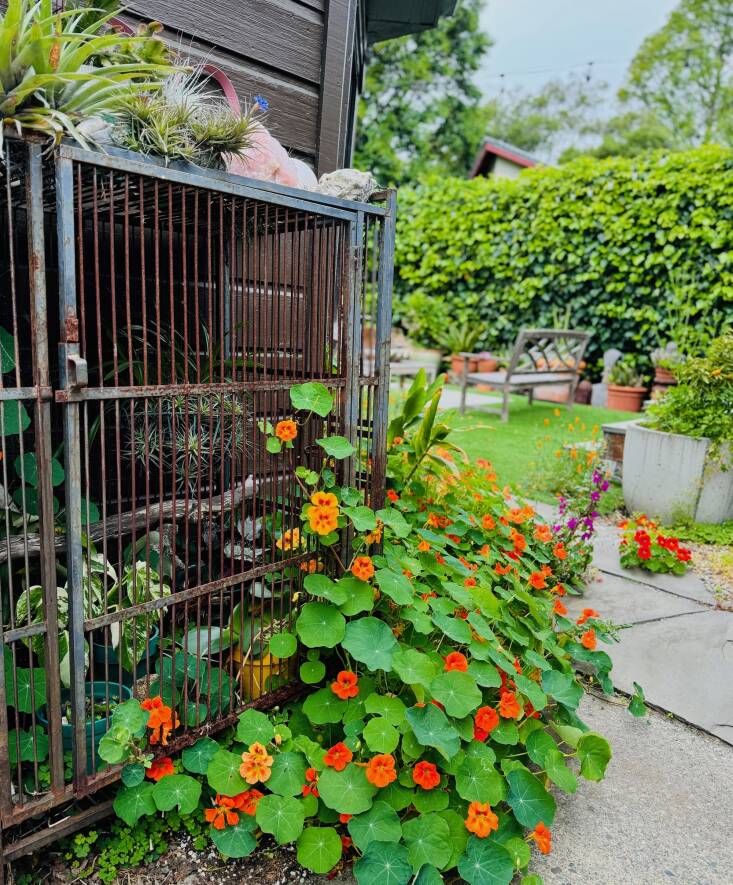
One day I was driving down the road and saw a large rusty birdcage with a “free” sign on it. I immediately called my husband and asked him to take his truck and pick it up for me. The cage now sits in my garden as a cabinet of curiosities, filled with shells, coral, and random tiny leftover plants that the nasturtiums are desperately trying to swallow. Something tells me I’ll need another one of these cabinets soon.



Have a Question or Comment About This Post?
Join the conversation