

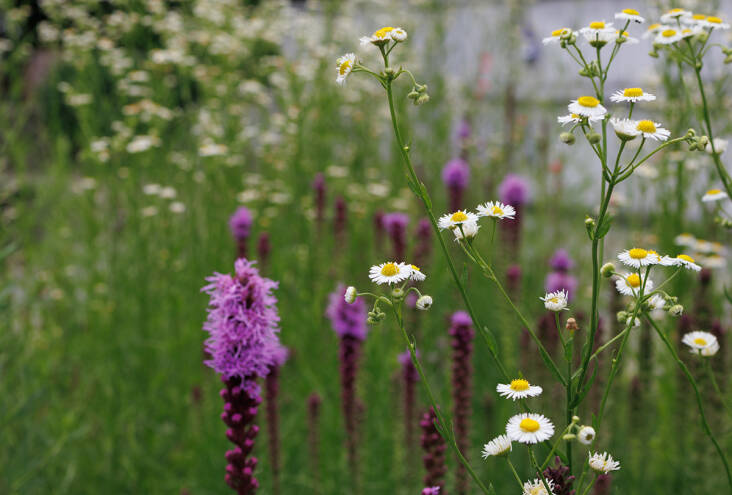
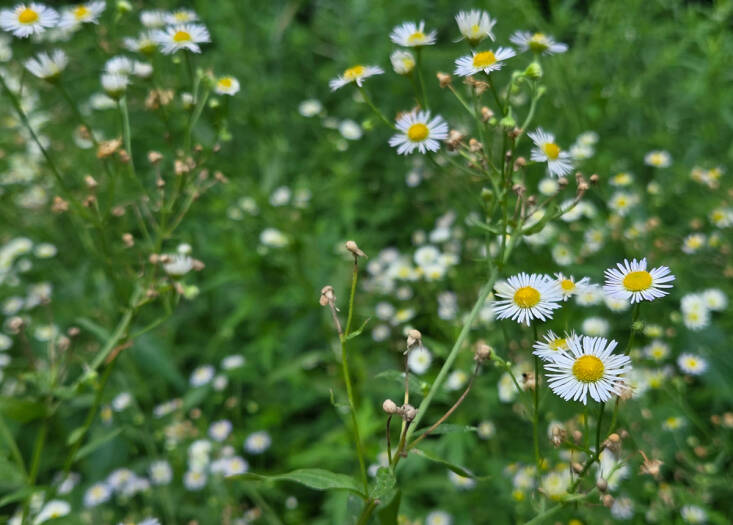
Fleabane has been waiting for its moment of horticultural recognition and respect. As awareness of the importance of growing native plants spreads, that moment is here. Several species of Erigeron—all known commonly as fleabane, with qualifiers—are native to North America. In high and late summer, annual fleabane (Erigeron annuus) is among the showiest, its constellations of flowers rising above other perennials to bring bright whimsy to borders and path edges.
If you are ecologically-minded, give this native annual (and its close daisy fleabane cousins) a second chance.
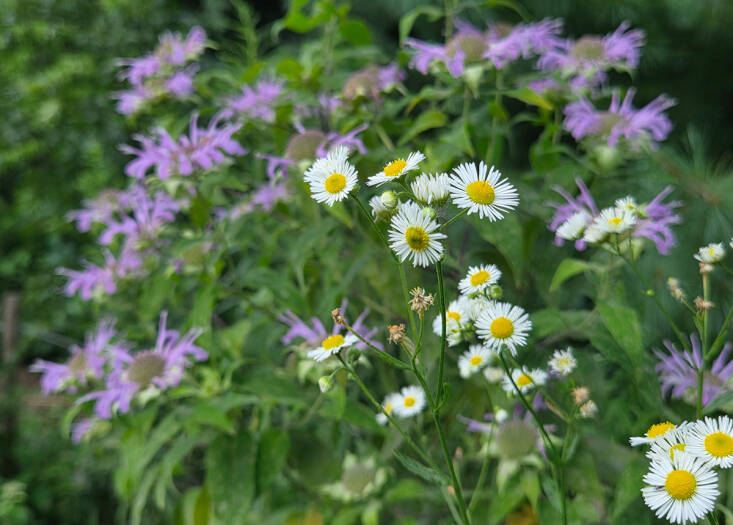
Flower-wise, summer-blooming annual fleabane and prairie fleabane (Erigeron strigosus) are very hard to tell apart (and both are often referred to commonly as daisy fleabane). But their leaves differ, and they prefer different sites: Annual fleabane is generally found in richer soil crowded with other plants (which encourage it to grow tall), while prairie fleabane is at home in leaner, exposed, drier, and less disturbed habitats. Philadelphia fleabane (E. philadelphicus) blooms in spring and likes damp soil.
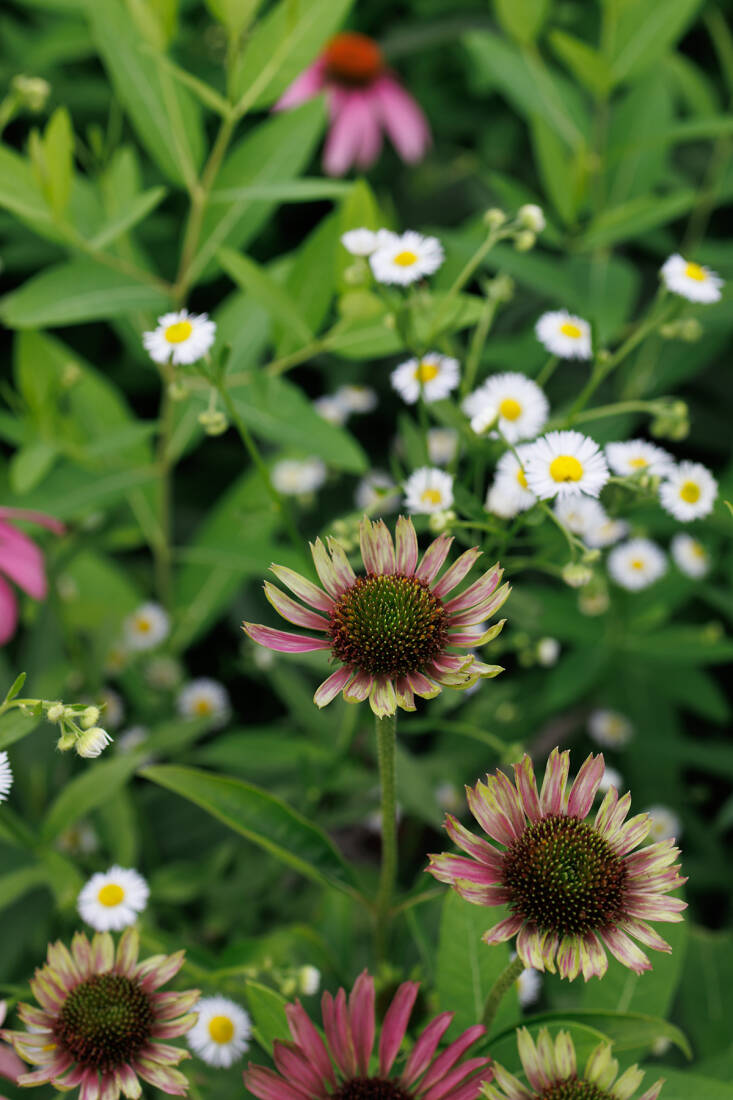
As a companion for more substantial perennials, the tall, wire-thin stems of annual fleabane add lightness and punctation to native meadows and wild borders. Curiously, while its flowers produce both nectar and pollen, attracting many small pollinators, it reproduces asexually, and does not require pollination.
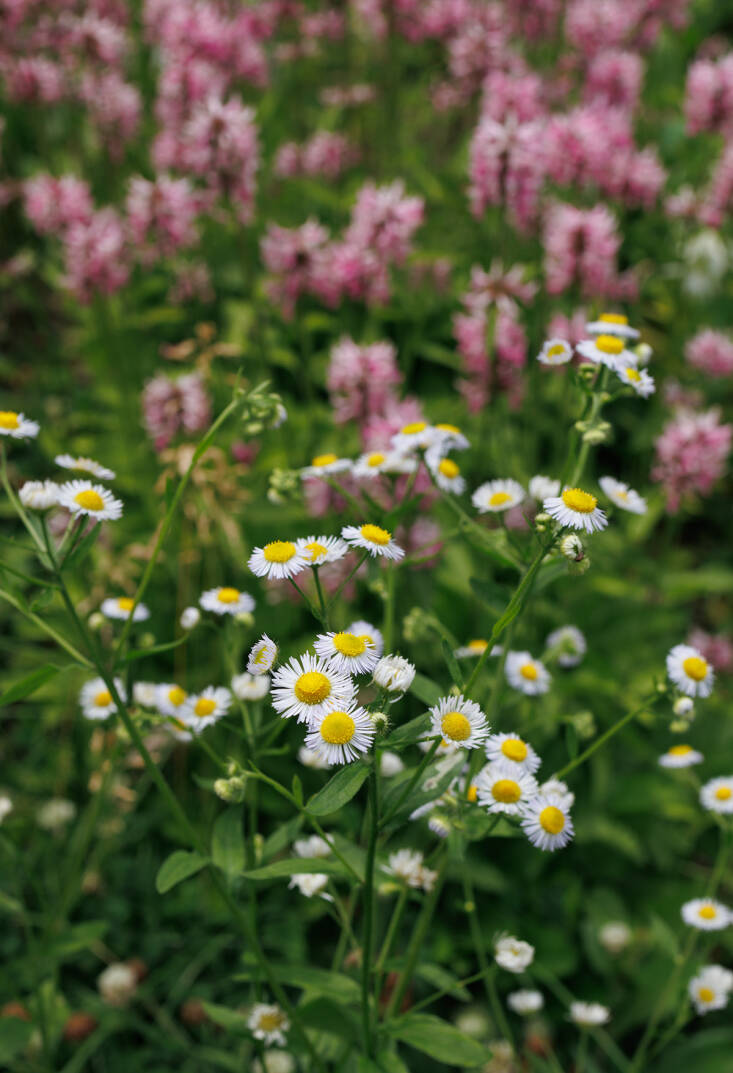
The daisy fleabanes are also that very interesting and appealing thing—plants that support Conservation Biological Control (CBC): From crab spiders to wasps, their myriad white flowers attract predators that prey on critters that are deemed garden pests.
Cheat Sheet
- Annual fleabane, Erigeron annuus, is also known commonly as eastern daisy fleabane.
- It is native to the eastern United States and Canada.
- It is an annual, and occasionally biennial, flowering from summer through early fall.
- Other daisy fleabanes include the very similar-looking Erigeron strigosus (prairie fleabane), and E. philadelphicus (Philadelphia fleabane).
- Because they attract predators (and their prey), fleabanes support Conservation Biological Control.
- Fleabanes reproduce by apomixis, asexual seed production.
- In Europe and East Asia, North American fleabanes have become highly invasive.
Keep It Alive (don’t laugh):
- Once established annual fleabane self seeds readily: it is a pioneer plant that likes disturbed soil.
- Grow in full sun or part shade.
- It is drought-tolerant.
See also:
- Gardening 101: The Low-Maintenance Fireworks of Liatris spicata
- Gardening 101: Coneflower
- Native Bee Balm: Pollinator-Friendly and Delicious, Too

Have a Question or Comment About This Post?
Join the conversation