

As late summer steps into the shorter days of fall, a native annual whose generous yellow flowers festoon its upright and feathered stems begins to show off. Touch those fine-cut, pinnately compound leaves and they fold up, sensitively. This is partridge pea, sensitive plant, sleeping plant—a legume that resembles a delicate shrub but whose lifespan is a growing season. Its seeds will ensure that it stays around the following year, and the next. That self-seeding habit makes partridge pea a helpful stabilizer of sunny slopes and a filler for wide-open spaces. Its flowers attract butterflies and other pollinators, and those seeds, maturing in fall, feed birds.
Here are some of the benefits (and caveats) of growing partridge pea.
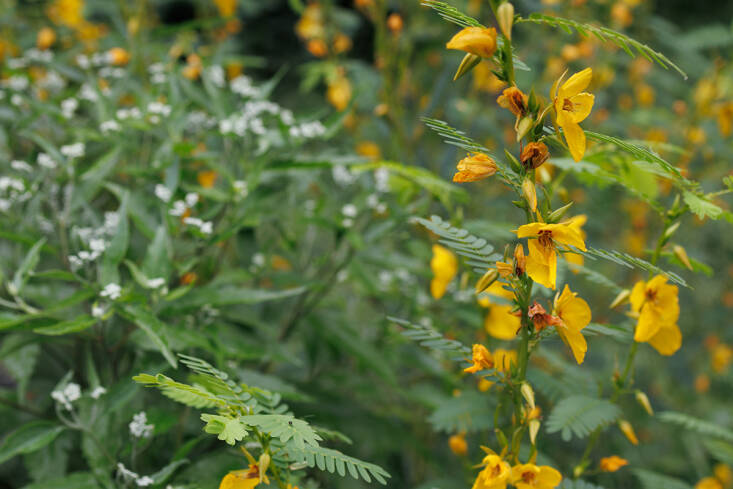
Like other plants in Fabaceae family, leguminous partridge pea fixes atmospheric nitrogen in the soil via beneficial bacteria that occur on the plants’ roots. This can improve poor soil over time (and it can also lead to the dominance of the species that hosts the bacteria—worth bearing in mind), and it is an especially rewarding plant for urban gardeners facing the drought, pollution, and compaction challenges of so-called hellstrips: sidewalk, roadside, and highway margins.
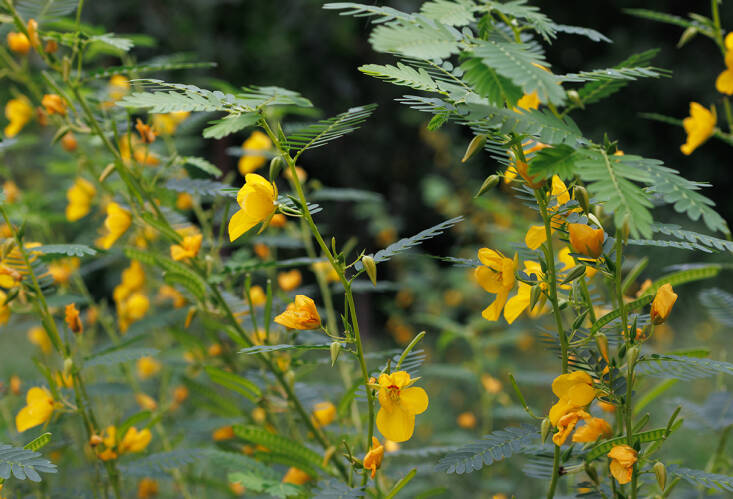
I first met partridge pea at the edge of a wildflower meadow in the northern part of Central Park, one early September. Its wiry, vertical stems made me mistake it for a shrub, and I was surprised to learn that it had grown from seed, and would do so again the following year. Later, during fall migration, the same population was besieged by seed-eating birds. It was enchanting.
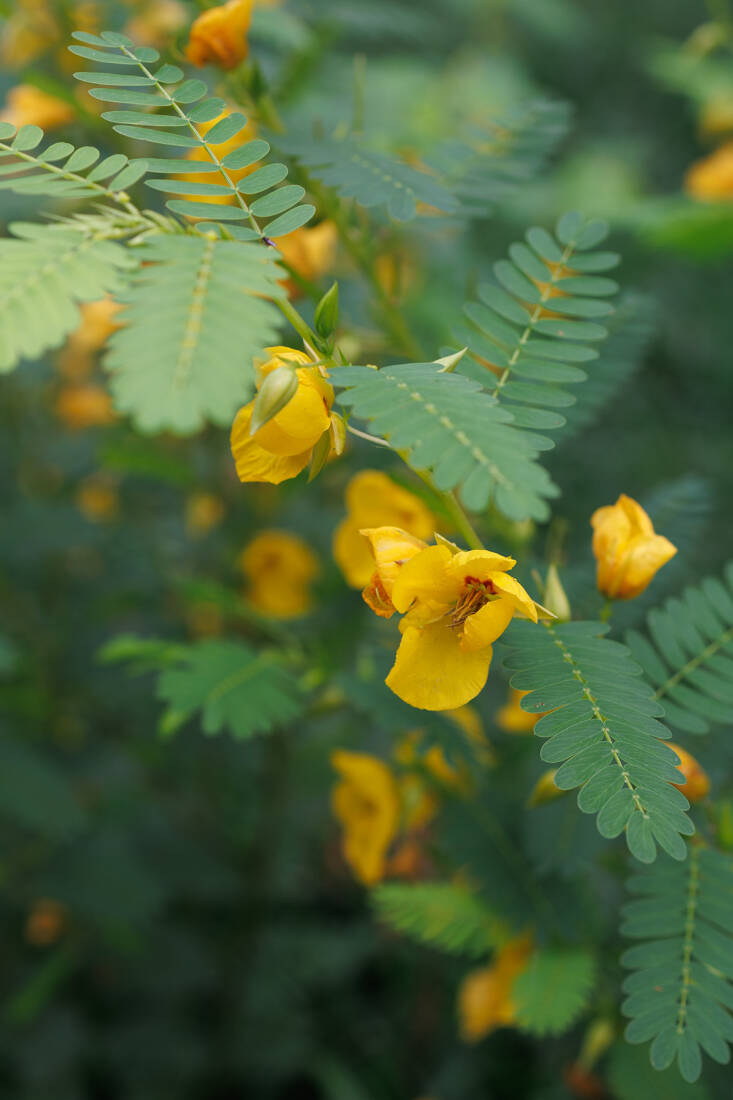
Cheat Sheet:
- Partridge pea’s botanical name is Chamaecrista fasciculata.
- Other common names include sensitive plant, sleeping plant, locust weed, prairie senna, and golden cassia.
- It is an annual.
- It tolerates a wide range of soil types, from sandy to loam to clay.
- The flowers produce no nectar, only pollen.
- The seeds are an important food source for birds.
- Partridge pea is a host plant for several butterfly species and supports native bees.
- It supports conservation biological control by attracting predator-insects like wasps.
- Over time it can grow aggressively in a monoculture—in a small garden weed it selectively when seedlings emerge in late spring.
- It’s an excellent ground cover in problem places.
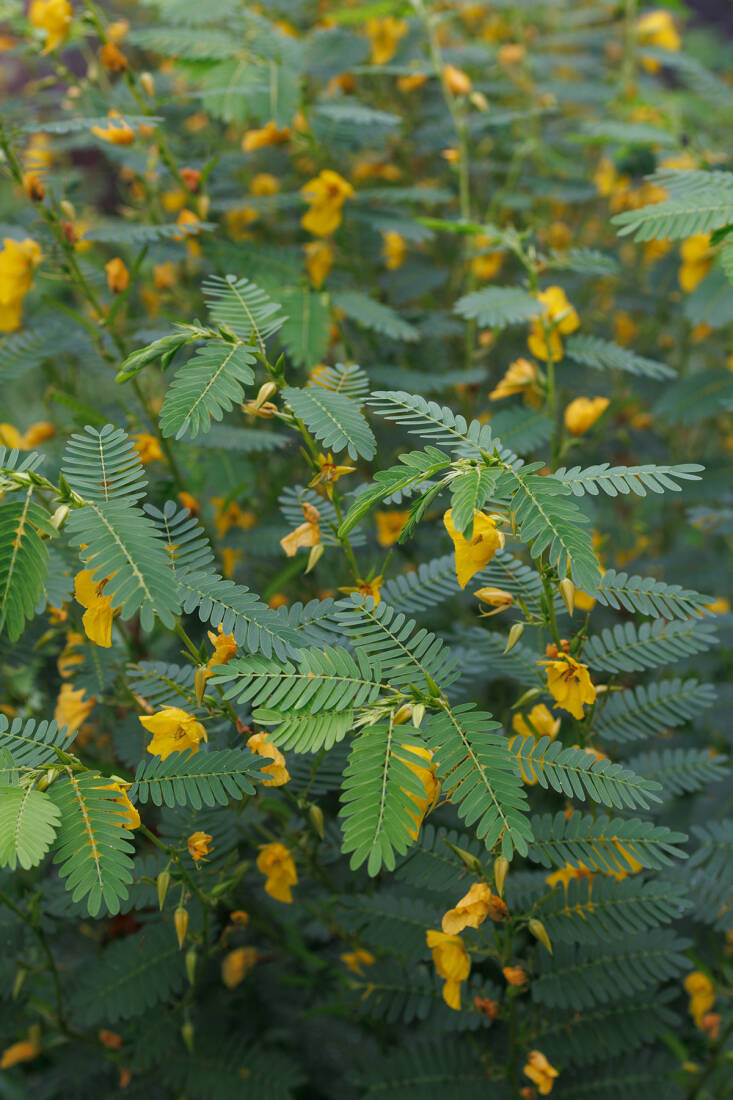
Keep It Alive
- Sow partridge pea seeds or plant seedlings in full sun (plants will grow well in part shade, with fewer blooms).
- Sow seeds in late fall for natural cold-stratification.
- Water to establish, at which point the plants are tolerant of dry periods.
See also:
- Rethinking Yellow Daisy Flowers, Oxford Edition
- 5 Favorites: Unusual (and Low-Maintenance) Perennials for Late-Season Interest
- Annual Fleabane 101: A Boon to Pollinators and a Natural Pest Control




Have a Question or Comment About This Post?
Join the conversation