

Catching a glimpse of a pink lady’s slipper orchid (Cypripedium acaule) in the Eastern springtime woods feels to me like the apotheosis of a floral treasure hunt. Regal and otherworldly, their slender stems supporting outsized flowers that are part petal, part pouch, lady’s slippers tempt pollinators, plant collectors, and deer alike. These interesting native North American orchids hold quiet secrets and forest knowledge. Here are 11 things I never knew about them until I began to visit the plants annually, and to learn more about how they live and grow. (The orchids pictured here were photographed in Downeast Maine in late May.)
1. Another common name for pink lady’s slipper is moccasin flower.
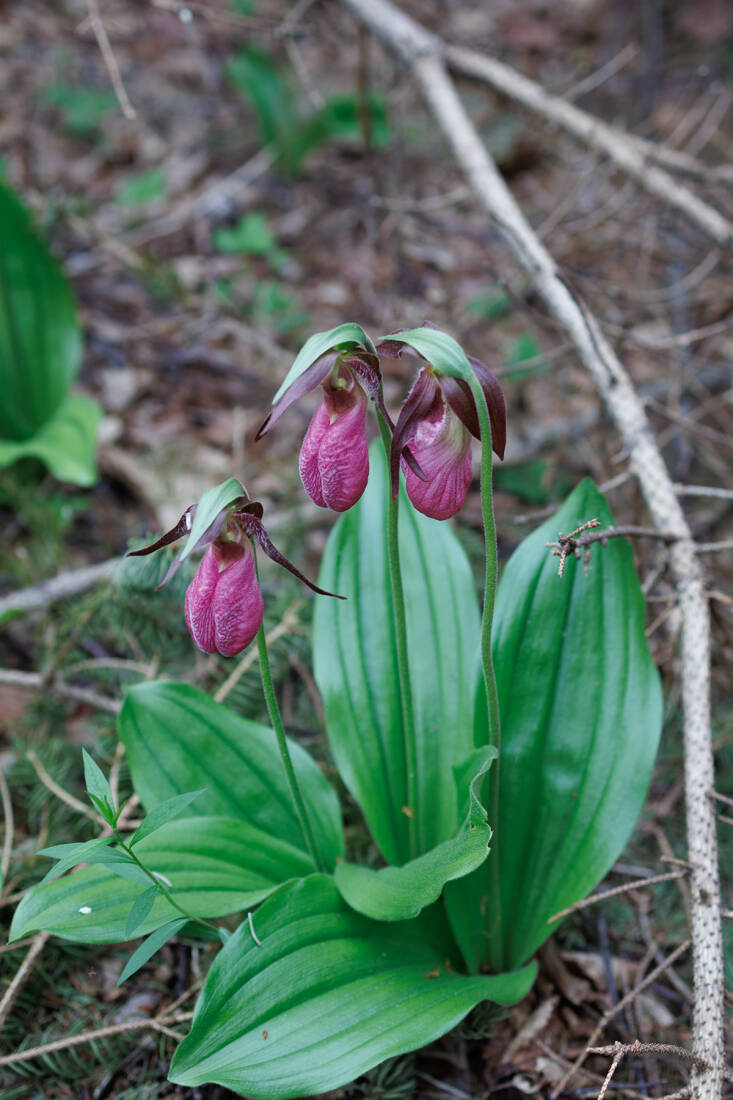
The flower’s colorful labellum—varying from very pale to rose to magenta and burgundy—is the pouch that resembles moccasins. Moccasin flower origin stories include versions of a legend about a young girl seeking help for her community, and in whose bare, bloodied footprints the flowers sprang up. It is a bittersweet reminder that these wildflowers persist where many Indigenous communities could not.
2. There are 12 species of lady’s slipper in North America, and pink is considered the trickiest to grow.
Pink lady’s slipper is Cypripedium acaule and it is one of 12 species that occur in North America (worldwide, there are over 45 species of Cypripedium). Its highly specific growth requirements make it very hard to cultivate, and wild plants should never be moved.
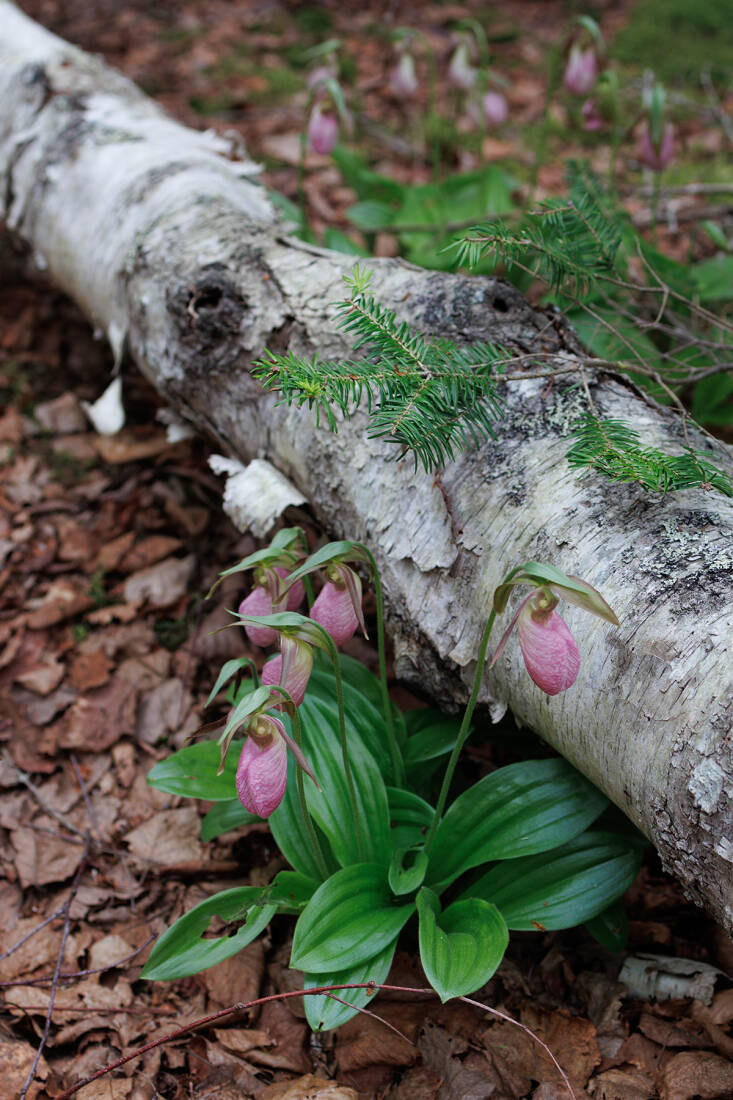
3. Cypripedium acaule is native to the eastern part of North America.
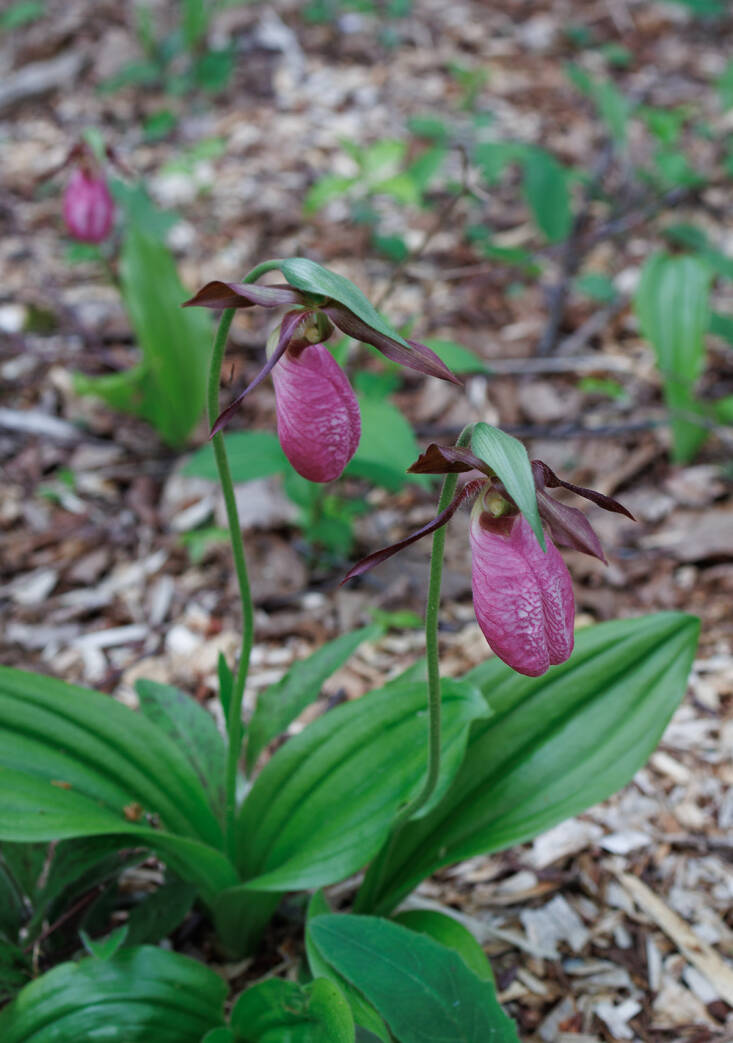
Pink lady’s slippers have a broad distribution—from Canada’s Alberta in the north, east to Newfoundland, and all the way south to Georgia and Alabama. They grow in association with mixed conifers and also with deciduous trees where the soil is very acidic with a layer of rich humus. The colonies that I have been lucky to see in Maine near or at sea level grow where the duff is so thick that the ground beneath our feet feels buoyant. In the southern part of their range they tend to grow at higher elevations, where it is cooler.
4. Pink lady’s slipper is not considered rare.
This is a hard one for me to accept, because the flowers feel rare. I thrill to see them. But pink lady’s slippers’ conservation status is considered globally secure, with exceptions.
Habitat loss, due to development, is a constant and growing threat. In Indiana the orchids are critically imperiled, and in Alabama they are considered vulnerable, in conservation terms. Illegal wild-collection for sale impacts some populations, as does climate change—these very cold-hardy plants have minutely specific growing requirements.
5. Most pink lady’s slipper orchids will die if moved.
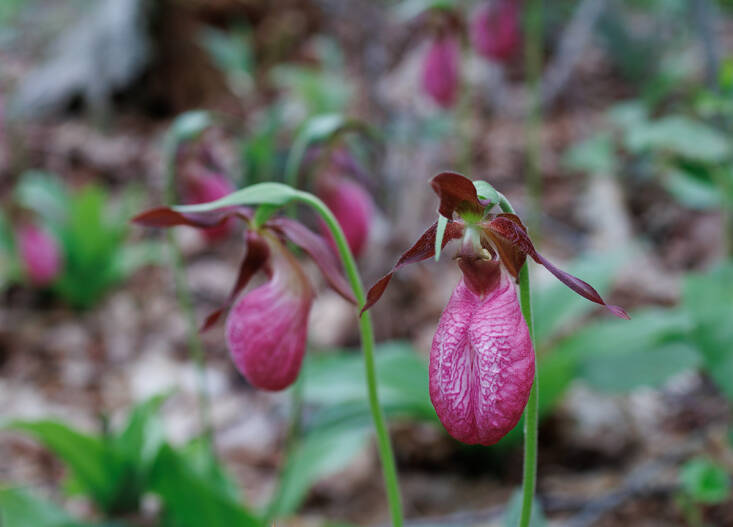
Speaking of vulnerability—and this is what unscrupulous collectors already know: not only is it illegal to dig up any Cypripedium species on state or federal land, but your thievery will likely result in the death of pink lady’s slippers, specifically. While some other lady’s slipper species (as well as hybrids) are easier to cultivate, pink lady’s slipper is fastidious, requiring very acidic, relatively poor soil with super-drainage, pristine water, as well as a vital fungal association without which the plants’ seeds cannot germinate and develop.
6. Lady’s slippers are partial mycoheterotrophs
Say what now? About that fungus: Like many orchids, lady’s slippers evolved with fungi, in this case species of Rhizoctonia, mycorrhizal fungi present in the soil where the orchid grows. Rhizoctonia are considered to be pathogens, but in this relationship both organisms thrive. The fungus, invading the seeds for nourishment, is itself parasitized by the lady’s slipper. The near-microscopic seeds absorb soil minerals via the fungus, making germination possible. When the lady’s slippers are mature enough to photosynthesize, the fungus obtains nutrients from the orchid, whose shallow root system continues to benefit from the symbiosis by accessing more moisture from the soil.
7. Pink lady’s slipper orchids take years to bloom from seed.
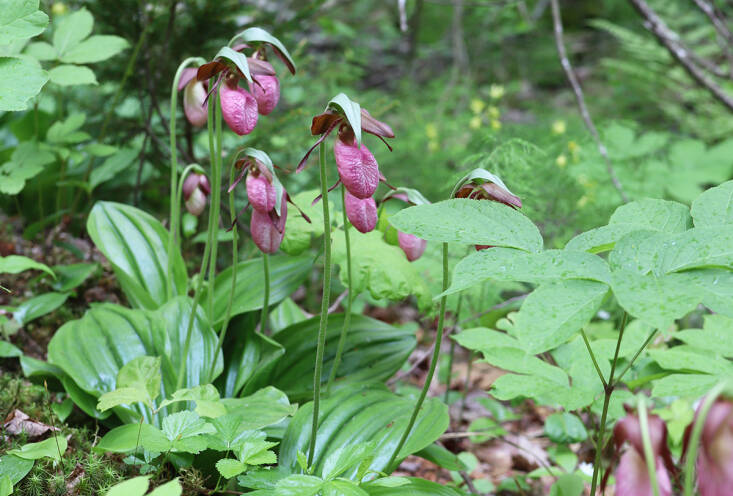
Lady’s slippers do not bloom every year, and pollination rates are low—possibly as low as 5 percent. When they do flower, and when pollination is successful, the thousands of exceptionally fine, spore-like seeds rely on the aforementioned mycorrhizae to germinate. It then takes five or more years for the plant to reach maturity, with the ability to flower.
8. Lady’s slippers for sale may have been wild harvested.
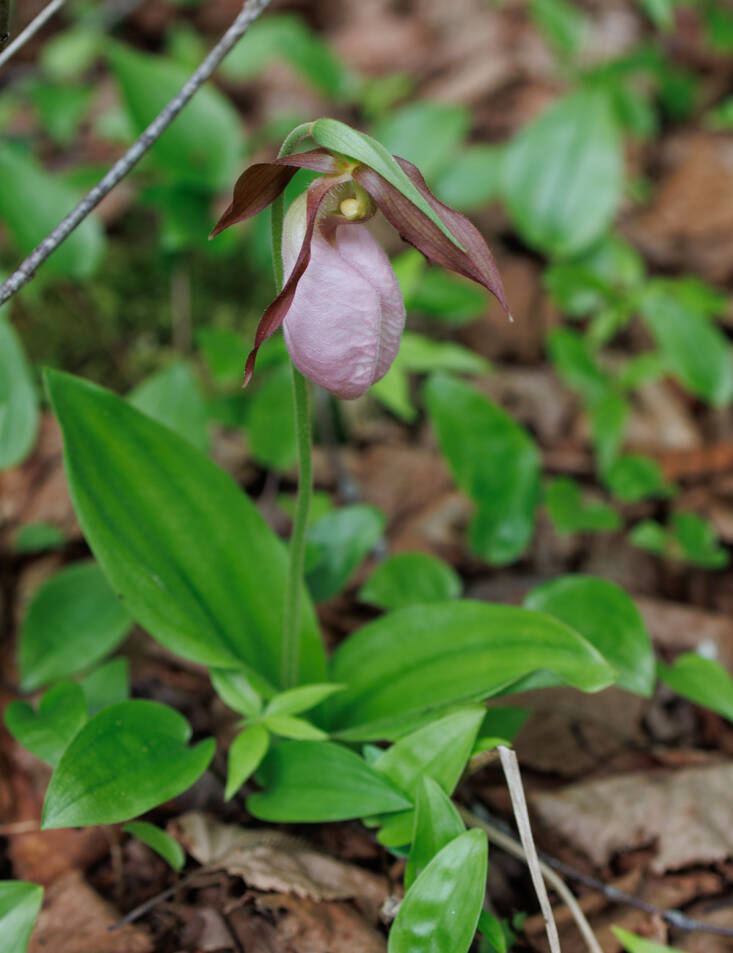
It is possible to grow pink lady’s slippers in vitro, but verifying sight-unseen whether a seller has grown them ethically or is selling a wild plant (which is highly likely to die), is hard. Reputable sellers will be transparent about their process.
Whether sold as live plants in the orchid trade or dry for medicinal reasons (in herbalism lady’s slipper root has a reputation as a sedative), the plants being advertised for sale may have been poached. In a 2004 article in the New York Times, native orchid expert and author William (Bill) Cullina (now the executive director of the Morris Arboretum) described the “tells” of ethically-grown versus wild-collected lady’s slippers: “Greenhouse-grown plants arrive with long white roots that end in points, while those collected in the wild tend to have multiple dark roots, cut short during harvesting.”
9. Pink lady’s slippers can be…white.
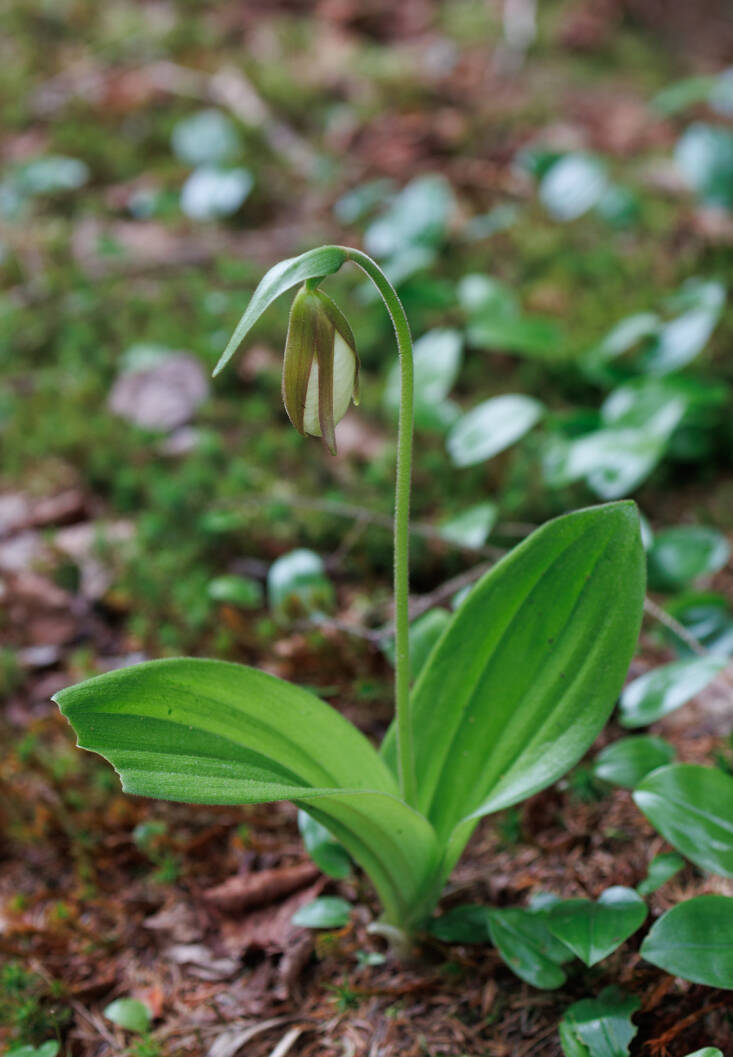
Cypripedium acaule is variable in color, and this white form is considered unusual.
10. It’s a tease for bees.
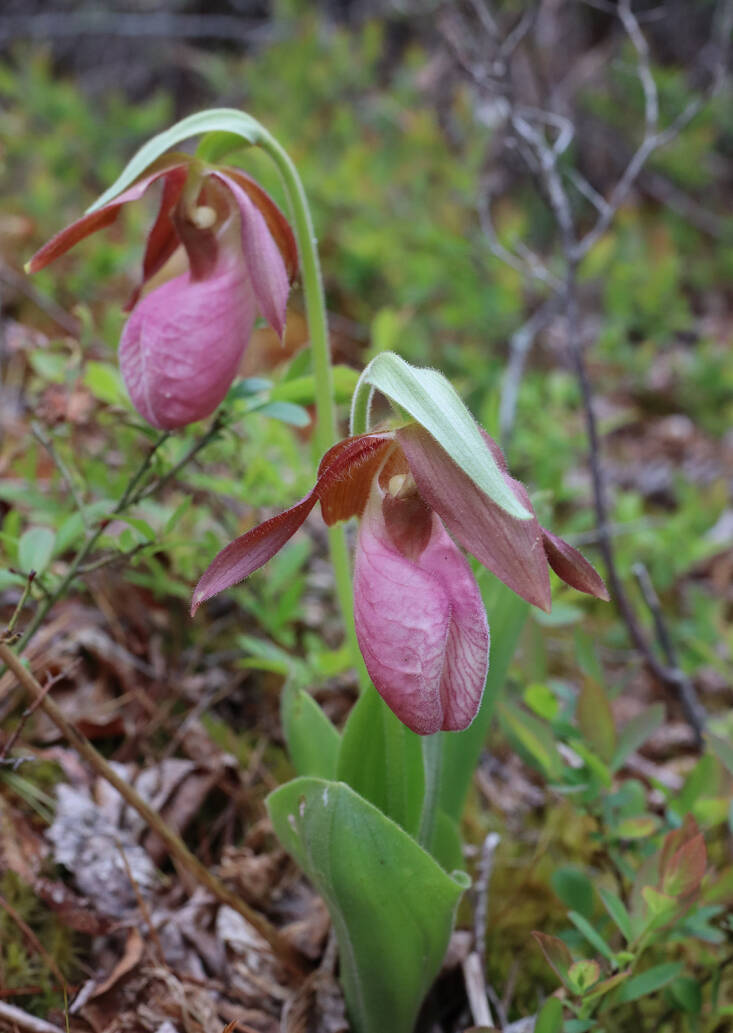
Bumblebees are deceived into visiting lady’s slipper orchids, whose scent promises a nectar reward. Entering to investigate via a slit in the labellum, they are trapped inside, nectarless, until they find the small exit in the rear, first clambering up hairs inside the pouch before squeezing out under the stamenode (a sterile stamen), accumulating pollen en route. If the bee visits another flower, it leaves the pollen on the new flower’s lady parts. “The bee does not get anything from this interaction except perhaps humiliated,” wrote Bill Cullina on his Instagram page this May.
11. Deer think they are delicious.
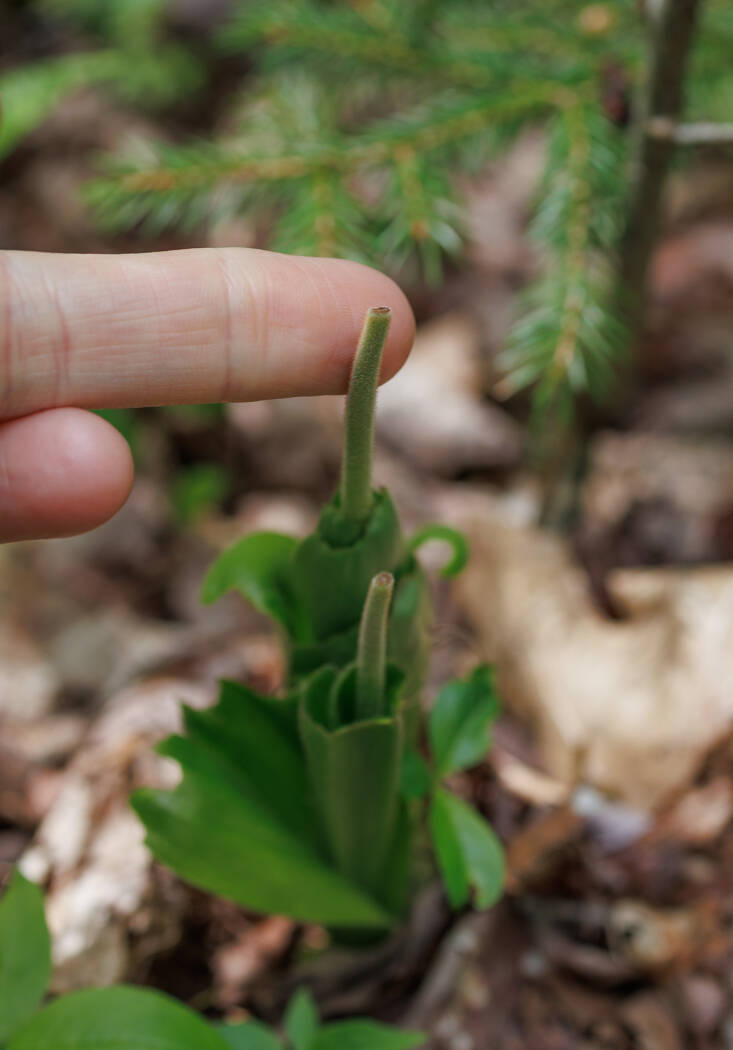
In Maine this spring I was excited to visit a familiar colony of pink lady’s slippers growing in full view beside a dirt road. It had been two years since we had last seen them. But where over a dozen had flourished, only two plants remained. And their stems ended abruptly where a flower should have been, decapitated. I fumed, blaming humans. My husband and I walked on, very depressed. But we began to think. Looking at photos, and then re-visiting the plants, it seemed clear that my anger should perhaps have been leveled at ungulates; to wit, deer. Were those not clear bite marks across the whole crown of the plant? A little reading confirmed that deer find lady’s slippers very delicious. (Did they eat all the other plants? We can’t know.)
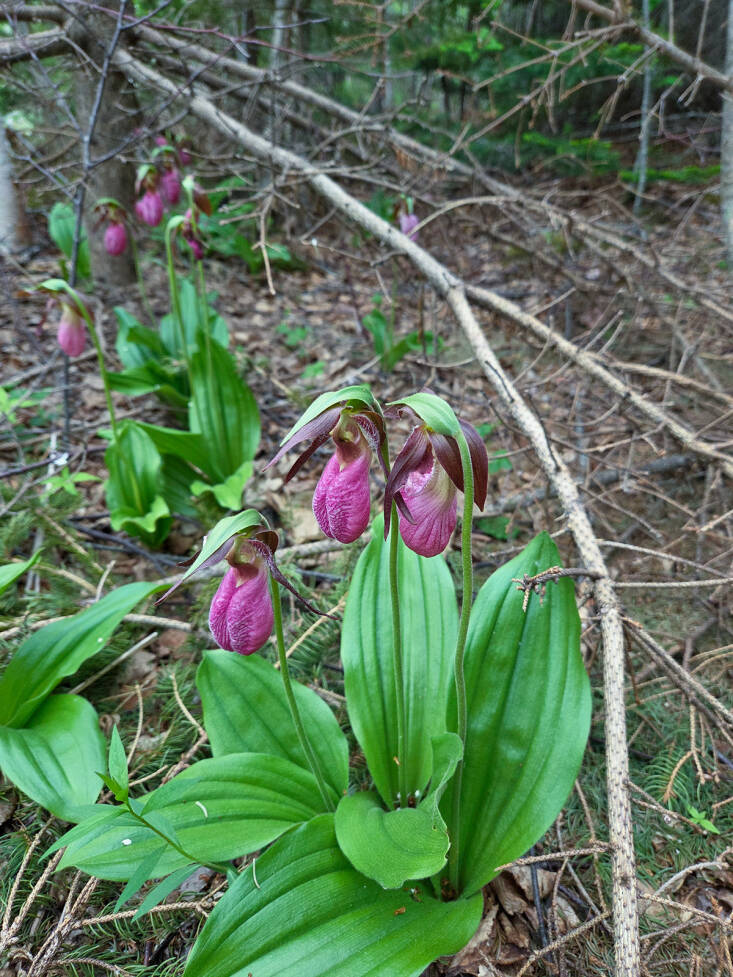
Several days after seeing the chomped plants we walked on an unfamiliar trail where we glimpsed throngs of the orchids in full bloom. Groups of plants had been meticulously caged by cut-off, slender dead pine and fir trunks, their branches radiating out like an umbrella’s spokes to cover the plants. Trail keepers’ or an orchid guardian’s work, either as deterrent for humans, or more likely, against deer. They seemed too slender to be effective, but perhaps the profusion of flowers was proof.
There is plenty I still do not know about pink lady’s slippers. But I do know that finding them on a spring trail in the leafed-out woods where a hermit thrush sings will be and will remain one of the more extraordinary experiences of an otherwise rather ordinary life.
See also:
- May in Maine: Heaven on Earth?
- A Sense of Place: The Work of Garden Designer Caleb Davis in Maine
- Garden Visit: A Hidden, Beautifully Wild Rhododendron Sanctuary in Maine




Have a Question or Comment About This Post?
Join the conversation