

My pitch to my Gardenista editor was well-intentioned. I love nothing more than finding new ways to contradict myself and keep a running list on my phone of things I’d like to second-guess. Hemerocallis sat at the top. “How about a story on rethinking daylilies,” I proposed.
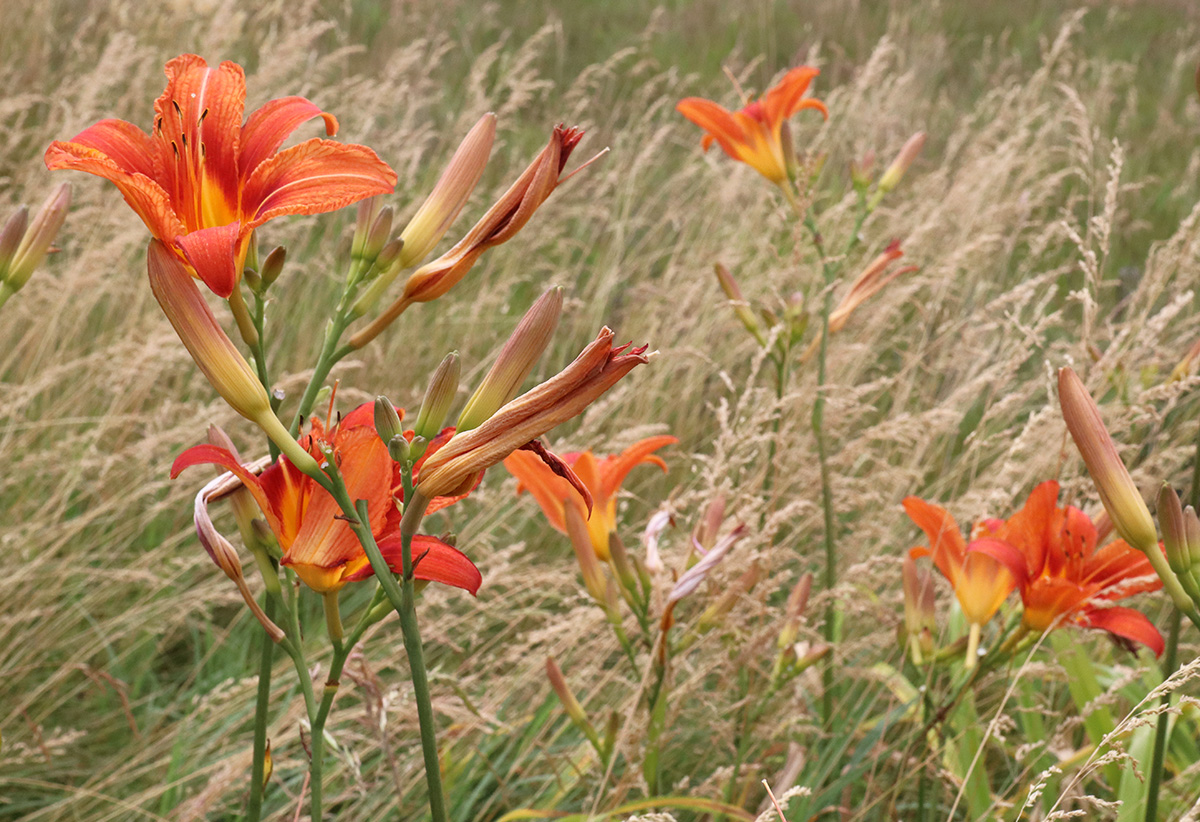
There’s one word that comes to mind when I think of daylilies: pedestrian. That’s not because I’m snobbish about them, even though I am, but because that’s the context in which I’ve always known them: as colonizers of municipal sidewalks, busy traffic medians, and Walmart parking lots. Their sinewy foliage and tawdry blooms are made only slightly more palatable by the way they glow against a backdrop of dark mulch and tarmac. But when I saw an image of them tangled in a mist of bronze fennel in Dan Pearson’s garden, I wondered if there may be some redeeming qualities that I had missed. And when, out of nowhere, one sprung up in a bed that I had recently resuscitated on the road-facing side of my Massachusetts property, that diminutive splash of apricot overlooking Route 41 seemed to confirm both the flower’s symbiotic relationship with asphalt—and its potential as a worthwhile story.
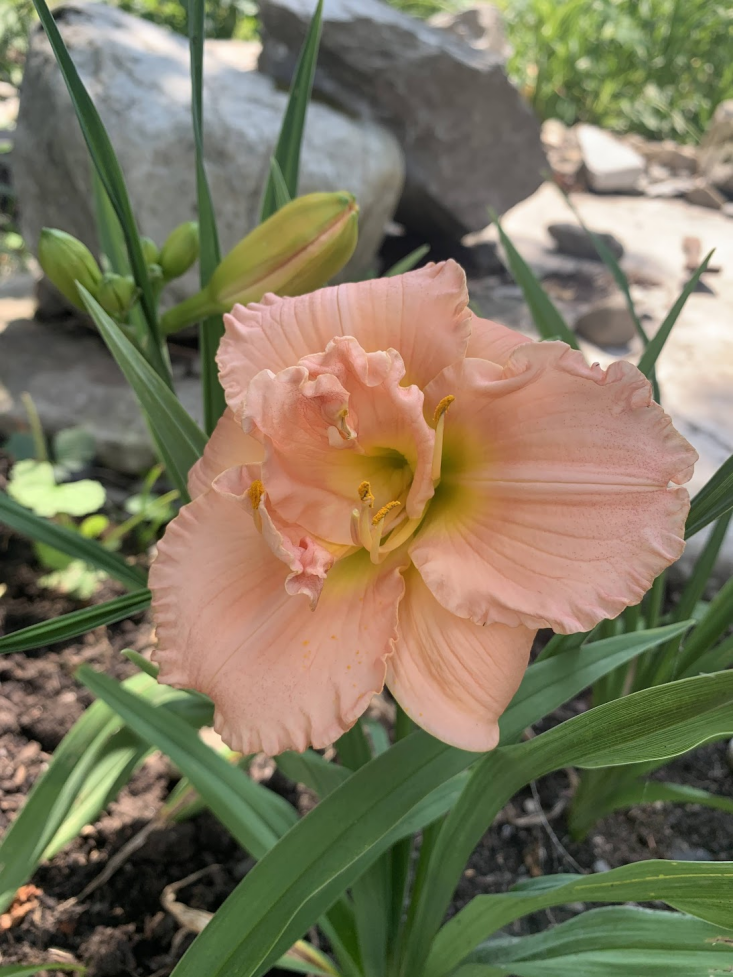
So I tried to be curious, I really did. I scoured the internet in earnest for information about a genus that I was very familiar with but knew remarkably little about. Native to Asia and brought over by European colonizers, they have been in our landscape for so long and are so prolific that they’re often confused for natives. The American Daylily Society, founded in 1946, boasts more than 5,000 members and includes a list of 300-plus prominent display gardens that you can filter by zip code to find one closest to you. The 15 or 16 straight species of Hemerocallis have been bred to produce more than 90,000 cultivars that come in retina-scalding shades of crimson, cerise, fuchsia, and yellow, many with ruffles to boot.

There were the aforementioned ones in Pearson’s garden—H. ‘Stafford’ and H. altissima, to be exact. The altissima in particular proved intriguing, a towering species with highly fragrant blooms that open only in the evening. They could make an ideal addition to my burgeoning Oenothera collection, I thought, with reflexed petals that offer structure against the primrose’s swirling forms. I dug deeper, finding another variety called ‘Lemon Bells’ that James Hitchmough had listed as a favorite summer plant in his Sheffield garden, even though evidence of the plant’s presence in said garden is relatively scant. In the two images where I was able to spot them, they lurked in the distance, silent sentinels that were outshone by vivid Kniphofia, Crocosmia and Echinacea.
From there, though, it all went downhill. A post on Choose Natives informed me that H. fulva, the ubiquitous, orange-flowering variety, is listed as invasive by both the U.S. Fish & Wildlife Service and the National Parks Service. Two pages of the NYBG website dedicated to the genus barely featured images of the plant at all, with one prominently showing an Asiatic lily instead. Whether that was by accident or intentional, it’s hard to say. Then, this spring, I noticed the single plant I’d found in my bed last year had quadrupled in size and was already smothering a stand of nearby camassias, the sign of a thug if there ever was one.
So I ripped it out and stopped my search. I closed the tabs on Google Chrome and deleted the doc with the running list of references. On rare occasions, reconsidering beliefs can be a clarifying process more than a transformative one. The magnifying glass of intention may not reveal anything new, no matter how much you may want it to. For now, daylilies live on in those commonplace spaces for me, knocking against car tires and the hurried knees of city dwellers who pay them no mind. Until the day that someone can prove me wrong. Maybe you are that person.
See also:





Have a Question or Comment About This Post?
Join the conversation