

Ask your nearest bumblebee where they are headed and—if you speak Bombus—they might share their hottest hangout in high summer. It’s the mountain mint. It might seem narrow to focus on just one species in the genus Pycnanthemum, but slender mountain mint is well worth highlighting. Now is when you will notice it, because its small white flowers festoon the delicately needled foliage during the warmest time of the warmest season. Those softly pointed leaves are exhilaratingly aromatic. Once you know that, wandering past the perennial without bruising the foliage gently is impossible: A sharp whiff of peppermint, a quick tonic.
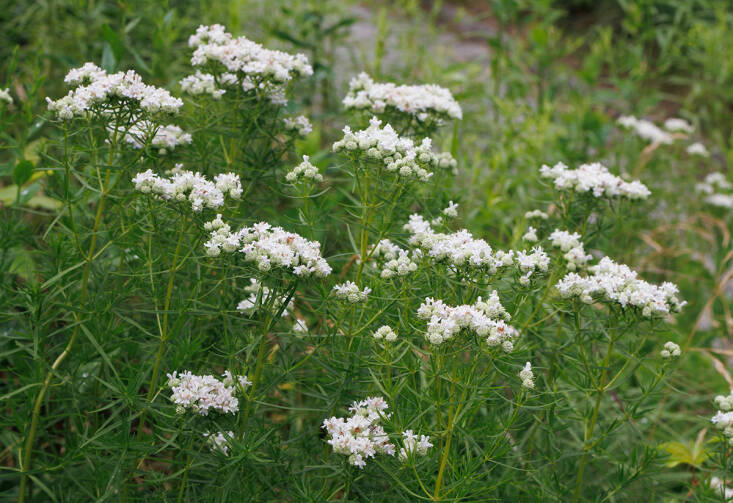
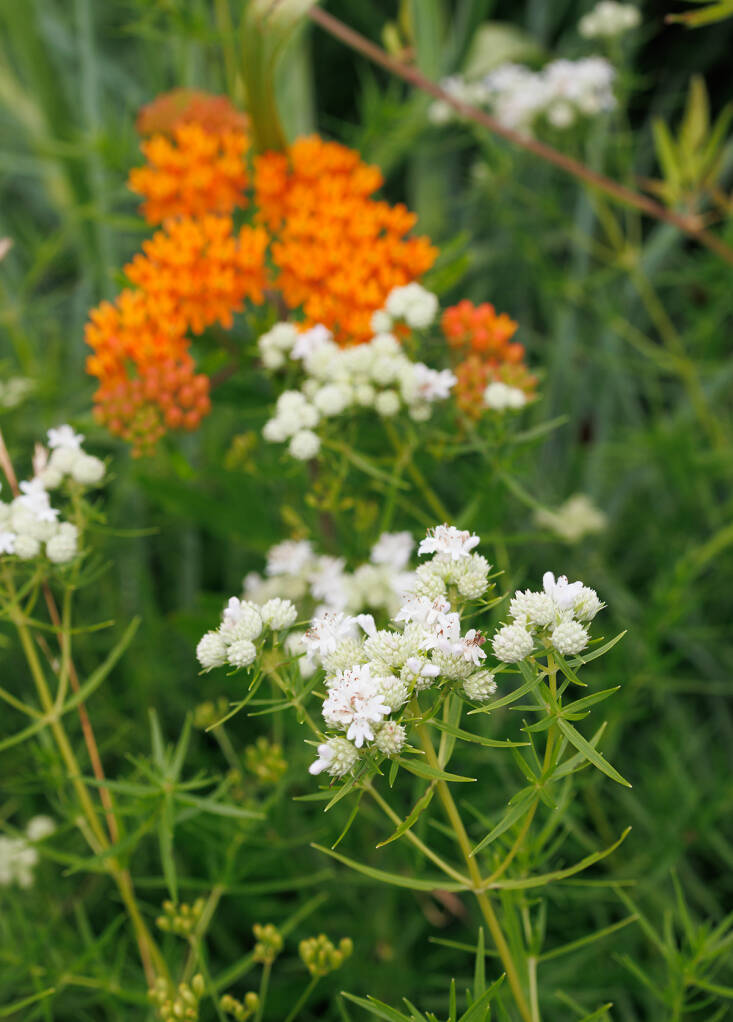
Slender mountain mint is Pycnanthemum tenuifolium, with a native range across eastern North America. Once established it is tough, surviving spells without water, and relishing full sun. Like all members of the Lamiaceae family its nectar-filled flowers, tiny but gathered in packed clusters, are to bees what Times Square is to tourists in New York. Irresistible.
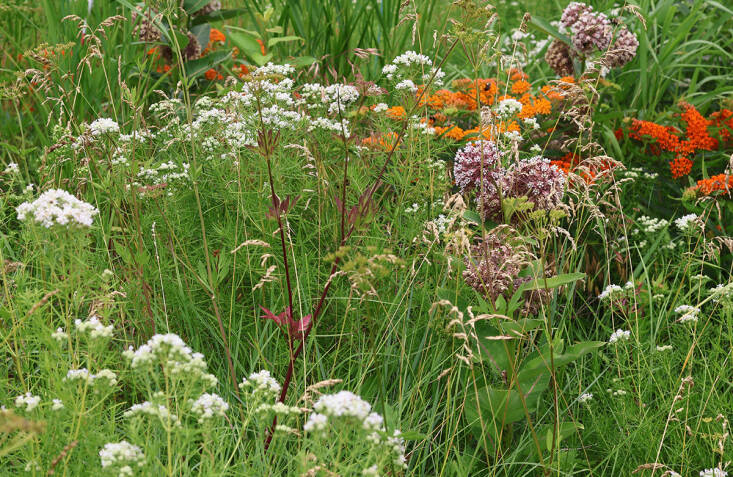
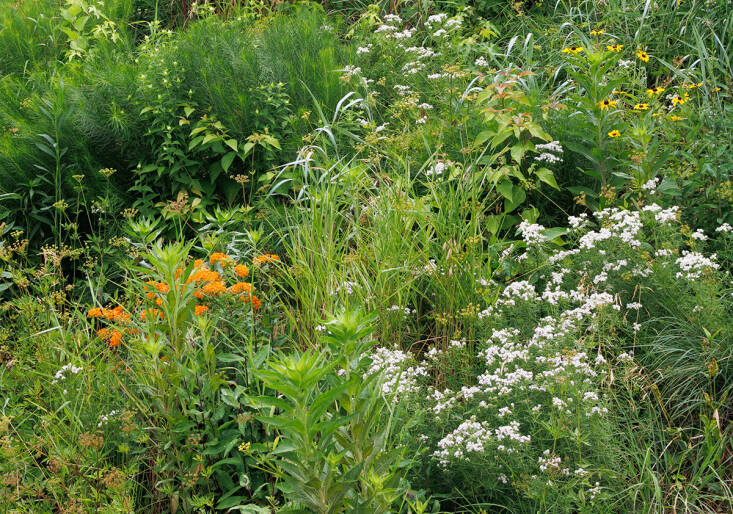
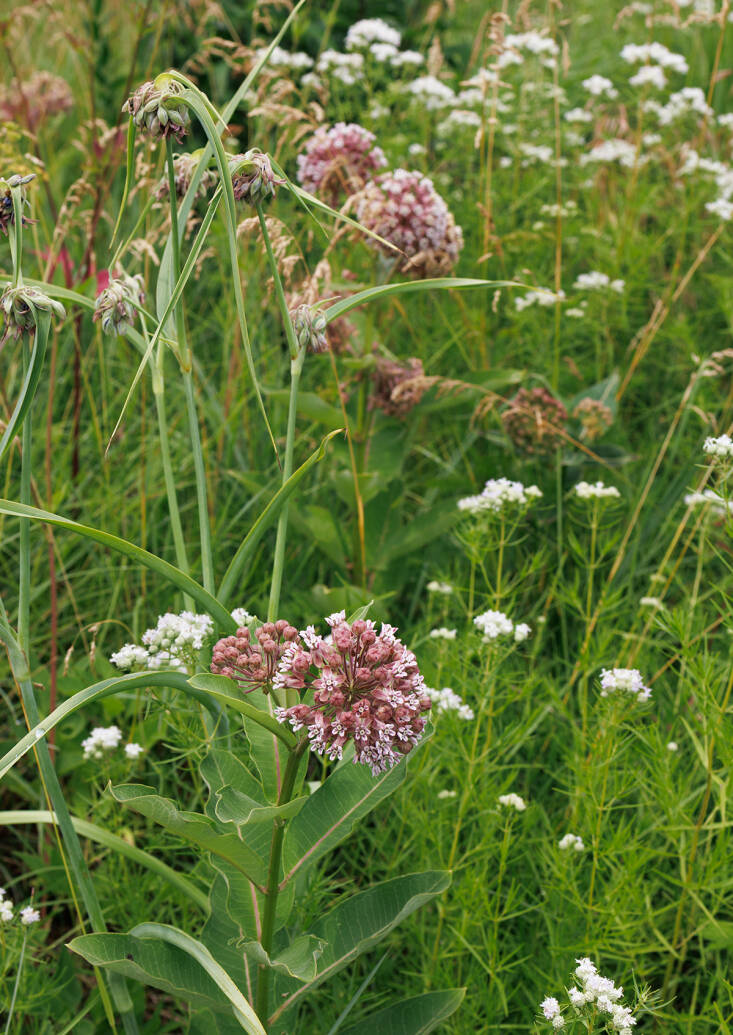
This mountain mint plays well with many plants. Spreading via rhizomes, it is tenacious enough to hold its own alongside gregarious natives like common milkweed (as well as less rambunctious butterfly weed and swamp milkweed) and Rudbeckia, as well as Amsonia, Echinacea, Liatris, prairie onions, and spiderworts—perennials whose flowering season coincides with this Pycnanthemum’s.
Cheat Sheet
- Slender mountain mint is a native North American mint, one of about 20 species in the Pycnanthemum genus.
- Most mountain mints occur naturally in the eastern parts of North America.
- The plants are very adaptable, growing in soils ranging from dry to modestly wet and in full sun to semi shade.
- The Pycnanthemum Trial at the Mt. Cuba Center in Delaware includes 42 species, cultivars and hybrids of the genus and is on view through 2027.
- Bees, butterflies, wasps, and other pollinators flock to the flowers.
- Slender mountain mint is a good partner for other chaotic rhizomatous spreaders like common milkweed and dogbane.
Keep It Alive:
- Slender mountain mint is hardy from USDA growing zones 4 to 8.
- It flowers most in full sun but grows very well in half a day of shade.
- Keep new plants watered until established, when they are tolerant of extended dry periods.
See also:
- How to Plant a Pollinator Garden—in a Pot
- In the Night Garden: How to Help the Moth, a Vital and Underrated Pollinator
- 8 Favorites: Roses for Pollinators

Have a Question or Comment About This Post?
Join the conversation