

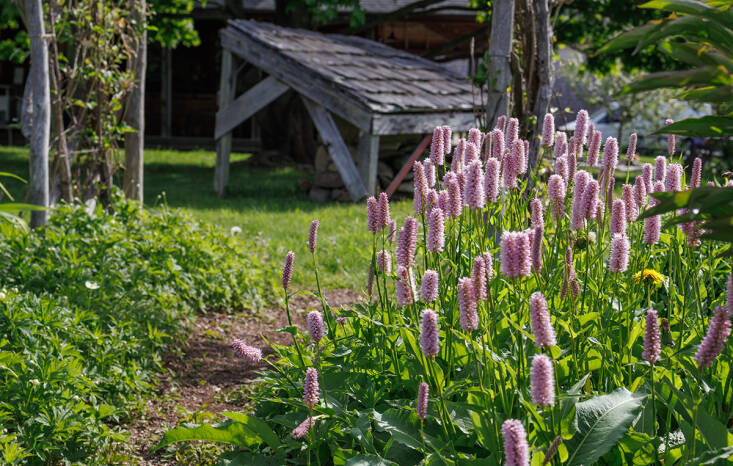
In the early summer garden of Tinder Hearth, the bakery and restaurant set amid green fields outside Brooksville, Maine, I waited recently with my husband for two very good pizzas to arrive (when they did there was lovage from the garden on one, and tender kelp stipes from the coast on the other). There was plenty to occupy us while we waited. Neat Victorian edging around a pruned circle of elderberry shrubs. An old apple tree in blossom, its heavy limbs supported by kind crutches. A vegetable garden where rhubarb and rows of statuesque chives flourished. Perennial borders lush with new green leaves and pink with the elegantly showy spires of bistort, just beginning to open. It kindled a desire in me to grow it.
Here’s how.
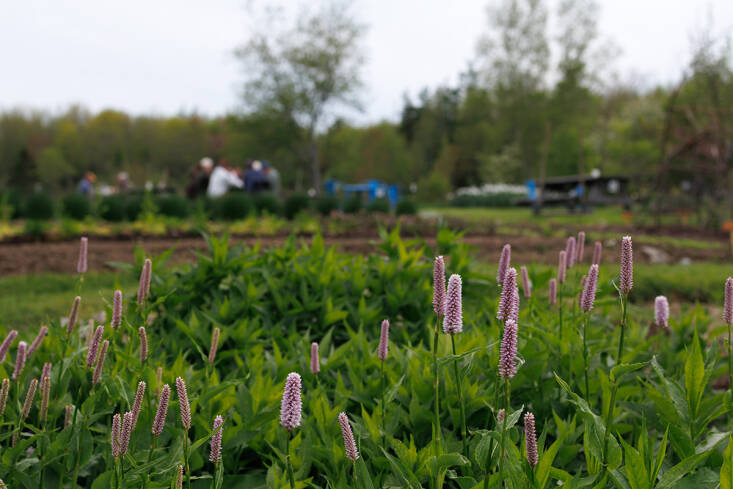

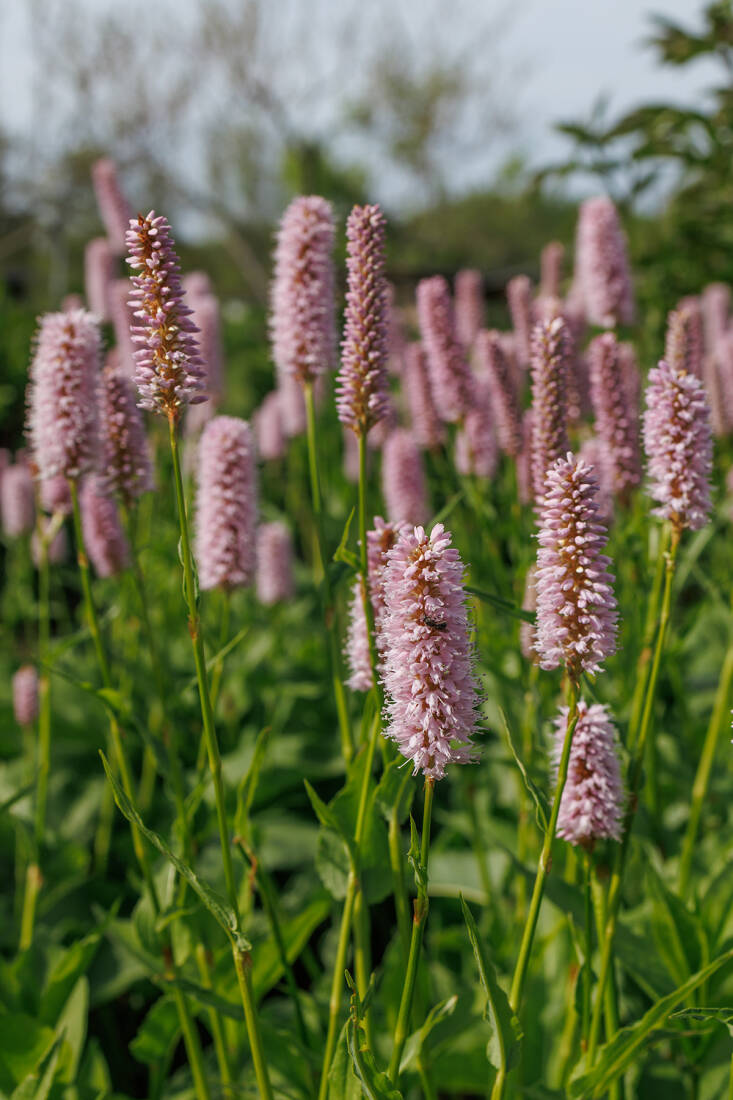
I returned four sunny days later to see the bistort better, and found the pink flowers in full bloom.
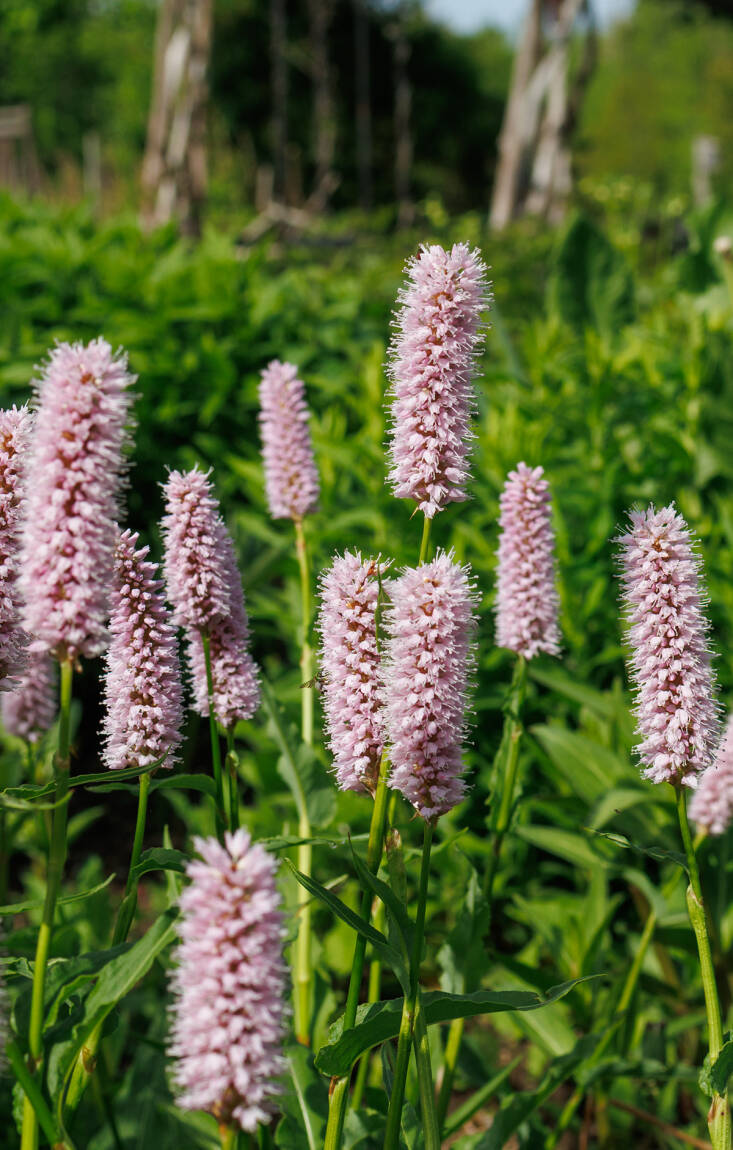
Previously classified as a Persicaria bistorta, and Polygonum bistorta before that, bistort has been granted its own genus and is now Bistorta officinalis. There are many cultivars, whose flowers may be carmine, pale pink, or white, with pink ‘Superba’ appearing most often in cottage gardens.
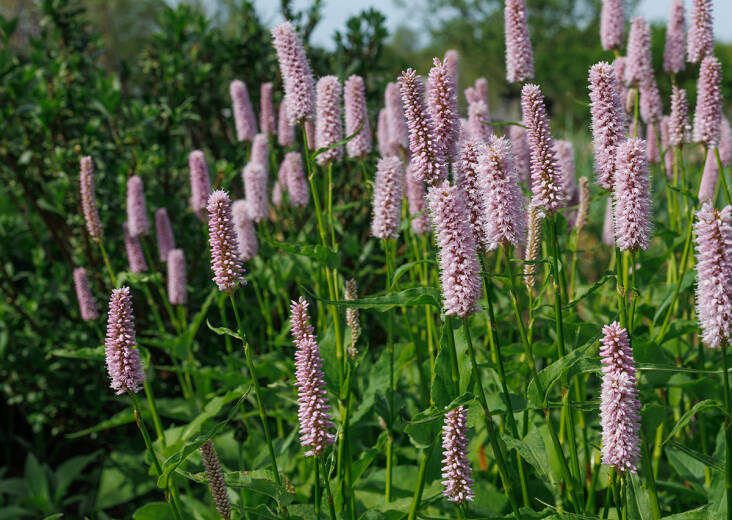
The earlier classifications are easy to understand. The flower structure of pink, weedy smartweed (Persicaria pensylvanica) is like bistort, but in miniature. And lady’s thumb (Persicaria maculosa) is a lankier lookalike. Bistort’s jointed stems and alternate leaves suggest fleeceflower (Persicaria polymorpha ) as well as Japanese knotweed (Reynoutria japonica). Then there is its close cousin Bistorta affinis, which is mat-forming.
All these plants are in the buckwheat or knotweed family—Polygonaceae. While they share characteristics, the perfectly vertical posture of common bistort’s slender, strong stems atop its clumping habit sets its fluffy flowers apart, making it instantly recognizable and desirable.
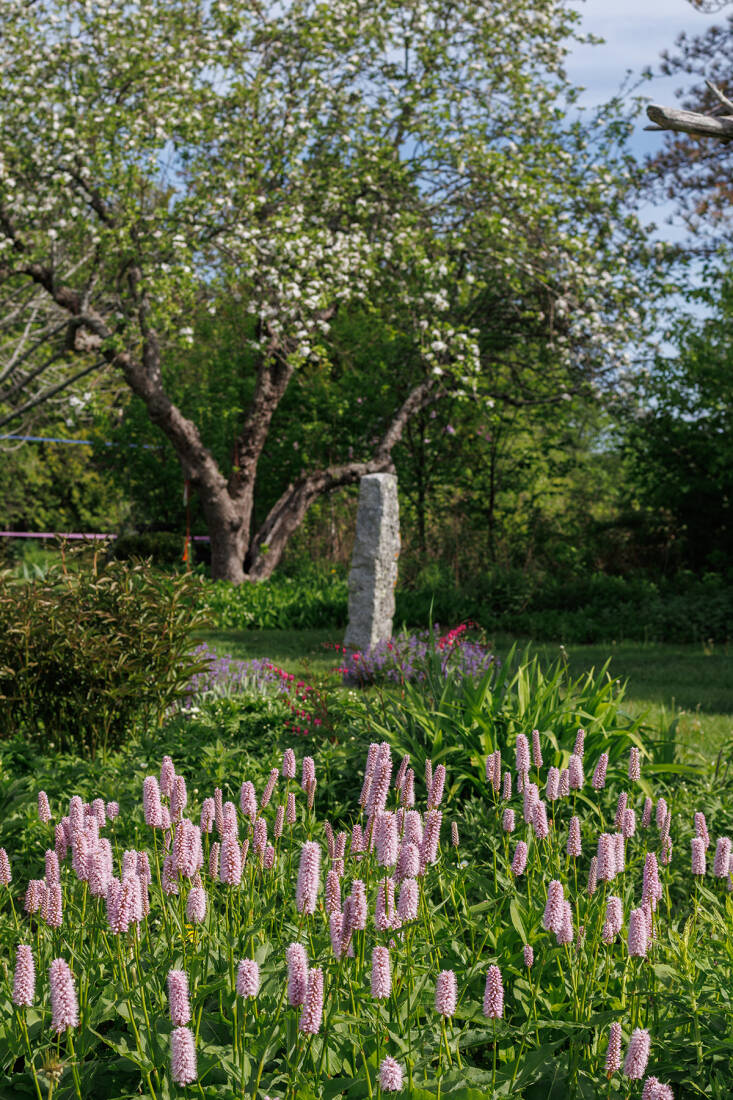
Bistort is native to Northern Europe, and East and Central Asia, but it has naturalized in parts of New England where it finds the region’s serious winters to its liking. Despite this success it is not listed as invasive in any state. In a garden it is a low-maintenance flowering perennial with a satisfyingly long as well as diverse season of interest: those flowers (which repeat), excellent fall leaf color, and seedheads that attract birds. Deer tend to steer clear of it (but saying that out loud may have jinxed it—sorry).
Cheat Sheet
- The etymology of bistort is Latin: bis = twice and tortus = twisted, referring to the plant’s root structure.
- Snakeroot is another common name, also referring to its slithery rhizomes.
- Bistort begins to flower in late spring to early summer, with a bloom-time of over a month, with repeat-bloom if deadheaded.
- ‘Superba’ is a common cultivar with large flower clusters.
- Its pink (or white) spires are a collection of up to 150 tiny, individual flowers arranged in a terminal raceme.
- The flowers are excellent for a cutting garden and last well in a vase.
- Bistort leaves are edible when young.
Keep it Alive
- Give bistort a bitter winter and short, intense growing season and it is happy.
- In other words, it is hardy from USDA growing zones 3 to 7.
- Bistort appreciate neither dry climates, nor regions with mild winters and extended hot, muggy weather.
- It grows well in full sun with ample moisture, otherwise appreciates afternoon shade.
- Deadhead to encourage rebloom and a longer flowering season.
For more tall perennials, see:


Have a Question or Comment About This Post?
Join the conversation