


This is part of a series with Perfect Earth Project, a nonprofit dedicated to ecological gardening, on how you can be more sustainable in your landscapes at home.
For more than 80 years, Whitmores has been caring for landscapes on the East End of Long Island. Recently, Mariah Whitmore, the third-generation CEO, has noticed a change. More of their clients are requesting nature-based land care. She observed that when people started growing food in their yards during the pandemic, they started thinking about what they were putting on their lawns and in their flower beds. “It was a lightbulb moment for them.” So last year, Whitmores joined forces with Piazza Horticultural, the pioneering ecological landscape and design maintenance firm founded by Tony Piazza in 1998, to form a new nature-based land care branch.
Piazza (who is also on the board of Perfect Earth Project) was an early adopter of ecological practices. Growing up at his “Italian grandmother’s apron strings” in her thriving garden replete with flowers, vegetables, lawn, and chickens, he watched as she “composted, operated the garden as a closed loop system, and never used chemicals,” he recalls. Those early lessons stayed with him when he started in the industry decades ago, and led to his early adoption of nature-based practices.
As people learn about the dangers of conventional landscape chemicals, homeowners want to change how they care for the properties—to protect their health, the health of their kids and pets, and the health of the planet. “Today, the majority of our clients are interested in nature-based practices,” says Whitmore. Demand is growing—and it’s not just coming from homeowners. Employees are eager to change, too. They don’t want to work with toxic chemicals, notes Whitmore.
While there might not be enough nature-based land care professionals to meet the demands right now, Perfect Earth Project is working to change that. We created a guide that will help you get started talking with your landscapers about the changes you’re looking for and how to achieve your goals together. Here are the steps to get started. Download the complete Landscaper Language to learn about the practices and follow the links for more help.
Talk with your landscaper.

Set up a meeting to review your landscaper’s current proposal and invoices and go over what practices you’d like to change.
Explain the reasoning behind the changes.
Start by committing to these three simple promises: 1) Avoid all chemicals. 2) Grow native plants and think two-thirds for the birds (for every three plants you buy, make two of them native). 3) Close the loop—send nothing out (ie. grass clipping and fall leaves), buy nothing (ie. mulch and fertilizer), except more plants.
Then discuss the nature-based practices you’d like them to do, like mowing higher and leaving the grass clippings on the lawn, irrigating only when necessary, and planting a living mulch or soft landing, instead of buying truckloads of imported mulch each season. Explain why these new promises and practices are important to you. Remember: It’s about process, not products. You want to create a healthy space that is safe for you, your family, your pets, and the wildlife all around you.
Stay firm.
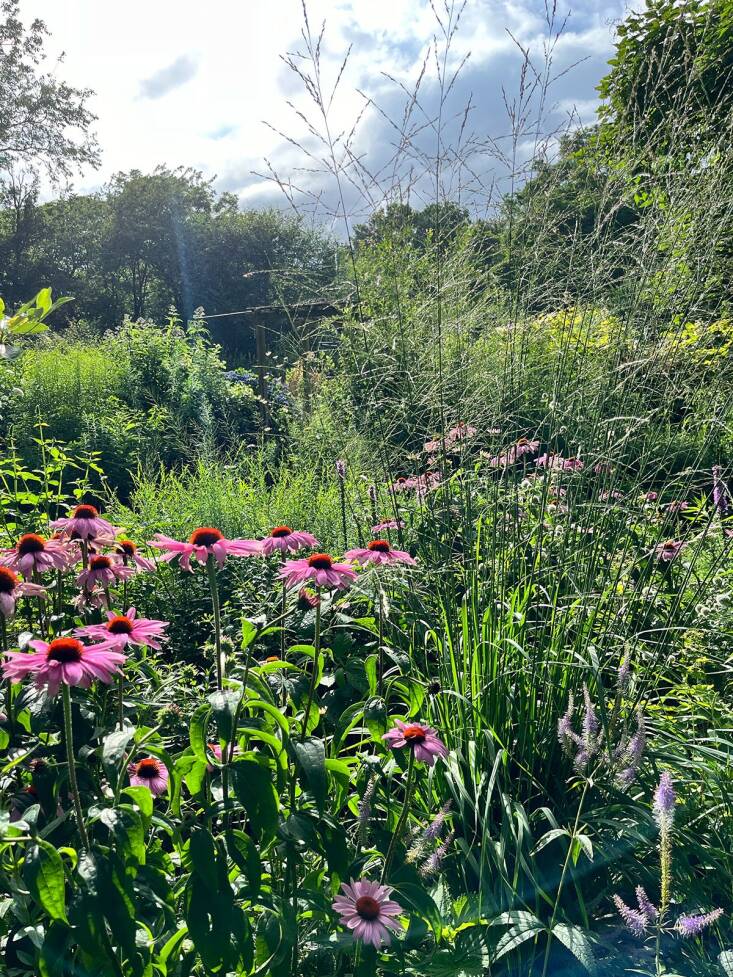
Be prepared to defend your commitment. Assure them that you will be happy with the results if they follow nature-based practices and everyone is positively engaged. For example: You will welcome clover in your lawn. You will be happy without a sea of mulch. You will celebrate nibbled leaves. Hooray!
Provide assurances.
We know this may be new and different from what they’ve been doing, and there may be a learning curve. “Give your landscaper a little bit of grace as they learn and, and start to incorporate those practices,” says Whitmore. “Tell them, I want to change. I want to change with you. And we’re going to do this together.” Share trusted nature-based practices, encourage them to research, take classes, and try things out. Explain to them it’s not a product swap (switching from one fertilizer to another), it’s a process.
Request a new contract.
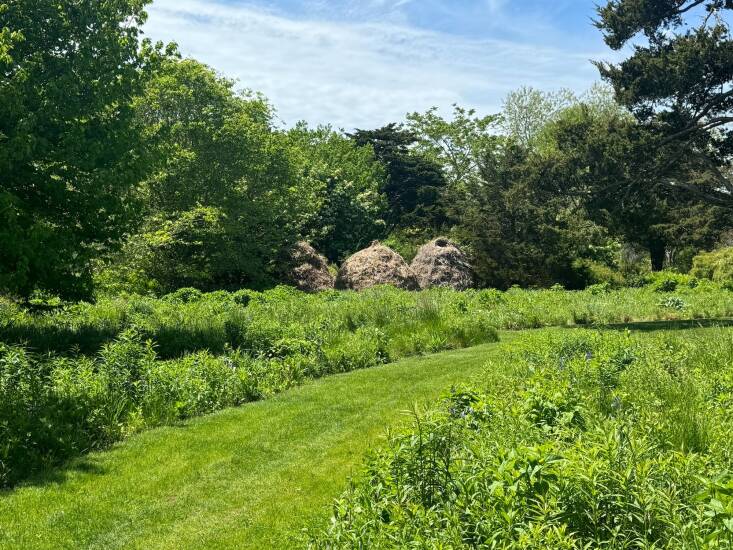
Ask for a new proposal. The costs may go down. You could save money by not buying chemicals and mulch, by avoiding carting and dumping fees for grass clippings and leaves, and by irrigating only when needed. If your landscaper is worried about loss of income, explain that there are new, more meaningful tasks they can perform instead, such as planting native plants, hand weeding, building habitat stacks, and composting.
“There’s a lot of gratification in knowing that you’re not harming natural systems but are actually enhancing them with your practices,” says Piazza. Many landscapers go into the business because they love nature and being outdoors, adds Whitmore. When they’re encouraged to work with living systems, observe, collect data, experiment, try native plants, they’re engaging with nature that’s so much more rewarding (not to mention healthier) than conventional mowing, blowing, and spraying. “I think most nature lovers will find it an interesting and a tremendously gratifying part of their practice.” We couldn’t agree more.
See also:
- Ask the Experts: Just How Bad Are Conventional Lawn Maintenance Practices?
- Close the Loop: 5 Ways to Engage in Circular Economy Gardening and Save Money (and the Planet)
- Out With the Old: 7 Bad Gardening Habits to Break Now




Have a Question or Comment About This Post?
Join the conversation