

This is part of a series with Perfect Earth Project, a nonprofit dedicated to ecological gardening, on how you can be more sustainable in your landscapes at home.
Firefly fans, luna moth lovers, woolly bear worshippers: Now is the time to take action. Leave the leaves! It’s crucial to biodiversity. Fallen leaves host these beloved insects and more who overwinter in them. They also enrich the soil when they decompose. And they reduce waste by staying out of landfills. The EPA estimates that the U.S. sends about 35 million tons of yard waste to the landfill annually, which adds to already high levels of methane, a potent greenhouse gas. According to the National Wildlife Federation, “solid-waste landfills are the largest U.S. source of man-made methane.”
While it’s best to leave the leaves where they land in your yard, we know it’s not always possible. Rake them under trees, shrubs, and in beds to use as free—and beneficial—mulch. Just don’t chop or mulch-mow them, which was once a recommended practice. (Mulch-mowing can kill all insect life, so leave the leaves whole.) Or store leaves in a leaf basket you create out of fallen branches. Perfect Earth Project founder Edwina von Gal has created chic “baskets” at her property to store fallen leaves and keep them out of the landfill. Here’s how you can do it at home.
Photograph courtesy of Perfect Earth Project.
Gather branches.
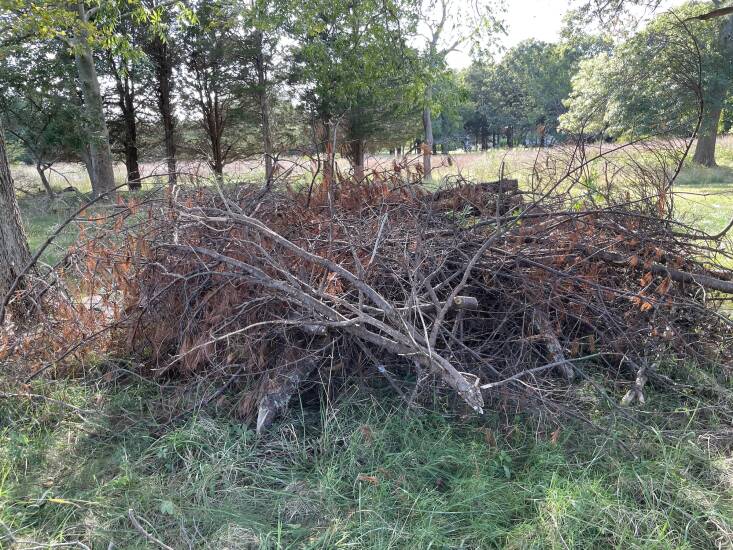
We’re having more storms. Big storms—just ask anyone in the Northeast after last weekend’s Nor’easter. But don’t despair. Gather those fallen branches and put them to good use.
Lay out the shape.
Using larger branches, map out the shape of your basket. The size is up to you. Create a cluster of smaller baskets or build one large one. Do you have a spot full of invasive plants or an area you want to prep for future planting? Place your leaf basket there. The leaves will smother whatever is growing beneath it and get it ready for new growth in the future.
Weave them together.
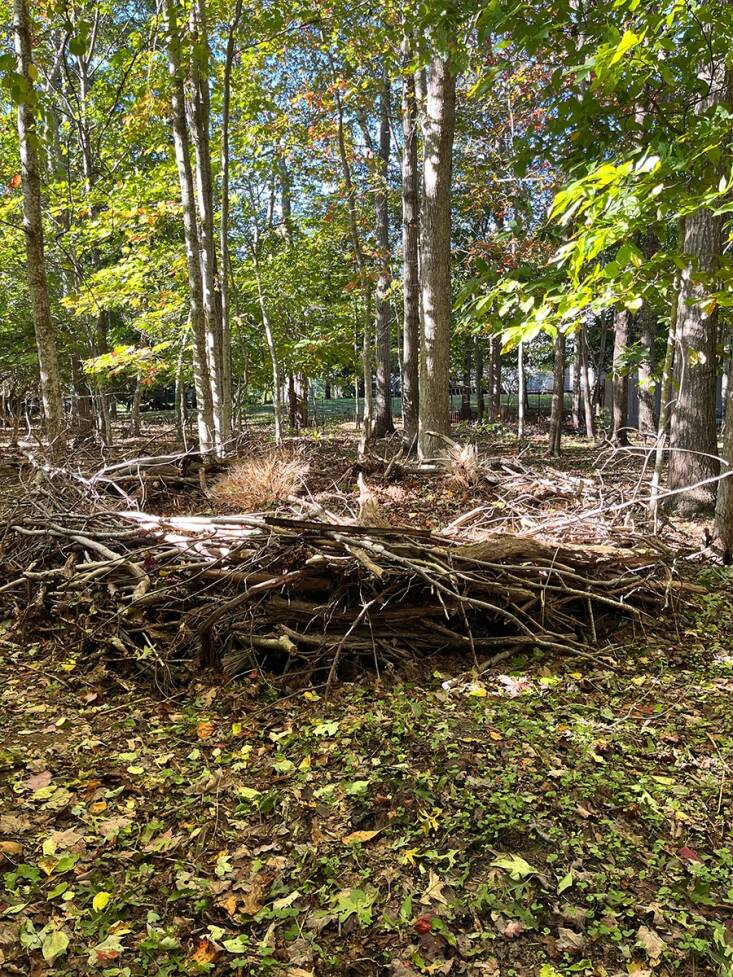
Now start building. Lay down branches, overlapping and tucking them into each other to form a cohesive unit. Trim branches as you need to make them fit. Keep adding more branches, building layer after layer, until you reach your desired height. You can continue adding branches as you find them throughout the year to reinforce the structure. Just make sure to weave them into other branches so that they’ll stay in place.
Add leaves.
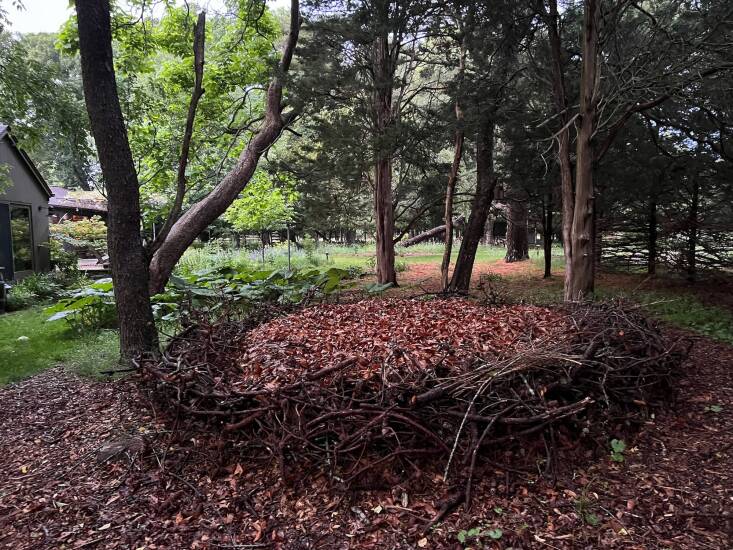
Rake leaves off of paths and driveways and place them into your basket. The basket will keep them contained and the leaves and branches will decompose over time, enriching the soil beneath it. “It might look like a lot of leaves and a full leaf basket this fall, but by next summer the mass of leaves will have drastically shrunk,” says Perfect Earth Project’s Tim Wheeler.
See also:
- Ask the Expert: Doug Tallamy Explains Why (and How to) Leave the Leaves
- Fall Gardening: 15 Ideas For What to Do With All Those Leaves
- ‘Rejoice When You Spot Nibbled Leaves’: A Gardener (and Writer) on Eschewing Perfection for Natural Beauty



Have a Question or Comment About This Post?
Join the conversation