


An outdoor patio can change your outlook on life. Picture yourself sprawled in a comfortable chair, a glass of lemonade on a side table, a book. The sun is warm. Close your eyes: that tweeting sound you hear is coming from birds in your garden.
If the only obstacle that stands between you and this miracle is the fact that you currently don’t have a patio, that’s an easy problem to fix. Even on tight budget, or with a very small outdoor space, you can create a new outdoor living room. The average cost of installing a patio is $4,000, with most people spending anywhere from $800 to $14,000 depending on a patio’s size and materials, according to Home Advisor.
Here are 10 ways to save money when you design and build a new patio:
1. Pick a level location.
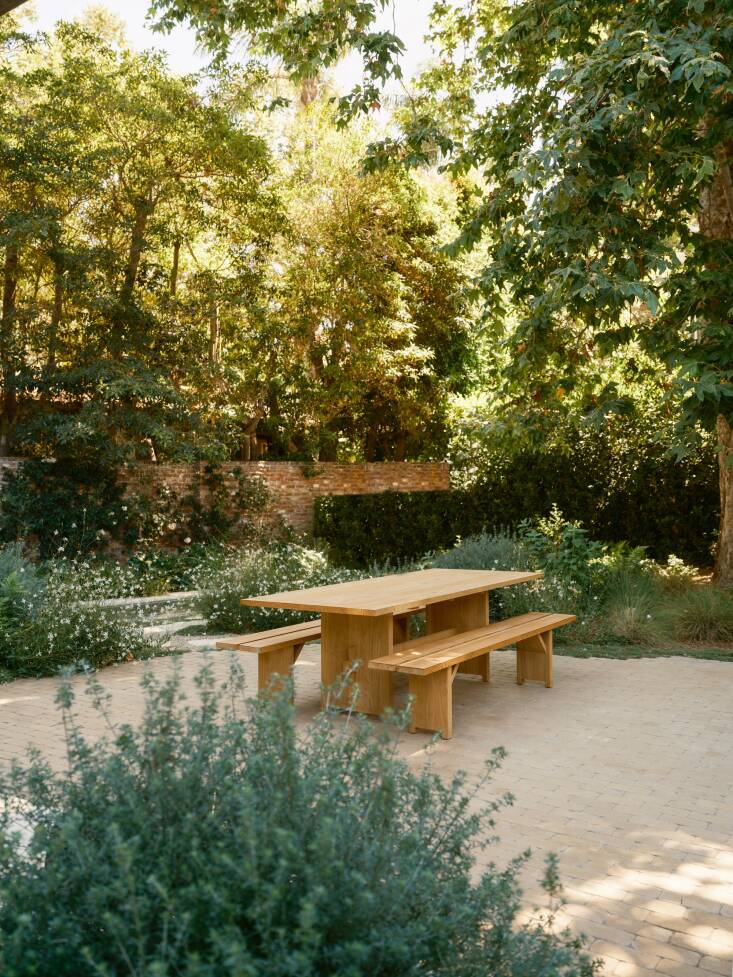
Remember: it’s more expensive is if you have to build retaining walls or grade the soil to make a flat spot. If you can’t avoid a slope, stabilize soil with inexpensive Jute Erosion Control Cloth ($5.65 per yard from Online Fabric Store).
2. Site the patio near the house.

Think about how you plan to use a patio: will it be an outdoor kitchen? Do you want to run electrical or plumbing lines to it? If so, the closer the site to the house, the less expensive the cost.
3. Work around existing trees.

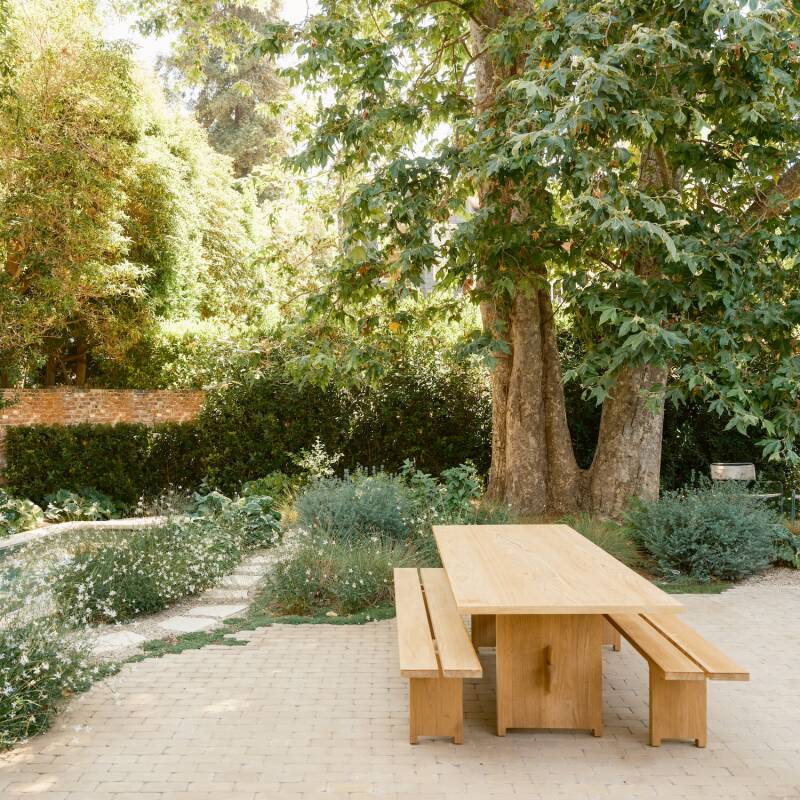
With a clever design that incorporates existing trees, you can save money two ways. In addition to saving the cost of removal, a mature tree can provide as much shade as an awning or pergola (without the added expense of building a shade structure).
4. Choose an inexpensive paving material.

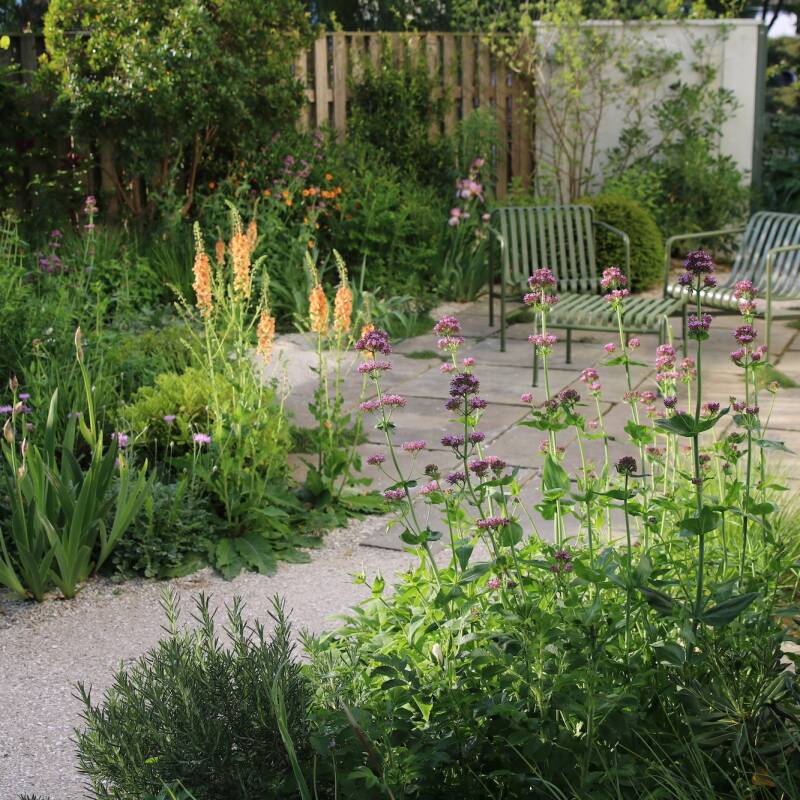
Gravel, costing anywhere between $1 and $4 per square foot, is the least expensive patio paving material, according to Home Advisor. At the other end of the price spectrum is natural stone—such as granite, bluestone, or limestone—cut into thin layers to create flagstone pavers. Depending on the stone, the prices of flagstone pavers can be up to $35 a square foot, says Home Advisor.
5. Buy materials in the off-season.

Plan ahead by designing a new patio—and purchasing the materials to build it—in the off season when demand and prices are lower.
6. Reuse existing materials.
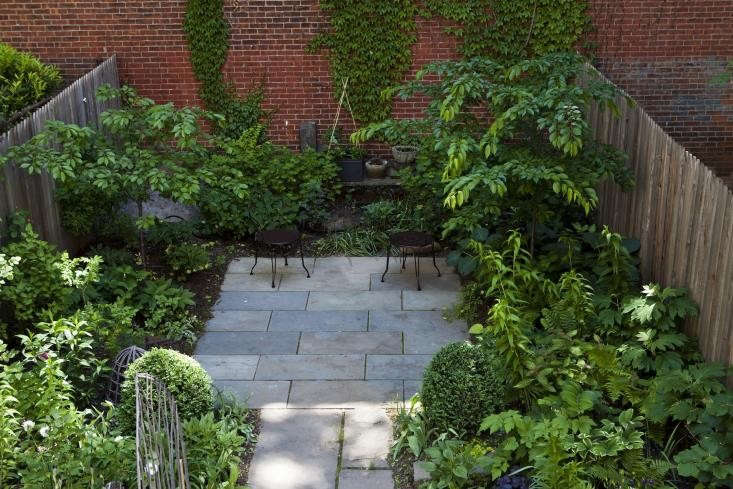
If you’re upgrading an existing landscape, you can reuse pavers from an old path or patio to create your new outdoor space.
7. Build a patio in stages.
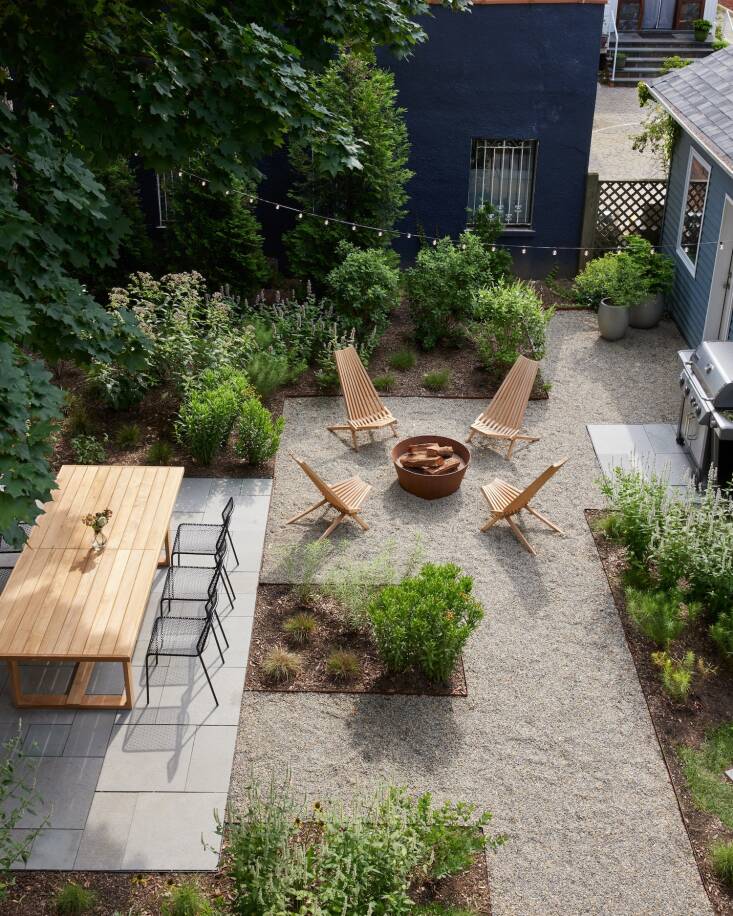
To save money on construction costs, build a patio in sections. If you need to have soil compacted to create a solid base for a patio, plan ahead by leveling the entire area. Then build the patio in stages, as your budget allows for expansion. In the meantime, you can cover the unused area with mulch.
8. Mix and match materials.

“The first thing you do in a small garden project is to take inventory to do an analysis, so you can make decisions about the things that are existing and are good,” says landscape architect David Godshall of Terremoto, who elected to salvage an existing concrete patio as part of a garden rehab (shown above) in Los Angeles.
Mixing materials—such as redwood decking and poured concrete—can add interest and texture to a patio (while saving money).
9. Create a focal point with inexpensive furnishings.

Instead of expensive outdoor furniture, you can hang a hammock to create a focal point for the patio. Create a seating arrangement with flea market finds or outdoor furniture from Ikea—versatile pieces can do double duty indoors in the off season.
1o. Define a patio’s perimeter with potted plants.
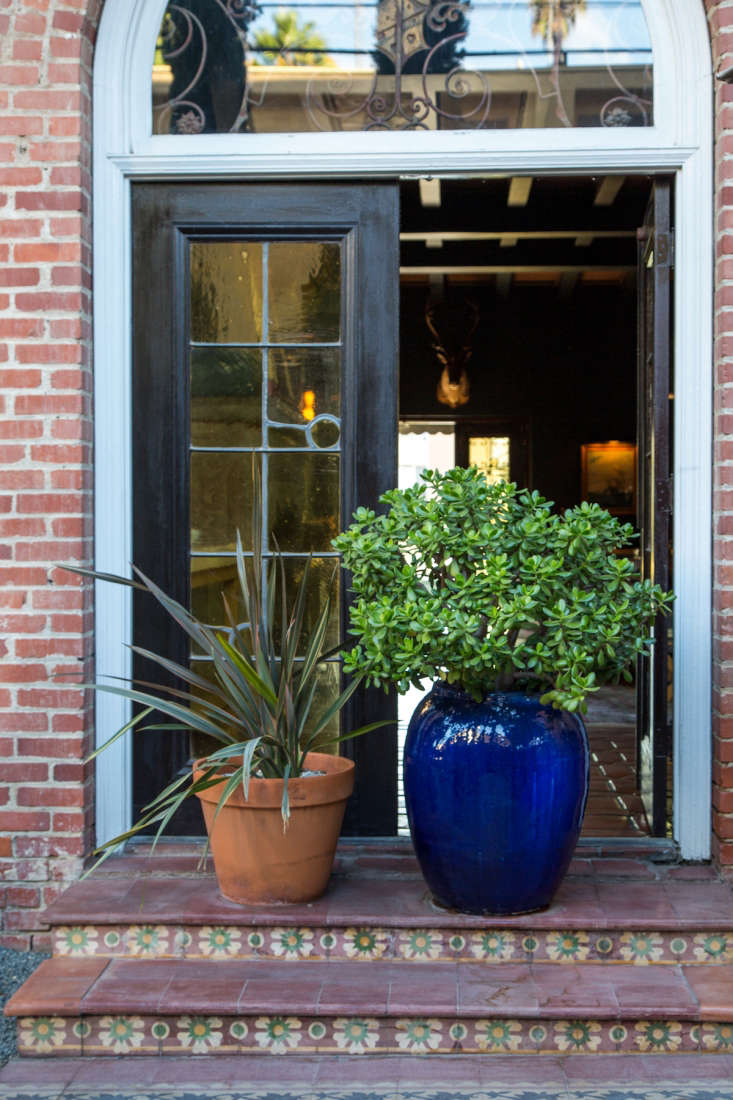
Building a fence or wall around a patio is an expensive undertaking. A budget-friendly alternative to create privacy is to group together a few tall potted plants.
See more ideas:
- Landscaping Ideas: 10 Ways to Save Money During a Garden Remodel
- Rental Garden Makeovers: 10 Best Budget Ideas for an Outdoor Space
- 10 Things Your Landscape Designer Wishes You Knew About Gravel (But Is Too Polite to Tell You)
N.B.: This post was first published January 2019; it has been updated with new photos, prices, and links.



Have a Question or Comment About This Post?
Join the conversation