

A twist on the adage that you only miss something when it’s gone is that you only realize you miss something when it suddenly reappears. This became clear during a recent talk and book launch (at the Italian Embassy in London, no less) for Rome: City of Gardens by Gregory Long. Here was something that gardening readers had been missing for quite a while: a proper book, one that is at once a survey (spanning 2,000 years), an authoritative reference, and a highly enjoyable read. Written by the president emeritus of the New York Botanical Garden (since retired), the book’s gestation was over four years, with Mr. Long researching in situ, and spending two winters at the American Academy in Rome. There are no shortcuts in production; all-original imagery by the Italian photographer Matteo Carassale adds to the sense that here is a book with personality. Andiamo:
Photography by Matteo Carassale for Rome: City of Gardens.
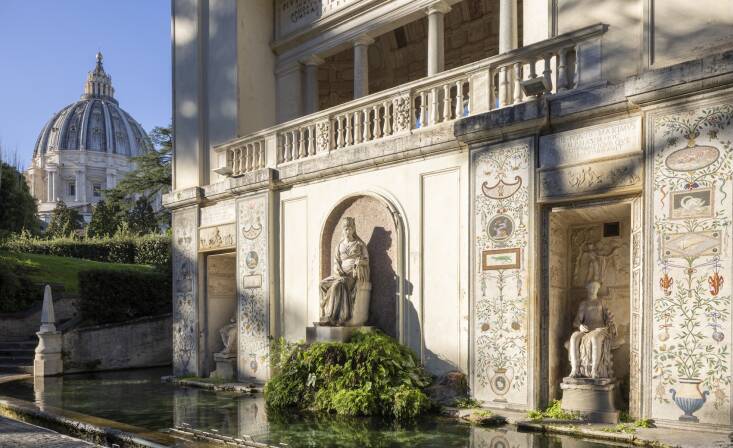
The beautifully packaged book travels through three golden ages: imperial, papal, and a loose interpretation of modern. The first era of “Garden-Loving Ancients” comes to life with frescoes from Empress Livia’s dining room (detailed on the book’s cover). She “was not a very nice woman,” remarked Mr Long at the talk, noting that she murdered several people, but she was also a gardener and appreciator of plants. This comes across in the sensitive evocations of birds in trees, amid fruit and roses. The next section, on the epoch of “Papal Extravagance” shows more arcadian mosaics, at the Casina of Pius IV in the Vatican Gardens. On closer inspection, fluttering ribbons hold up snails and tortoises by their necks.
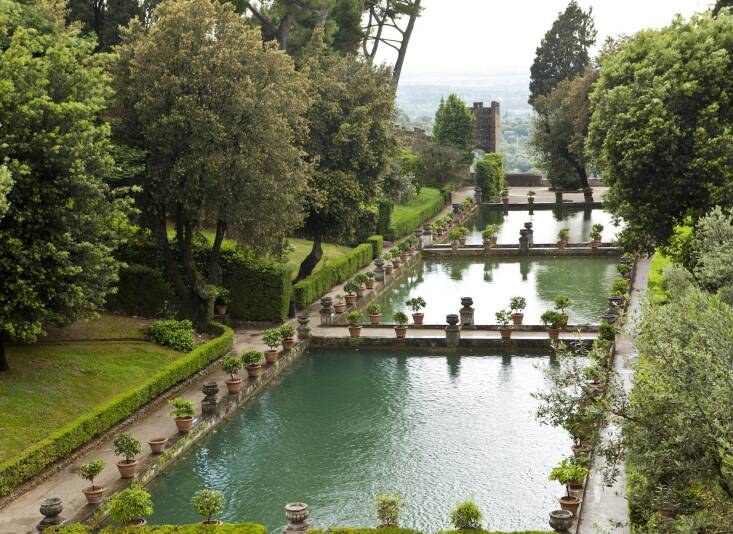
Roman gardens are steep: they have terracing in common and views out to the wider landscape, which become part of the immediate scene. The book’s depiction of these gardens also has clarity in common. The maximalism of Villa d’Este, the UNESCO World Heritage Site with waterfalls, jets, fountains, and basins in the hundreds, can be difficult to comprehend but here it is given human scale with a focus on the quality of water, green structure, and moss on stonework. Fishponds built for supplying swans (as well as fish) to the kitchens are surrounded by citrus trees in terracotta pots. The breathing space on this terrace of calm is very welcome.
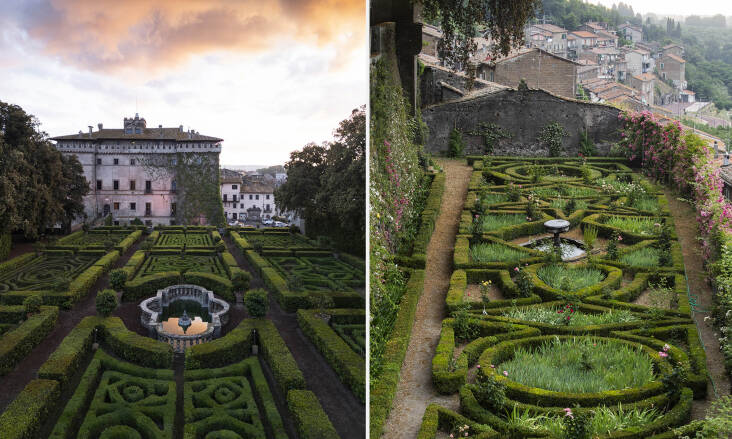
Roman gardens became “a craze,” noted Mr Long in his talk. American novelists Edith Wharton, Henry James et al famously wrote about Roman gardens in fiction as well as non-fiction, drawn on by Mr. Long in his research. It is the difficulty in growing flowers that haven’t withered by high summer that has contributed an important part of an Italian garden’s character, Wharton wrote. “The result has been a wonderful development of the more permanent effects to be obtained from the three other factors in garden-composition—marble, water, and perennial verdure.” This gives them a charm that does not rely on any particular season. Early summer flowers however, such as irises and roses (above right), are an Italian staple, from imperial frescoes to modern gardens, mixed with clipped boxwood and bay trees.
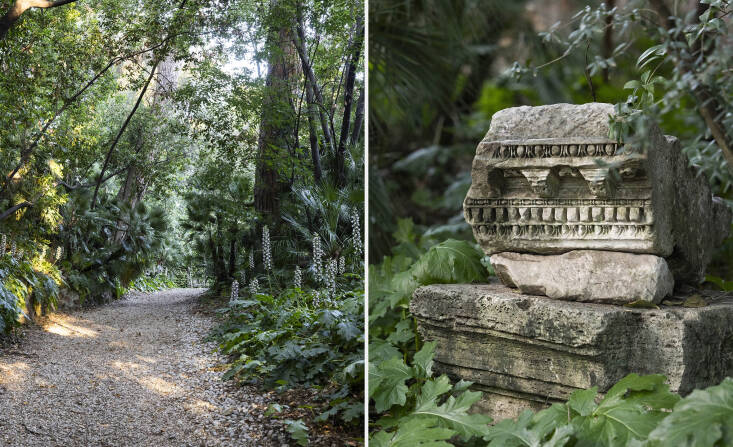
The “Era of International Gardeners” stretches from the end of the nineteenth century to the present. “These are the creations of Italian, American, and English grandees, garden designers, architects, and landscape architects,” explains Mr Long. Unlike earlier Roman gardens, they were made by “a cosmopolitan world of expatriate Americans, international families, and celebrated designers with practices in many countries besides Italy.” Their loose reinterpretation of classical and Renaissance gardens made use of archeological remnants for a new mood. Unlike the power displays of their forebears, these gardens are not highly formal; they are “personal expressions of the joy of gardening in this fertile and sunny country.”
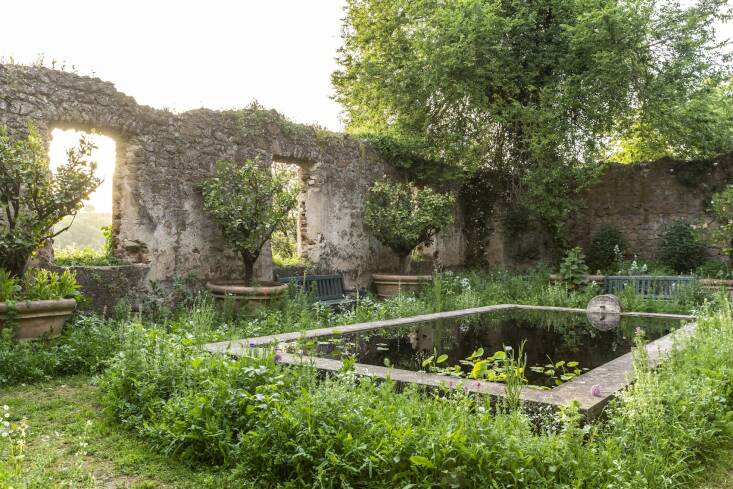
Wharton’s friend, the essayist Vernon Lee, wrote of the “poverty of flower-beds and richness of pots” in Italian gardens. It’s worth noting that terracotta is a translation of “baked earth” but also, there are flowers—and flowers. Modern gardens such as Ninfa, built amid the ruins of a hill village south of Rome, and nearby Torecchia Vecchia (above), designed by Dan Pearson, make use of the wildflowers that naturally occur in the meadows all around, and as edits inside the gardens. The idea of Torecchia was to create a sense that it was just about to be reclaimed by nature. The borrowed landscape is still a feature here, seen through the crumbling windows of roofless buildings, with pools bringing the sky closer.
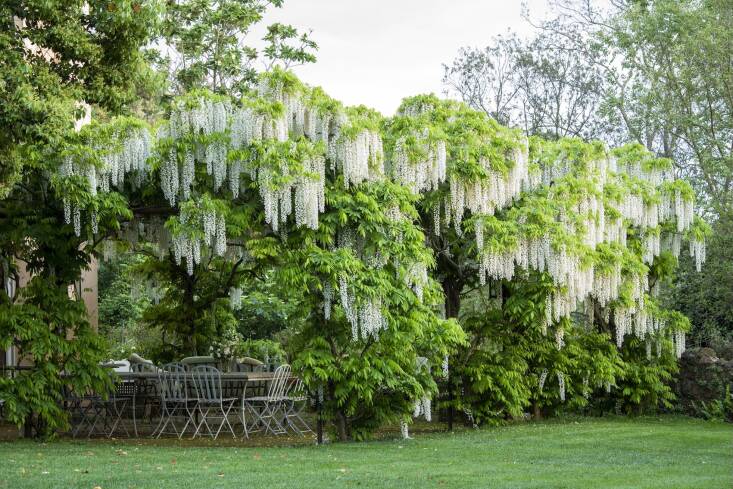
The plant palette at Torecchia is specifically green and white. The clients wanted something like Ninfa but through the eyes of an English gardener, and yes, there is a white garden—but this one has more in common with Sissinghurst Castle in its early days, when a garden was being made against the ruined walls of buildings that had long since ceased to be an actual castle. There is a comfortable Englishness near the fairly new house, with a lawn, handkerchief tree, lilac, hydrangea, roses, and osmanthus, all blooming in white. And there is no shortage of herbaceous flowers (including bishop’s weed): agapanthus, foxglove, goats beard, iris, tobacco plants, both green and white, sages, and hellebores. There is also plenty of shade.
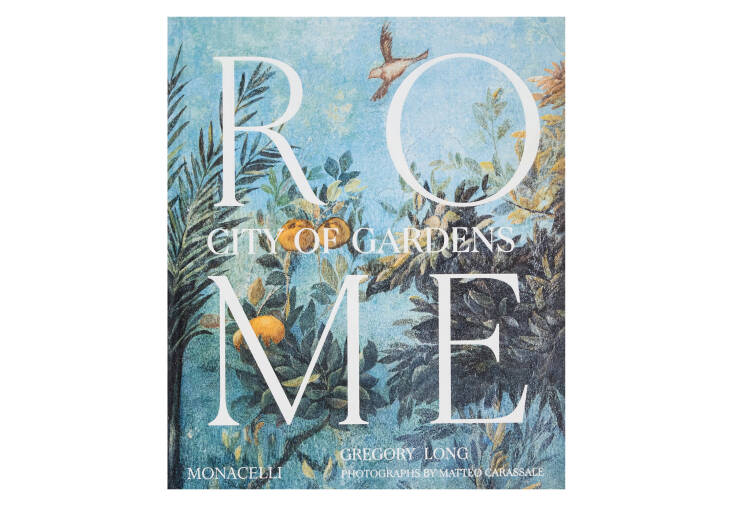
Above: Rome: City of Gardens by Gregory Long is published by Monacelli/Phaidon, at $74.95.
See also:
- The Original Vertical Garden: Hotel Raphael in Rome
- Lost World: Italian Opulence at Villa Balbiano on Lake Como
- 10 Garden Ideas to Steal from the Italian Coast



Have a Question or Comment About This Post?
Join the conversation