


Documenting a garden is a tricky business. Gardens often take years to come into their own; filled with living, growing things, they are also in a constant state of flux. As a result, professional garden designers often wait years to shoot their work—and we home gardeners rarely get to see the process and in-between stages.
So it was refreshing when landscape architect Marissa Angell, founder of the ecologically-minded firm Angell Landscape Architecture, reached out to share her Hudson Valley garden-in-progress. After years of renting, Angell and her husband Elias Blumm, bought their first home in 2024, and they got right to work laying the foundation of their future garden.
“When we first arrived, the land near the house was all lawn, and the area immediately around the house was a bunch of barberry, burning bush, and non-native ornamental shrubs that had become quite a tangle,” says Angell. The 7-acre property has a range of other site conditions including about five acres of rolling meadow, an old irrigation pond, shrubland, low-lying areas, and forest. It will be a many-year project to transform the landscape, but Angell has already created some pockets of enhanced habitat and beauty.
In her professional work, Angell makes detailed drawings, plans, and planting schemes, but at home the design process has been more improvisational and gradual. “We’ve embraced a one-step-at-a-time, call-and-response approach where we see what things are happening and then respond to it,” she says.
Angell took Gardenista on a tour of what she’s accomplished with her garden so far (a lot!). Read on for some lessons the rest of us can apply to our own landscapes.
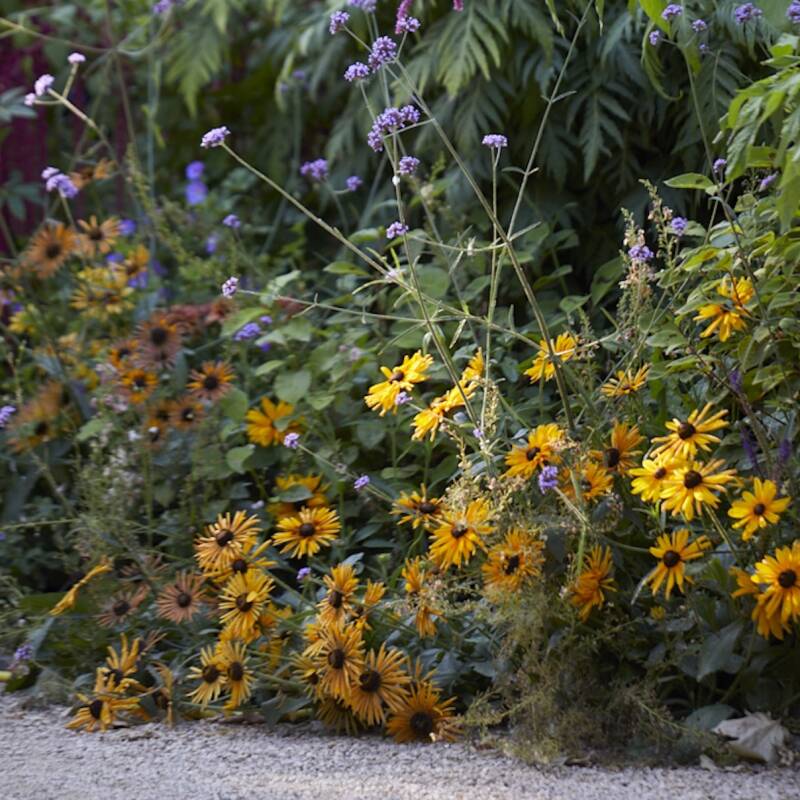
Featured photograph, above, by Kyle Caldwell for Angell Landscape Architecture. All other photography by Marissa Angell.
Observe the land.
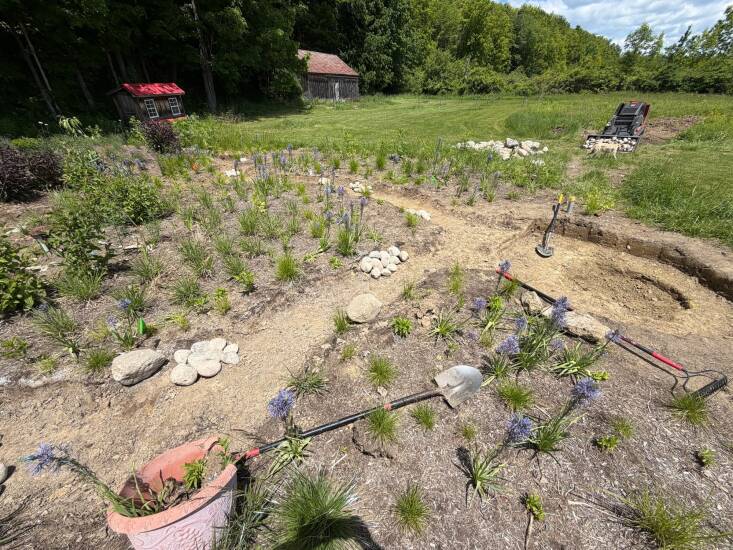
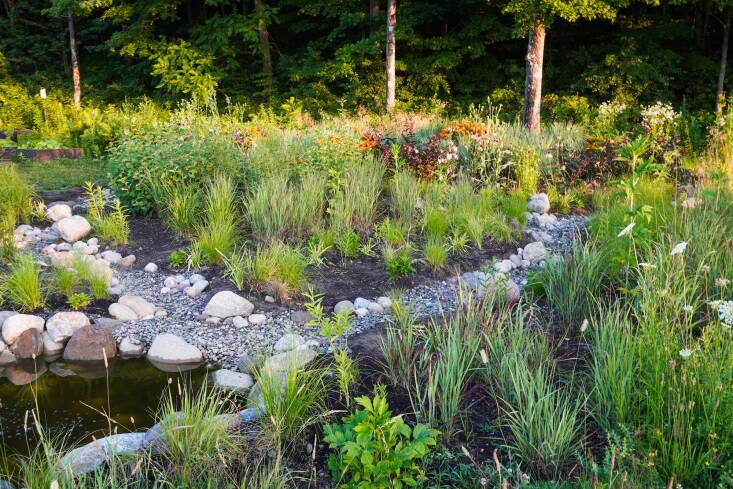
“For the first year we just got to know the space,” says Angell. One of the first things she noticed was that the area outside their kitchen window was quite low-lying and soggy, which led them to a decision: shift the water’s path or lean into its presence. “We decided to dig down and make dry bed channels that take the water that’s coming off of the hillside and funnel it into a little lined frog pond, which then slowly releases more water down the slope,” she says.
Ask yourself: “What do I want to look at?”
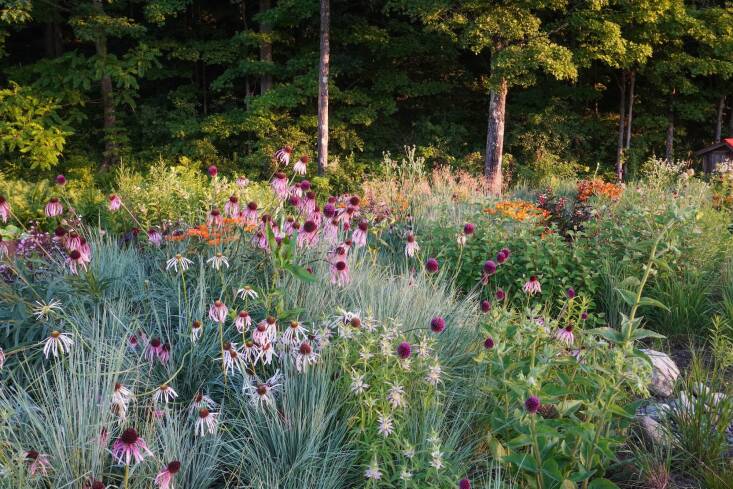
If you’re building a new garden and wondering where to begin, Angell says to consider the view from within the house. “For us, it just started with the question, ‘What do we want to be looking at every day?’” she says. “I knew that when I woke up, I wanted to see something that was meadow-y and flower-y, more grounded in plants.”
Get rid of the bad stuff first.
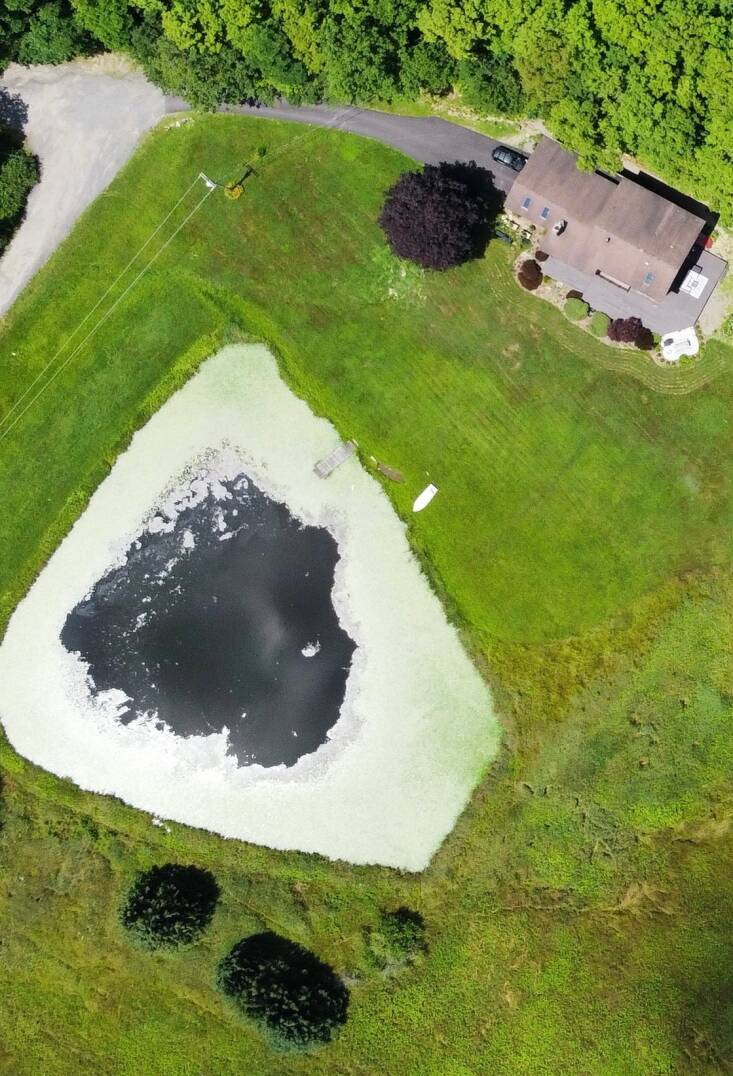
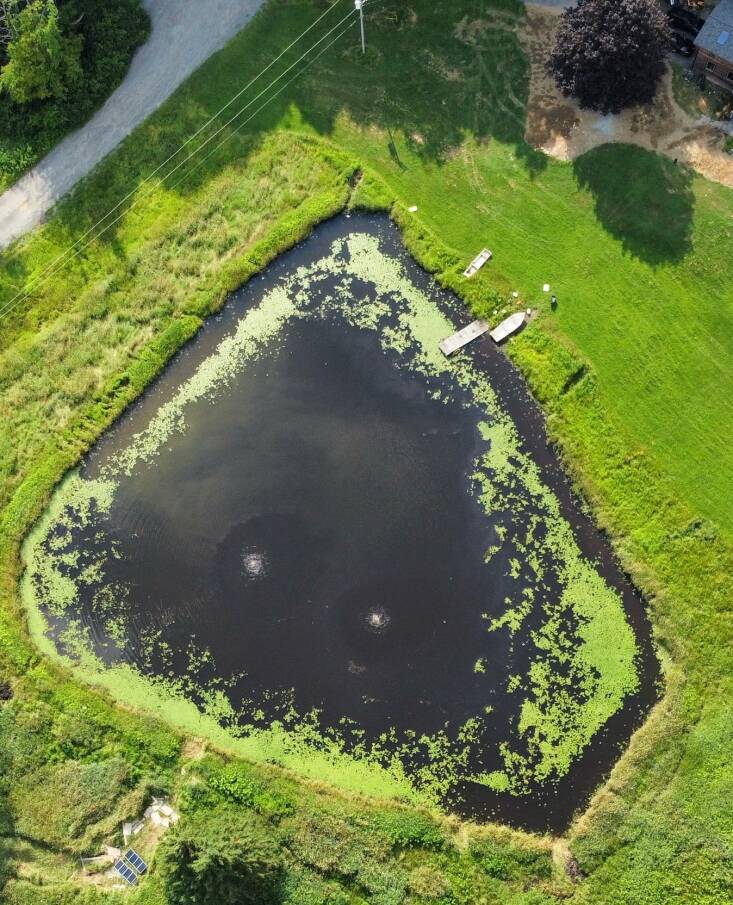
While Angell took a mostly observational stance in the first year of gardening, she tackled invasive plants right off the bat. She removed the barberry and burning bush around the house, not only because she didn’t like them, but because she didn’t want them to reproduce any more. Likewise, Angell knew she needed to address the water chestnut in the pond right away because the entire surface was covered with the plant. (She’s in for a decade-long battle with this annual plant whose seeds persist in the soil for years.)
Embrace the site soil.
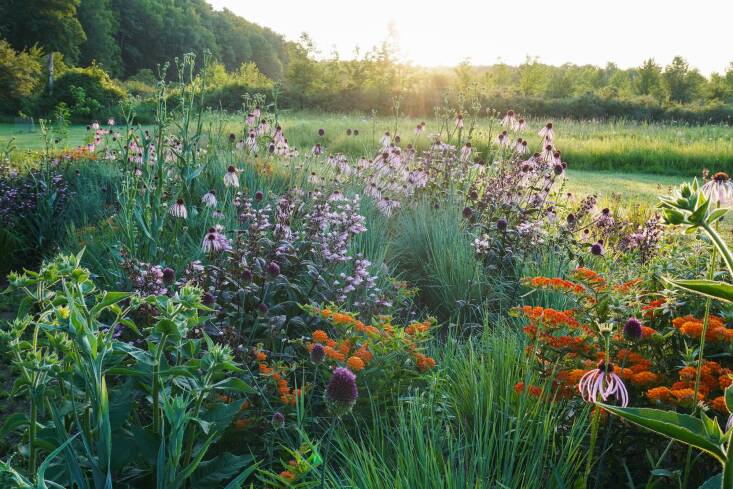
Much of Angell’s land is clay soil, but instead of fighting the clay she embraces it. Angell planted Camassias, switchgrass, Baptisia, Echinacea purpurea, butterfly milkweed, and foxtail sedge, which all love clay conditions. “They are slower to take in Year One, but we are already seeing great growth,” she says.
Let the seed bank express itself.
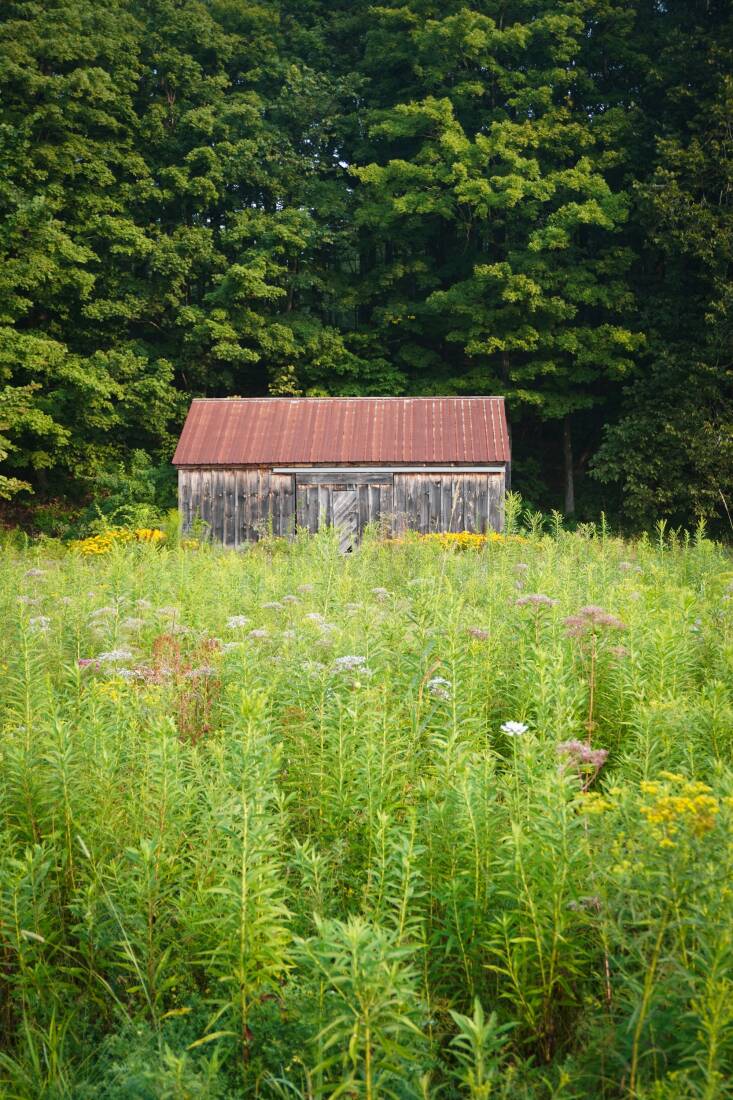
This year, Angell didn’t mow the meadow in order to see what would come up. “I wanted to get a sense of what species are here,” she says. While the meadow remains unmowed, Angell’s been snipping the seed heads of aggressive non-indigenous plants like valerian, so they don’t set seed. At the same time, she is collecting seed from desirable plants like swamp milkweed and boneset.
Administer tough love.
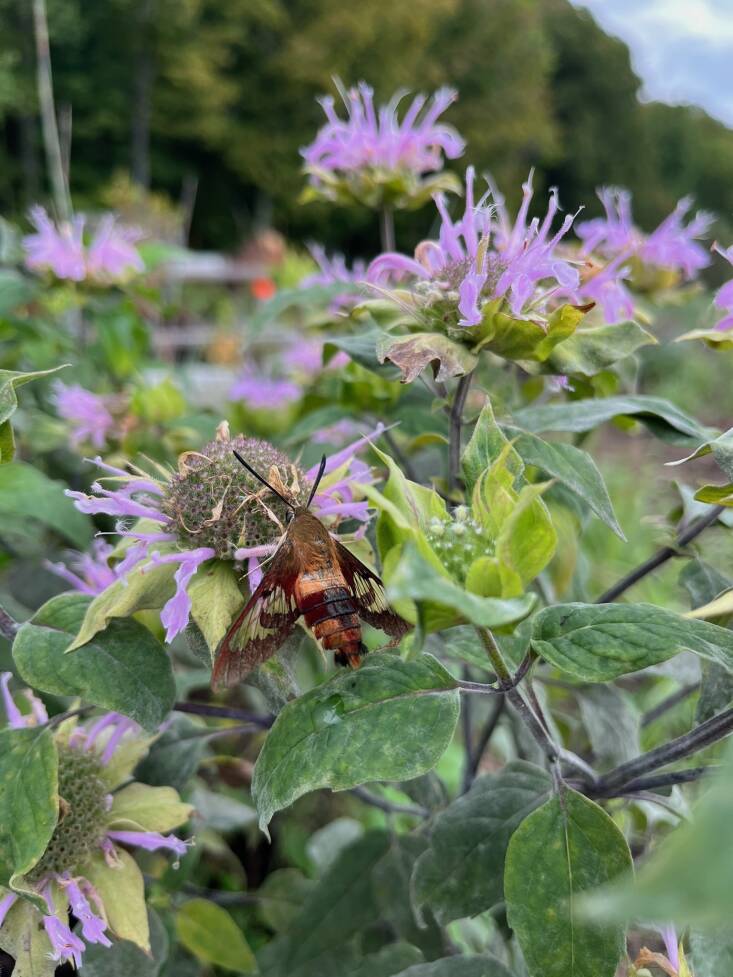
There is no irrigation at Angell’s property–and she doesn’t plan to add it. “We hand-water for establishment in the first couple of weeks, but then plants are on their own,” she says. “We are neglectful of our plants and somewhat cruel, but if they cannot handle the extremes within the first year without coddling, we won’t use more of it.”
Use what you’ve got.
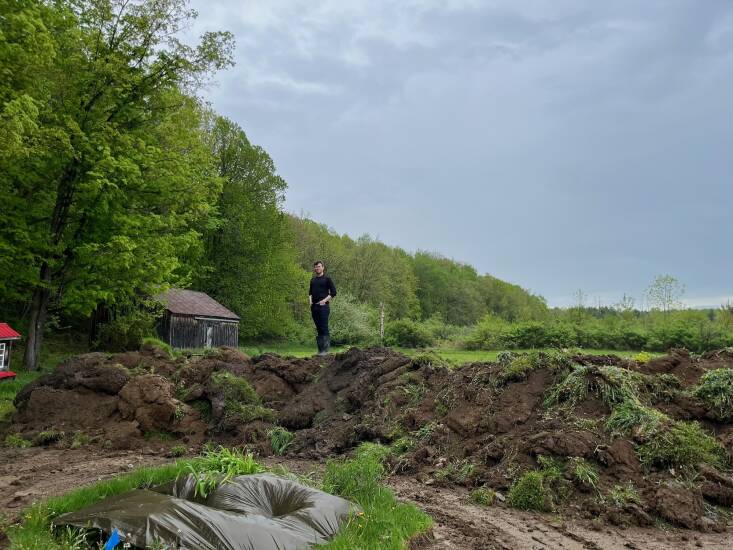
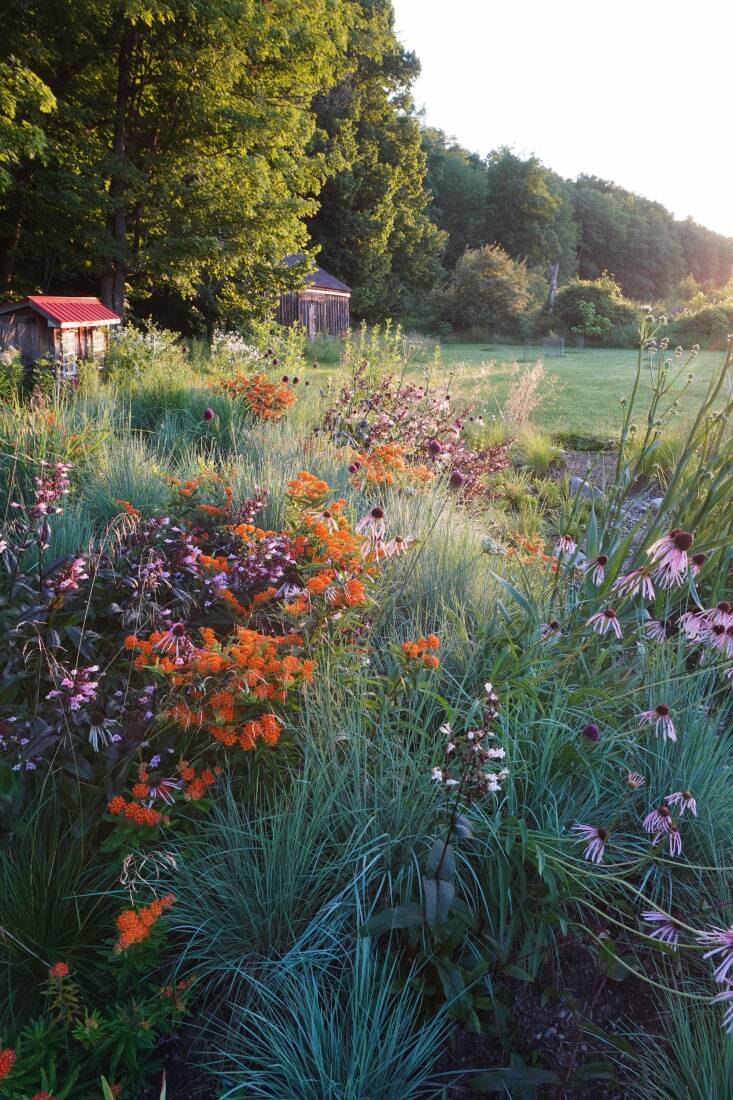
Removing the shrub beds around the house created significant soil disturbance and piles of excess dirt, but rather than haul it offsite, Angell took the earth that was removed and compacted it into berms to add a feeling of enclosure to the backyard. Likewise, she constructed a ‘dead hedge’ using fallen branches and sticks.
Seek local inspiration.
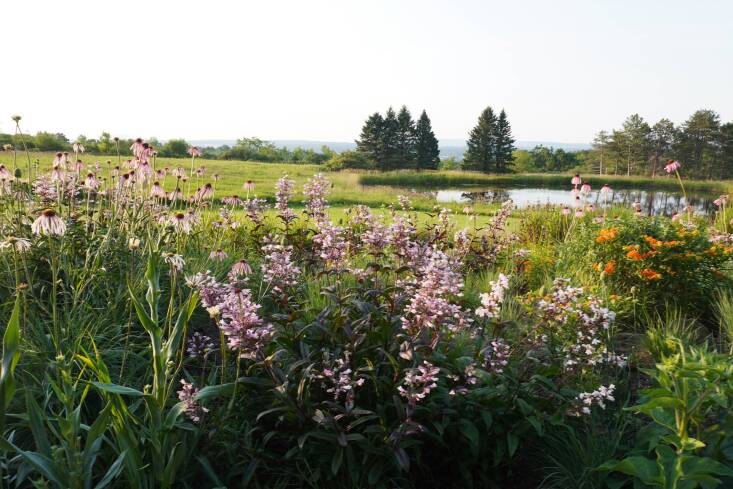
Angell was inspired to add sand on top of the backyard berms to create growing conditions for a stylized microcosm of the nearby Albany Pine Bush. Angell planted the berms with species from the Pine Bush, including butterfly milkweed, little bluestem, spotted beebalm, foxglove beardtongue, and rattlesnake master, plus some “nativar interlopers or more prairie-adapted plants, including the pale coneflower and ‘Husker Red’ penstemon” for an aesthetic boost.
Edit the edges.
Angell describes her approach to the forest edge as “more akin to editing” than gardening—cultivating native plants and removing more aggressive non-indigenous plants. “I collect seed and propagate from existing plants I find at the forest edge because they are uniquely adapted to the dry shade,” Angell says. She’s encouraging Anemone virgniniana, early meadow rue, false solomon’s seal, flowering raspberry, doll’s eyes, and echinacea.
Embrace the slowness.
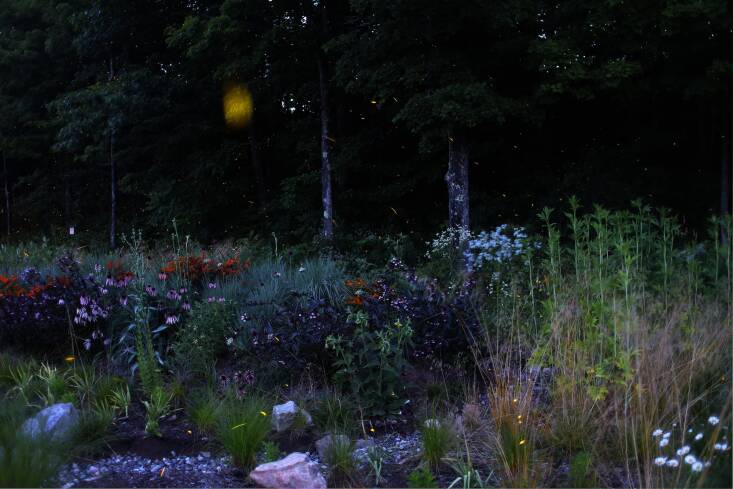
“We acknowledge that this is not a one year to two year effort. This is going to take a long time,” says Angell, who notes that this slowness is very different from the work she does on clients’ properties, where things are done within a season.
We were thrilled to get to see this garden in its first stage and to hear how Angell is putting her ecological values into practice. We can’t wait to see what the future will bring for this landscape.
See also:
- A Garden from Scratch: 8 Regrets from My First Years of Gardening
- Required Reading: ‘Beyond the Meadows: Portrait of a Natural and Biodiverse Garden by Krautkopf’
- Ground Rules: Lindsey Taylor Shares Her Tips for a More Sustainable Landscape
- Butterfly Weed 101: Growing Asclepias Tuberosa




Have a Question or Comment About This Post?
Join the conversation