

Compared with a more typical community garden, OmVed Gardens in North London is rather posh. The brainchild of World Health Organization activists who wanted to create a space that provided food education with an emphasis on diverting food waste, they asked their friend Paul Gazerwitz, a Brooklynite by birth whose international portfolio is decidedly upscale, to help them develop a pocket of post-industrial land. The result is miraculously successful: OmVed is not only gorgeous, but it has soul. With views overlooking London, yet quiet and tucked away, it feels like a very nice bit of countryside, in microcosm. Let’s take a closer look.
Photography via OmVed Gardens unless otherwise noted.
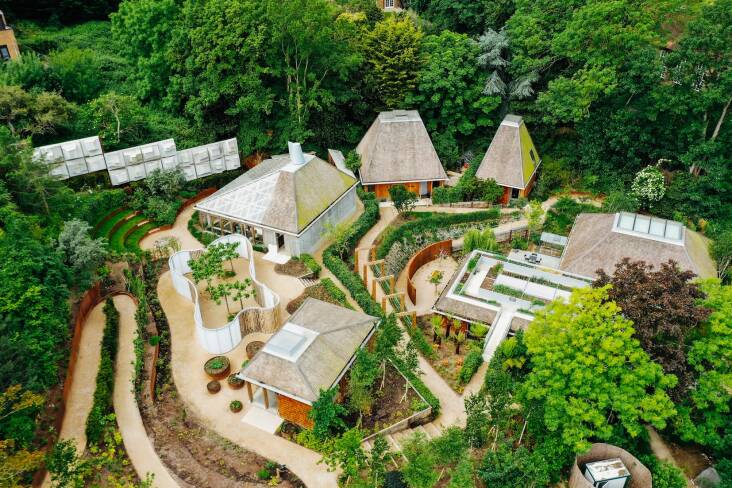
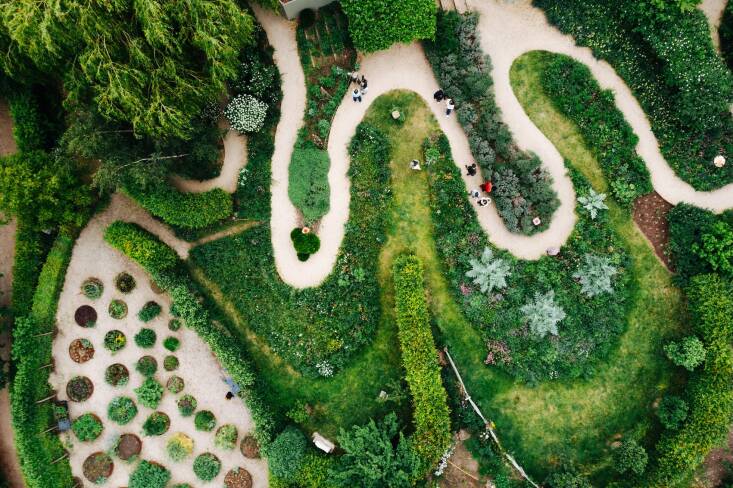
The community garden is in Highgate Village and easy to reach by bus. Hidden down an alleyway off Highgate High Street and perched on a hilltop, it has the fairytale look of a small village inside a forest clearing, with shingled wooden buildings of varying roof pitches, surrounded by gardens and paths that meander through the steep site.
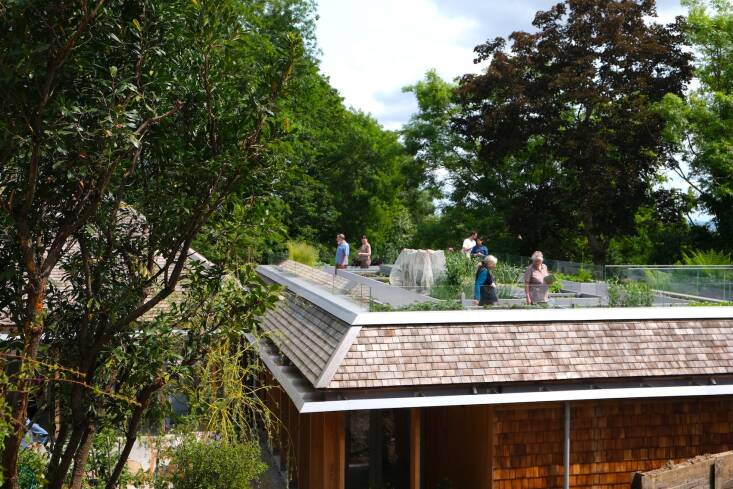
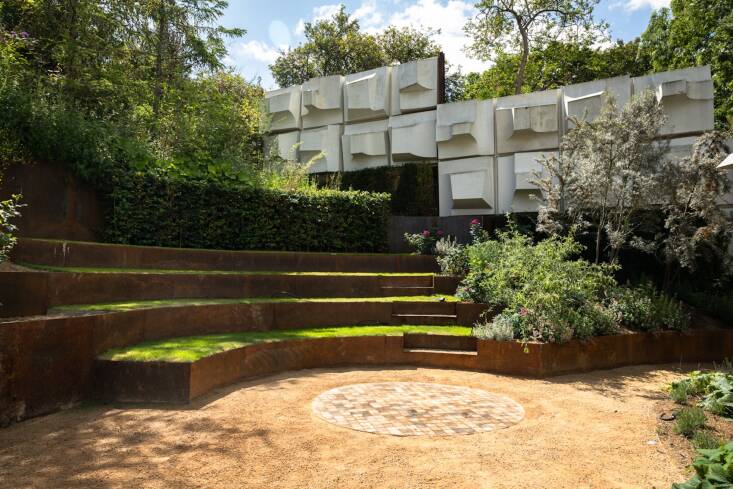
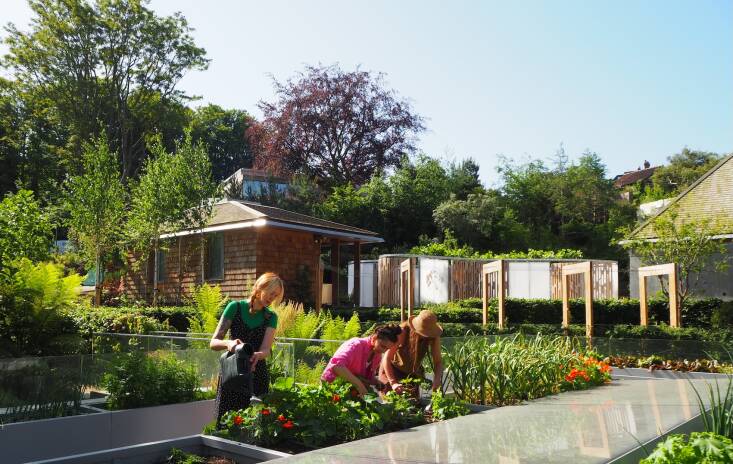
Built in collaboration with Gazerwitz by Smerin Architects, the glorified huts (or “pavilions”) are for seed-saving, growing, cooking, and teaching; in addition, there’s a roof garden over the kitchen and an outdoor amphitheater. They are all connected, and once you have found OmVed, you will want to linger.
Entry to the garden requires a ticket to one of the frequent courses and dinners (at various price points) or via the free art show in summer. OmVed is a community interest company which feels like a well-oiled private enterprise, staffed by people who love their job.
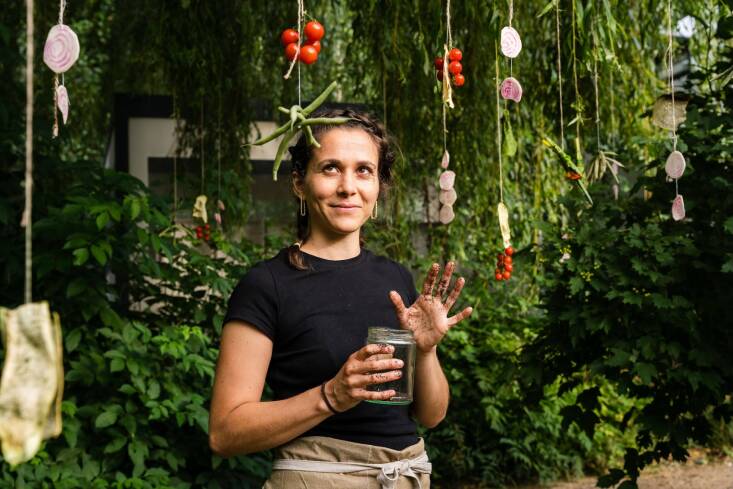
Visitors come from far and wide, with a steady flow of loyal regulars from London. At the heart of the enterprise is human connection—and health that is both environmental and plant-based, communicated through food.

Activity in the kitchen never stops: There is always something to pickle or preserve, and discarded offcuts, such as strawberry tops or tomato cores, make their way into fruit leather or shrubs for drinks and dressings. At the end of the season, there are talks, demonstrations, and hands-on making; the upcoming Fermentation Celebration explores the “Four K’s”: kimchi, kombucha, kefir, and kraut. More of the harvest is preserved in an underground fridge—which is really a large hole in the ground like an old-fashioned root cellar, cooled by its subterranean position rather than external power. Lined with plywood, it’s as chic and efficient as the buildings above-ground.
The site has had many iterations: It was once a market garden for growing flowers for Highgate Cemetery (just down the hill); a drover’s yard, providing pasture for cattle on the way to market at Smithfield; and the worst kind of garden center, concreted over and no stranger to chemicals. From a developer’s point of view, it was an awkward site, which saved it from housing construction and allowed mature trees to thrive around the edges. A lower story of native trees and shrubs has been added slowly; cherry shows up in two ways, as a wild tree around the periphery and as an espaliered culinary tree by the kitchen garden.
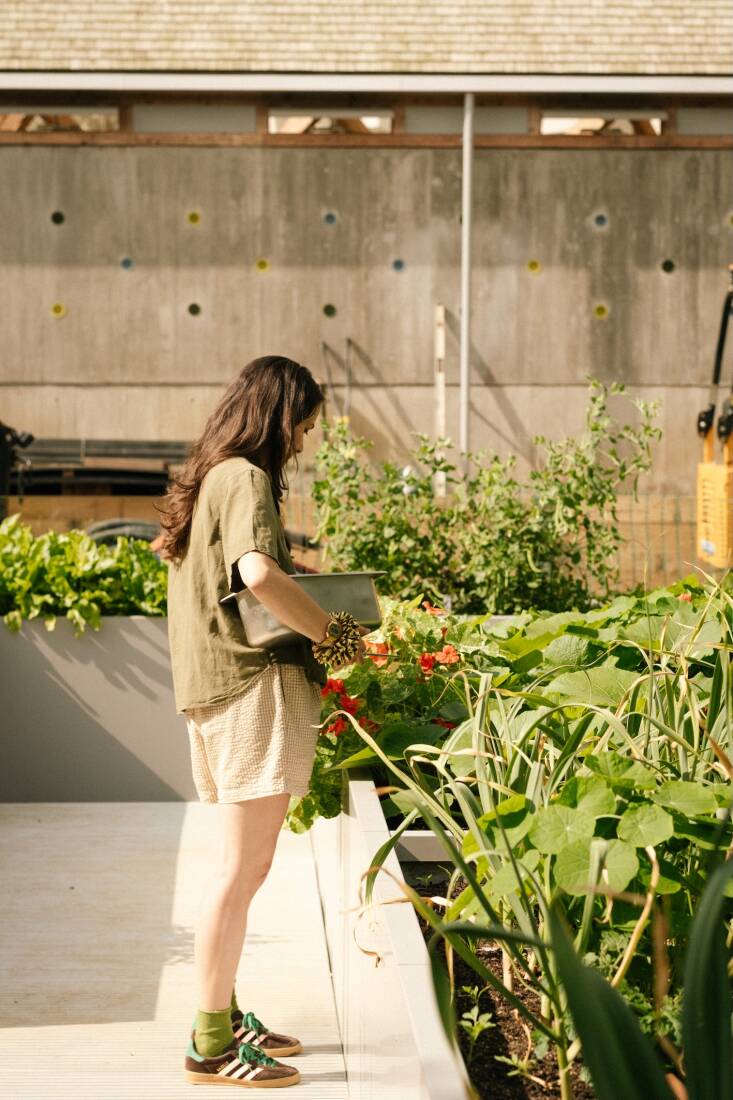
Seed-saving is also a public-facing endeavor, with free seeds sent out to participants through the Seed Saving Network, of which this writer is one (I am currently growing and monitoring tomatoes, both orange and black, white cucumber, “giant” parsley, and stripey eggplant, all grown from the network’s seeds).
All of the materials at OmVed are top-notch, from wooden cobblestones by the kitchen, to a better class of cinderblock arranged as a holding wall by a sunny patio, for displaying rare edible plants and providing habitat. The aesthetic could be called industrial-rustic.
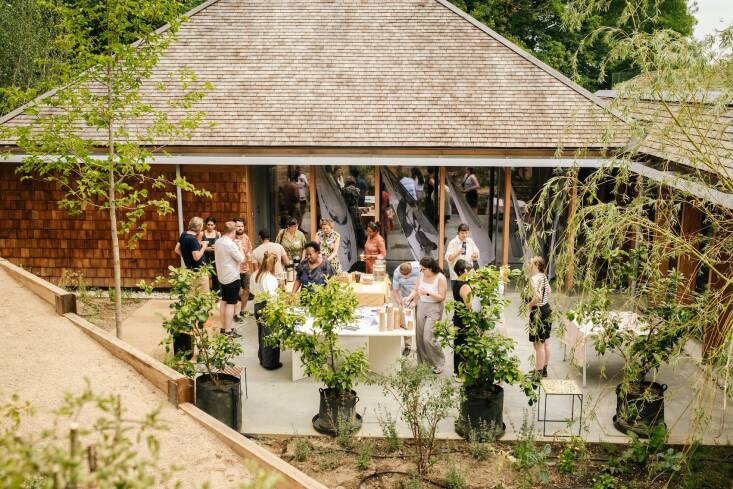
Up to 400 people can pass through the garden in a day, with concurrent events spilling out into different spaces, as well as quieter areas over the two acres. The genius is in the design. The steep site has lent itself to a contoured approach; the main path is based on a squiggly line that Paul made on a piece of paper during his first visit.
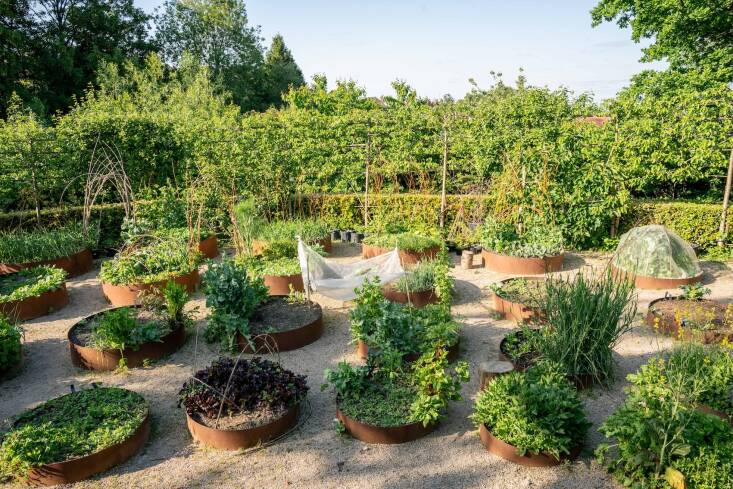
The lack of cars or parking adds to the garden’s feeling of enchantment. Replacing the former parking lot at the bottom of the site are two ponds that are replenished with rainwater as well as the overflow from several springs, which occur naturally here (a chemist on Highgate High Street used to sell bottled Highgate spring water).
See also:
- 5 Favorites: The Best Day-Trip-Worthy Gardens in Britain
- The Ultimate Secret Garden: A New Era for Benton End
- What Would the Queen Think? The New London Garden Named After the Late Queen Elizabeth II



Have a Question or Comment About This Post?
Join the conversation