


A hoop house tour might not sound like the most glamorous experience, but at Thyme Hotel, Restaurant, and Spa near Lechlade, England, food is so central to the stay, it follows that guests will want to know where 80 percent of the produce comes from. The kitchen garden at Thyme was daringly planted on a drier corner of the flood meadows that surround the old farm; it was the idea of the founder and creative director, Caryn Hibbert, a woman who doesn’t see problems, only opportunities. The garden is always on show, to guests and for guided tours, and the combination of cooking and growing—in other words, production—requires a certain amount of precision. It is an immaculate space.
Thyme is a family business and this shows in its attention to detail and refreshingly light touch in hospitality. With a cooking school, talks, courses, and garden tours, the way most people experience Thyme is through the food. The Hibberts’ elder son Charlie is the chef director and their daughter Milly is the general manager. Thyme’s head gardener, Daryll Taylor, an experienced former chef, works with a kitchen staff that is pleasantly open-minded. If there is a glut, the chefs will find a way to use it.
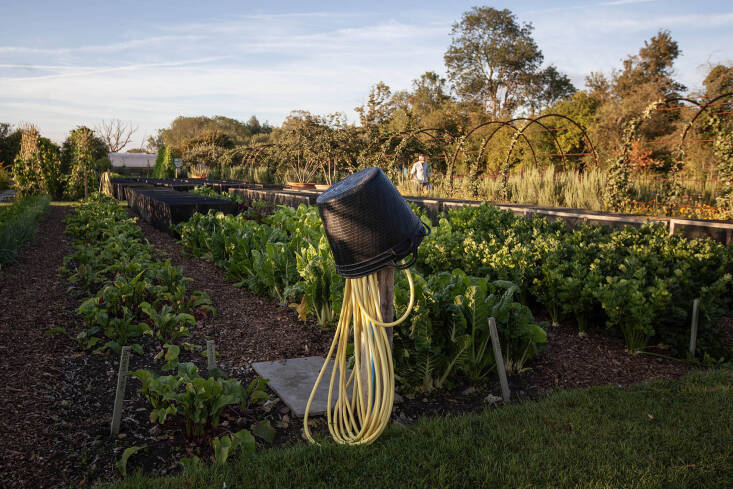
There is no grand glass house here, at least not yet. Instead, the growing season is extended with the help of two hoop houses, and another for cut flowers. This week, Daryll showed us around these polytunnels and shared his tips on how to keep the crops coming.
Photography by Jim Powell for Gardenista.
Make narrow paths.
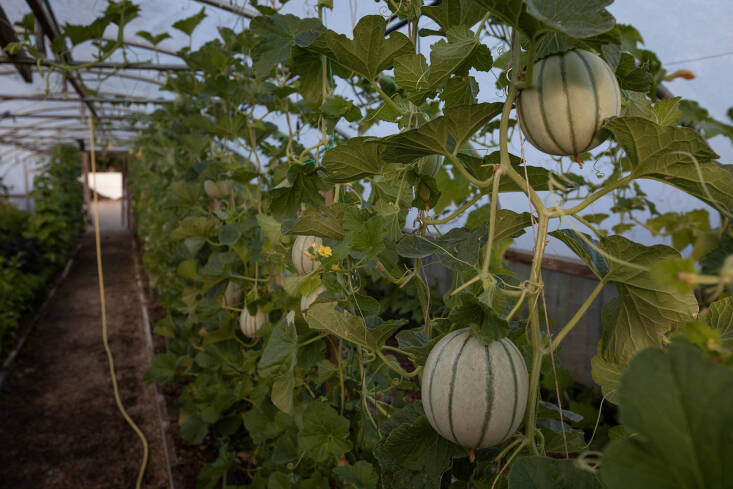
“Make the smallest paths you can work with,” suggests Daryll. The only concession to people in the tunnels is in the straight alleyways of wood chip; the rest is for growing. “That’s the most important part; you want to maximize the space you’ve got.”
Ensure water is nearby.
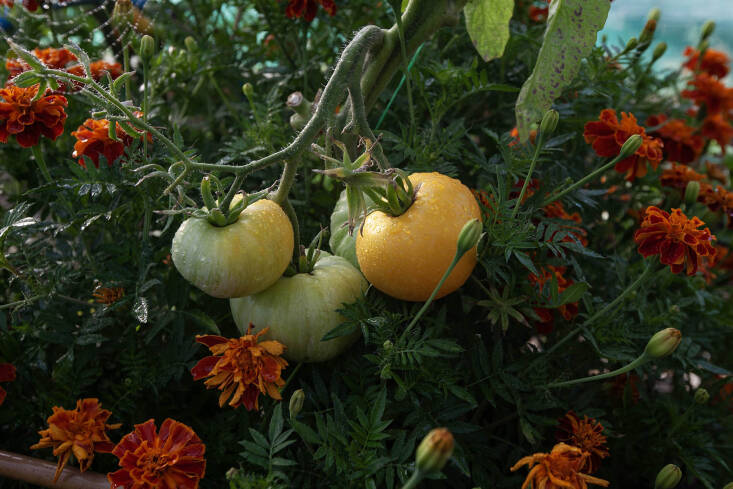
Growing under cover has its advantages in unpredictable weather: steady heat, no wind, and no rain. You will therefore find yourself nannying your indoor plants, so an easy water source, very nearby, is key. At Thyme, Caryn put in a bore hole (a type of very deep well), and there is a water tank for storage. Spray irrigation is installed in the hoop houses but the tomatoes are only watered about three times a week.
Enrich the soil.
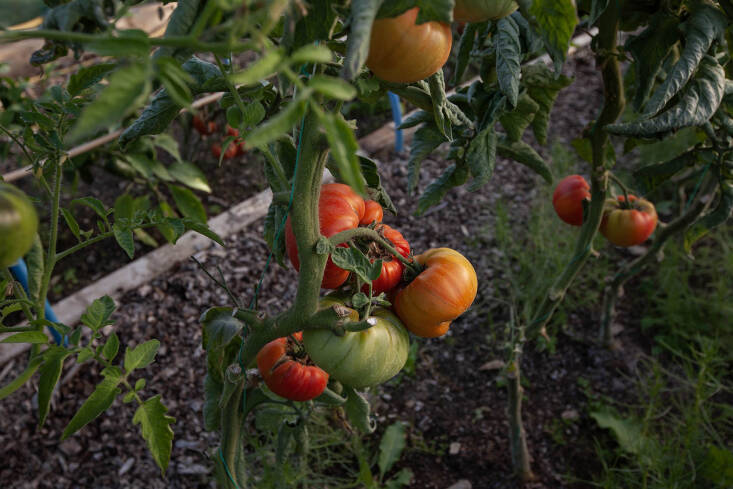
“When you’re constantly growing, you’ve got to make sure you’re looking after the soil as much as possible,” says Daryll. At Thyme there are at least five compost bays, although more would be welcome. The beds in the hoop houses use a mix of homemade compost, manure, and digestate. “I generally try to bury manure underneath each plant.” Green manure (cover crop) is useful if the soil gets tired; homemade feeds also work. “We do a comfrey feed, and the guys at the hotel save me wood ash from the fire. So I use that as a potassium feed for the tomatoes.”
Take advantage of daylight.
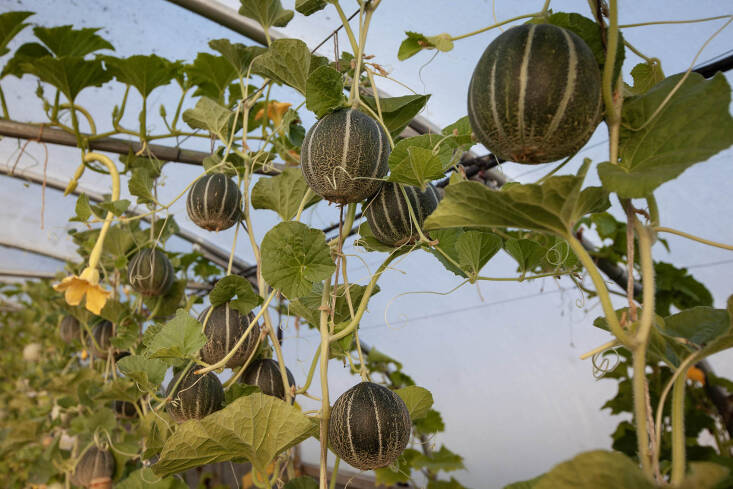
“The hours of daylight will denote whether things are going to grow or not,” says Daryll, and this is even more acute in a polytunnel, where the old farmer’s test of sitting on the ground with one’s trousers down will not work (i.e., if it’s comfortable to sit there, go ahead and plant), since greenhouses are warmer, for longer. The trick is to plan ahead and move plants in as quickly as you take the old ones out. “I’ve got things that are on standby, waiting for the daylight hours to increase. Once you have over 10 hours of daylight, things will start to move.”
Let in fresh air.
“Air flow is really important, especially in wintertime, when it’s all a bit stagnant.” Daryll waters sparingly, so as not to chill the plants or encourage mold. “I just open up for an hour or two in the morning to let some air flow through, depending on the weather. If it’s a nice sunny day, I open everything up.” He also uses horticultural fleece over hoops, to help plants to warm up “and bring things on.”
Plan for two growing seasons.
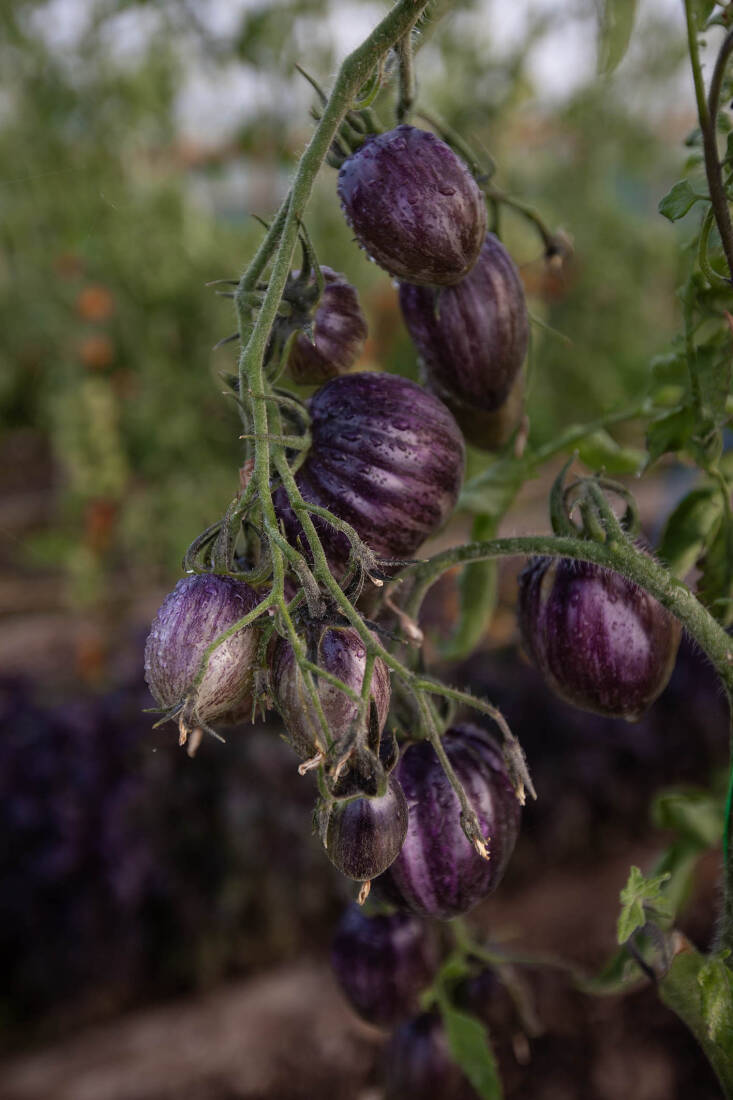
“I do two crops, for summer and winter. I start on my winter crop from late autumn, planting things up in September and October, which will take me through until the spring, and then I’ll rip everything out.” He aims to have it all in the ground by the end of October. “If the soil is too cold, they’re going to sulk.”
Thyme’s greenhouse winter crop: Brassica salad leaves such as mizuna and mustard frills, rocket. Winter purslane, land cress, parsley and cilantro. Early peas, early potatoes, and broad beans grow in the tunnel to get a start on produce early in the year.
Summer crop: “I just used it for the expensive crops, like tomatoes, cucumbers, and peppers.” It’s too hot in there for things like salad leaves.
… And extend them.
Bitter winter greens (radicchio and chicory) from Italy are grown outside for providing leaves in the dead of winter. Puntarelle, another radicchio, was grown this year under cover, as an added guarantee. Tomatoes stay in the tunnel until October, but the cucumbers will be out much earlier, even before the melon. “So then I work it out,” says Daryll. He has plants such as Swiss chard and spinach already prepared indoors and ready in pots to plant out.
Grow soft herbs.
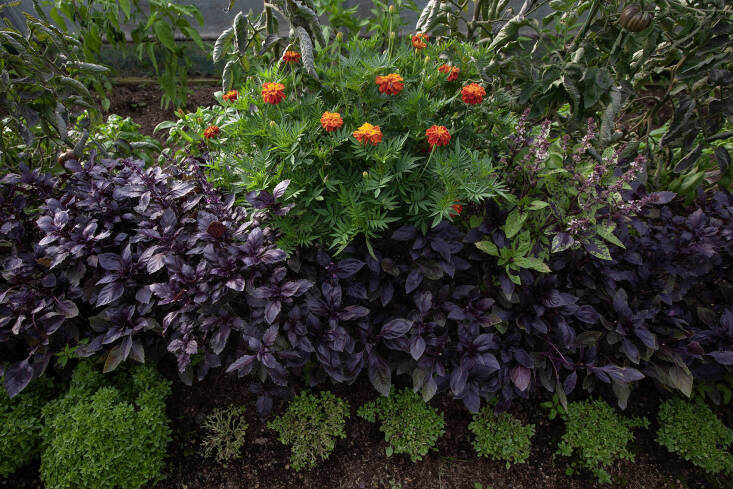
The woody ones, like thyme, are hardier outdoors. Save space for parsley, tarragon (which is quite tender), all the basils, dill. Not mint, “which really likes to have its feet wet.”
… And flowers.
Diversity in planting is good for soil health and helps to bring in pollinators. Flowers for cutting might include cosmos, which enjoys the heat, as well as zinnias. For spring there will always be tulips at Thyme, and decorative foxglove cultivars which are taken out around now, the ground prepared for more.
Think vertically.
Consider fruit.
“I’m very meticulous on space,” says Daryll but he suggests that a home grower could investigate “one stop shop” fruit. “Apricots, white peaches, grapes are going to really thrive in that environment.” Trained grape vines are kept in check through summer pruning, and they have the advantage of providing leaves for the kitchen. A fig tree could also be kept to a reasonable size through pruning, and it has the bonus of providing some shade.
Save seeds.
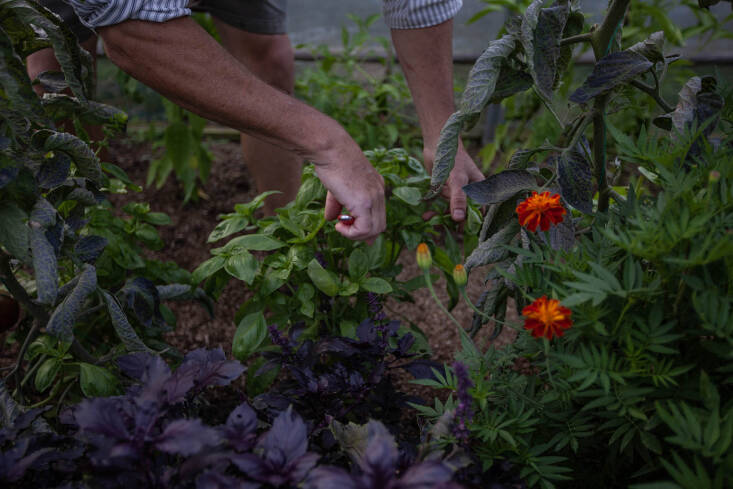
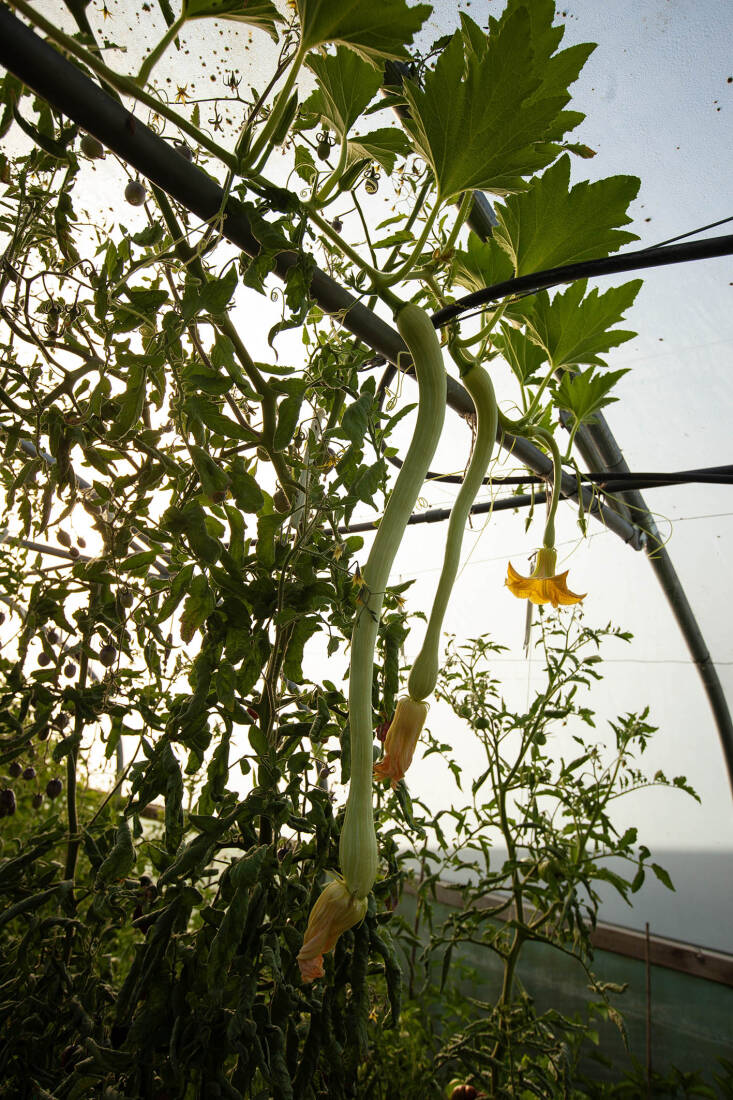
It is always worth saving seeds on heritage varieties, which are free from genetic engineering. Seed from some of the 24 varieties of tomato at Thyme will be saved this year, along with Trombetta zucchini and two varieties of tomatillo, which is used in salsa.
Last, expect surprise visitors.
Daryll once found a grass snake (harmless to humans) trying to wriggle out of the chicken wire door. It was stuck because of the toad that it had just swallowed. “If you’ve got a polytunnel at home, have a little wild area,” suggests Daryll. The grassy water meadows all around the kitchen garden are left long, and are rich in wild flowers as well as insects and small birds. There are hawks and kestrels as well as egrets by the River Leech; three pairs of breeding owls keep mice and voles in check.
See also:
- The Garden Decoder: What Is ‘Biochar’?
- 5 Favorites: Farm Resorts With Character, English Edition
- 10 Things Nobody Tells You About Starting a Vegetable Garden



Have a Question or Comment About This Post?
Join the conversation