Icon - Arrow LeftAn icon we use to indicate a rightwards action. Icon - Arrow RightAn icon we use to indicate a leftwards action. Icon - External LinkAn icon we use to indicate a button link is external. Icon - MessageThe icon we use to represent an email action. Icon - Down ChevronUsed to indicate a dropdown. Icon - CloseUsed to indicate a close action. Icon - Dropdown ArrowUsed to indicate a dropdown. Icon - Location PinUsed to showcase a location on a map. Icon - Zoom OutUsed to indicate a zoom out action on a map. Icon - Zoom InUsed to indicate a zoom in action on a map. Icon - SearchUsed to indicate a search action. Icon - EmailUsed to indicate an emai action. Icon - FacebookFacebooks brand mark for use in social sharing icons. flipboard Icon - InstagramInstagrams brand mark for use in social sharing icons. Icon - PinterestPinterests brand mark for use in social sharing icons. Icon - TwitterTwitters brand mark for use in social sharing icons. Icon - Check MarkA check mark for checkbox buttons.
You are reading

Garden Visit: Iford Manor in Somerset, England

Search

Garden Visit: Iford Manor in Somerset, England

October 22, 2025

Last month, the Garden Museum Literary Festival (a traveling event that visits a different historic garden each year in the U.K.) arrived at Iford Manor, just a few miles southeast of Bath in Somerset, England. Over two days, there were fascinating talks and conversations with designers, writers, and makers, including potters Edmund de Waal and  Frances Palmer; photographers Tessa Traeger and Ngoc Minh Ngo; and landscape architects Jinny Blom and Tom Stuart-Smith.

But perhaps the most wonderful discovery was the location itself. Iford is a Palladian manor house (its Georgian façade conceals its older Elizabethan origins) with an extraordinary Italianate garden created by the architect-turned-landscape-architect, Harold Peto, who bought the property in 1899 and developed the gardens until his death in 1933.

Location is everything—and Iford Manor’s is spectacular. Although “challenging” might be the way some describe it. Accessible only via two narrow, twisting lanes which meet on a medieval stone bridge that crosses the River Frome, the property sits on a slope in a wooded valley on the cusp of Somerset and Wiltshire. The steep slope means that the garden has been cut into the hillside in a series of terraces and walks, many of which are designed to offer tantalizing views out to the bucolic landscape.

Although much of the garden had been created long before Peto’s arrival, his passion for the Italianate style, and for ancient architecture, statuary, and antiquities led him to reimagine it into a series of classical and often theatrical walks and rooms.

Its modern renovation begins with Elizabeth Cartwright, who bought the property from Peto’s nephew in 1965 and began a series of repairs. Along with her husband John Hignett she would continue to restore the house and garden until their son and daughter-in-law, William and Marianne Cartwright-Hignett, became the custodians in 2016. In 2022 head gardener Steve Lannin arrived to continue the estate’s development and preservation.

Join us for a tour.

Photography by Clare Coulson.

The Cloisters
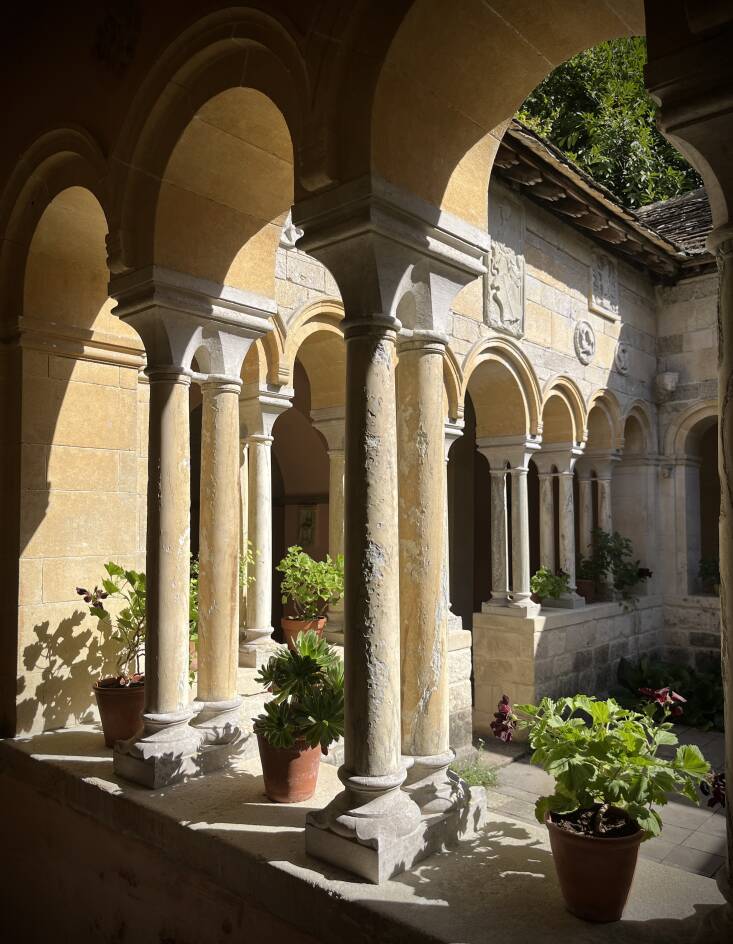
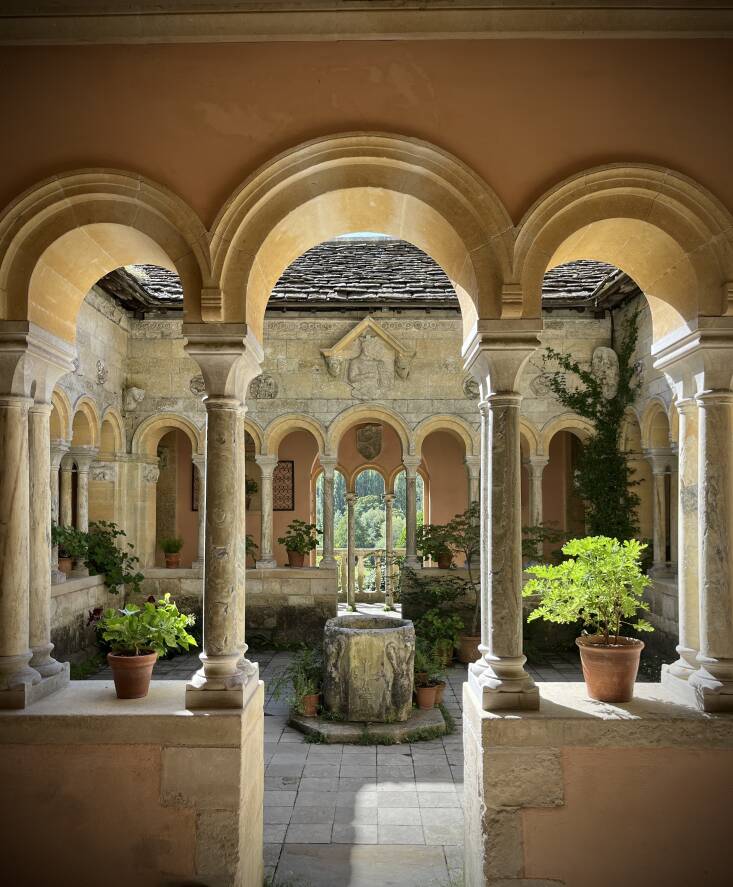
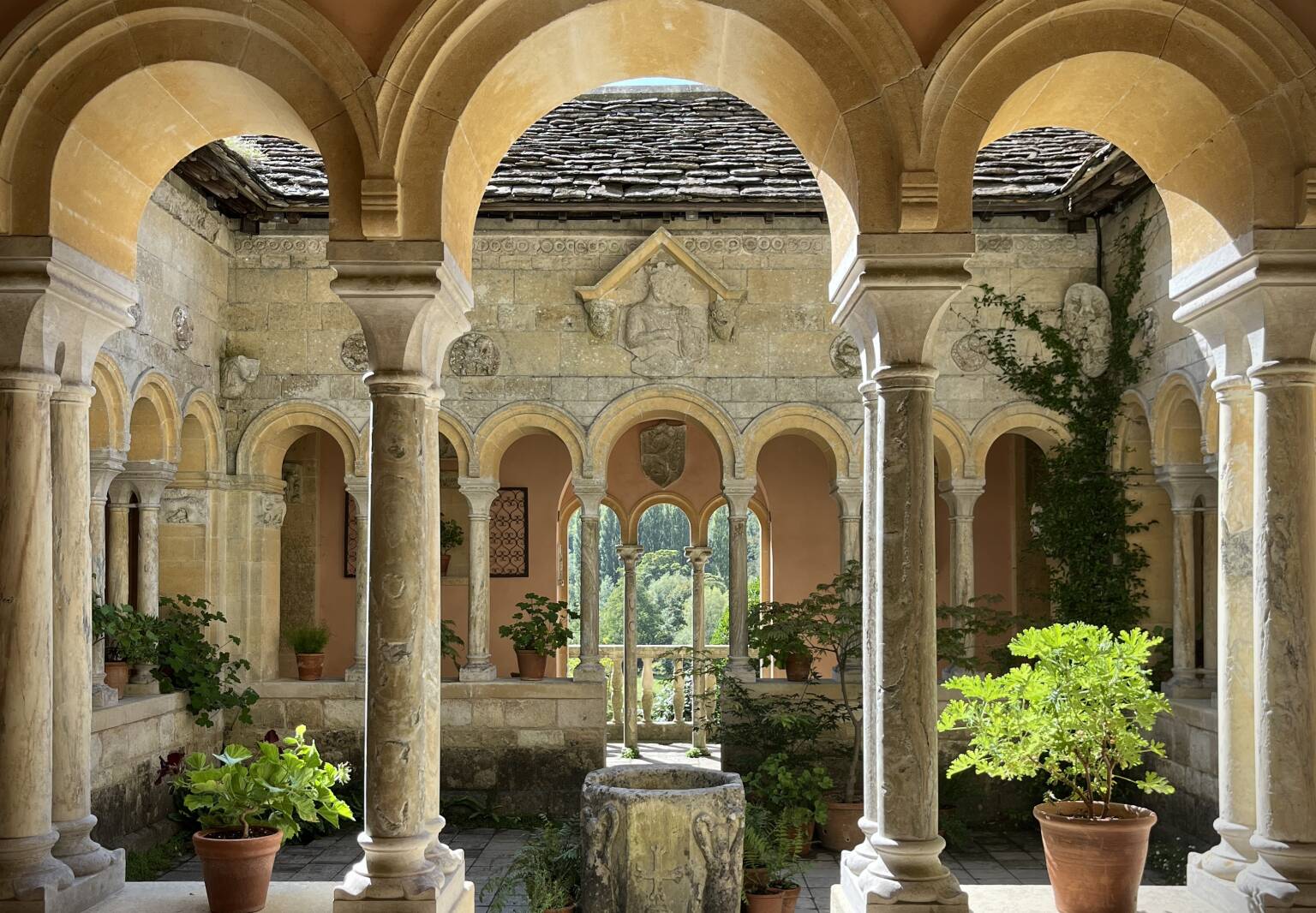
Above: Arguably the jewel of the garden is the Grade II* listed Cloisters that were built by Peto in 1914 to house his remaining artifacts. The columns are cut from Pavonazzo marble. This magical space is made all the more exquisite by the play of light across the architecture and the plants, carefully placed by Lannin.
Above: The perfect symmetry and elegant arches of the courtyard in the Cloisters were in part inspired by the Moorish architecture of the Alhambra in Granada, Spain.
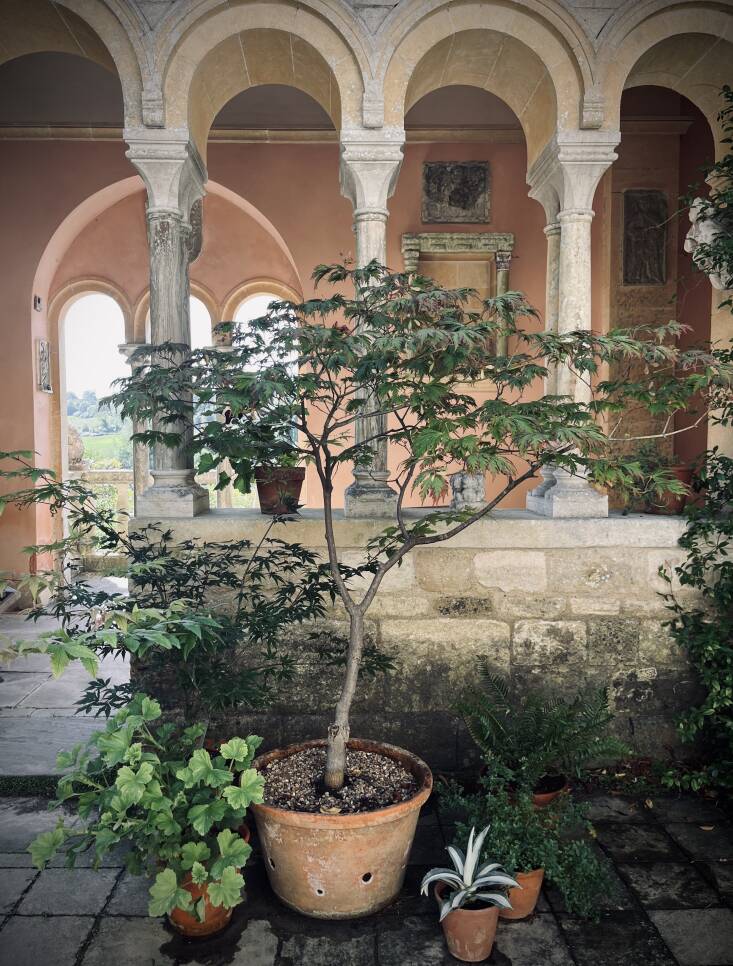
Above: In the open courtyard of the Cloisters, another grouping of pots includes an acer, a pelargonium, a fern and a succulent.

The Great Terrace

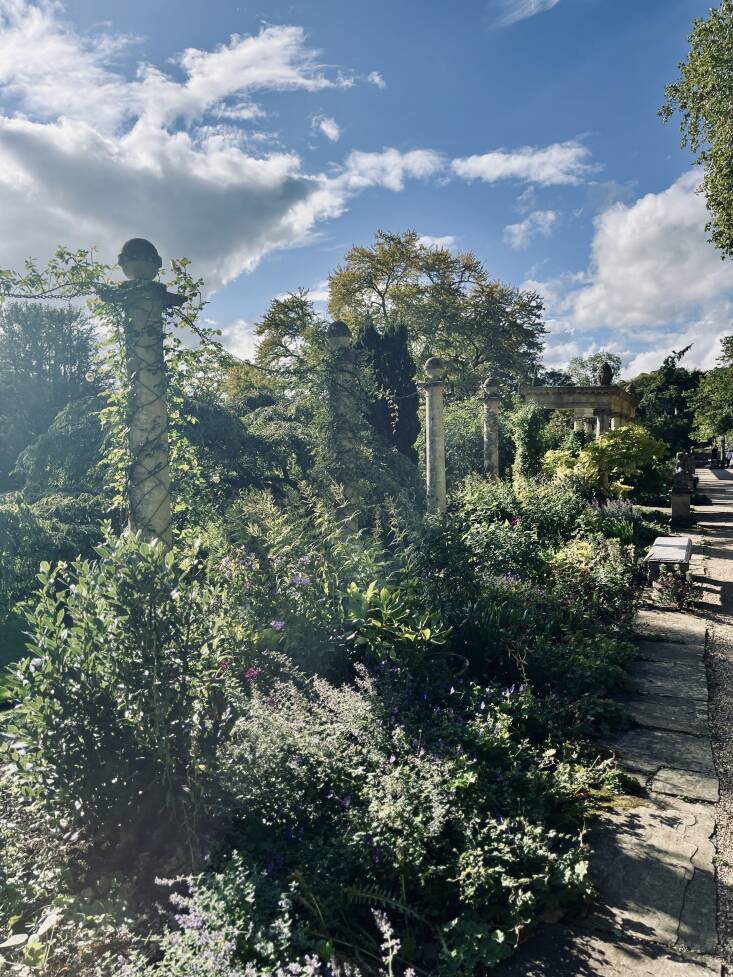
Above: There are several terraces at Iford but none as magnificent as the Great Terrace, which was restored around 1910 with an impressive colonnade in local stone.
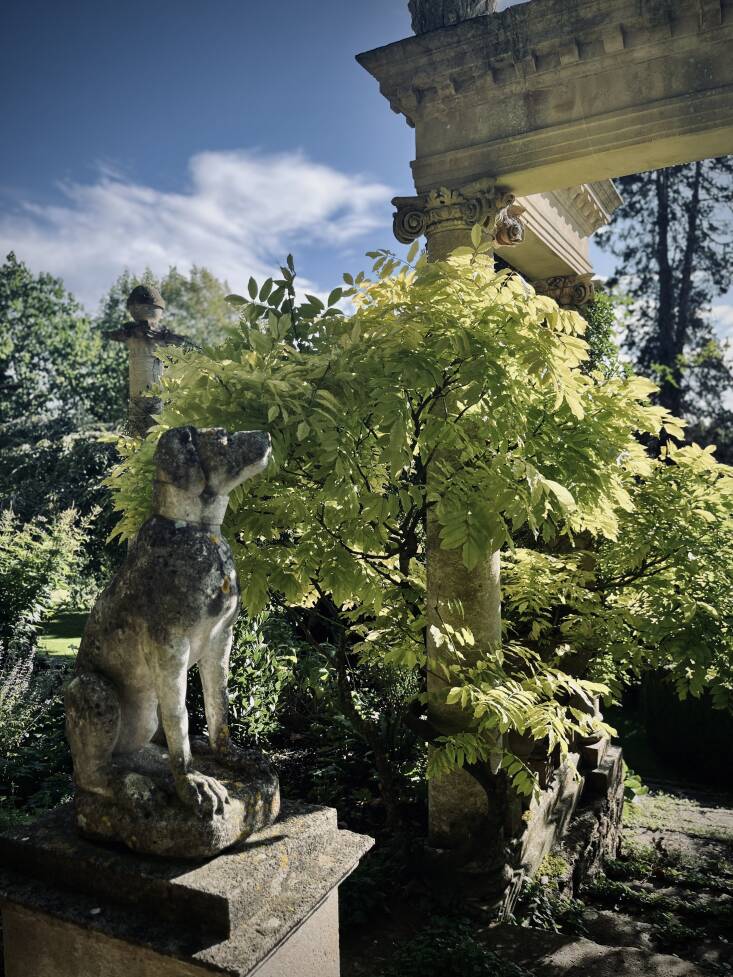
Above: A sweet dog sits beneath a wisteria-draped column on the Great Terrace. Last summer, the garden lost four large bronze statues when they were stolen in the dead of night—including a pair of fawns and a bronze of the She-Wolf with Romulus and Remus that was commissioned by Peto from the original held in Rome’s Capitoline Museum.
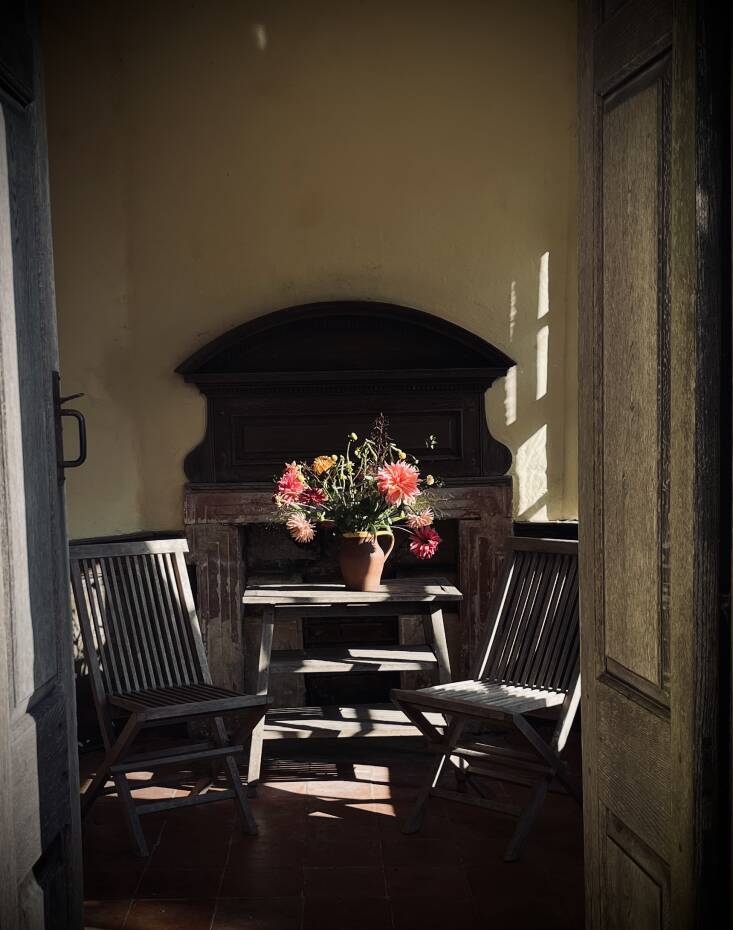
Above: An octagonal garden house, which had been found by Peto submerged in yew in the walled garden, was repositioned and now sits at the end of the Great Terrace. Inside, it is panelled in oak and has an oak fireplace mantle as well as fresh dahlias from the garden.
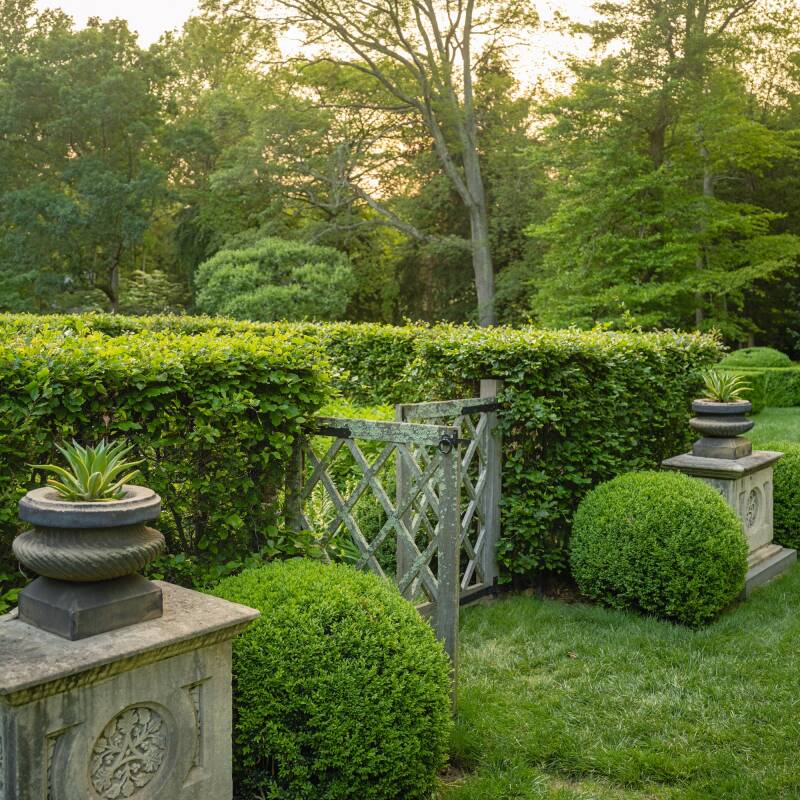
Above: A triple flight of stone steps that leads up from the house through the terraces of the garden, is punctuated with piers topped with urns and statuary. The steps are softened with self-seeding Mexican fleabane.

The Walled Garden

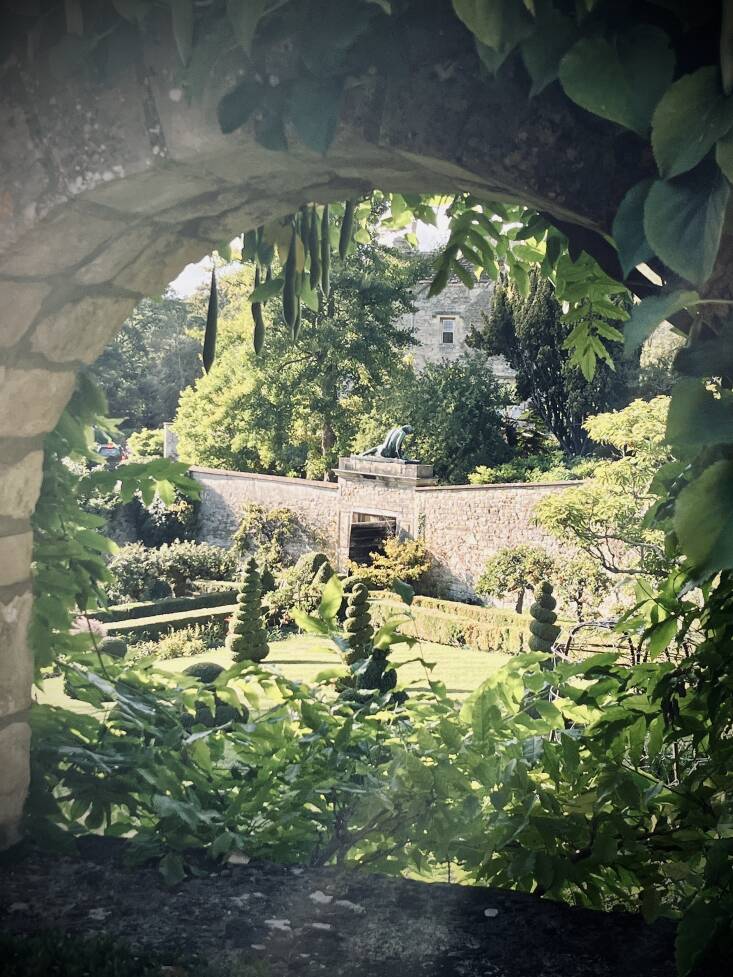
Above: The 1.5-acre walled garden includes a cutting garden, vegetable garden, topiary lawn, puzzle garden, and glasshouses.
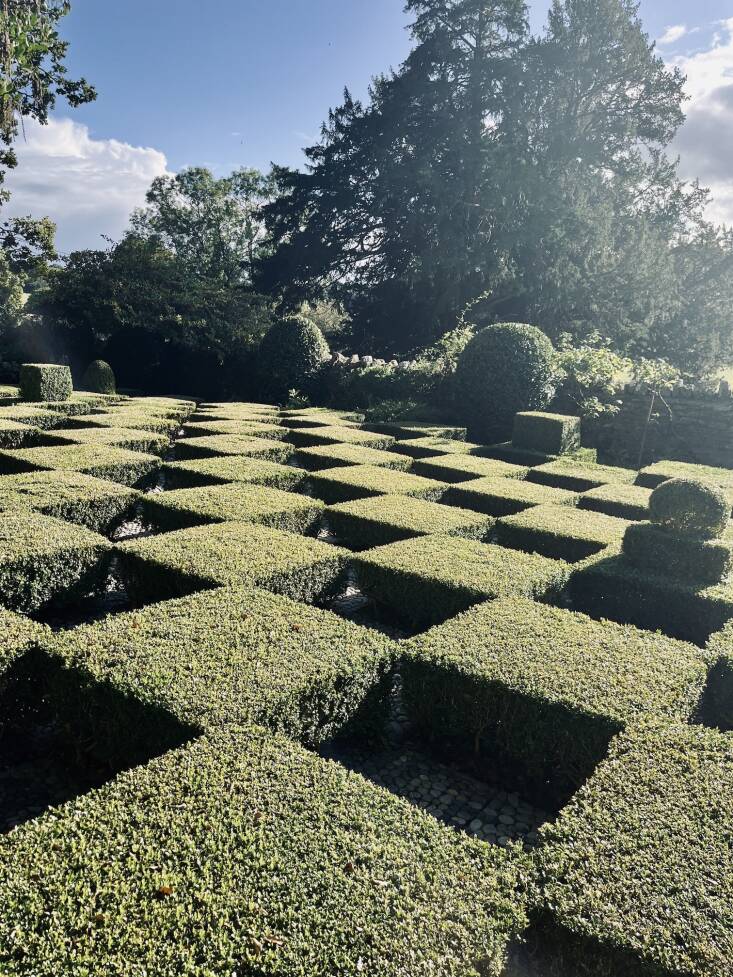
Above: Meticulously clipped cubes make up the puzzle garden.
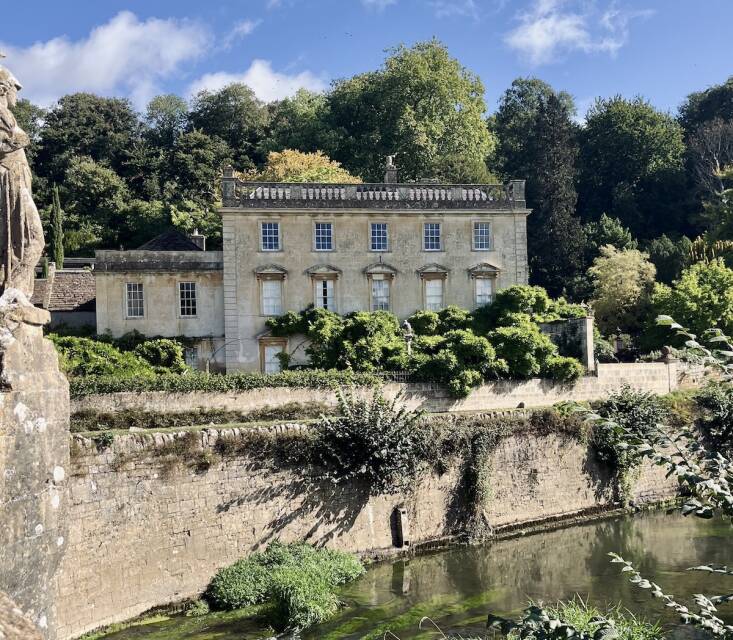
Above: The Georgian facade of the house conceals much earlier Elizabethan origins.

Iford Manor is now closed for winter but will reopen in spring 2026.

See also:

(Visited 6,179 times, 23 visits today)
You need to login or register to view and manage your bookmarks.

Have a Question or Comment About This Post?

Join the conversation

v5.0