

My fenugreek may be your methi. The aromatic, cuboid seeds of Trigonella foenum-graecum—a clover-like legume whose botanical name translates as Greek hay—are used as a spice in food traditions spanning South and West Asia, the Middle East and the Eastern Mediterranean.
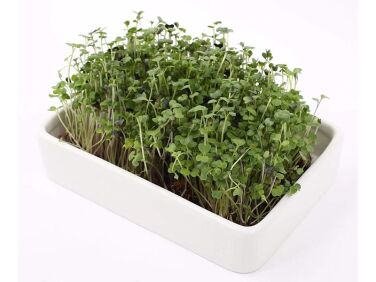
Sprouted, the seeds are an accessible and easy way of growing your own fenugreek microgreens, and allow you to enjoy its friendly aroma and nuttily bitter, green-tonic flavor, even if you don’t have a garden, or if it is the middle of winter. A lush tray of fenugreek seedlings on a windowsill is a satisfying thing when the world is frozen.
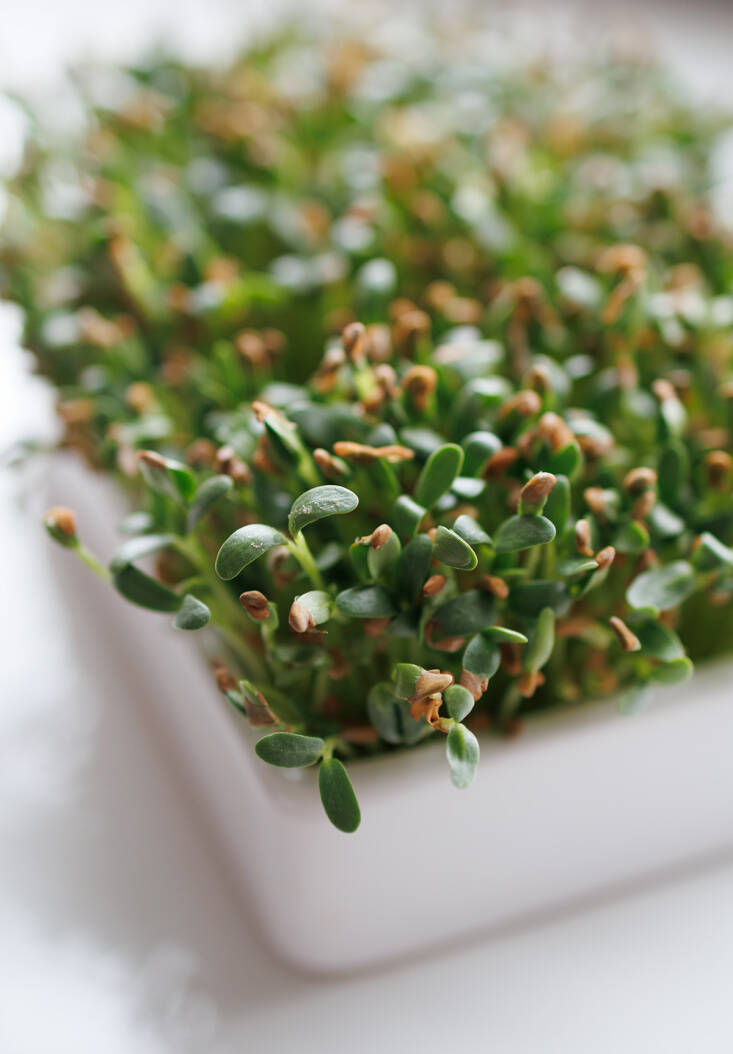
Methi is a pan-South Asian term for the plant, and hilbeh is transliterated from Arabic. The Turkish name is çemen. The plant is probably native to the broad region encompassing Southern Europe, the Eastern Mediterranean, and West Asia. Fenugreek smells, to me, like the Westernized commercial Indian curry powders I grew up with, long before learning that “curry” is a catchall for a complex array of dishes in a flock of cultural traditions. The smell of fenugreek is often described as strongly reminiscent of maple syrup—compelling.
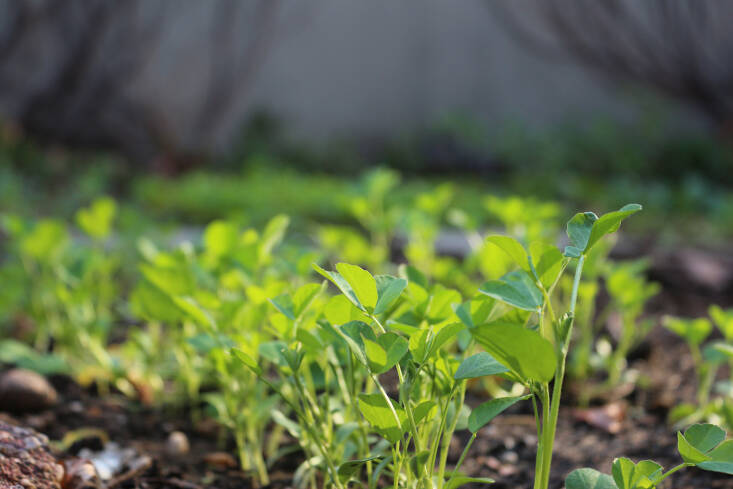
Fenugreek makes a good cover crop, since the legume fixes nitrogen in the soil, as well as a green vegetable: the well-known Indian aloo methi combines the tender stems and leaves of fenugreek (methi) with potatoes. (Years ago, it was Madhur Jaffrey’s memoir, Climbing the Mango Trees, that gave me a longing for fresh fenugreek greens.)

And it is with potatoes that I like to deploy my own microgreens: warm baby potatoes, eggs, and a vivid turmeric butter. The fresh greens add their powerfully sweet aroma along with their much-appreciated and distinctive trace-bitterness to a plate that brims with functional food goodness.

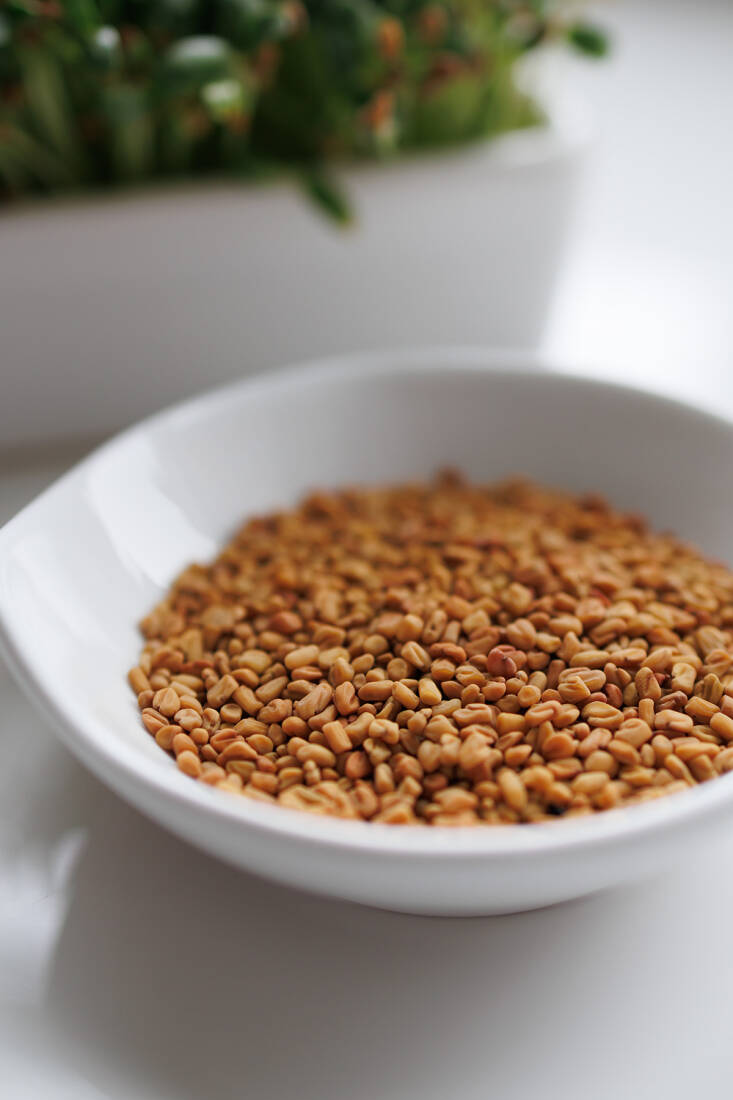
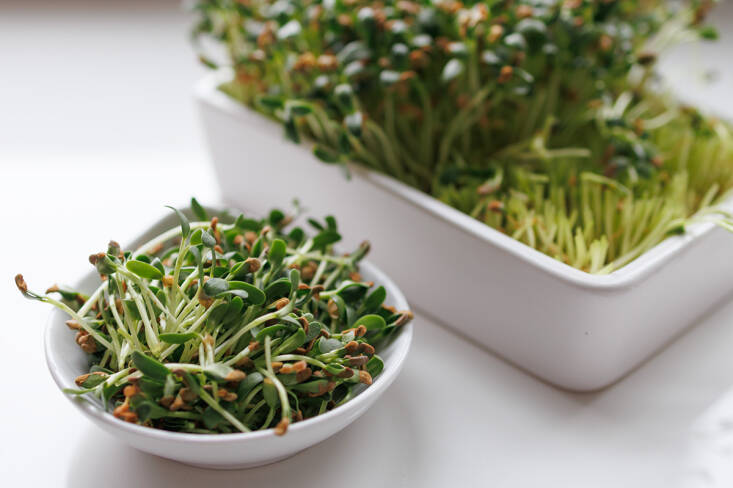
To make your own fenugreek microgreens no special equipment is required. No soil, no pot with drainage. I use a ceramic tray, but a shallow soup bowl, or enamelware dishes work, too.
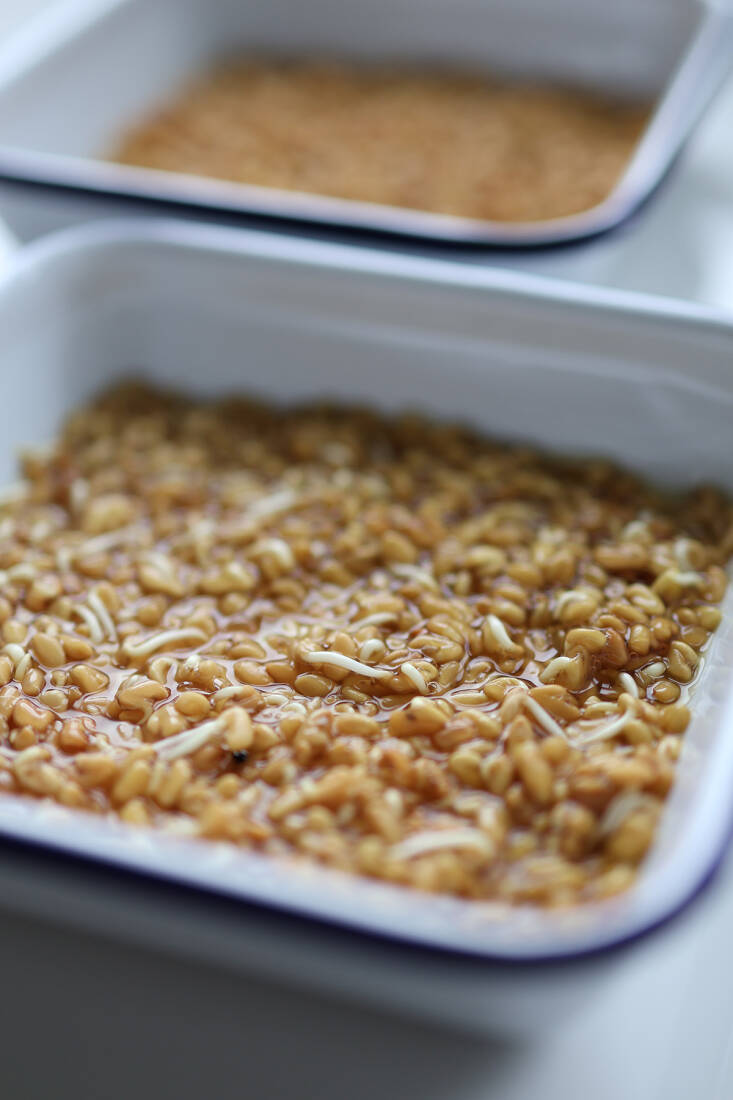
The seeds are soaked, covered for three days to create a dark environment, and then uncovered and placed somewhere bright. You only add water when it threatens to dry up, keeping the sprouting seeds very lightly moist. As to where to find fenugreek seeds for growing the microgreens, I have been very lucky with store-bought spices—100 percent germination rate, in fact, which surprised me. They are also available online especially for sprouting.
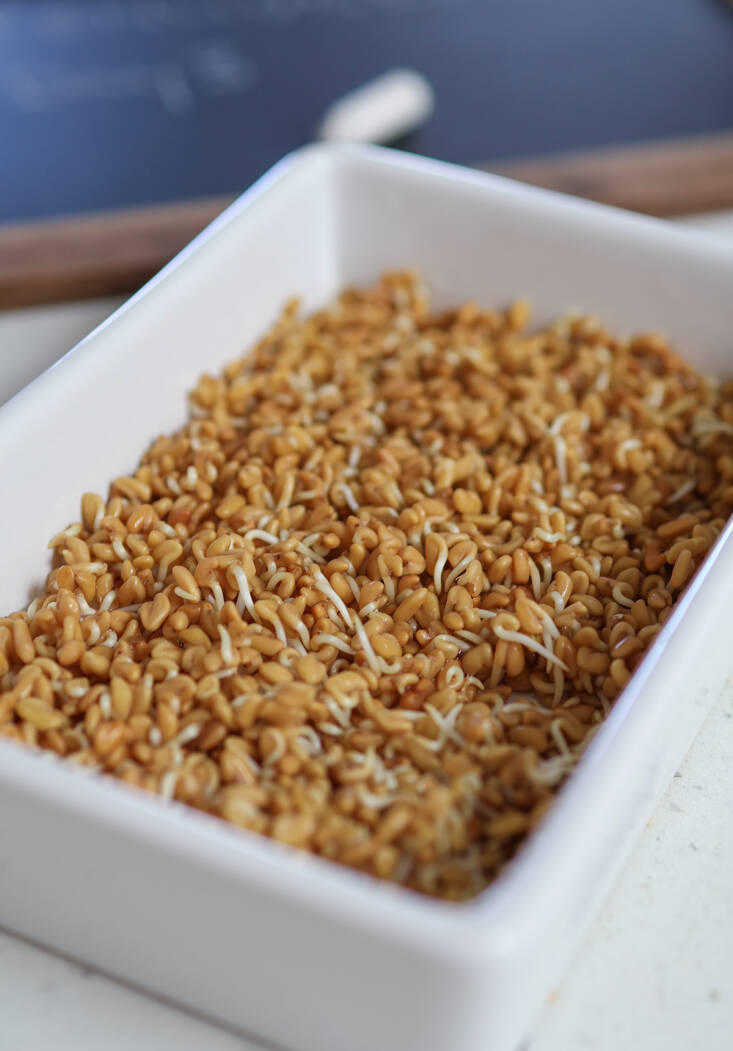

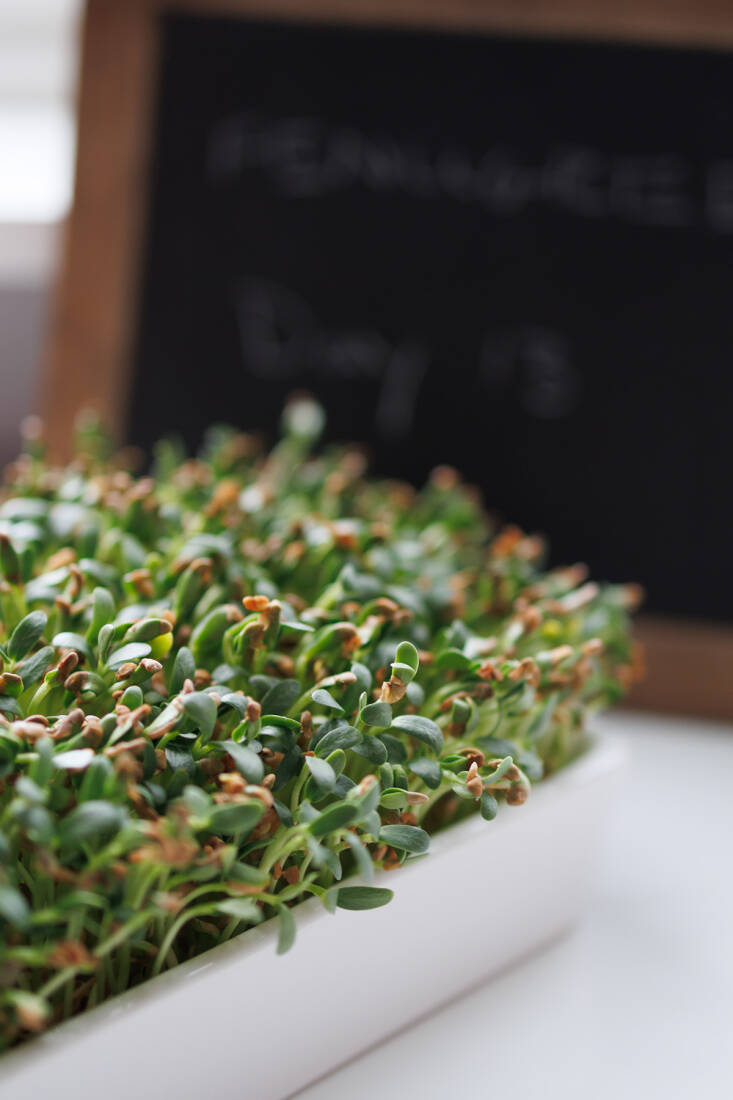
I use a small vintage school slate (found on Etsy—they also make great shopping lists, hung at our front door) to cover my tray, but a piece of thick cardboard cut to fit works just as well. It helps to write the date, or number of days, on the cover, to keep track. Expect the microgreens to be ready for harvest around Day 12 to 14.
Fenugreek Microgreen Cheat Sheet
- Scatter a layer of fenugreek seeds in a shallow tray or bowl.
- Add water to barely cover the seeds.
- Cover the tray with a piece of cardboard (or a book, etc.) for 72 hours.
- Uncover the seeds and place in a bright spot like a windowsill.
- Add a little water if all the moisture has been absorbed, already.
- Check the tray daily for water—the seeds must not swim, but they do need a film of water at the bottom of the dish.
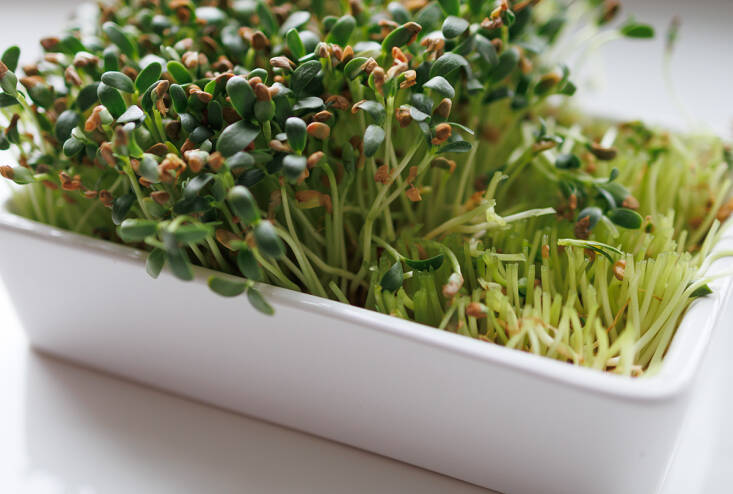
- The first seed leaves (cotyledons) appear around Day 10. I wait another few days for them to grow larger and the stems longer.
- Cut with scissors to harvest.

Potatoes and Eggs with Fenugreek Microgreens
Serves 2
- 8 baby potatoes
- 2 large eggs, boiled for 8 minutes
- ¼ cup unsalted butter
- 1 teaspoon microplaned fresh turmeric (or ¼ teaspoon dry turmeric powder)
- Salt
- 1/2 cup loosely packed fenugreek microgreens
- Freshly ground black pepper to taste
Potatoes and eggs: Fill a medium pot with cold water, and add the potatoes. Bring to a boil over high heat and continue to cook, partially covered, for about 8 to 9 minutes more, at which point they should be tender when pierced with a small sharp knife. I add the eggs to the potato-water when it reaches a boil and cook them at the same time, removing them after 8 minutes. Cook them separately if you prefer.
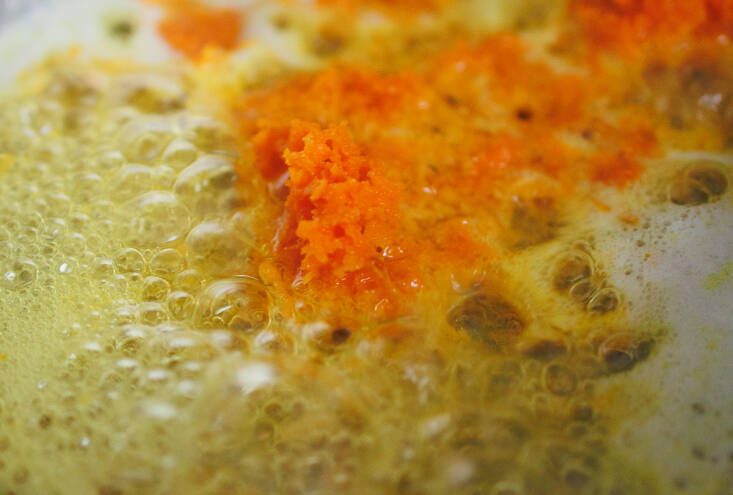
Turmeric Butter: While the potatoes and eggs are cooking, melt the butter in small pan or pot over medium-low heat and add the turmeric, stirring. Cook for two minutes and turn off the heat.
Assembling: Crack the egg shells while they are very hot, then dip them for a few seconds into a bowl of cold water so that you can handle them. Peel, and set aside. Drain the potatoes and cut each one in half. Place the still-hot potatoes in a bowl and pour in two thirds of the warm turmeric butter. Add half the fenugreek microgreens and a very generous pinch of salt. Toss well.
Serving: Transfer the buttery potatoes to serving plate, top with the halved eggs and the rest of the turmeric butter, and scatter the remaining fenugreek microgreens across the plate. Add freshly ground black pepper to taste.
Dive in.
See also:
- Microgreens: No Space Too Small to Grow Your Own
- Make the Most of Your Greens: A Recipe for Leafballs
- A No-Knead Focaccia for Thanksgiving and Beyond





Have a Question or Comment About This Post?
Join the conversation