

As if gardening weren’t challenging enough, sometimes deer take up residence in your garden and decide to host a dinner party. There is nothing worse than planting a bunch of pricey new plants, only to have them nibbled down to the ground. To help you avoid this costly occurrence and disappointment, I’m sharing a handful of my favorite deer-resistant shrubs that I have tested out over the years in various gardens.
Word of caution: Every garden is different, every deer is different, and every season is different with varying degrees of available alternate food sources—so what may be unsavory to deer in one garden may be irresistible in another. Also, when plants are young, and the leaves and stems are tender, there is a higher chance that the plant will get snacked on; as the plant matures, it becomes less desirable. If this early munching happens, a deer-repellent spray can work if applied routinely and after any rain.
1. Coleonema pulchrum

The plant is fondly called pink breath of heaven because crushing the needle-like leaves releases a pleasant scent. That same scent is what helps ward off deer. This low-maintenance shrub grows best in sunny spots and, depending on the variety, produces either dainty magenta, white, or pink flowers. ‘Sunset Gold’ offers bright golden foliage contrasting with pink flowers. It has moderate water needs and is hardy in USDA Zones 8-11.
1. Westringia fruiticosa
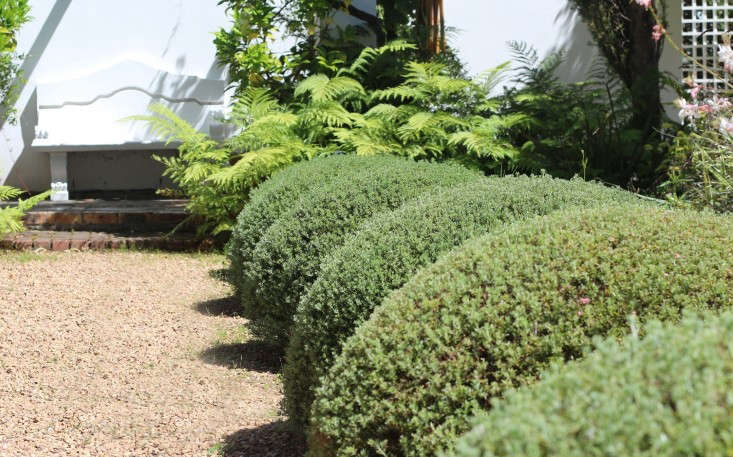
These evergreen, easy-to-care-for shrubs come in various sizes, from low to tall, and make excellent informal or formal screens, low or high hedges, and ground covers. Because Westringia is in the mint family, the leaves aren’t appealing to deer. Most bloom profusely from late winter to early summer with petite flowers ranging in color from white to light lavender, putting them also in the bee- and small butterfly-friendly category. A sunny to mostly sunny spot and summer irrigation are appreciated. Hardy in USDA Zones 9-11.
3. Leucadendron
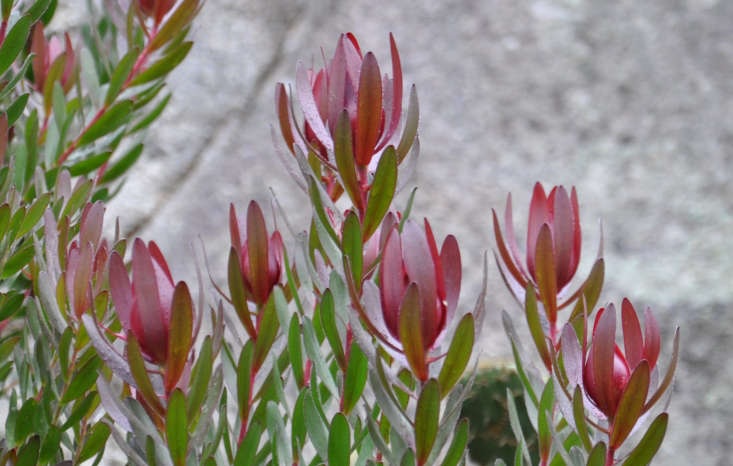
Showing off vibrant color, some even in the winter, Leucadendrons are my go-to if I want structure, more visiting pollinators, year-round interest, and amazing sculptural cut flowers. Fast-growing, drought-tolerant, and low-maintenance, these shrubs can hover around three feet, though some tower to eight or more feet. Plant in a sunny spot for best growth and color. Pro tip: Avoid high phosphorous fertilizers as this can be extremely damaging. Hardy in USDA Zones 9-11.
4. Grevillea

Looking for a fast-growing shrub that pumps out curious spidery flowers that deer leave alone? Grevillea is your gal. Coming in a wide range of heights and shapes and colors, there is a Grevillea for every sunny garden. Need a low ground cover? Try Grevillea lanigera. Need a tall informal screen? Go for Grevillea ‘Red Hooks’. Oh, and these low-maintenance shrubs are also true hummingbird magnets. When planting, make sure your soil has sharp drainage. Hardy in USDA Zones 9-11.
5. Pieris japonica

This easy shrub not only offers year-round beauty and charming dangling flowers, but also the assurance that deer will leave it alone. Plant slow-growing Pieris in a shady to partly shady spot in a mixed border, woodland, or Asian-inspired garden; smaller varieties can be used in containers. Depending on the variety, it can grow anywhere from one foot tall to 12 feet tall, and two to eight feet wide. The flowers (coming in white, pink, and dark pink) are adored by bees and hummingbirds, and avoided by deer, who view them as toxic. Hardy in USDA Zones 5-8.
See also:
- 13 Favorites: Native Shrubs that Don’t Mind the Shade
- 5 Favorites: Naturally Rounded Evergreen Shrubs
- 17 Favorites: Shrubs With White Flowers





Have a Question or Comment About This Post?
Join the conversation