

In Chicago, where I grew up, tulips were pretty much the only thing that kept us going through the winter. You can survive snow, and you can survive ice, and you can even survive the razor winds that blow in from the lake to rub your face raw, if you know that one day you will look out a window and see a clump of tulips, their swan necks improbably supporting the weight of their fat flowers.
But it can be daunting, in the autumn, to figure out how precisely to make tulips happen. Which varieties to plant? Will crocuses grow in your climate? How do you gracefully make room in the garden for flowers that bloom briefly before producing withering foliage you shouldn’t cut back for weeks?
For advice, I phoned bulb grower Scott Kunst of Old House Gardens in Michigan. He grows and sells hundreds of hardy and rare, vintage varieties of tulips, daffodils, crocuses, hyacinths, bluebells, and other bulbs.
“Start small,” he suggested.
Here are Scott Kunst’s 10 ideas for planning a spring bulb garden:
Photography by Michelle Slatalla except where noted.
Know your microclimate.

Go outdoors and take stock of your garden’s microclimate: where are the sunny spots and well-drained soil? That’s where most bulbs grow best. Draw a garden plan to remind yourself.
Buy 5, 7, 9, or 11.
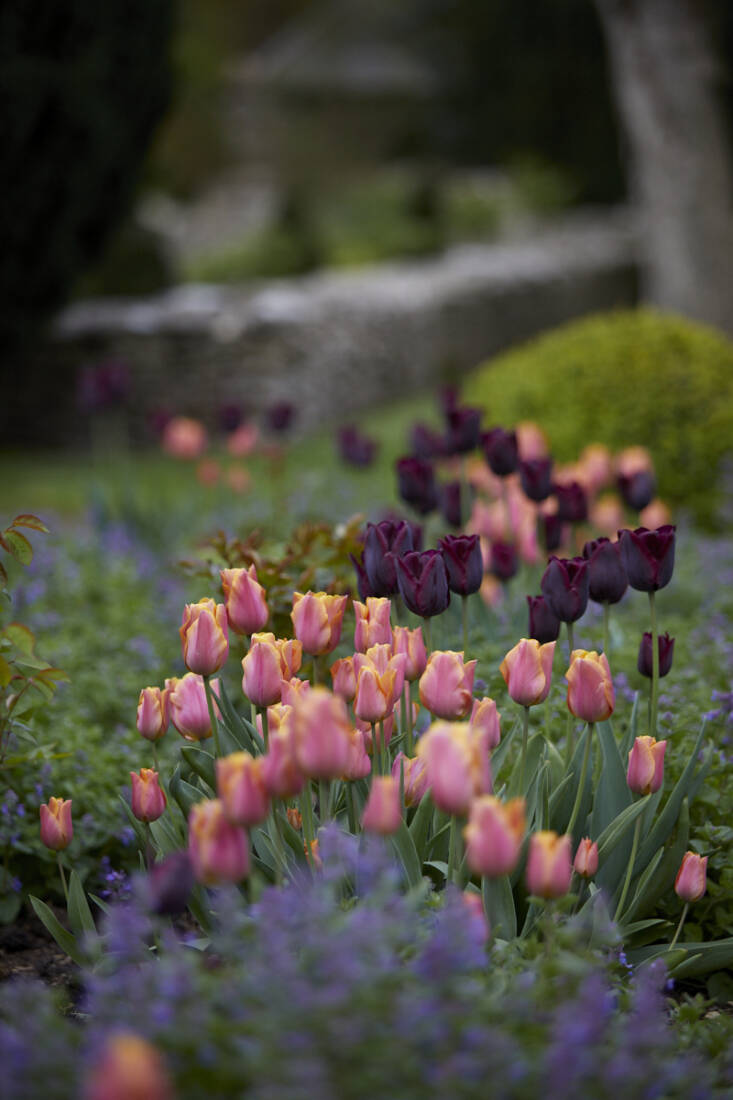
While you’re looking at your garden, imagine clumps of bulbs, planted in clusters of five or more of a single variety; that’s how they look best.
Know your hardiness zone.
The US Department of Agriculture has developed a map of hardiness zones to help you choose plants that will survive in the climate of your geographic area. Check your USDA hardiness zone by entering your zip code at USDA Plant Hardiness Map; purchase bulbs that are rated for your zone. You can search for bulbs for your zone with the Heirloom Bulb Finder at Old House Gardens.
Start small.

The first year you plant bulbs, fill a few holes in the garden rather than trying to make the whole garden look like a field in Holland.
Use a fence as backdrop.
_0.jpg)
Plant bulbs in narrow, curving clusters that run parallel to the fence. “This is a trick I learned from Gertrude Jekyll,” says Kunst. “Rather than planting a big, round circle that’s three feet wide, make a gentle curve that’s about 18 inches wide. The bulbs will be in your line of vision when they bloom, and after they go over, other plants behind and in front will hide the yellow foliage.”
Heights may vary.

When deciding where to place bulbs, take size guidelines with a grain of salt. Heights of the same variety of bulb can vary from one year to the next, and in different growing zones. “It’s OK to mix up heights,” says Kunst. “It looks less garden-y than if you try to put all the tall ones in the back and all the short ones in the front.”
Don’t let them touch.
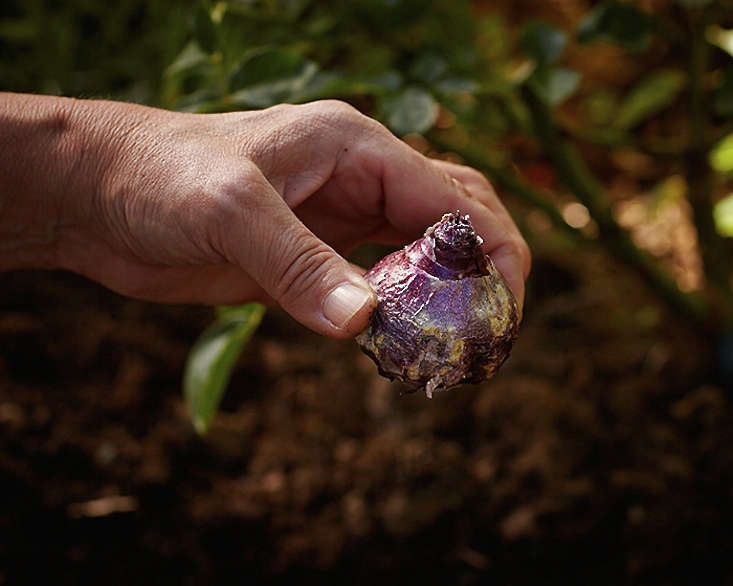
You can plant bulbs close together in one big hole, but don’t let them touch. “They look more naturalistic if you plant them close together,” says Kunst.
Buy older varieties of tulips.

In most parts of the US, tulips will not reappear as reliably as other bulbs year after year; older varieties of tulips will return more reliably than new ones. “Tulips like super sandy soil and summers that are quite dry,” says Kunst. “If you plant them in a spot that’s going to be watered regularly over the summer, dig them up and store them until fall.”
Add companion plants.
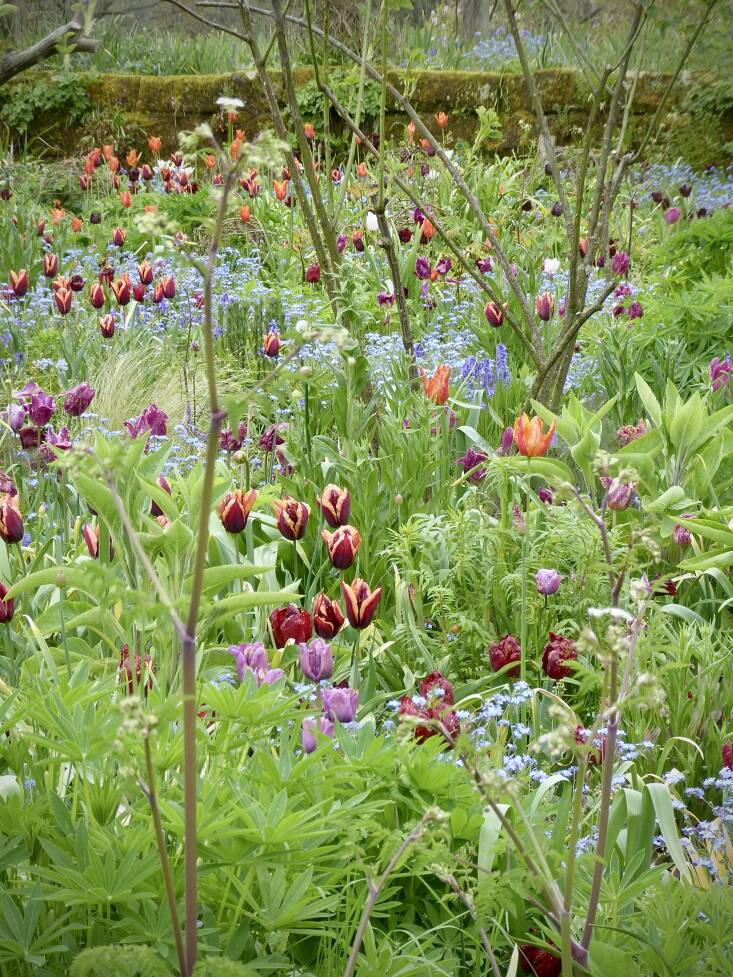
Good companion plants to take center stage as bulbs finish blooming: day lilies and peonies and self-sowing annuals such as larkspur. (“It has nice ferny leaves to distract the eyes from bulbs’ dying foliage,” says Kunst.)
Make room.

To make room to plant bulbs, pull out or trim back existing plantings. “The best gardeners have a ruthless streak,” says Kunst. “If you’re not willing to throw things away–or give them away–then you eventually are going to be overwhelmed by all that stuff that keeps burgeoning in the garden.”
Draw a plan…or not.

“Do I need to draw a garden plan for the path?” I asked Kunst.
“Most gardeners don’t—we fly by the seat of the pants,” says Kunst. “And it works out fine.”
See also:
- Confessions of a Tulip Addict: Britt Willoughby on the Appeal of Cultivating Super-Rarefied Tulips
- Gardening 101: Growing Tulips the New Dutch Way
- How to Grow Tulips That Come Back Year After Year, With Polly Nicholson
N.B.: This post was originally published on September 2013; it has been updated with new photos and links.




Have a Question or Comment About This Post?
Join the conversation