

For the many gardeners whose growing-spaces are either entirely or partly shaded, shade-loving shrubs offer an important, permanent layer of interest alongside perennials and beneath trees. In small gardens, shrubs can create a structural framework for the space, seasonal focal points, a living wall or partition, or even a harvestable crop for a less-than-sunny kitchen garden. While any list of shrubs for shade can include worthwhile and non-invasive introduced species, planting natives (in this case, to North America) contributes towards resilience and supports sustainable growing practices.
Our 13 favorite shrubs for shade span the year in terms of seasonal interest, from spring flowers to fall fruit.
American hazel (Corylus americana)
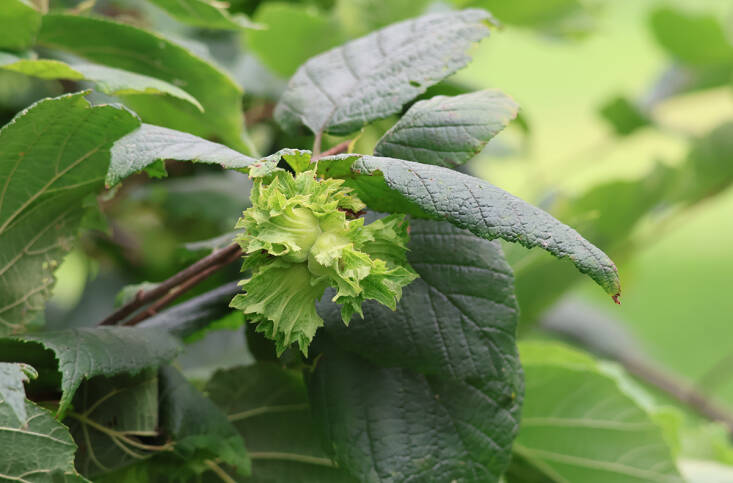
Hazelnut, filbert, cobnut—whatever you call the fruit of this large shrub, it will be yours to harvest if you plant your Corylus in semi-shade. (While hazel will grow beautifully leafy in full shade, it will bear fewer nuts.) One of the earliest shrubs to bloom in pre-spring, American hazel has slender flower structures with a tiny, burgundy male flower poised above the pendant female catkins. American hazel is hardy from USDA growing zones 4 to 9.
Blueberry (Vaccinium angustifolium and V. corymbosum)
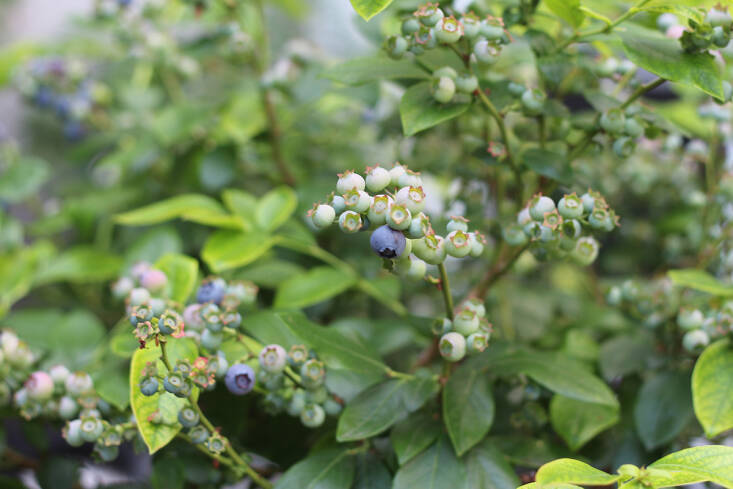
Highbush and lowbush blueberries have three seasons of serious interest: early spring flowers (an important food source for native bees), their famous summer fruit, and very vivid fall foliage. Blueberries require acidic soil—it’s non-negotiable—so if your garden’s in-ground soil tests near-neutral, they are better grown in containers, where you can adjust the pH more easily (personally, I use fresh—not spent—coffee grounds, mixed into the potting soil when planting.) Blueberries are hardy from USDA zones 3 (possibly 2, with protection) to 8.
Bottlebrush buckeye (Aesculus parviflora)
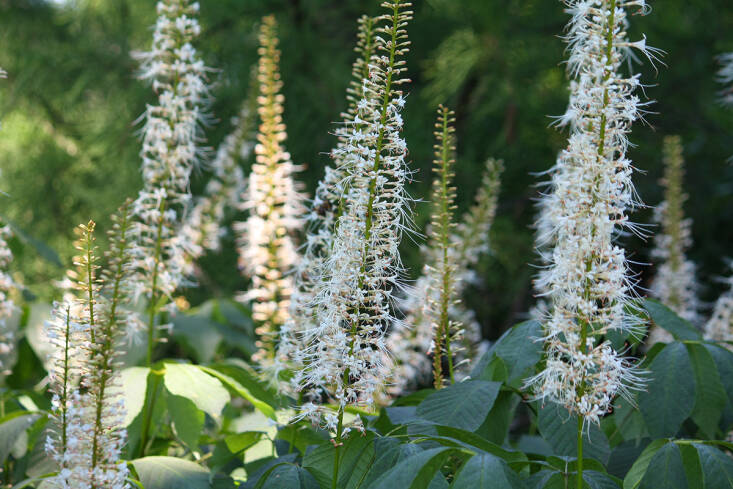
Bottlebrush buckeye’s elegantly upright racemes of white flowers are like summer fireworks. Blooming in mid to late summer, this large shrub fills the flowering gap between spring’s profusion and fall’s fruit and foliage. Hardy from USDA zones 4 to 8, bottlebrush buckeye will thrive in part to full shade.
Canada rosebay, rhodora (Rhododendron canadense)
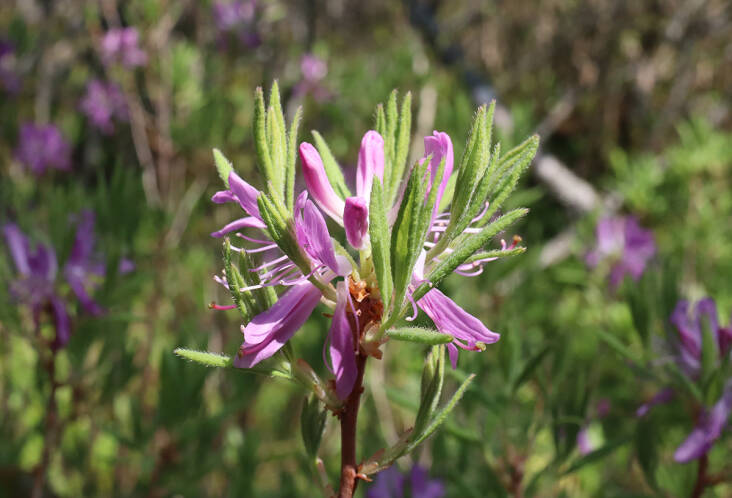
In the wild, Canada rosebay, or rhodora (which is also the family name for all rhododendrons), flourishes in moist woodlands and at the edges of swamps and bogs. Its scented blooms appear in late spring to early summer. This is a shrub that needs plenty of water, and it also requires acidic soil. Canada rosebay grows in semi-shade or under the seasonal shade of deciduous trees. It is is very cold hardy, from USDA zones 2 to 6.
A digression for botanical poetry:
The Rhodora
– 1834, by Ralph Waldo Emerson
In May, when sea-winds pierced our solitudes,
I found the fresh Rhodora in the woods,
Spreading its leafless blooms in a damp nook,
To please the desert and the sluggish brook.
The purple petals fallen in the pool
Made the black water with their beauty gay;
Here might the red-bird come his plumes to cool,
And court the flower that cheapens his array.
Rhodora! if the sages ask thee why
This charm is wasted on the earth and sky,
Tell them, dear, that, if eyes were made for seeing,
Then beauty is its own excuse for Being;
Why thou wert there, O rival of the rose!
I never thought to ask; I never knew;
But in my simple ignorance suppose
The self-same power that brought me there, brought you.
Carolina allspice, strawberry bush, sweetshrub (Calycanthus floridus and C. occidentalis)
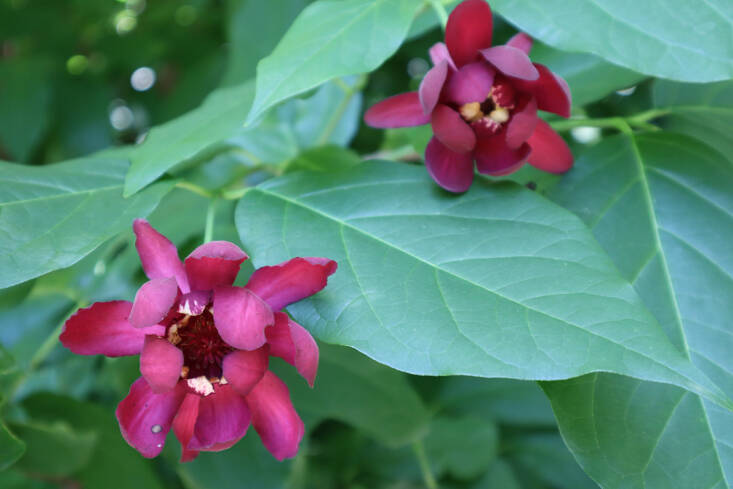
Calycanthus is a large shrub with magnolia-esque late spring and early summer flowers. They later form strikingly ornamental seed pods that persist through winter. The leaves and twigs of Carolina allspice (C. floridus) smell like strawberries when crushed—a quick and refreshing olfactory pick-me-up. Its cousin-species, C. occidentalis, is native to the West Coast and smells more like camphor. (A white form is East Asian, C. chinensis.) Calycanthus floridus is hardy from USDA zones 4 to 9, while C. occidentalis is hardy from zones 6 (with protection from winter winds) to 9.
Fothergilla
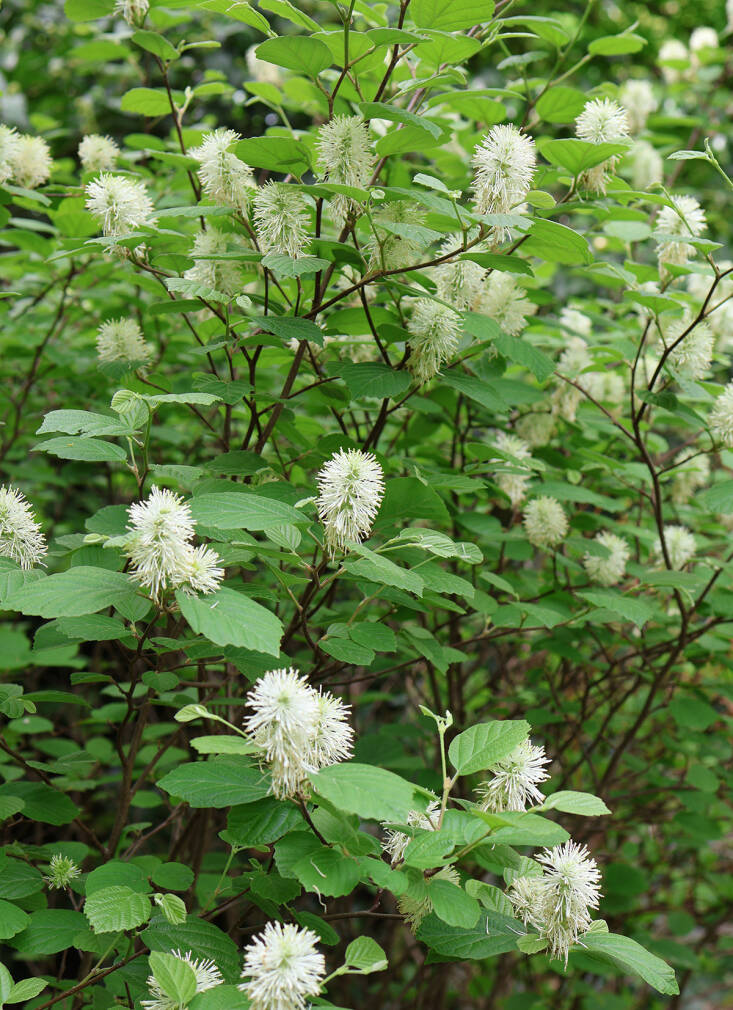
Fothergilla’s soft tufts of white spring flowers lighten shadowy gardens and give way, in autumn, to a blaze of beautiful foliage. With a couple of species and several hybrid cultivars to choose from, fothergillas may be compact or elegantly leggy. They are hardy from USDA zones 4 to 8, and prefer lightly acidic soil.
Mahonia, Oregon grape (Mahonia species)
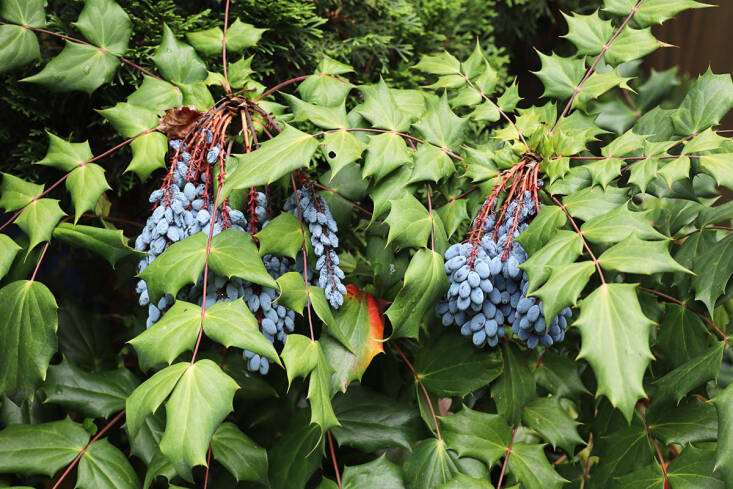
One of the best shrubs for shade because if its year-long appeal, Mahonia species have pretty yellow, sweetly scented flowers that bloom in late winter and early spring; lusciously attractive (and edible) clusters of late summer fruit; and sharply defined, evergreen leaves. Depending on the species Mahonia may be hardy from USDA zones 5 to 8, with protection from freezing winter winds.
Mountain laurel (Kalmia latifolia)
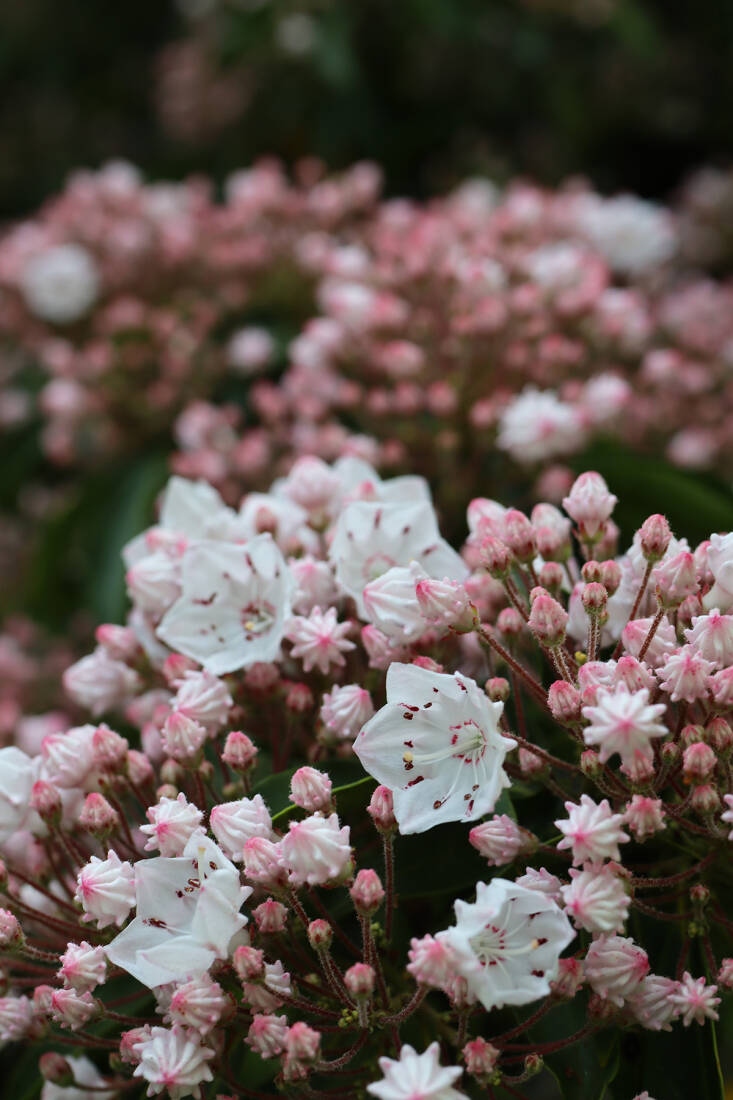
In the wild, evergreen mountain laurel grows as an understory shrub in Eastern woodlands, blooming exuberantly in early summer. To thrive, these shrubs require acidic soil and consistent but well-draining moisture. Mountain laurel will grow in USDA Zones 5 to 9 in full shade to partial shade.
Ninebark (Physocarpus opulifolius)
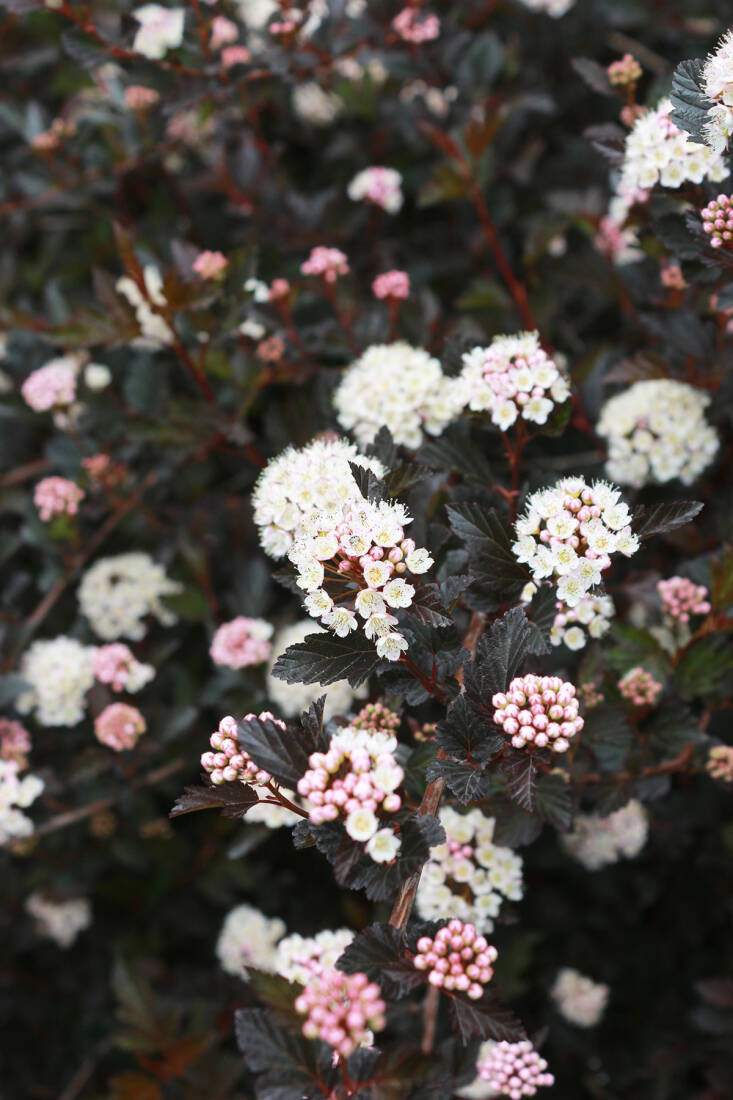
Ninebark is one of the hardiest native shrubs for shade, with arching stems that are festooned with pink buds that open into showers of white confetti in early summer. While many ninebark shrubs are green, burgundy-leafed cultivars are a spectacular garden backdrop, whether or not they are in bloom. Exceptionally cold-tolerant ninebark will grow in USDA zones 2 to 8.
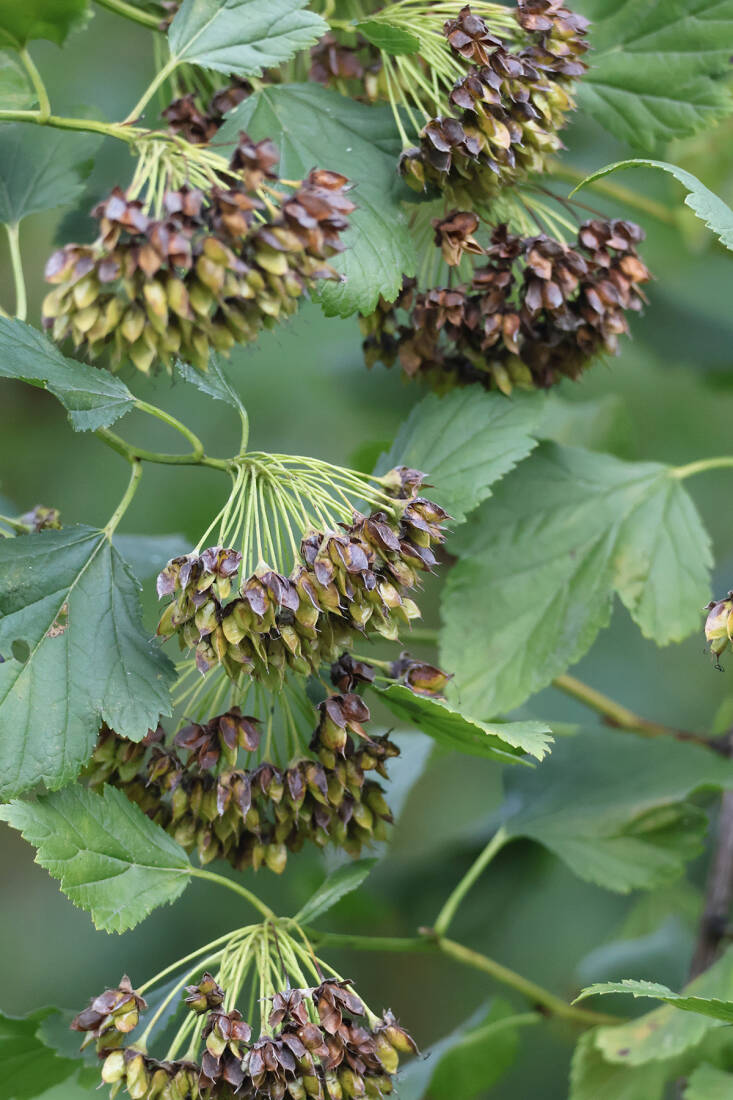
Patridgeberry (Mitchella repens)
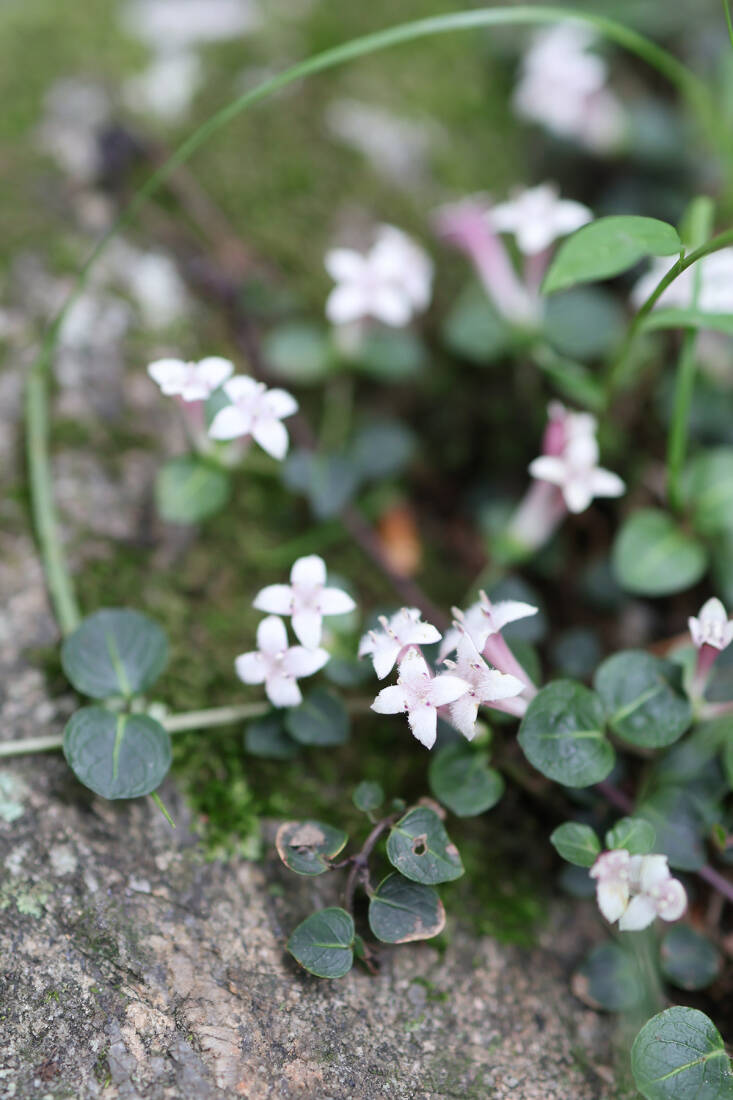
Partridgeberry grows no taller than a couple of inches. Its starry summer flowers are seen to best advantage when it is planted beside paths, near a retaining wall, or where it can sprawl over rocks in a shady garden. Its brilliant red fruits appear in early fall. Partridgeberry is hardy from zones 3 to 8 and requires acidic soil to thrive.
Purple-flowering raspberry (Rubus odoratus)
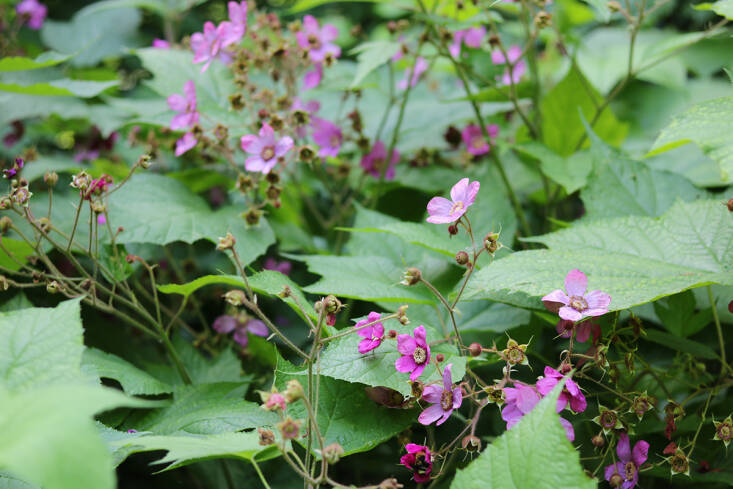
The ample, maple-leafed foliage of purple-flowering raspberry is a velvet backdrop for the shrub’s dramatic early summer flowers. The large, rose-like flowers are a pollinator favorite and are especially loved by bumblebees. In late summer the fruit, reminiscent of thimbleberries, makes an appealing snack. Purple-flowering raspberry is hardy from USDA zones 3 to 8.
Spicebush, Appalachian allspice (Lindera benzoin)
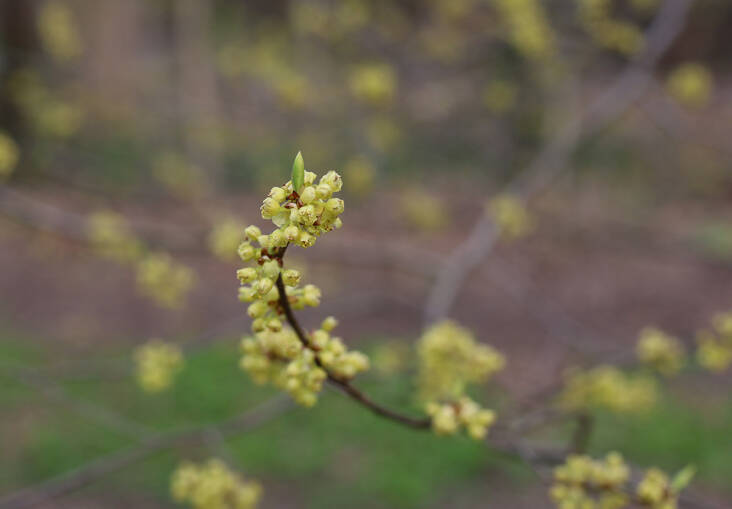
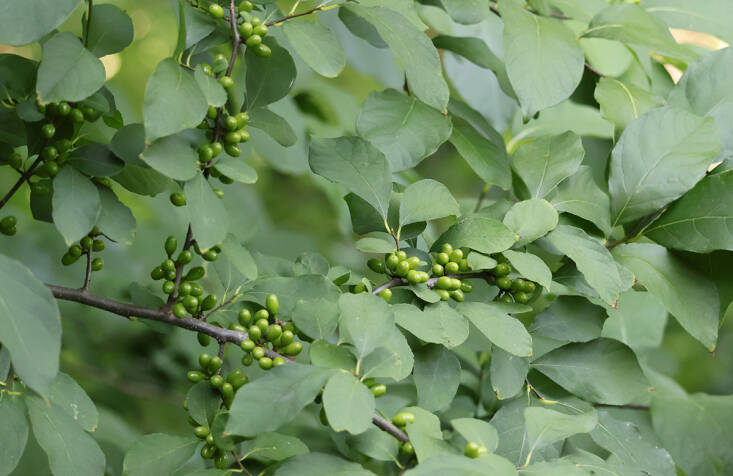
Is spicebush a large shrub or a small tree? Doesn’t matter. This woodland native’s fresh yellow flowers are the first to break the bleak spell of the woodland winter, and by summer the female shrubs have formed their citrus-redolent fruit. All parts of spicebush are highly aromatic and edible, and it is also the host plant for the spicebush swallowtail butterfly. (See Want to Help Support Butterflies? Plant Caterpillar Food.) Spicebush is hardy from zones 4 to 9.
Sweet pepperbush (Clethra alnifolia)
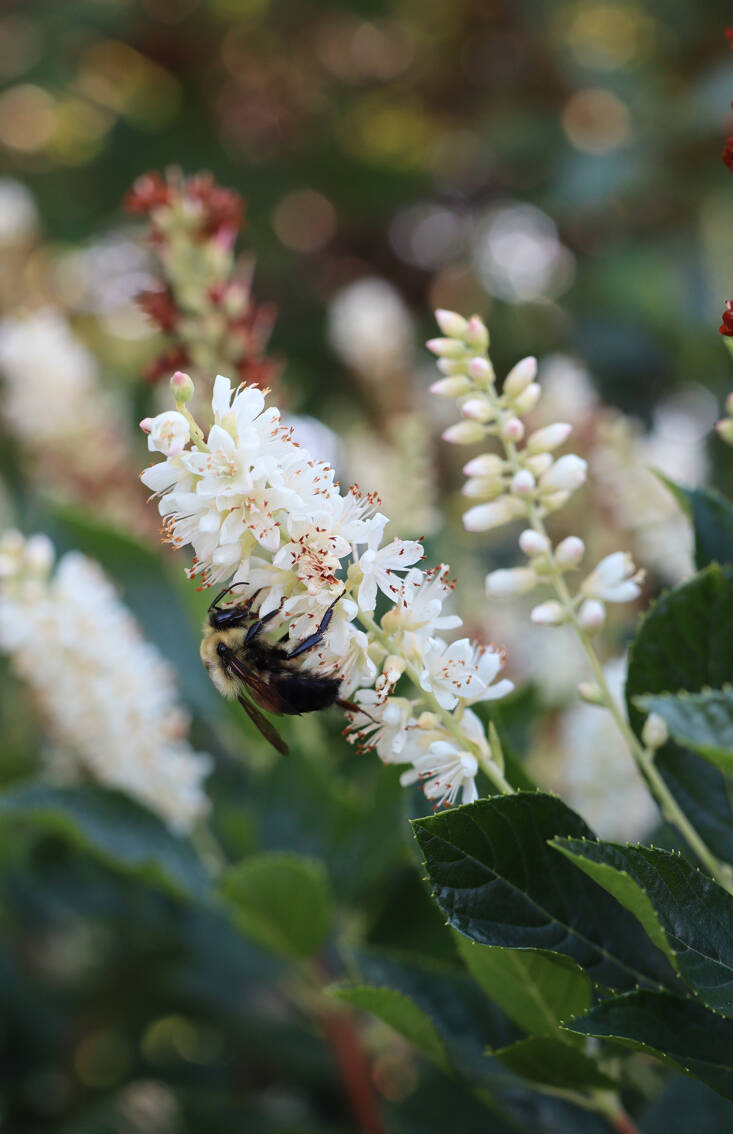
One of the loveliest shrubs for shade, the clove-scent of sweet pepperbush—Clethra alnifolia—signals the last days of summer, and the turning of the year. The native shrubs producing copious clusters of flowers that are irresistible to bees and butterflies. Clethra is hardy from USDA zones 3 to 9.
See also:
- Perennials for Shade: 13 Favorites for Spring, Summer, and Fall
- 13 Favorites: Herbs that Thrive in Shade
- Gardening 101: How to Grow Vegetables in the Shade





Have a Question or Comment About This Post?
Join the conversation