

When August melts into September, nights are suddenly noticeably longer, while flowering perennials seem to grow wilder, to compensate. One of the greatest gardening pleasures of this cusp-season is the effusion of a tousled collection of native plants whose flowers are the languid counterpoint to spring’s cheerful bursts of blossoms. If we must have winter, then these sultry blooms are a fitting way to celebrate the dying of the light. Here are 11 native perennials for late summer and fall.
Photography by Marie Viljoen.
Agastache, anise hyssop (Agastache foeniculum)
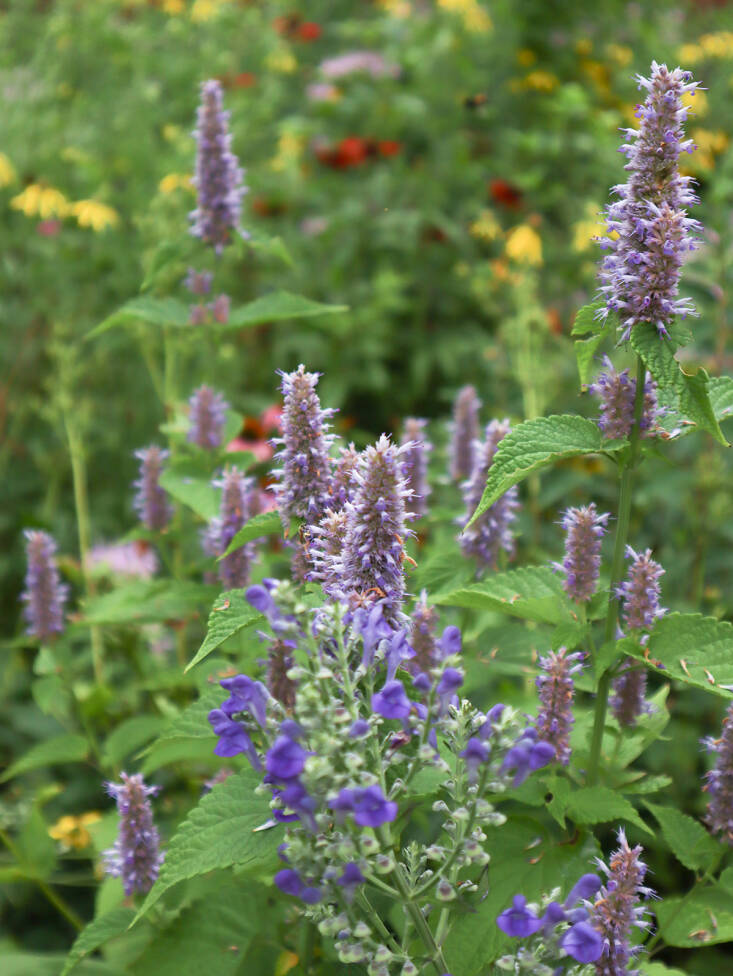
Of all the native perennials that bloom late into the year, if I had to choose just one to provide summer-to-fall flowers, it would be Agastache foeniculum and its various cultivars. Tall in stature, with licorice or mint-scented leaves, and profuse little blue flowers, these sun-loving hyssops provide height and bulk and filler, all at the same time. They are also elegantly lanky, and are a day-long buffet for bees, other pollinators, and even hummingbirds. If you can bear it, grit your teeth and cut the waning flowers back in late summer for a late fall resurgence; and leave those flowers to set seed for seed-eating birds like goldfinches.
Asters (Symphyotrichum pilosum, S. ericoides, and others)
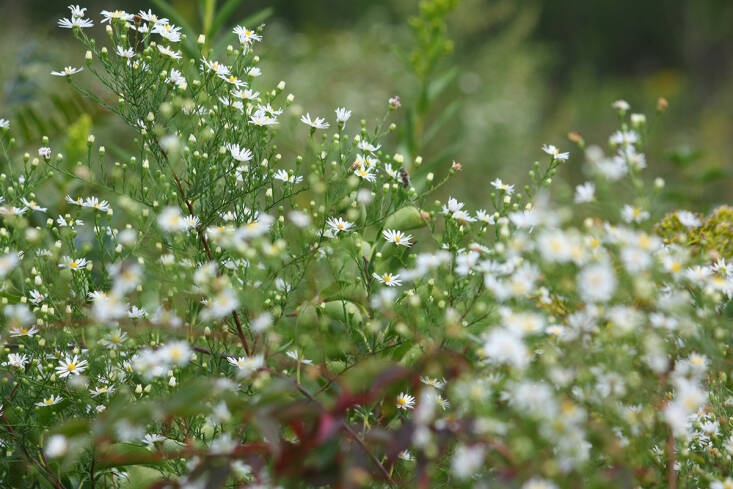
No late summer garden seems complete without asters—low-maintenance and long-blooming. Heath aster (Symphyotrichum ericoides, above) likes full sun and is hardy from zones 3 to 10. Hairy aster (S. pilosum) can handle more shade and likes moist soil. It is hardy from zones 4 to 8. For woodland gardens, choose wood aster (Eurybia divaricata).
Flowering spurge (Euphorbia corollata)
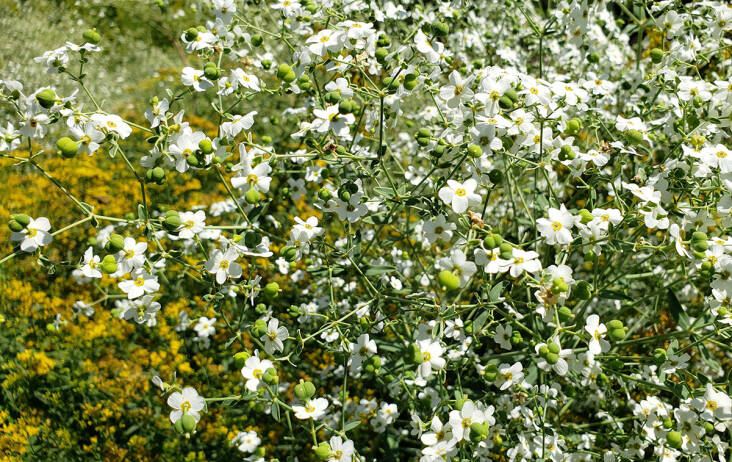
Clump-forming flowering spurge is one of the native perennials that seems to fly under the horticultural radar. Also known as the baby’s breath of the prairie, it has a loose, breezy habit with wiry stems tipped by flower-like bracts and distinctive, three-celled seed capsules. Flowering spurge pairs well with grasses and golden rods, asters, helianthus, and partridge pea. It flourishes in full sun and is hardy from USDA zones 4 to 9.
Great burnet (Sanguisorba officinalis)
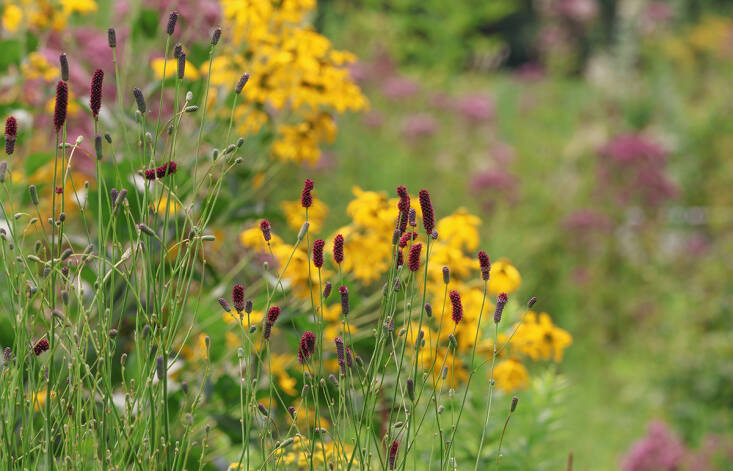
Great burnet is potentially statuesque, but it never dominates, visually. Instead, its threadlike stems hold burgundy flowerheads effortlessly aloft, adding tousled lightness to late summer and autumn gardens. Grow great burnet in full sun, and enjoy its cucumber-flavored leaves in salad. It is hardy from zones 4 to 8.
Ironweed (Vernonia fasciculata and other species)
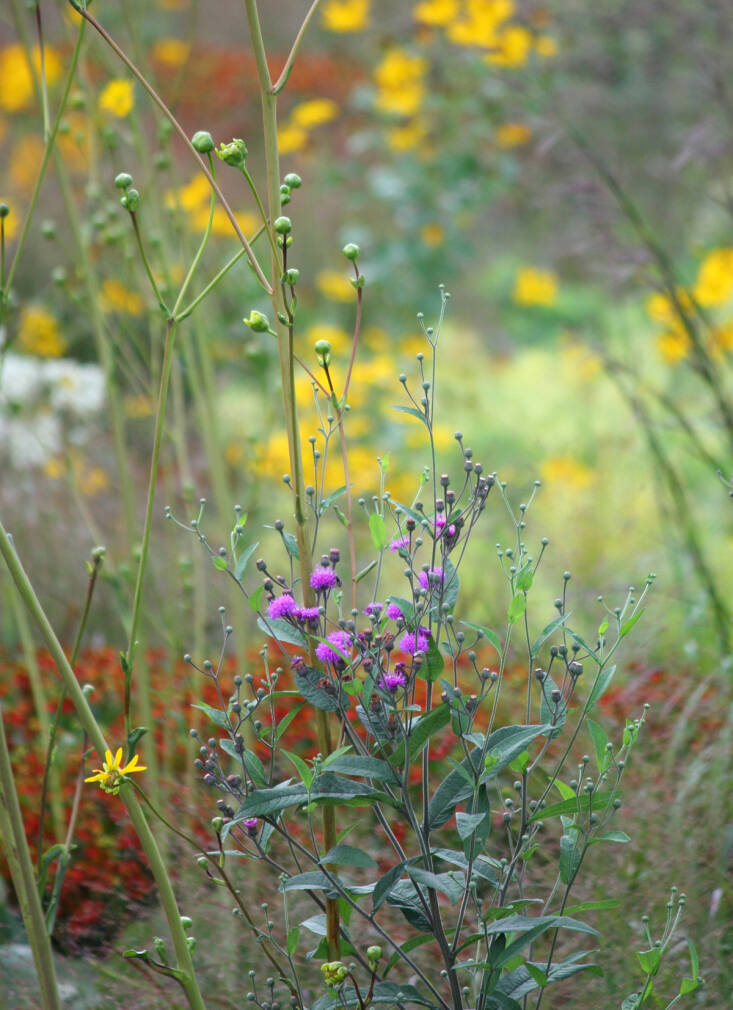
The vivid amethyst tufts of ironweed are welcome relief from the cheery but often dominant yellow palette of the late summer native garden. Smooth ironweed (Vernonia fasciculata) is hardy from zones 4 to 9 and flowers best in full sun. Giant ironweed (V. angustifolia) grows better in partial shade, and is hardy from zones 5 to 8. Both species require ample moisture.
Woodland sunflower (Helianthus divaricatus)
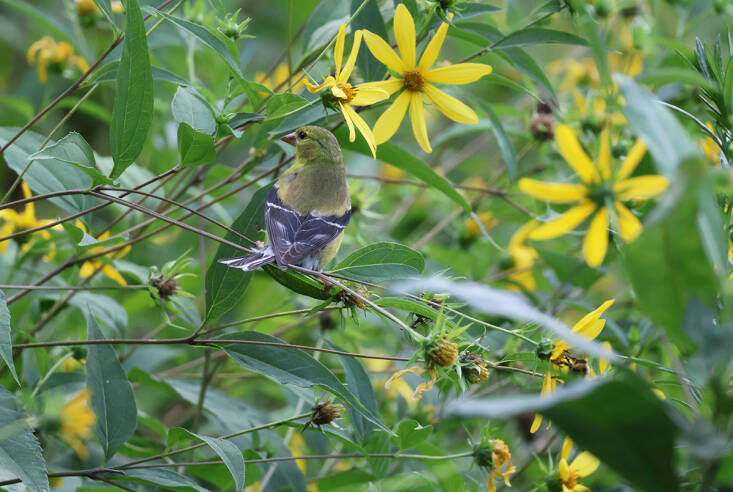
The long stems of woodland sunflowers add graceful wildness to late summer gardens, and the cut flowers last well in a vase. Birds relish the spent flowers’ seeds. Woodland sunflower is unfussy, tolerating dry soil and flourishing in partial shade or half a day of sun. It is hardy from USDA growing zones 3 to 8.
Partridge pea (Chamaecrista fasciculata)
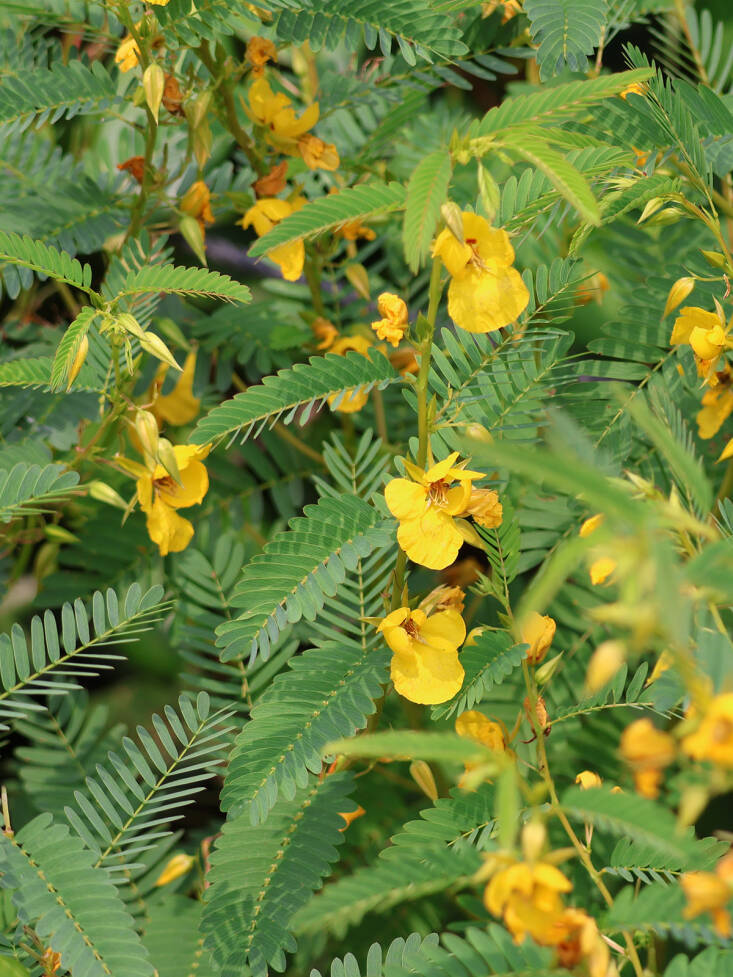
Partridge pea’s sensitive, feathered leaves are reason enough to plant this low-maintenance late summer bloomer. The legume’s warm yellow flowers are showy, with tan-red centers, whose pollen attracts bees. Unusual nectaries at the base of the leaf stalks lure many other insects. Even if there are no partridges in sight, the fall seeds are good food for other seed-eating birds (and small mammals). Nitrogen-fixing partidge pea is a short-lived but self-seeding perennial that is hardy from USDA zones 3 to 8.
Slender mountain mint (Pycnanthemum tenuifolium)
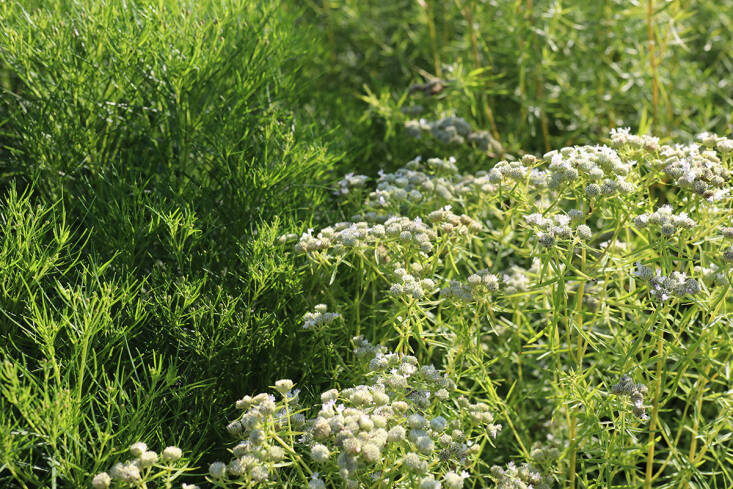
Pycnanthemums as a genus are piercingly mint-scented, and their refreshing aroma is like a quick reset: be here, now. Slender-leafed mountain mint has profuse button-like inflorescences that provide a soft foil for its needle-narrow leaves. Mountain mint is very adaptable and can tolerate both dry and wet soils, and grows in full sun as well as partial shade. It is hardy from zones 4 to 8.
White snakeroot (Argeratina altissima)
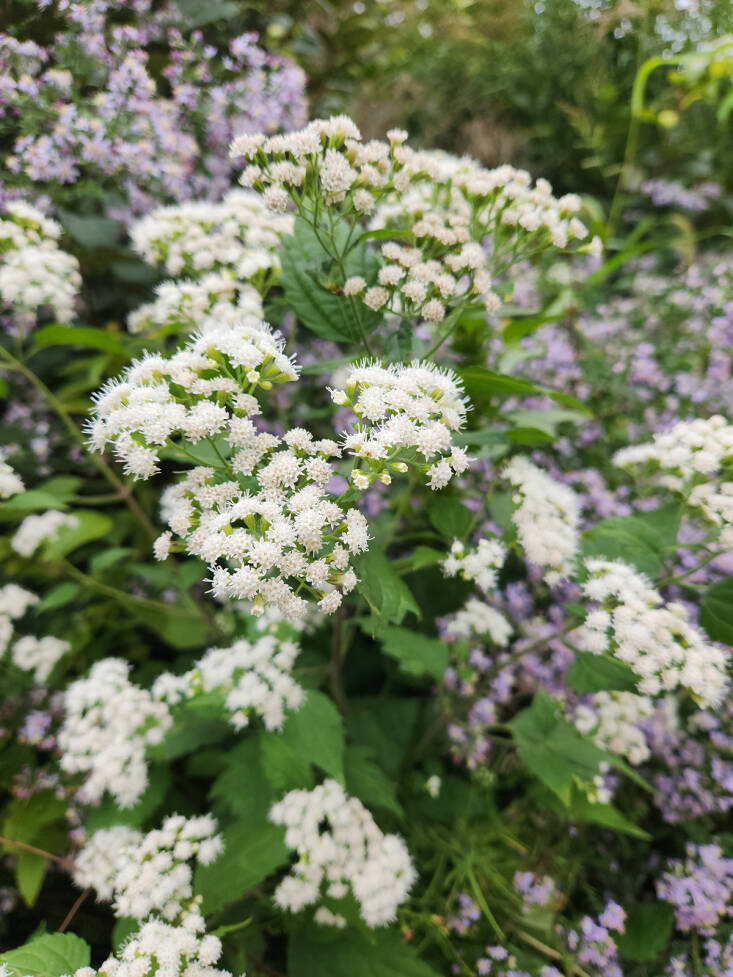
Forest and woodland-edge gardens deserve swathes of white snakeroot. Anonymously green until fall, its foamy white flowers erupt as the days shorten in earnest. White snakeroot is the plant that made 19th century colonial cows ill with milk sickness, which in turn killed thousands of humans who drank their affected milk. So don’t feed it to your cows. White snakeroot grows very well in high or dappled shade (where it tolerates dry spells), or in full sun as long as it has supplemental water. It is hardy from zones 3 to 8.
Whorled milkweed (Asclepias verticillata)
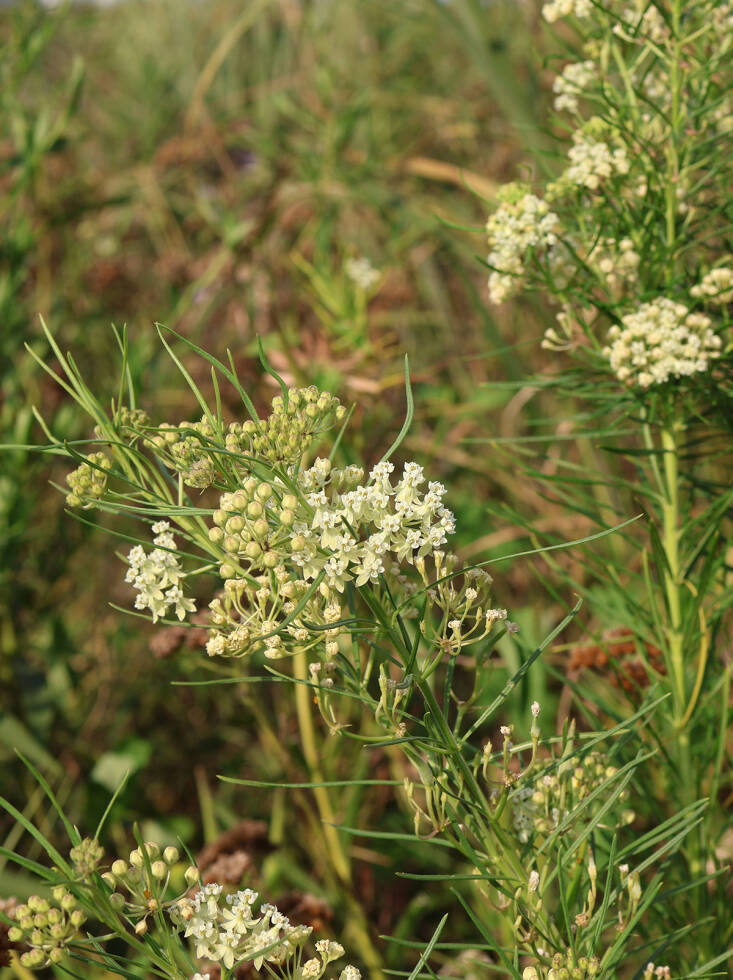
While most native milkweeds are done flowering by mid summer, the white waxy blooms of whorled milkweed are at their peak near summer’s end. Its slender, beaked seedpods add autumn appeal. Like other native milkweeds, it provides nectar for a wide range of pollinators. While it is attractive to monarch butterflies, it is not their preferred species for egg-laying (those would be swamp milkweed and common milkweed). Whorled milkweed is hardy from zones 4 to 9.
Joe-Pye weed (Eutrochium maculatum and species)
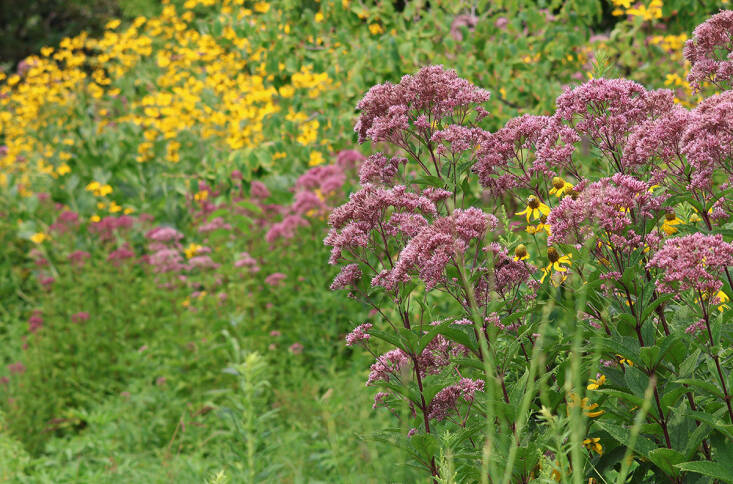
Tall and strong, and one of the most reliable native perennials for butterfly banquets, Joe-Pye weed works as both filler and statement plant. For full sun, choose Eutrochium maculatum; for shade. E. purpureum works better. Joe-Pye weeds are hardy from growing zones 4 through 8.





Have a Question or Comment About This Post?
Join the conversation