


It wasn’t a field when we bought the house in Massachusetts, but that’s what it ended up being. At first, there were massive junipers that lined the circular driveway—a presumed early attempt at formalism that had grown gargantuan due to neglect and caused frequent ice dams on our northern-facing roof by blocking out the sun. Once they were gone, it was just a barren plain, and the nakedness created by the newfound sunlight made us do what most young, dumb homeowners do: panic-buy a tree. We placed a three-inch caliper London plane slightly off-center in the giant green oval of lawn just to add some form of life, even if it was entirely too close to the house. By the time we actually knew what we wanted to do with the space, the tree had just settled into place. So, of course, we uprooted it again to its final home on the western edge of the property, and we had the clean slate we were finally ready for.
I’m not a big fan of the term “rewilding,” not because I don’t believe in the cause, but because I don’t think that’s what’s actually being done. If I were actually doing that here, I’d let it return to woodland. Still, it’s the best term we’ve got, so it’s what we’ll use for the sake of this story. About five years ago, we lined its central axis with an allée of crabapples (Malus ‘Indian Summer’), mowed formal paths, sowed perennial seed, and got to work rewilding. While it’s still nowhere near where I’d like it to be, there are several lessons I’ve learned throughout the process.
Photography by Nick Spain.
Rewilding is still gardening.
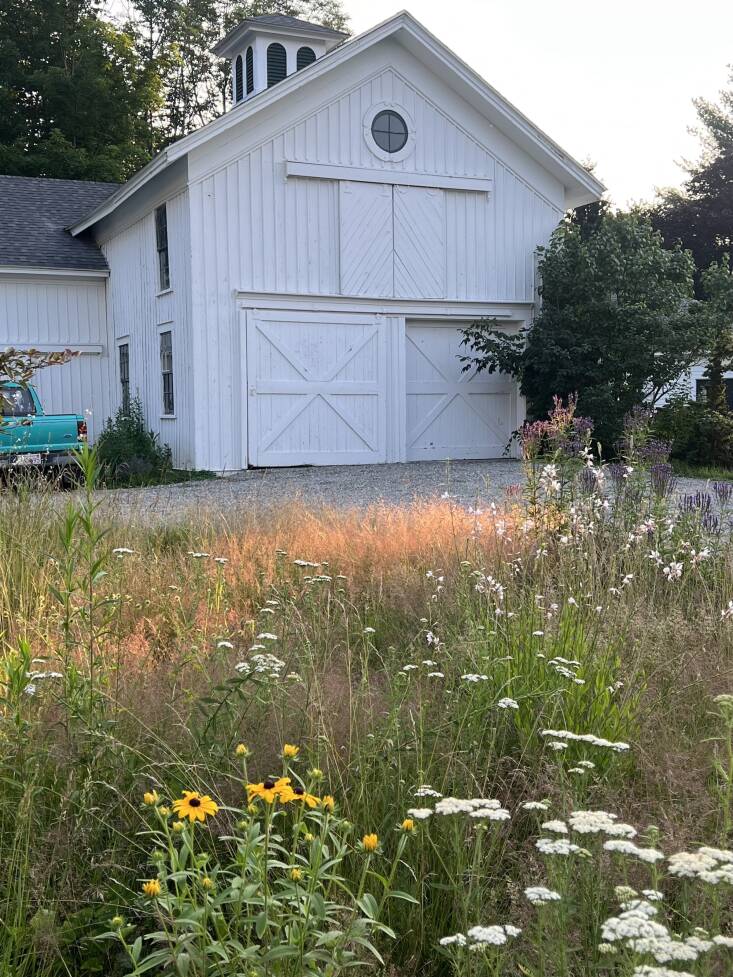
I’m fortunate that most of my garden clients are curious about and open to letting some part of their property go more natural, because it will also be easier to maintain. I’m quick to tell them, however, that low maintenance doesn’t mean no maintenance. Regardless of how you go about it, whether that’s sowing seed on freshly turned earth, utilizing plugs, planting containerized plants, or some combination of all three, you will have to get your hands dirty and manage whatever you’ve installed. I find the real joy comes from the gardening style being more laissez-faire—whether that’s haphazardly slinging around lupine heads in July so they will create more stands in coming years, or knowing that I don’t have to get every single last strand of vetch out each time I weed since there are plenty of other plants it will have to compete with.
It completely made me rethink quantities.
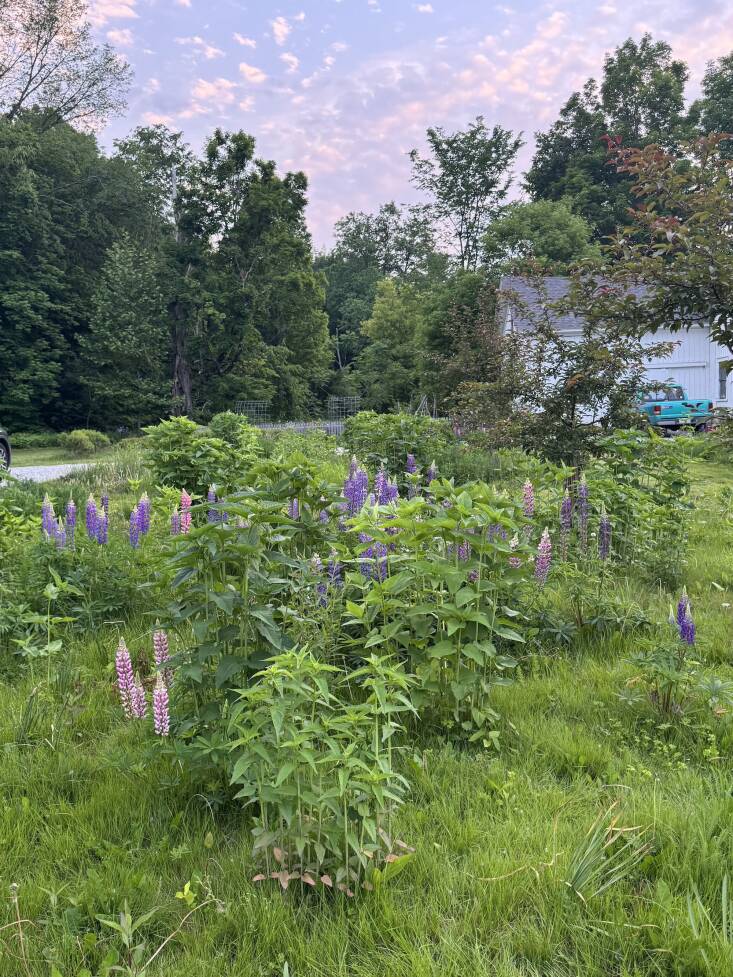
That’s mainly because when you’re planting an area that’s roughly 6,000-square feet, those quantities of five or six or even nine that you’re accustomed to in smaller beds don’t even make a visual dent, depending on the plant. I laugh now thinking about the little pockets of Bouteloia curtipendula plugs I placed in groups of three all those years ago, many of which disappeared altogether.
It’s made me appreciate the garish.
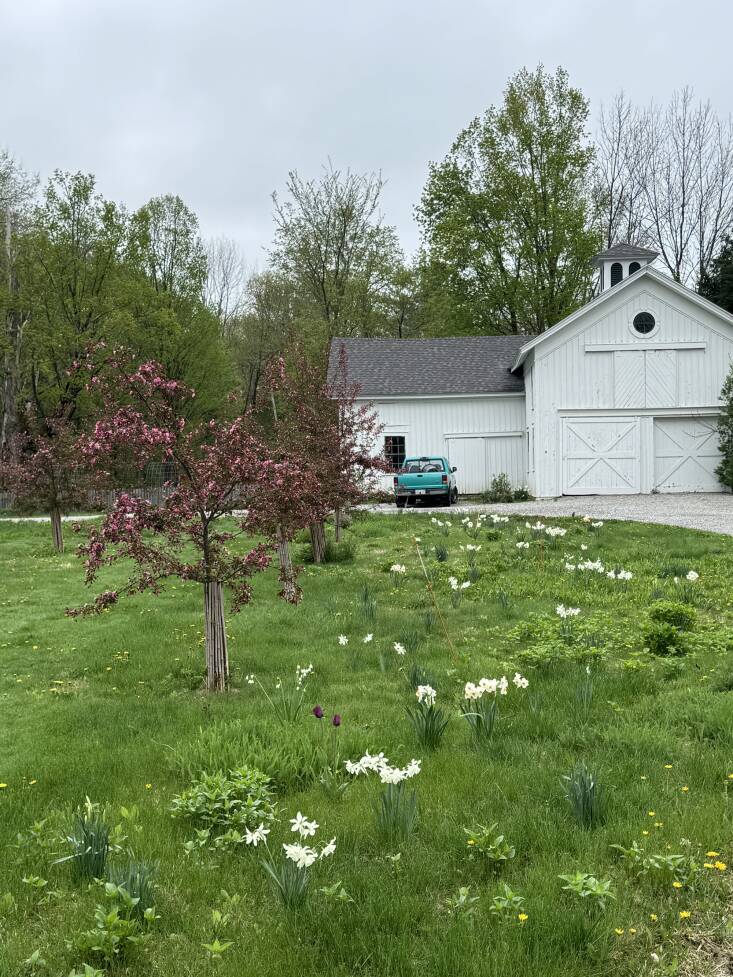
That first fall, after we had scalped the old grass and spread seed, I planted a variety of single-flowered daffodils in groupings of eight or 12. Although they came up beautifully, they looked a bit meager in the large swath of lawn due to their delicacy. So the next season I did something I never do—buy double or multi-flowered varieties, including a few with frills. These ones give a little more visual weight to the scheme and mimic the appearance of aged clumps while I wait for the other ones to bulk up.
Visual markers are a must.
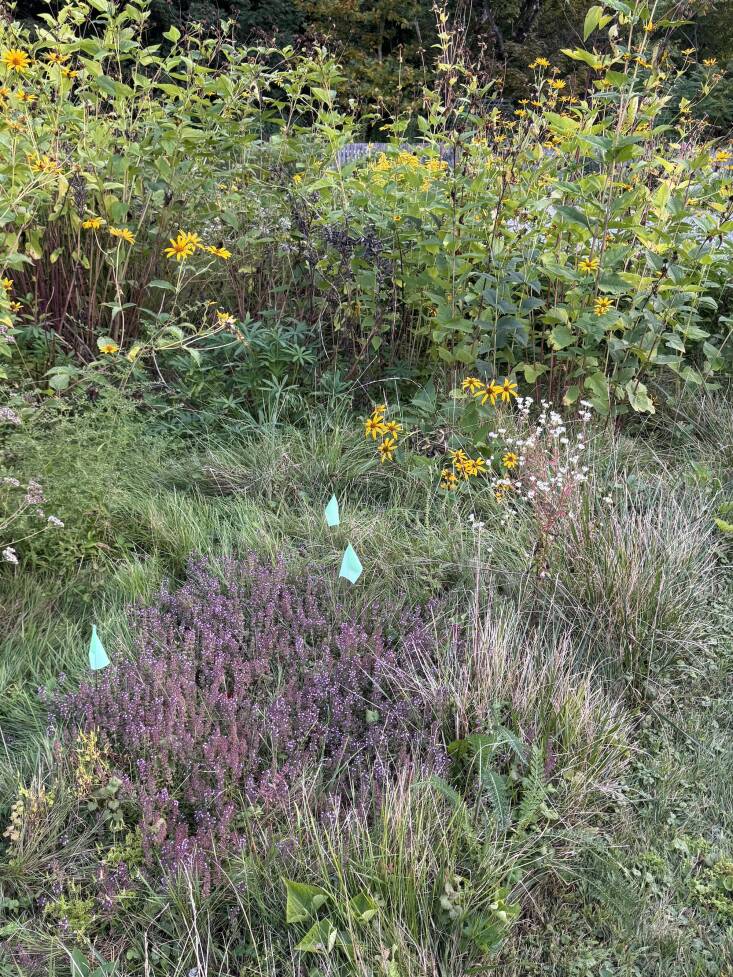
This aids in knowing both where you planted things so you can water them afterwards, and as a tool to identify where you might want to fill future gaps. I use little metal and plastic construction flags from the local hardware store. Canes would also work well.
Make plans, but then forget them…
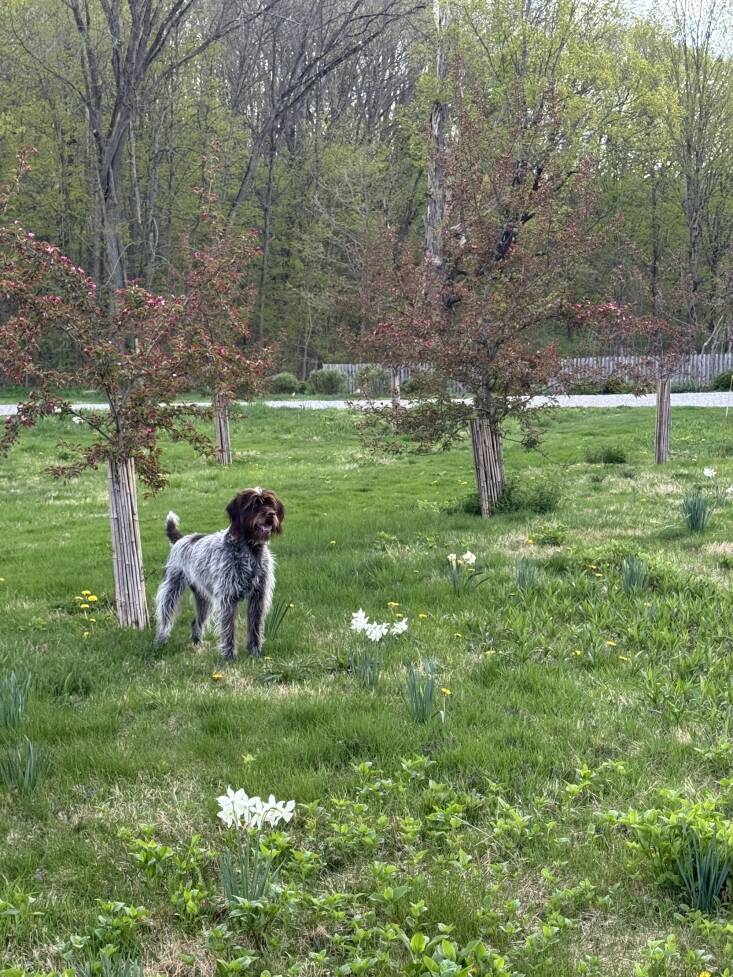
…because I assure you nature has other plans. I was delighted when we started getting rabbits mating in the field; not so much when we got bucks during mating season that shredded the skin of 2 young crabapples, which ultimately had to be replaced. Similarly, though I sow a regionally appropriate wildflower mix each season, very few of them are able to germinate through the dense grass. The unexpected natives that do arrive, however—wild senna, Antennaria neglecta, among others—bring just as much satisfaction, even if they weren’t what I intended.
It’s the best television.
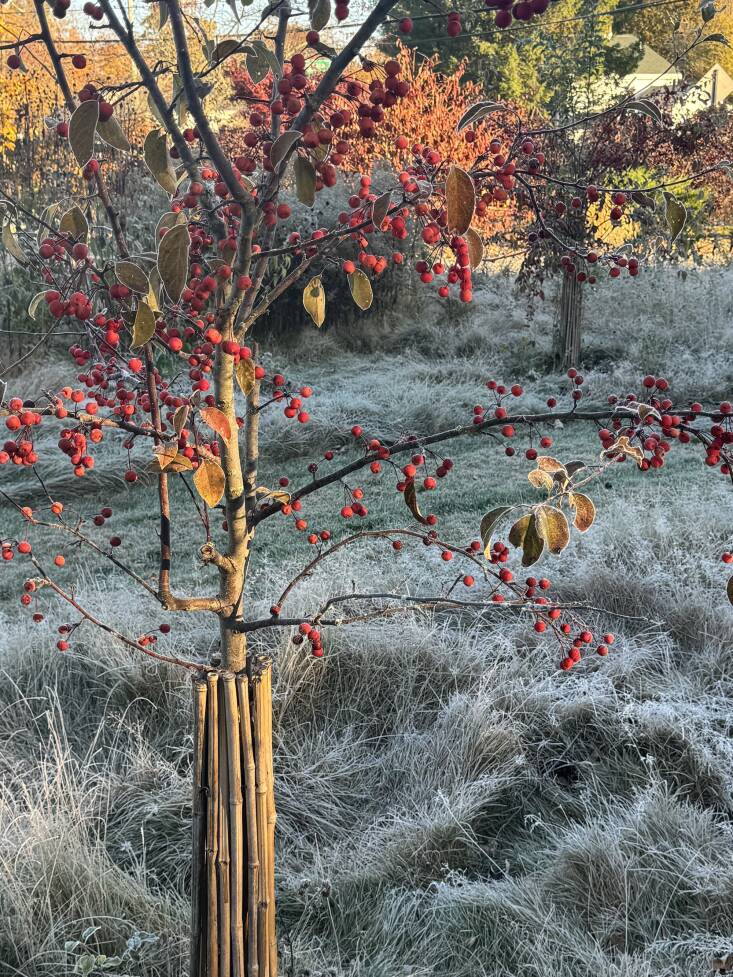
There is always something to watch any time of year—whether that’s finches descending on the blackened crabapples in the dead of winter, hummingbirds bouncing between lupines in early summer, or woodpeckers feasting on mullein seedheads in fall. And sometimes, there are surprise twists—when our neighbor’s sister visited, she made a point of turning to her sibling just to remark, “I actually think it looks really nice,” so we had a good idea of the conversations that were being had behind closed doors.
But it is still mine, or rather I am its, since in the warmer months you will find me swallowed whole, surrounded by bugs and dogs and snakes, weeding and editing in a way that almost convinces me I hold some kind of sway here, until it does something to remind me that I don’t. Still, I would not change the channel.
For more on my garden, see A Love Letter to Sanguisorbas.
For more on rewilding, see:
- To Rewild or Not to Rewild? 10 or So Questions with Landscape Designer Jinny Blom
- Set Your Garden Free: Start By Rewilding One Half, Says ‘Reformed’ Landscape Designer Mary Reynolds
- Ask the Expert: Regenerative Organic Gardener Emily Murphy on How to Rewild Your Landscape





Have a Question or Comment About This Post?
Join the conversation