

I have planted different veronicas over the years, mainly because I always appreciate a very vertical plant that can contrast superbly with larger leaves like stachys or bergenias or play nicely with other vertical plants such as linarias. Despite my familiarity with the plant, though, I never stopped to question why it was named Veronica. Turns out, veronica is more than just a pretty flower.
Please keep reading to learn more about the story behind the name and how you can find the perfect veronica for your garden:
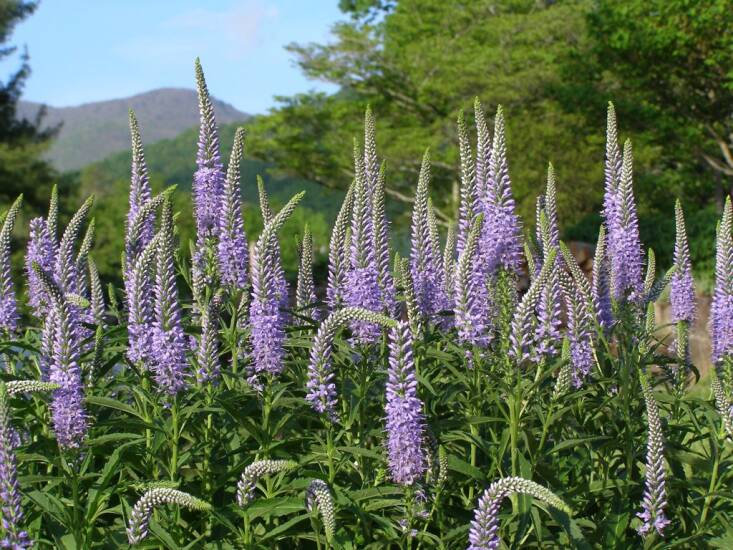
With more than 500 species of Veronica, it’s nearly guaranteed that you’ll find at least one that easily integrates into your garden. Veronicas come in different heights, colors, and shapes. Some grow as creeping groundcovers with shorter flower spikes (like Veronica peduncularis ‘Georgia Blue’, a low-growing evergreen with tiny, saucer-shaped blue and white flowers), while others have a decidedly vertical habit (including one of my favorites, Veronica spicata ‘Novaversky’, which has 12- to 14-inch-high spikes of bluish purple flowers that bloom from spring to frost). Their flowers can appear blue, purple, pink, or white, and nearly all are long-lived, easy to care for, and attractive to pollinators—a win-win-win for everyone.
The groundcover types tend to bloom in the spring and are perfect partners to spring-blooming bulbs like daffodils and tulips, while the taller ones bloom mainly in the summer and pair well with salvias, yarrows, and gauras. These taller upright species are great mixed into beds, borders, or containers. I like to add the white versions to an all-white garden, and the taller, colorful ones to cutting gardens, next to zinnias and dahlias.
The biggest issue I have had with veronicas is that without proper air flow and soil drainage, they are susceptible to mildew, which appears as white, talcum-like spots on stems and leaves. To prevent disease, don’t crowd your plants or over-water, and avoid overhead watering. If your plant becomes affected, try spraying with a yogurt/water mix. But don’t let this deter you from planting veronicas. Some varieties, such as the ‘Vernique’ series and ‘Marietta’, are known for their mildew resistance.
Now regarding that name: One popular theory is that the genus name was inspired by Saint Veronica. It is believed that Saint Veronica offered Jesus her veil to wipe his face on the way to his crucifixion, and when it was returned to her, the veil was imprinted with the image of his face. The plant’s markings, particularly in some white varieties, were thought to resemble the “veil of Veronica”. The plant is also commonly referred to as speedwell, due to its historical association with success and good luck.
Cheat Sheet
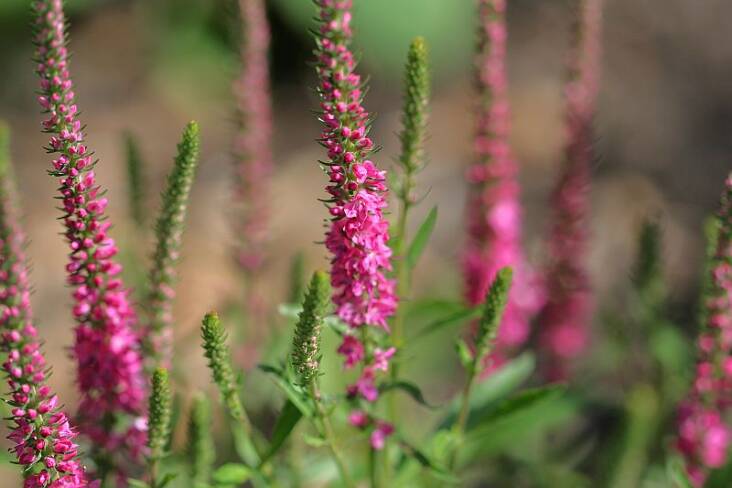
- Depending on the variety, some are perfect for cutting, cottage, or rock gardens, and some mounding types are great for spilling over containers or as charming fillers between pavers.
- Taller species are long-lasting and make superb cut flowers.
- The flowers lure hummingbirds, bees, and butterflies, making them a great addition to a pollinator-friendly garden.
- Veronica is not thought to be toxic to humans or pets.
- Some report that veronicas are not especially tasty to deer or rabbits. (I have never planted them in deer country so I can’t vouch for this claim.)
Keep It Alive
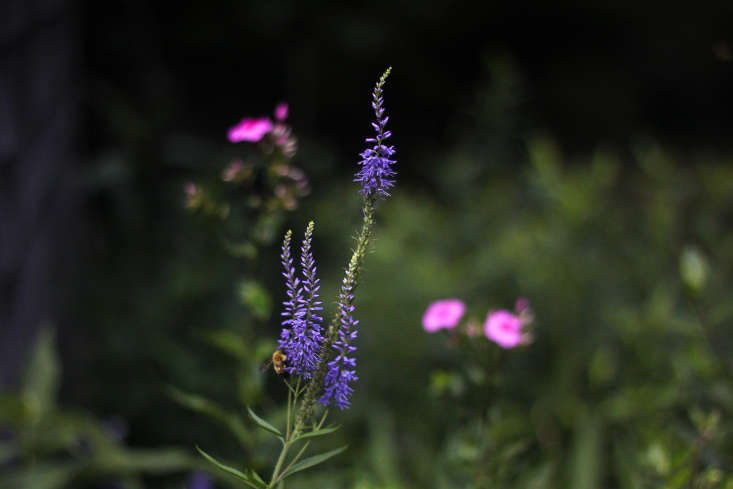
- Hardy in USDA Zone 3 to 9.
- Full sun is best, as too much shade reduces the flower load and creates floppy stems. Oh, and a shady spot without good air flow also increases the risk of funky fungal diseases.
- Well-draining soil is a must to prevent root rot.
- Regular water is preferred for best growth.
- Prune back spent flower stems to encourage a re-bloom.
Note: Veronicas are different from Veronicastum.
See also:
- Gardening 101: Russian Sage
- Gardening 101: Lupine
- Gardening 101: Foxglove
- Gardening 101: Butterfly Bush



Have a Question or Comment About This Post?
Join the conversation