Icon - Arrow LeftAn icon we use to indicate a rightwards action. Icon - Arrow RightAn icon we use to indicate a leftwards action. Icon - External LinkAn icon we use to indicate a button link is external. Icon - MessageThe icon we use to represent an email action. Icon - Down ChevronUsed to indicate a dropdown. Icon - CloseUsed to indicate a close action. Icon - Dropdown ArrowUsed to indicate a dropdown. Icon - Location PinUsed to showcase a location on a map. Icon - Zoom OutUsed to indicate a zoom out action on a map. Icon - Zoom InUsed to indicate a zoom in action on a map. Icon - SearchUsed to indicate a search action. Icon - EmailUsed to indicate an emai action. Icon - FacebookFacebooks brand mark for use in social sharing icons. flipboard Icon - InstagramInstagrams brand mark for use in social sharing icons. Icon - PinterestPinterests brand mark for use in social sharing icons. Icon - TwitterTwitters brand mark for use in social sharing icons. Icon - Check MarkA check mark for checkbox buttons.
You are reading

Garden Visit: Nicholas Morton’s SGLD Award-Winning Coastal Landscape Design

Search

Garden Visit: Nicholas Morton’s SGLD Award-Winning Coastal Landscape Design

February 12, 2026

Last Friday night the Society of Garden and Landscape Designers (SGLD) gathered in London to present their annual awards. Gardenista got the scoop on this year’s winners, which include several firms who won multiple awards for their submissions.

The “Garden of the Year Award” went to a family garden in Putney designed by Tomoko Kawauchi, the design director at Charlotte Rowe Garden Design; this garden was a triple-winner, also taking home the prizes in the “Small Residential Landscapes & Gardens” and “Built Landscape Design” categories. Another multi-award winner was a shady, terraced London garden submitted by Adolfo Harrison, which won both the “Judges’ Award” and the “Garden Jewel Award.” Fi Boyle took home the “People’s Choice Award,” which is the only category decided by public vote, for a garden sited in an old quarry.

But the garden that most caught our eye was the winner of the “New Designer Landscapes & Gardens” award design by Nicholas Morton, though he’s no novice designer: Before starting his own firm he worked for more than a decade for well-known designers Charlotte Rowe and Arne Maynard. Morton had also previously won one of SGLD’s Student Awards. “It is an incredible confirmation for a young design studio to be recognised by the SGLD,” says Morton. 

Judges praised Morton’s restoration of a coastal town garden as a “a delightful, well-planted garden that overcomes challenging conditions with skill,” while remarking on the thoughtful planting, high-quality materials, and clever use of budget. They also noted: “The restrained design works beautifully with the building and its history.

Here’s a peek at Morton’s winning garden.

Photography by Elissa Diver, courtesy of Nicholas Morton.
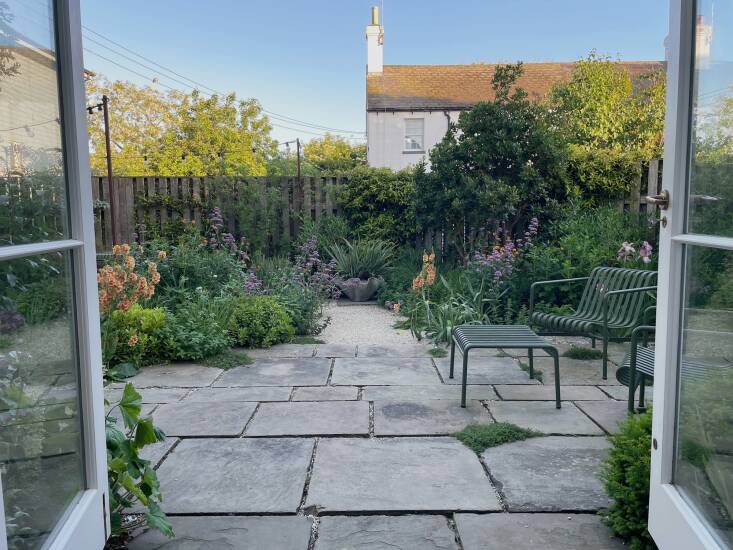
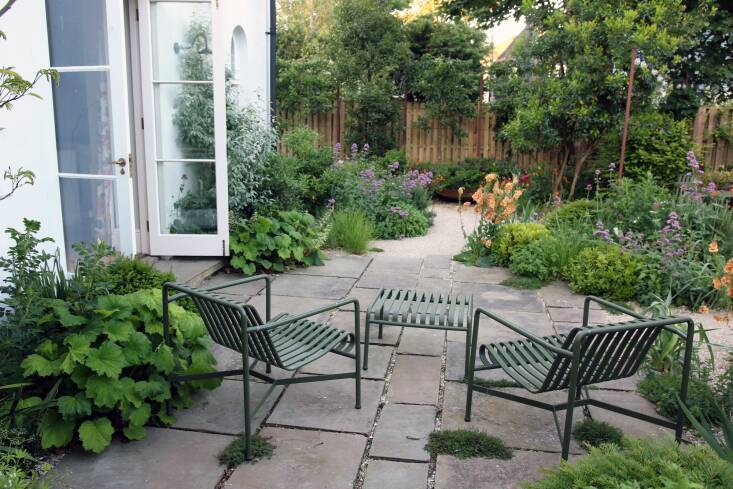
Added as part of architectural work on the house, new French doors connect the garden to the open-plan sitting room and kitchen. Morton describes the resulting indoor-outdoor space as “a place that feels like it is very private and a far away from the world outside.
Above: Added as part of architectural work on the house, new French doors connect the garden to the open-plan sitting room and kitchen. Morton describes the resulting indoor-outdoor space as “a place that feels like it is very private and a far away from the world outside.
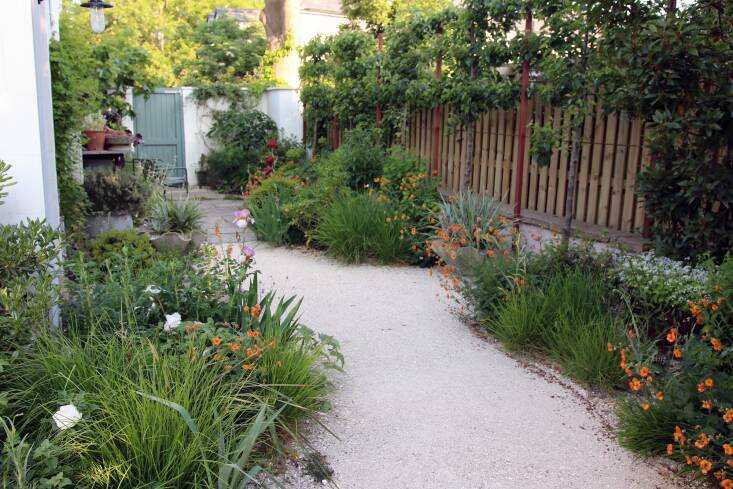
”The clients’ in-town property was a tricky L-shaped garden that wraps around the house, from the back to one side. “The challenge was to connect two arms of a garden, which had very different conditions, using planting that would both look good year-round and have seasonal highlights from multiple windows. All whilst breaking up the space to create a journey that both utilised, and encouraged use of, all of the space,” says Morton.
Above:”The clients’ in-town property was a tricky L-shaped garden that wraps around the house, from the back to one side. “The challenge was to connect two arms of a garden, which had very different conditions, using planting that would both look good year-round and have seasonal highlights from multiple windows. All whilst breaking up the space to create a journey that both utilised, and encouraged use of, all of the space,” says Morton.
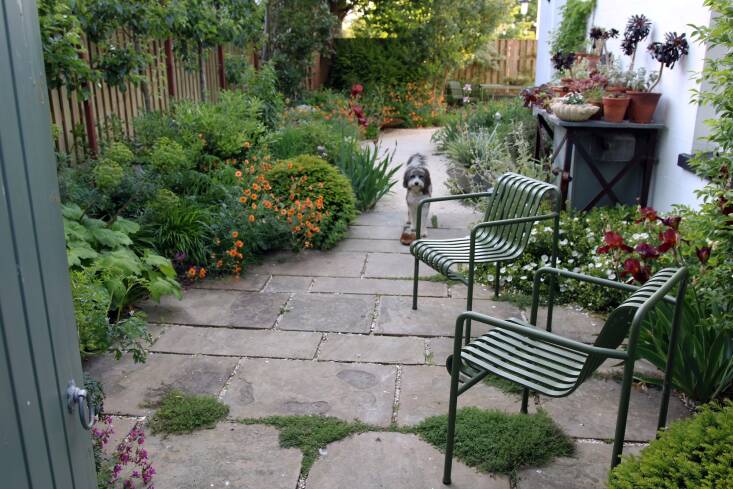
For the hardscaping, Morton paired reclaimed Yorkstone pavers with a shell-based gravel mulch, which helps the garden retain water, for a welcome time-worn feeling. Outdoor furniture pieces from HAY’s iconic Palissade collection appears in each of the garden’s seating areas. 
Above: For the hardscaping, Morton paired reclaimed Yorkstone pavers with a shell-based gravel mulch, which helps the garden retain water, for a welcome time-worn feeling. Outdoor furniture pieces from HAY’s iconic Palissade collection appears in each of the garden’s seating areas. 
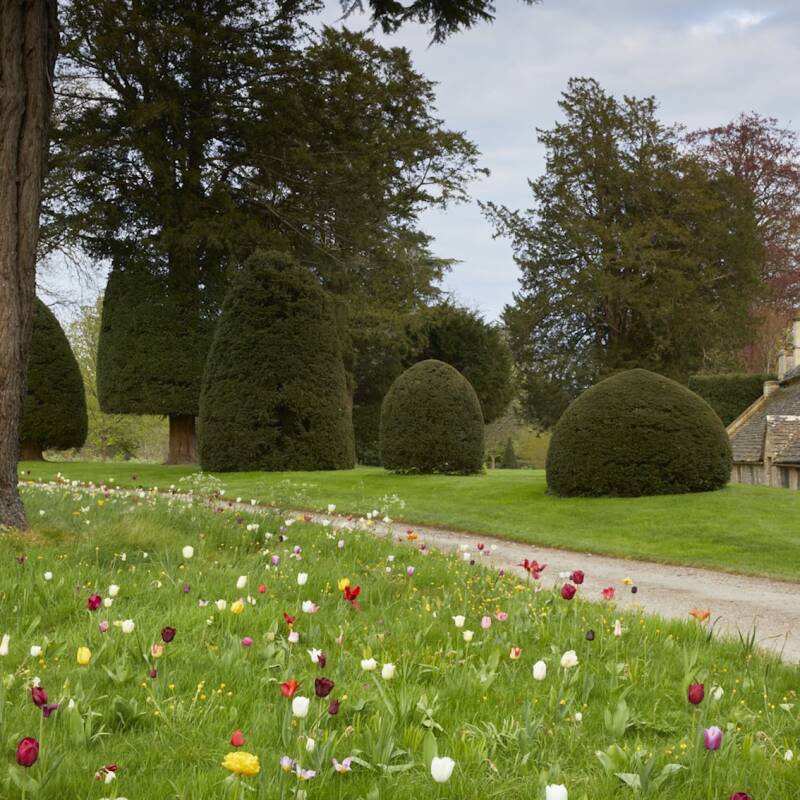
Custom wood fencing and a row of newly-planted pleached trees and two specimen multi-stem ‘Strawberry’ trees create privacy and vertical interest along the property line. 
Above: Custom wood fencing and a row of newly-planted pleached trees and two specimen multi-stem ‘Strawberry’ trees create privacy and vertical interest along the property line. 
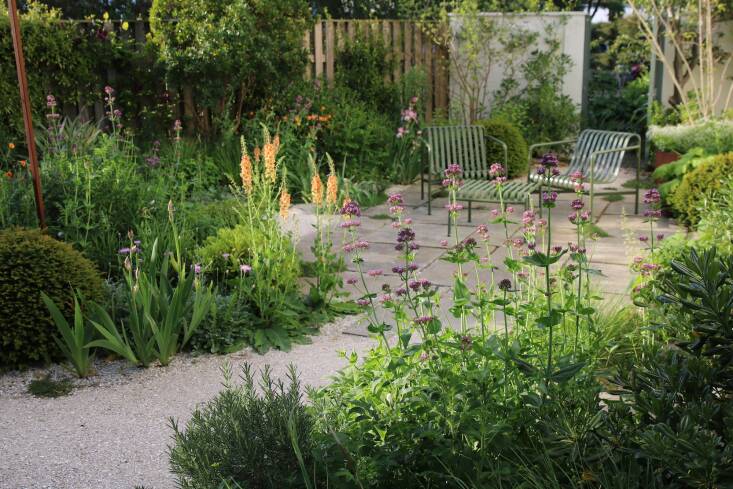
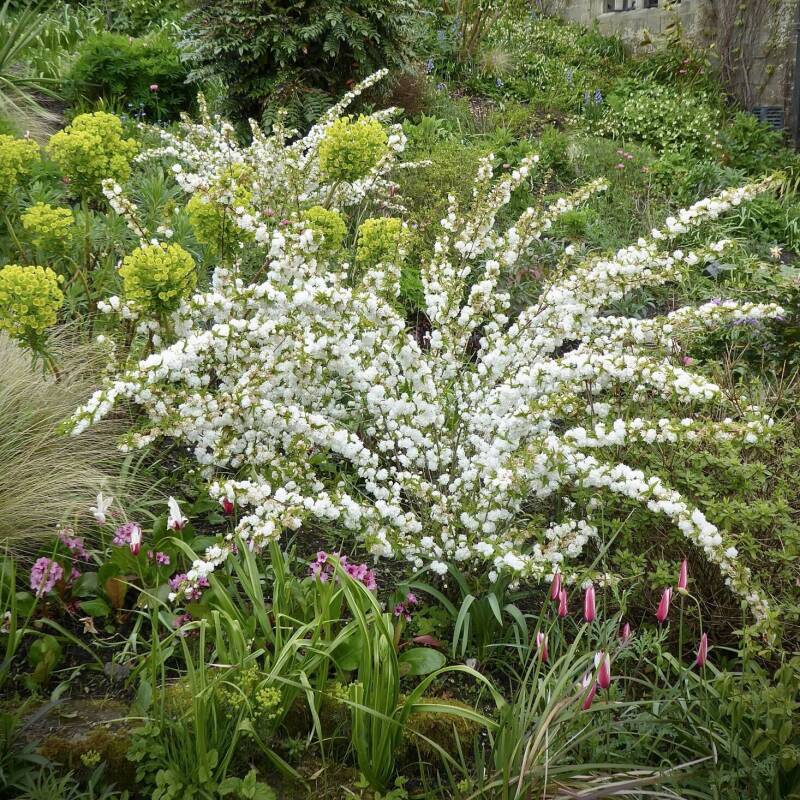
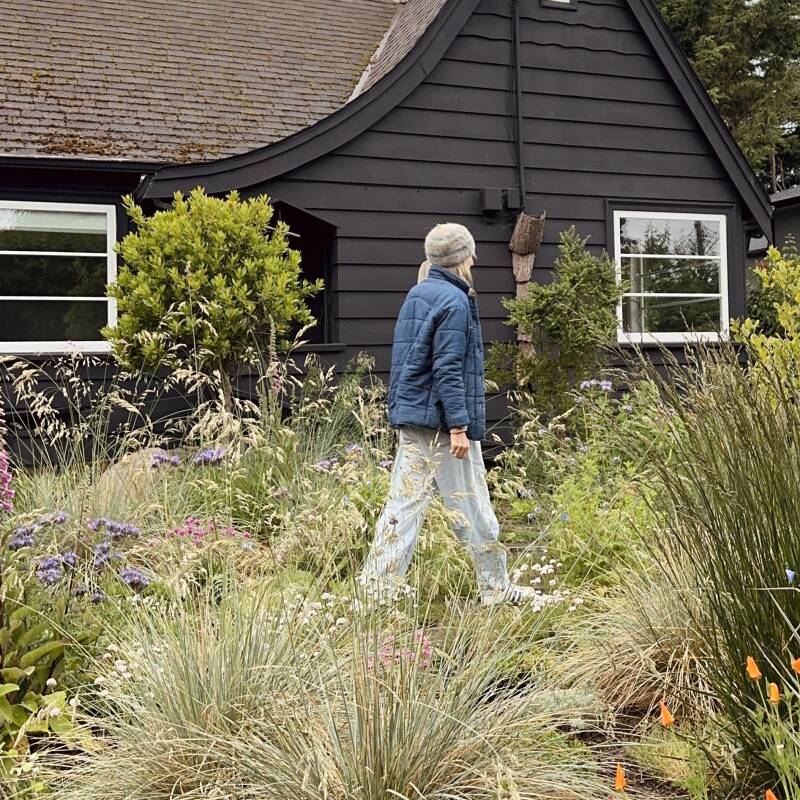
Morton describes his drought-tolerant planting scheme as “deceptively simple,” noting he used repeated structural planting with a matrix of grasses that “allow the feature plants to really stand out when it is their turn to shine.” Strategically-placed, naturalistic evergreen shrubs break up the space and define different areas within the garden. 
Above: Morton describes his drought-tolerant planting scheme as “deceptively simple,” noting he used repeated structural planting with a matrix of grasses that “allow the feature plants to really stand out when it is their turn to shine.” Strategically-placed, naturalistic evergreen shrubs break up the space and define different areas within the garden. 
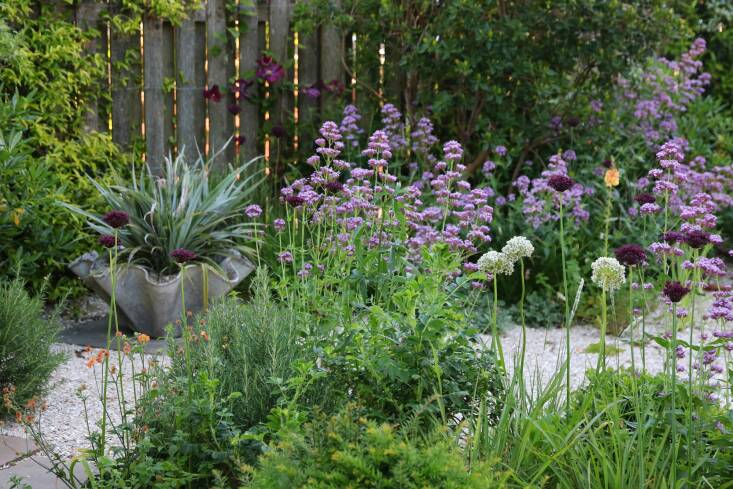
Note how Morton cleverly concealed an external oil boiler (at right) that dominated the view along this arm of the garden. Morton designed  what he calls a &#8\2\20;collector’s table,” a reclaimed slate table top with custom-made corten legs, to hold the clients&#8\2\17; potted sun-loving plants. 
Above: Note how Morton cleverly concealed an external oil boiler (at right) that dominated the view along this arm of the garden. Morton designed  what he calls a “collector’s table,” a reclaimed slate table top with custom-made corten legs, to hold the clients’ potted sun-loving plants. 

See also:

(Visited 53 times, 53 visits today)
You need to login or register to view and manage your bookmarks.

Have a Question or Comment About This Post?

Join the conversation

v5.0