Icon - Arrow LeftAn icon we use to indicate a rightwards action. Icon - Arrow RightAn icon we use to indicate a leftwards action. Icon - External LinkAn icon we use to indicate a button link is external. Icon - MessageThe icon we use to represent an email action. Icon - Down ChevronUsed to indicate a dropdown. Icon - CloseUsed to indicate a close action. Icon - Dropdown ArrowUsed to indicate a dropdown. Icon - Location PinUsed to showcase a location on a map. Icon - Zoom OutUsed to indicate a zoom out action on a map. Icon - Zoom InUsed to indicate a zoom in action on a map. Icon - SearchUsed to indicate a search action. Icon - EmailUsed to indicate an emai action. Icon - FacebookFacebooks brand mark for use in social sharing icons. flipboard Icon - InstagramInstagrams brand mark for use in social sharing icons. Icon - PinterestPinterests brand mark for use in social sharing icons. Icon - TwitterTwitters brand mark for use in social sharing icons. Icon - Check MarkA check mark for checkbox buttons.
You are reading

Plant Identifier: Apps to ID Leaves and Flowers

Search

Plant Identifier: Apps to ID Leaves and Flowers

May 30, 2016

If you are like me, you are probably pretty good at the parlor game of identifying certain plants: the flowers your grandmother grew in her garden, the pine cones you spray painted gold in third grade, and forsythia (if blooming). Unfortunately this is not that helpful when you come across some new plant–growing on the side of the road, or over a fence, or at the edge of a trail–that you would like to have, if only you knew how to ask for it at the local nursery.

Now they make apps for people like us. Zillions of electronic field guides such as Leafsnap, Plantifier, and iPflanzen exist to help us identify plants on the fly. Snap a plant’s photo against a white background–and submit it instantly for analysis. Or click through a list of characteristics (leaf shape, flower color, plant’s height) to make the identification.

(See our review of Plantifer, a plant ID app for Android and iPhone users, here.)

To see how well the apps work, two of my daughters (Zoe and Clem) and I spent a recent morning playing CSI: Plant Detective. After we downloaded a few free plant identification apps, here’s what we learned:

Photography by Zoe Quittner, except where noted.
Use plant identifier app for plant identification and to ID leaves

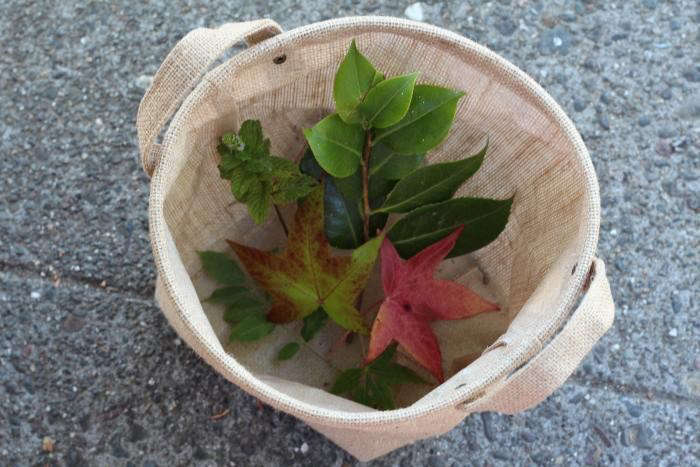
Above: We walked around the neighborhood collecting specimens–leaves from trees, wild herbs, flowers, and perennial vines–to put the garden apps through their paces. Our neighbors Steven and Minna, who drove by while we were snipping leaves from a tree, rolled down the car window to shout helpfully, “Try Google Goggles.” Everybody’s an expert.

Use plant identifier app for plant identification and to ID leaves

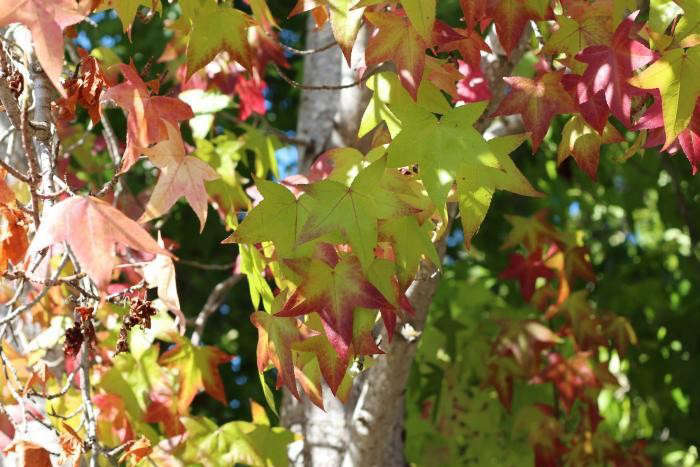
Above: Maple tree? That’s what we thought too, initially. Our neighbor Lynn walked by while we were discussing the possibility. Lynn (who it turns out studied botany in college) offered this verdict: sweetgum. Could we confirm the ID?

Use plant identifier app for plant identification and to ID leaves

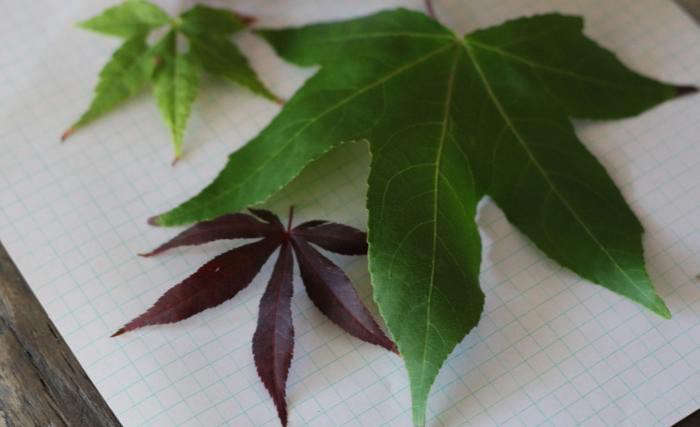
Above: Back home, we spread an array of similarly shaped tree leaves against a background of white paper and then submitted photos to Leafsnap, which uses visual recognition software to identify tree species from photos of their leaves. (Coincidentally, Leafsnap was developed by my friend Peter Belhumeur, a researcher at Columbia University.)

Leafsnap correctly identified both a leaf from a Japanese maple (Acer palmatum) and the similar-but-different leaf of the sweetgum (Liquidambar styraciflua). Lynn was right.

Use plant identifier app for plant identification and to ID leaves

Above: Leafsnap matches a photo to images in its library of several hundred species of trees common to the Northeastern United States or Washington D.C.

Use plant identifier app for plant identification and to ID leaves

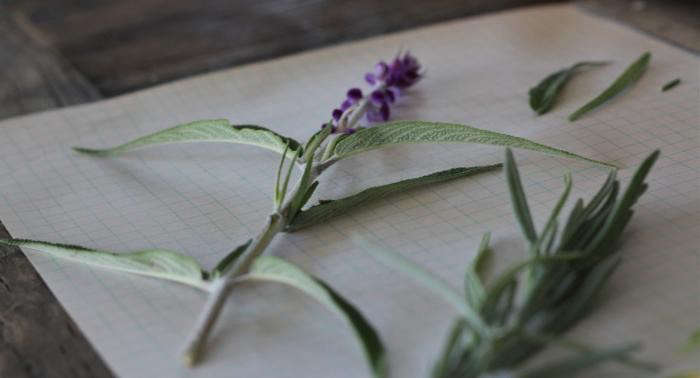
Above: Mexican sage (Salvia leucantha) grows in my front garden. To test other gardening apps with their own databases of plants, we offered  several data points about the flower (color, shape of corolla, number of petals, etc.); the leaf (shape, margin characteristics, etc.); the plant’s habitat and seasonality, and its other characteristics (height, hairiness, thorniness). But none of the six results the other apps suggested were accurate. Photograph by Clementine Quittner.

Use plant identifier app for plant identification and to ID leaves

Above: Taking photos against a white background.

Use plant identifier app for plant identification and to ID leaves

Above: We snipped a bit of another neighbor’s creeping rosemary (thanks, Susan) to test iPflanzen’s powers of recognition. We entered data points about the plant’s characteristics (pinnate, evergreen, purple flower) but were not able to elicit a match from the app’s database of 702 plants.

larry ball

Above: Goggle Goggles cannot identify plants or, it turns out, pets: it suggested our dog Larry is a cat. Please don’t tell him.  Photograph by Clementine Quittner.

Use plant identifier app for plant identification and to ID leaves

Above: This is lantana, a common ground cover in my neighborhood. It’s one of those plants whose name I am always forgetting. None of the garden apps helped remind me; when I uploaded this photo to Google Images, however, up popped the correct plant identification.

Use plant identifier app for plant identification and to ID leaves

Above: I’ll keep Leafsnap on my iPhone to help me identify trees. And I’ll keep searching for an electronic field guide to help me identify other sorts of plants on the fly. Have you had different luck? If there’s a terrific app we overlooked, please let us know in the comments below.

Have a Question or Comment About This Post?

Join the conversation

From our network