

A lot of people bemoan their incompetence at growing orchids. I have the opposite problem–an inability to kill my scraggly supermarket-variety species after they stop blooming.
Here’s my secret: I ignore them. My orchids sit unmolested on a windowsill with a western exposure for as long as they can stand it–months, usually–and then, finally, they bloom again in a desperate bid to get attention.
There are of course other days to care for an orchid. Here are our top tips for more attentive gardeners:
Pick a Hardy Variety

Above: Photograph by Erin Boyle.
There are more than 30,000 species of orchids; to maximize your chances of success, narrow your choice. Eliminate finicky species and instead grow an orchid that falls into the category of easy going. For instance, varieties that will tolerate low indoor lighting are oncidiums, phalaenopsis, and paphiopedilums.
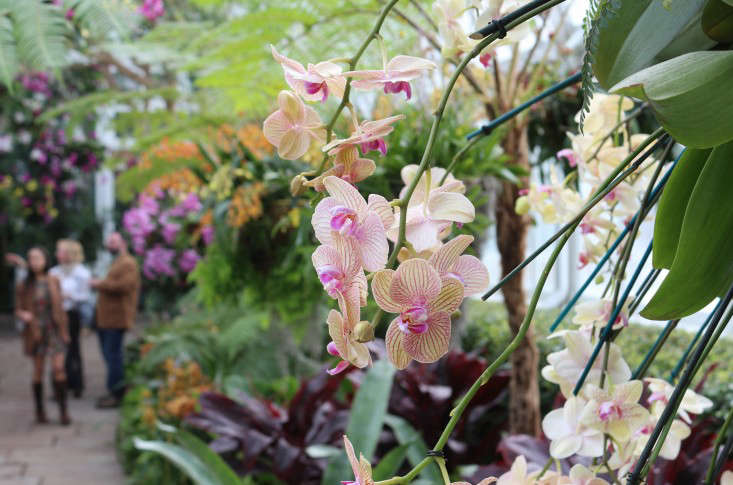
Above: Photograph by Marie Viljoen.
The orchid may look fragile. But remember, “In their natural habitat many orchids are extreme plants, attaching themselves to trees in order to survive,” says Marc Hachadourian, the NY Botanical Garden’s resident orchid exper.
Already potted, a yellow Moth Orchid in a 7-inch white ceramic urn is $99.95 from White Flower Farm.
Bright, Indirect Light
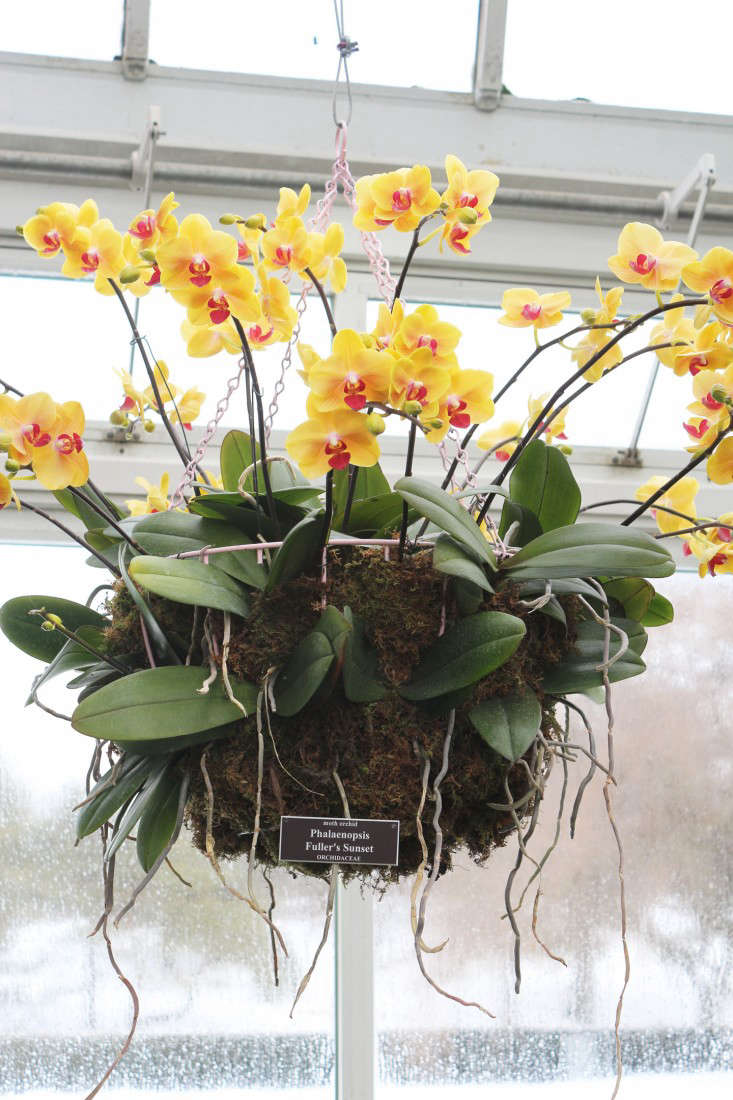 Above: A yellow phalaenopsis at this year’s orchid show at the NYBG. For more, see Opening Ceremony: The World’s Best Orchid Show. Photograph by Marie Viljoen.
Put an orchid in a bright room, but away from direct sunlight. And remember that these tropical plants do not like drafts.
Proper Potting
Above: Photograph by Sophia Moreno-Bunge.
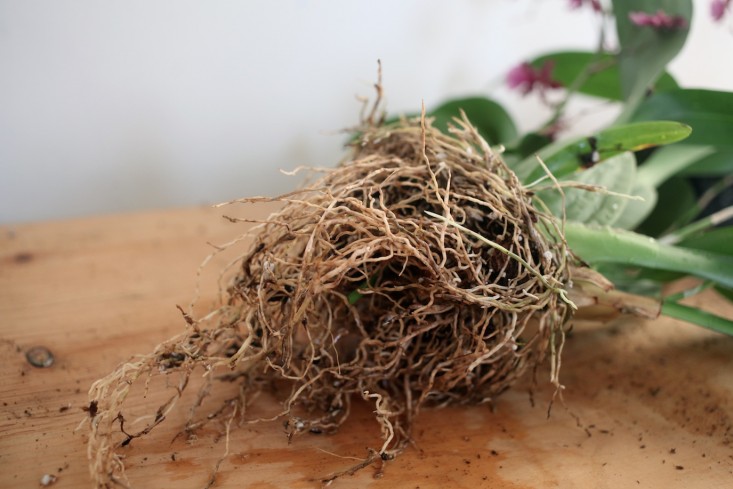
In the wild, orchids grow attached to other plants. They are not designed to grow in potting soil; please don’t try to force them. Instead, plant them in a nice loose bark they can clutch happily.
A bag of Orchid Bark is $10 from Terrain.
Drainage, Please
Above: Photograph by Erin Boyle.
For a vivid pink phalaenopsis, a Dor. Pulcherrima X DTPS. Siam Treasure is $15 from Odom’s Orchids.
Orchids hate to have wet roots; choose a pot with good drainage and spread a layer of pebbles in the bottom of the pot.
Feed Me

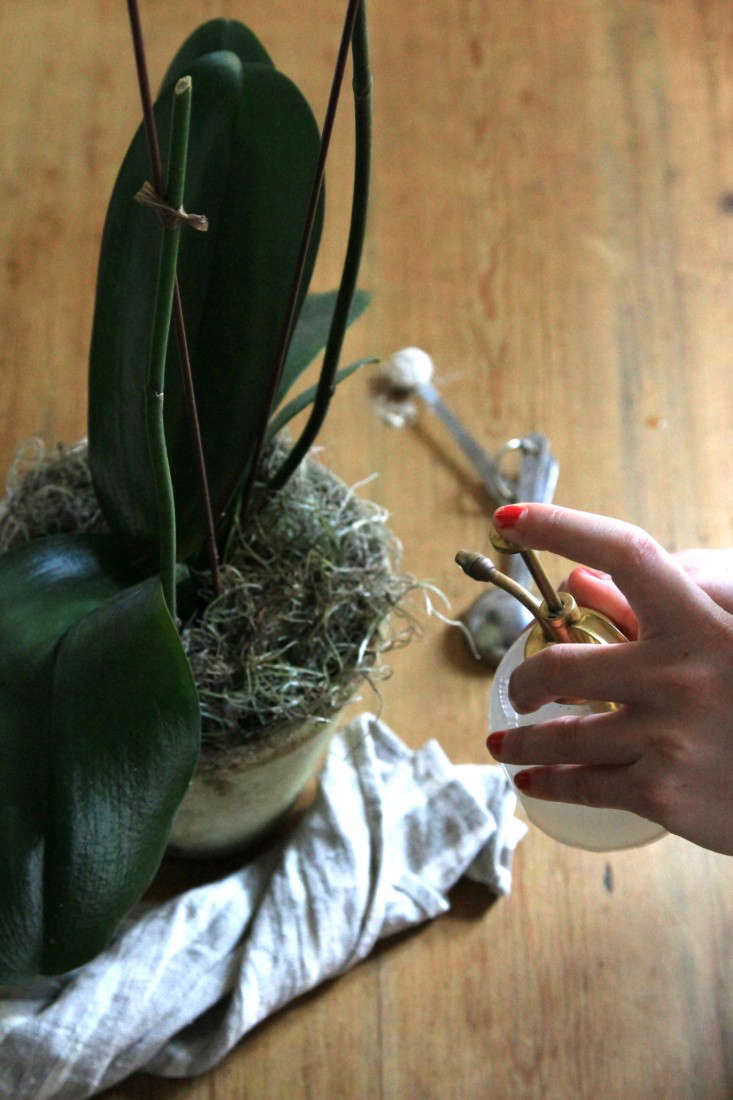
Above: Allow orchids’ bark to dry out between waterings. Use a liquid fertilizer every third time you water. Photograph by Sophia Moreno-Bunges.
A 1.25-pound jug of Organic Orchid Food is $8.75 from Amazon.
For more orchid inspiration, see:
- 5 Favorites: Essential Equipment for Orchids.
- The Orchid That Owned Me.
- The Greatest Orchid Show on Earth.
Finally, get more ideas on how to successfully plant, grow, and care for orchid with our Orchid: A Field Guide.
Finally, get more ideas on how to plant, grow, and care for various houseplants with our Houseplants: A Field Guide.
Interested in other tropical plants for your garden or indoor space? Get more ideas on how to plant, grow, and care for various tropical plants with our Tropical Plants: A Field Guide.



Have a Question or Comment About This Post?
Join the conversation