


This is part of a series with Perfect Earth Project, a nonprofit dedicated to toxic-free, ecological gardening, on how you can be more sustainable in your landscapes at home.
For more than two decades, Nancy Lawson has been living in harmony with deer. Sure, they’re in her Maryland yard every single day. Yes, they come to eat, rest, and, occasionally, rut. But, no, they don’t destroy her garden. In fact, it’s thriving. “We made a commitment to creating habitat for all animals,” says the nature writer, naturalist, and founder of Humane Gardener. “We manage for resilience.”
White-tailed deer populations have soared in this century. Since we wiped out nearly all their predators (grey wolves and mountain lions) and have taken over their natural habitat (developing 95 percent of the land in the US), they look for food and shelter anywhere they can find it, and that’s often in our gardens. As a result, their public image has gone from beloved Bambi to super villain—through no fault of their own.
But it doesn’t have to be that way. Lawson shares with us how we can all happily coexist with deer.
Photography by Nancy Lawson, unless otherwise noted. (Featured photograph above by @anoldent via Flickr.)
Plant densely and employ “protector plants.”
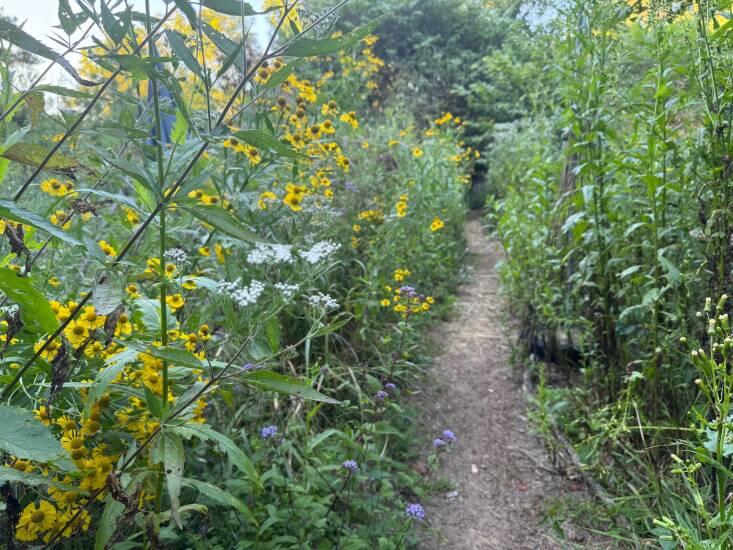
Walk through a nature preserve or forest and you won’t find plants spread out like polkadots poking out of a sea of mulch. “We never put a plant out in the open by itself,” says Lawson. “It’s not how it grows in nature.” In the wild, plants grow in communities. They mingle. They intertwine. Having an array of varieties growing densely prevents any one plant from being decimated. “If there’s a big mixture that includes some less palatable plants, deer are much less likely to devour a given area,” says Lawson. “But if I have all the same species lined up for 10 feet, and it’s tasty, then that’s really easy for them to eat it all.” Think about planting as you would companion-planting in a vegetable garden, says Lawson, and mix it up.
While there might be no such thing as a deer-proof plant, there are species that are less appealing. Lawson recommends that you surround precious plants with less tasty species like those in the mint family including beebalms (Monarda), mountain mints, and salvias; thorny varieties, such as Allegheny blackberries or native thistles; and sticky ones like blue waxweed. “Ask your local extension about the native plants in your area that have structural or chemical defenses that make them less palatable to deer,” she advises. Then weave them into your beds.
Grow a living mulch.
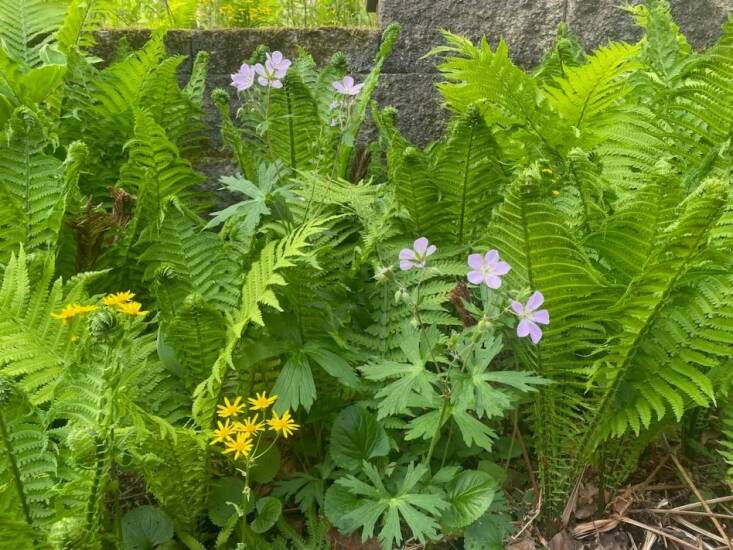
“People get frustrated following traditional planting advice,” Lawson says. “They space plants too far apart and cover the newly planted area with imported mulch.” No wonder those plants are eaten. Instead, let nature guide you (see above). Skip the imported mulch (it will save you money, not to mention all the fossil fuels to truck it in) and fill your beds with a tapestry of plants, or, in other words, grow a living mulch. Lawson loves the “beautiful pollinator” blue mistflower, pussytoes, native fleabane, ostrich and cinnamon ferns, and sedges, to name a few. They all have low growing habits and are resilient, she notes.
Design wildlife corridors.
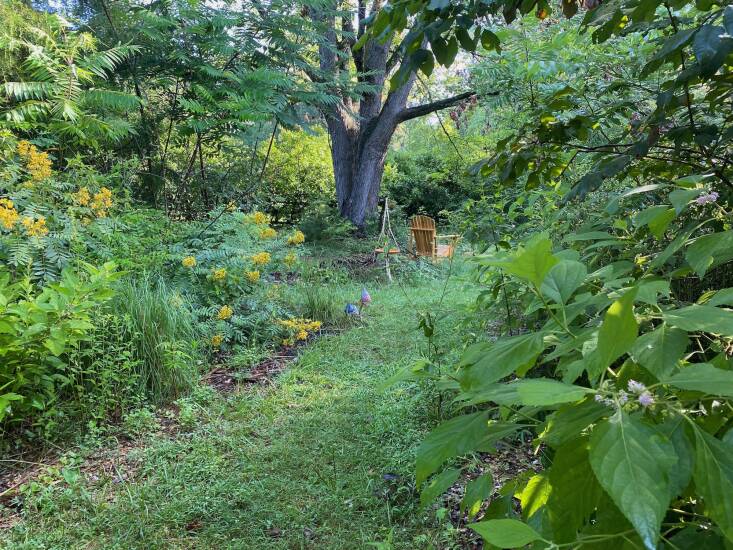
Deer, like many creatures (humans included), are apt to follow the path of least resistance. They’re also creatures of habit (also like us!), often returning to the same spots to eat and rest. Creating wildlife corridors helps encourage them to travel where you want them to go. Line the edges of these corridors with a mixture of protector plants and plants that can handle some browsing. Lawson also incorporates sacrificial plants, like evening primrose or pokeweed, which frequently pop up in her garden. She moves these prolific volunteers, which some might call weeds, that deer find irresistible to the edges of paths encouraging them to nosh. Left untouched, they can grow quite tall, but the deer keep them in check.
Cage young plants until they’re established.
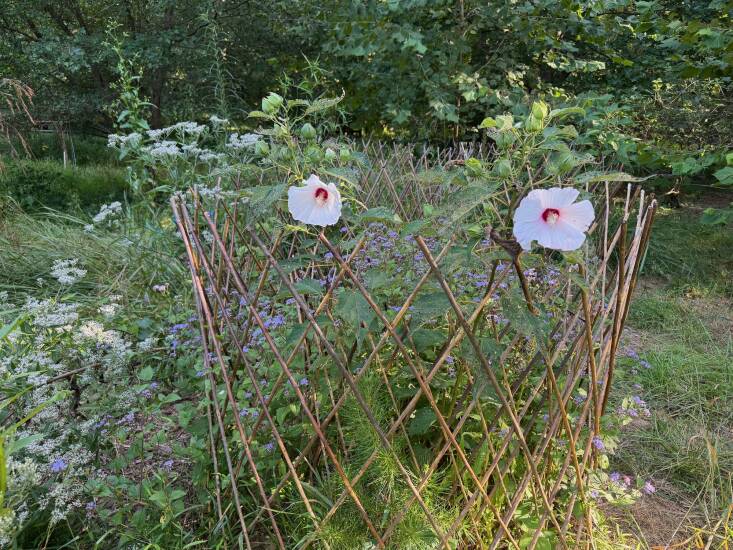
To protect newly planted plugs, Lawson places a willow cone trellis, which opens like an accordion, around them. Once the plant has matured and can handle some nibbling, she’ll remove the barrier. “They’re not as intrusive as metal caging and they’re really pretty,” she says.
Create a dead hedge.
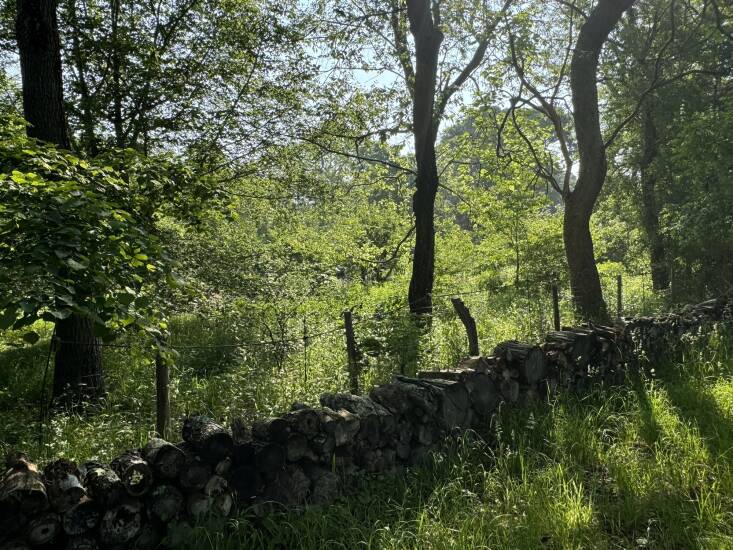
Help deter deer and also provide habitat for insects and animals by using your biomass to create barricades. You’ll close the loop and protect your plants at the same time—a win-win! Build log walls and construct fences of fallen branches and other biomass, and place them in areas you want to protect. “We’ll put them in corners and redirect animals from places where we don’t want them to go or don’t want them to go yet until the plant’s big enough,” says Lawson. Bonus: the dead wood provides habitat for native bees, chipmunks, woodpeckers, and snakes (who are predators of voles!).
Add a fence.
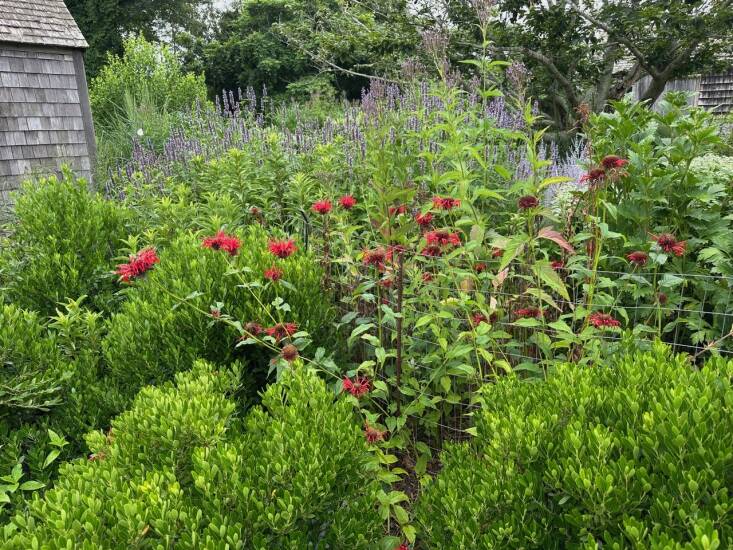
Lawson hopes that people will turn to a fence only as a last resort. But if you decide to erect one, the kind you choose matters. Avoid soft or plastic netting, which can snare and strangle birds and other wildlife, and vertical metal rails, which can trap deer and large mammals—they can get their heads and necks in but often can’t maneuver their hips through. If you use a metal grid, make sure that the holes are large enough that small critters, like rabbits, snakes, and turtles, can travel through freely, but small enough that deer won’t get caught or trapped.
One material you definitely want to skip is wrought iron, says Lawson. A team at the University of Georgia is conducting research on its dangers. Follow the study here.
Note: Don’t put out food for deer. They don’t need it. “Intentional backyard feeding emboldens them even more, concentrating deer and worsening conflicts,” notes the Humane World for Animals. It can also spread disease, cause aggression, and increase more deer-related car accidents.
See also:
- Log Pile Habitats: Build It and They Will Come
- Rethinking Mulch: Is There Ever a Good Reason to Use It in a Landscape?
- Close the Loop: 5 Ways to Engage in Circular Economy Gardening and Save Money (and the Planet)





Have a Question or Comment About This Post?
Join the conversation