

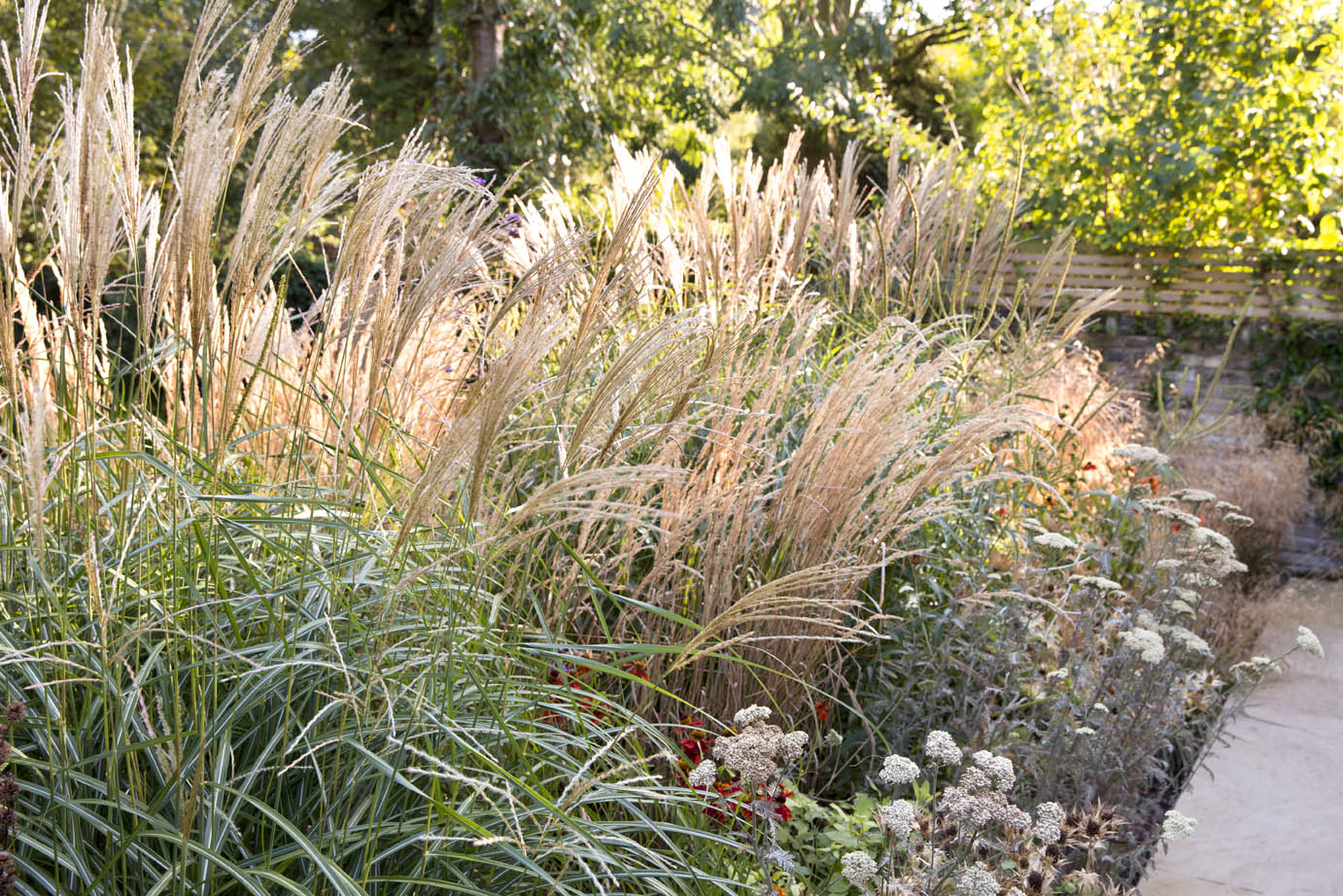
When Gardenista first wrote about Miscanthus sinensis (maiden grass or Chinese silvergrass) back in 2017, we called it “practically perfect.” Less than a decade later, we’ve changed our tune. Miscanthus sinensis and other varieties of miscanthus are increasingly problematic in much of the United States, where the ornamental grass is invading natural areas to the detriment of local ecosystems.
Garden designers love miscanthus, which is native to Asia, for many good reasons, including its strong form, beautiful movement, and seasonal interest. Miscanthus sinensis is also a hardy plant that is able to adapt to many types of soil and conditions. “Gardeners liked how tough it was…and it was easy to produce in the trade, and so it proliferated,” says Will Coleburn, one of the founders of Swamp Rose Co-Op, a ecological landscaping company and native plant nursery in Silver Spring, MD. “But it was maybe too much of a good thing.”

Miscanthus sinensis is now known to be invasive in 18 states (and it has naturalized in at least 25). In the Northeast, legislation banning or severely limiting the sale of Miscanthus sinensis is in the works in New York and Connecticut and it is banned in Massachusetts and New Jersey. In the Great Plains, Minnesota has banned the sale of Miscanthus sacchariflorus (creeping/Amur silvergrass). This list will only grow, as regulations surrounding miscanthus are changing quickly and vary by state. And while miscanthus is not yet listed as invasive in western states, it is documented to increase wildfire risk.
Many garden pros recognize the need for alternatives to problematic miscanthus. When Hoffman Nursery, a large wholesale nursery for ornamental grasses, hosted a webinar about alternatives to miscanthus late last year, hundreds of garden professionals signed up, making it one of their best-attended webinars ever.

Miscanthus sinensis has been in cultivation and popular for so long that there are a wide variety of cultivars with different growth habits and aesthetics, so there’s not a one-to-one replacement of miscanthus for another plant, says Shannon Currey, the education and outreach lead at Izel Native Plants, an online marketplace for native plants. Coleburn says gardeners should embrace the challenge to source new plants. “There’s an opportunity for us to reconsider things, especially in light of their ecological impact,” says Coleburn. “The fortunate thing is that we have a lot of native grasses that do really wonderful things in the landscape.”
Currey says the trick to finding suitable replacements for various Miscanthus cultivars is to figure out “what it is about that plant in the place where they have it that they most value.” For example, it could be the height or shape; the plant could be a focal point or a placeholder. In some instances, it might be a more functional reason like holding down a slope. Then, Currey says, “you want to be attentive to what cultivars are available and what those cultivar attributes are.” Breeders are actively working on new grass cultivars, so new alternatives are also in the pipeline.
Regionality will also come into play as garden designers edit their palettes to replace Miscanthus sinensis. A plant that might be appropriate in the Southeast might not work in the Northeast. Here are seven alternative grasses to consider; each of these plants has many cultivars available, so you’ll need to do some research for which one best suits your needs:
Switch Grass (Panicum virgatum)
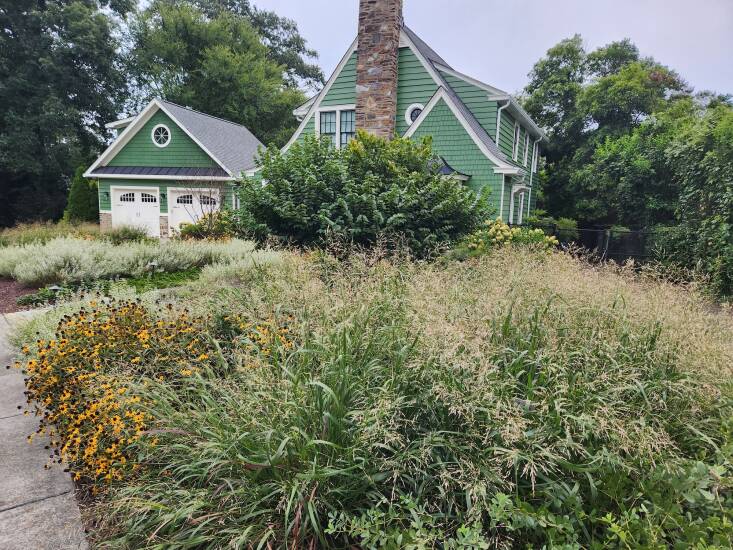
A North American native grass with an appealing inflorescence, Panicum virgatum has many cultivars. “This is one of the most obvious replacements for miscanthus,” says Currey. “It’s got height and that statuesque look to it.” There are many cultivars with different attributes. David Hoffman, the CEO of Hoffman Nursery, is excited by new panicums that are being developed by breeders, like the ‘Dream Catcher’ Panicums from Hortech.
- Height: 3 to 6′
- Exposure: Full sun to partial shade
- Moisture: Medium to wet
Little Bluestem (Schizachyrium scoparium)

There are also many cultivars of the little bluestem, another North American native grass. Currey notes that you can find cultivars bred or selected not to flop over (a common problem with some grasses), including one called “Standing Ovation” that she’s found to be upright and resilient. Coleburn also notes that little bluestem has a wide native range and can withstand a wide variety of conditions. “It prefers full sun and dry, but we do push it into some different areas as well,” he says.
- Height (with bloom): 3 to 4’
- Exposure: Full sun to partial sun
- Moisture: Dry to medium
Pink Muhly Grass (Muhlenbergia capillaris)
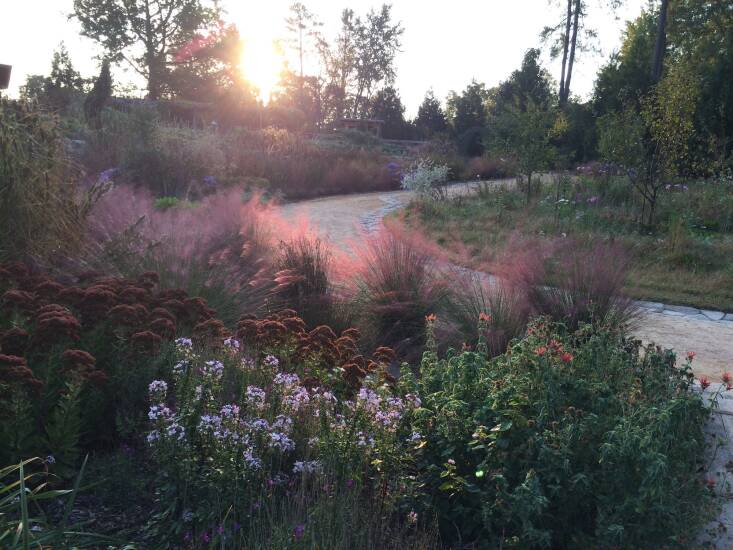
A popular plant for its “beautiful, pink, fluffy froth of air seed heads,” Coleburn notes pink Muhly grass is only native to parts of the East Coast, but is a better pick than a known invasive or potentially invasive exotic grass. “Pink Muhly is a lot closer to home,” he says.
- Height (with bloom): 4’
- Exposure: Full sun to partial sun
- Moisture: Dry to medium
Giant Sacaton (Sporobolus wrightii)

With large plumes, Sporobolus wrightii (giant Sacaton) is a very close aesthetic match to Miscanthus sinensis. Currey notes this southwestern grass has a very narrow native range, but “it’s got that big presence that people choose miscanthus for.”
- Height (with bloom): 6 to 7’
- Exposure: Sun
- Moisture: Dry to wet
Sand Cordgrass (Spartina bakeri)
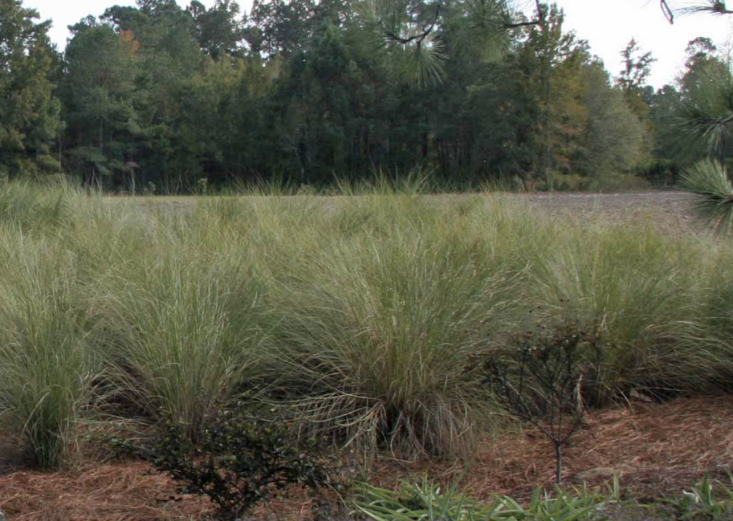
While its plumes don’t quite match miscanthus, its toughness, shape, and overall presence are similar to many of its narrow-bladed cultivars. However, Currey notes that sand cordgrass is not super cold hardy, so she suggests it for the southeast and coastal regions where it’s a little more temperate.
- Height (with bloom): 5’
- Exposure: Sun
- Moisture: Dry to wet
Big Bluestem (Andropogon gerardii)
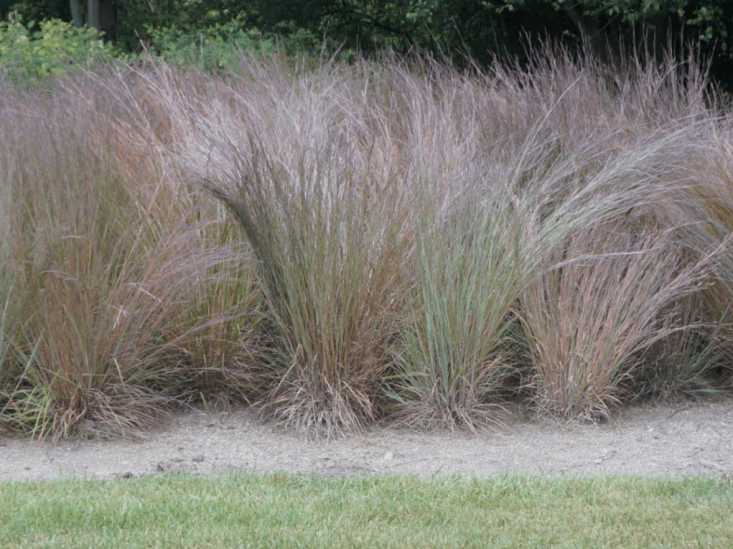
Currey says to keep an eye on Andropogon gerardii, noting “There’s more attention to it and there are more cultivars coming out, some of which are narrow and very upright.” Like miscanthus, big bluestem is a tough plant that’s got a tall, statuesque silhouette. Hoffman suggests cultivars ‘Red October’, ‘Blackhawks’, and ‘Karl’s Cousin’ as good alternatives to tall, architectural cultivars of Miscanthus sinensis, such as ‘Gracillimus,’ ‘Graziella,’ ‘Huron Sunrise,’ ‘Variegatus,’ and ‘Zebrinus.’
- Height (with bloom): 7’
- Exposure: Sun
- Moisture: Dry to medium
Bottlebrush Grass (Elymus hystrix)
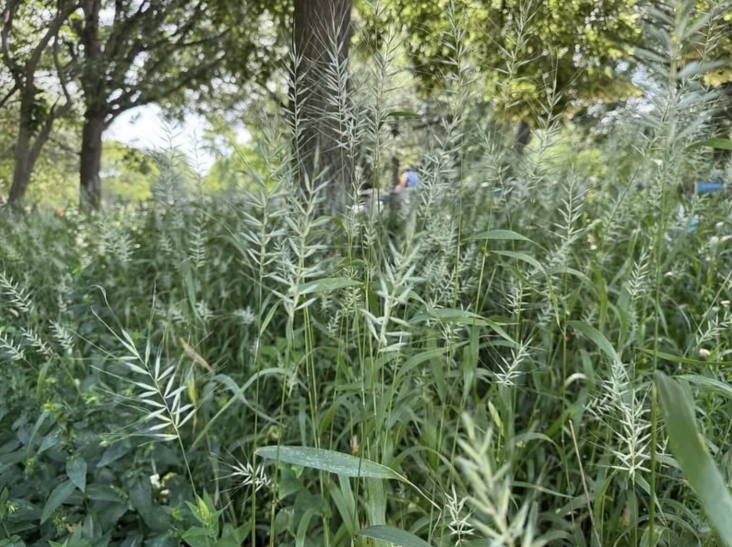
Copeland describes this grass as “an excellent “knitter” plant for gardens with varying sun exposures.” Its airy bottlebrush seedheads are quite different from miscanthus’s fluffy bloom, but offer texture and interest.
- Height (with bloom): 4’
- Exposure: Sun to shade
- Moisture: Dry to medium
As gardeners replace miscanthus from their toolbox, they might look beyond grasses to native shrubs, like red-twig dogwood (Cornus sericea) Other native shrubs to consider include winterberry (Ilex verticillata), staghorn sumac (Rhus typhina), and witch hazel (Hamamelis). Hoffman notes that sedges do a great job of replacing the shortest cultivars of miscanthus. We’ll be keeping an eye out for all the new and exciting options at garden centers this spring.
See also:
- 8 Favorites: Native Roses
- 13 Favorites: Native Shrubs that Don’t Mind the Shade
- 13 Pretty Plants You May Not Know Are Invasive




Have a Question or Comment About This Post?
Join the conversation