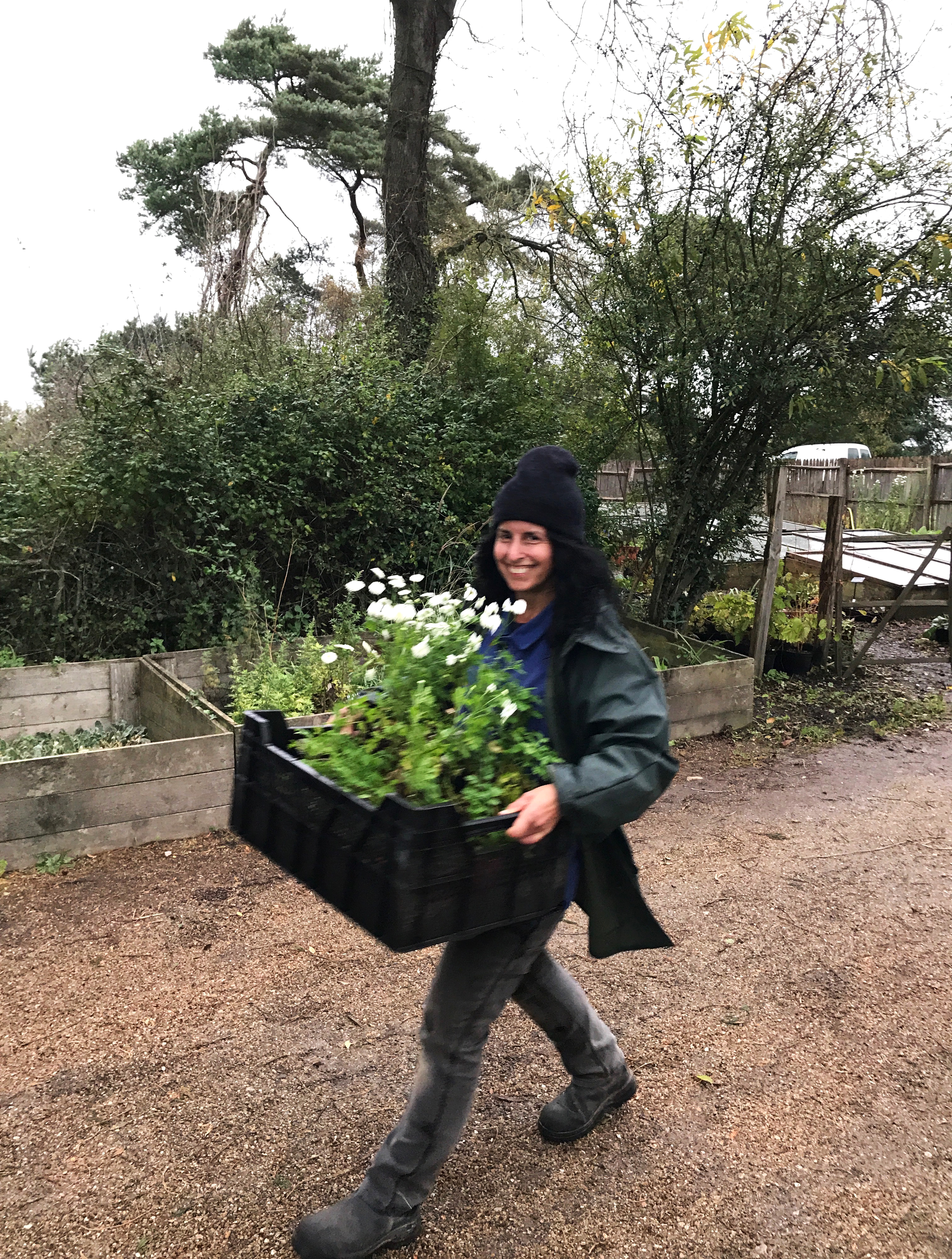
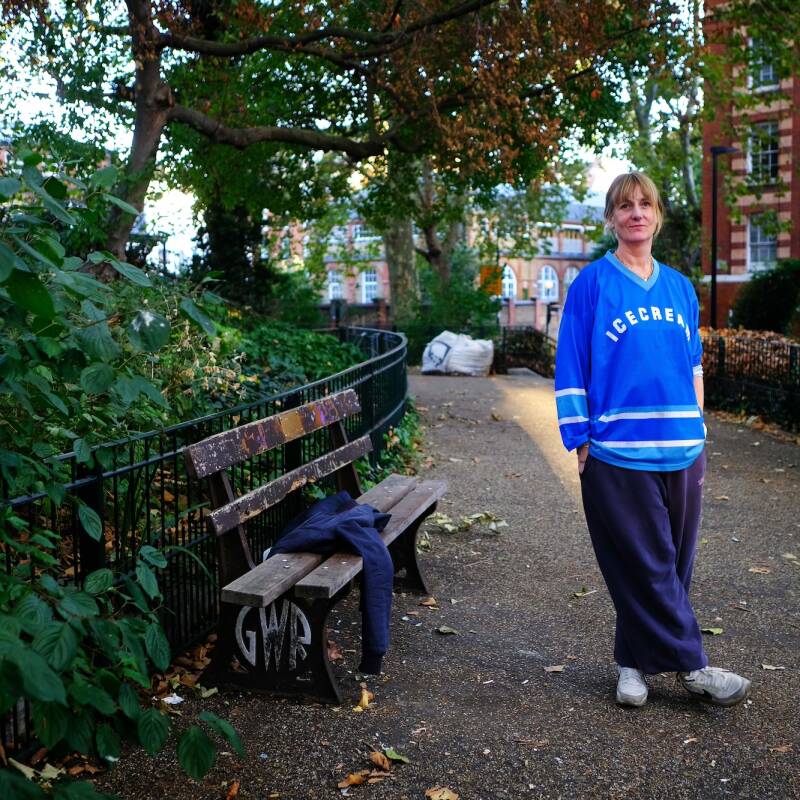


More than a few of us here at Gardenista and Remodelista come from a magazine background, so we’re especially excited about today’s Quick Takes expert: Julie Weiss, a veteran magazine art director and book designer with impeccable taste (just check out this impressive portfolio of features she designed over the course of her nearly two decades-long tenure at Vanity Fair). Julie also happens to love gardens and gardening, and in the past decade has turned her hobby into a fulfilling second act. Here, in her own words, she shares her journey from publishing to planting…
“I am from Los Angeles but spent most of my life living in New York City designing magazines and books. After 18 years at Vanity Fair, I became obsessed with gardening and plants, spending all of my free time up in my roof garden and taking horticulture and garden design courses (New York Botanical Garden and Brooklyn Botanic Garden, etc.) whenever I could. I went to a week-long Great Dixter Symposium in 2016 and was hooked, eventually spending two incredible years training there with Fergus Garrett and the team. I stay connected to and visit Great Dixter (my favorite place in the world) whenever possible and am honored to serve on the board of the North American Friends of Great Dixter. I was also fortunate to design the book The Tokachi Millennium Forest by Dan Pearson and Midori Shintani. Working on this book with Dan and Huw Morgan, and traveling to Hokkaido and meeting Midori was an amazing life-changing experience that brought together my love of horticulture, design, and photography. I am currently planting gardens and still designing books and publications.”
Photography © Julie Weiss.
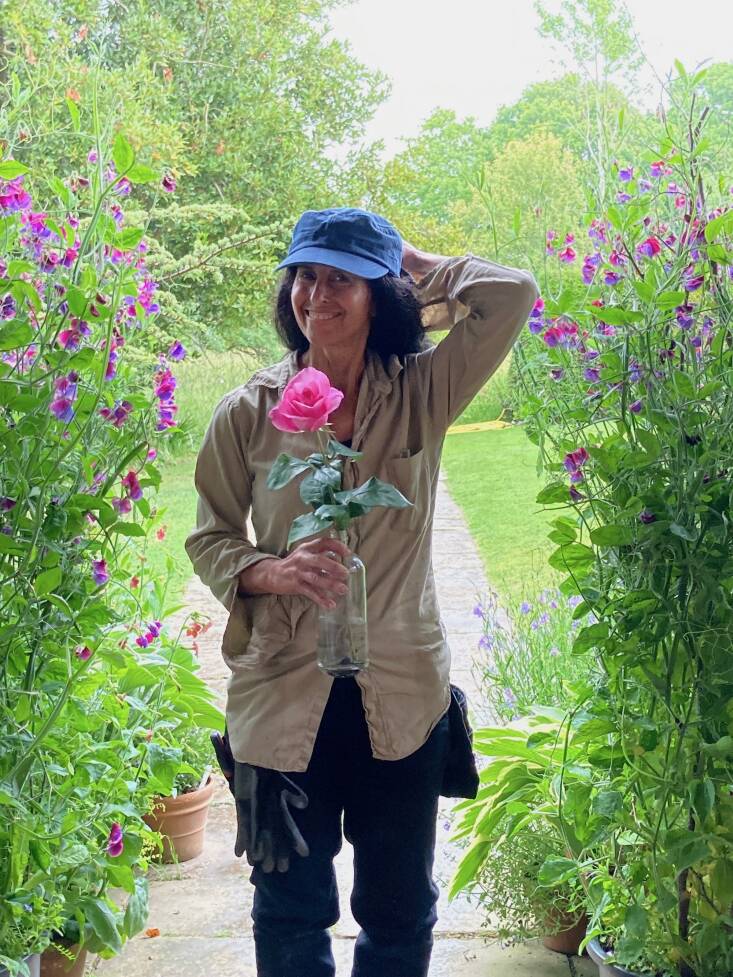
Playing in the chaparral behind our house in the Hollywood Hills. It was up above our garden, which I wasn’t interested in playing in at all! Always wanted to be in the more wild area, and loved all of those chaparral plants. I remember the purplish fragrant Malosma laurina (laurel sumac), which was everywhere and seemed indestructible. I was shocked one day to see Theodore Payne Nursery growing that plant for nursery production and backyard use. It really came full circle for me …. so this could be a plant in someone’s backyard that needs no care at all because it is fully adapted to that climate. It was kind of a revelation.
There are a few that I love and go back to often. Having spent most of my life in magazine art direction, I gravitated early to the book, Modern Gardens and the Landscape, which was published in 1964 by the Museum of Modern Art in NY. Coming from a design background, seeing gardens designed by people like Luis Barragán or Roberto Burle Marx made a lot of sense to me. I often look at this book now for inspiration. Christopher Lloyd’s The Adventurous Gardener was one of the first gardening books I read and is an expansive horticultural education in itself. I learned so much, and loved his humor throughout—I found that humor very encouraging. I love all of Beth Chatto’s books, especially The Shade Garden which I return to constantly. And one of my favorite books is The Flora of the Silk Road by Christopher and Başak Gardner. This beautiful book shows the plants in their natural environment. To see where these plants we all use really live is fascinating. I would encourage everyone to try to find a copy (especially if you love irises and eremurus!).
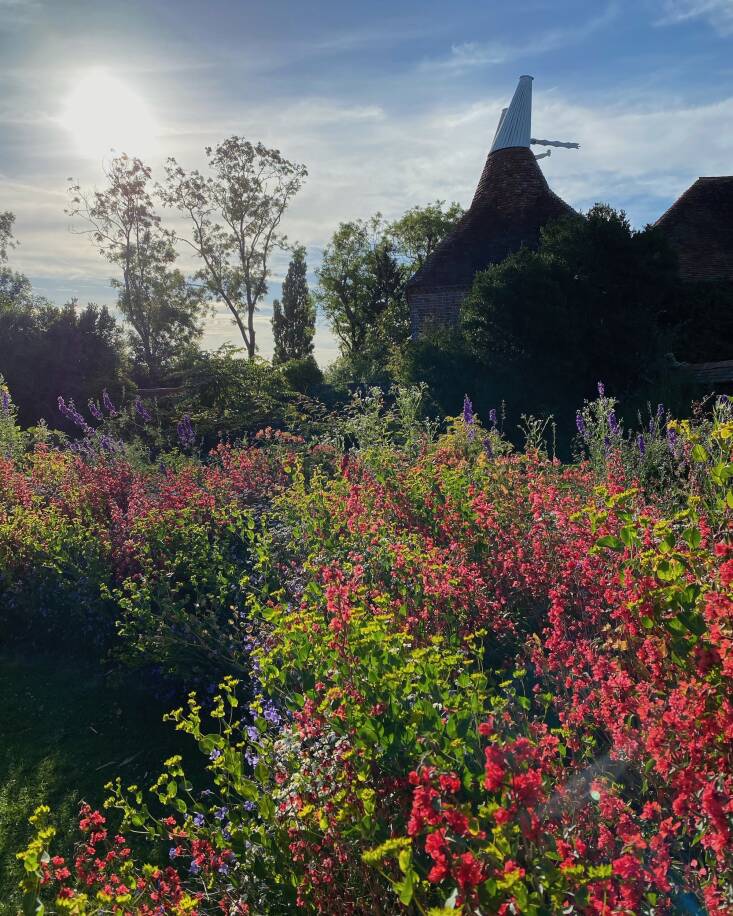
Of course I love seeing everything that is going on at Great Dixter especially when I can’t be there: @greatdixterofficial; @fergusmustafasabrigarrett; @greatdixternurseries; @digdelve; artist @johnpaulphilippe; and the invertebrate conservation nonprofit @xercessociety.
Succesion
Wildlife
Plants
Can’t just do one!
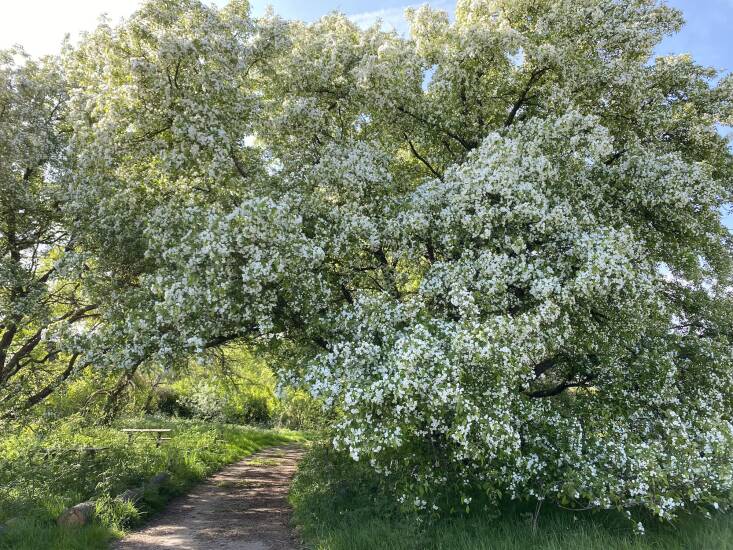
Prunus x yedoensis: I love the flowering bouquets of the yoshino cherry.
Malus hupehensis trees in the parking lot at Great Dixter. They are incredibly beautiful when in flower.
Opuntia basiliaris in the Mojave Desert.
And natives of the the Pacific Northwest in their natural environment: Trillium ovatum and Balsamorhiza sagitatta, and the Adiantum aleuticum and Delphinium at Silver Falls State Park.
Indoor plants that look like they are struggling.
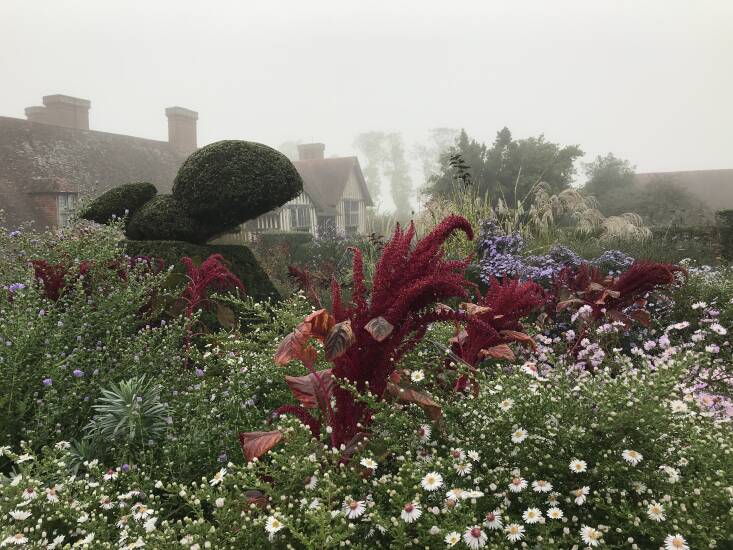
Carpenteria californica ‘Elizabeth’. This is a beautiful evergreen shrub, covered in fragrant flowers in spring. I love asters for creating a painting, their light reflectiveness, and late-season color. Some of my favorites are Aster cordifolius ‘Little Carlow’, A. oblongifolius ‘October Skies’, the white A. ericoides ‘Monte Cassino’. I always throw in a few Pacific Northwest native ones as well. I love cosmos for annual color and foliage.
Monoculture planting that shuts out wildlife. Clearing all the leaves when they fall under trees and shrubs. Pruning for the sake of pruning, not what’s best for the plant. I think the most important thing is to be educated about every plant you use.
Right plant, right place.
Well it’s not a hack just a great thing to do… less mulch, more ground cover plants.
I was recently at a friend’s house, with big windows and borrowed views of the garden and mountains in the distance. You could see the wind blowing through the trees and the rain or sunshine from indoors while talking over dinner. Those elements even though outside, were part of our indoor experience. Also planting fragrant plants outdoors near the doors and windows, and plants inside but only if they can thrive there. I don’t like indoor plants used as decorative elements only. Being from California, I love the idea of indoor-outdoor living.
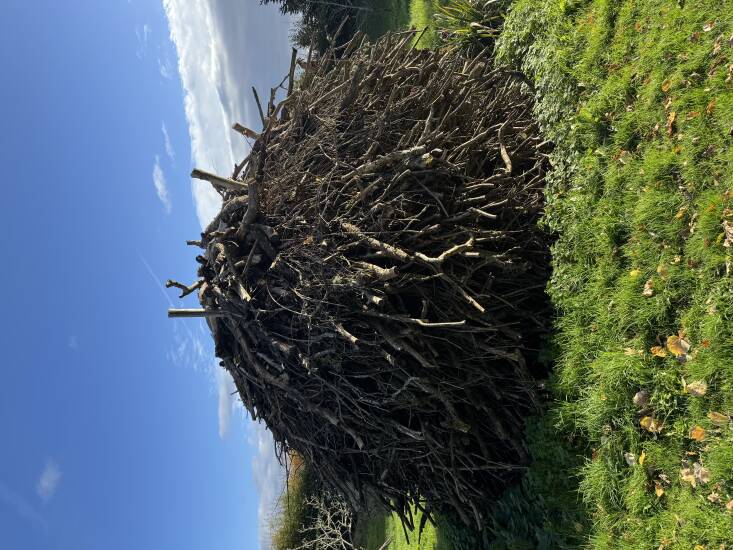
…place for wildlife to live and plants for them to eat. If possible some water (a pond, etc) for them.
Natural local materials like nearby rocks, stone, gravel. Less carbon footprint transporting materials that are likely nearby. I love different textures used together. More plants, less hardscaping is my preference these days.
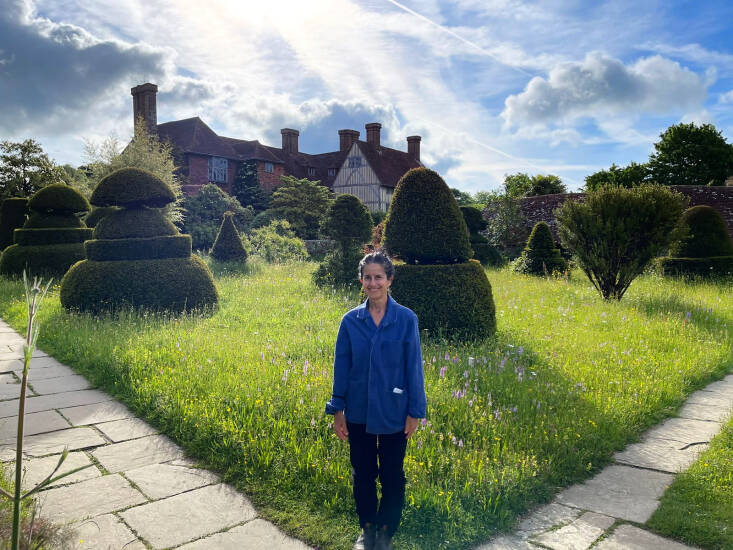
Protective clothing from the weather. Comfortable layers. A hat. French work shirts got very trendy in the fashion world for a minute, but they are very useful in the garden because of the thick canvas fabric that plants don’t catch onto. Layers for the cold. While working in the winters at Dixter I think I had on at least 5 layers. Waterproofs are essential. I am a toolbelt person…always secateurs (mine are Japanese or Felcos for pruning), my Dixter hand trowel, a pocket attachment for a pen and notepad, a hori hori, and a hand-saw if I am pruning. And clip for my gloves.
My Sneeborer wide trowel and Dixter designed short spade. These excellent tools are meaningful to me as I got them on my first real visit to Great Dixter, a succession planting Symposium in 2016. I had no idea I’d still be using these same tools almost 10 years later. I tend to get attached to the history of things.
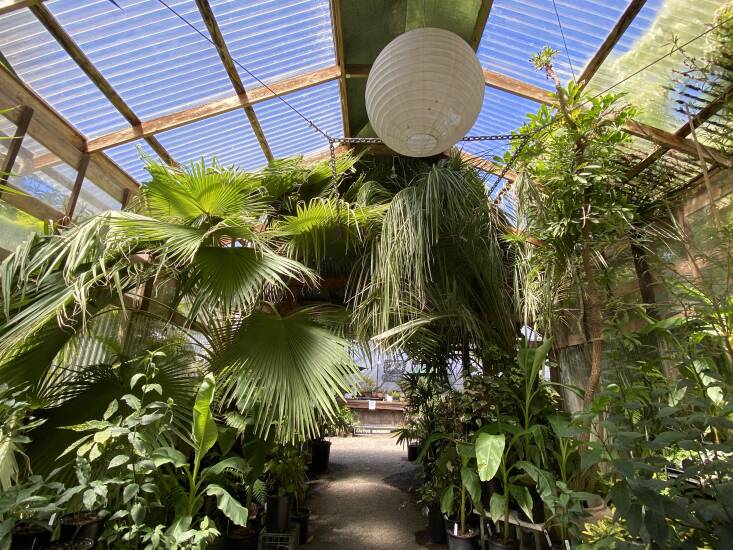
On the US West Coast, Dan Hinkley’s Windcliff Plants (in person only, and you can visit the garden if you shop at the nursery) and Sean Hogan’s Cistus Nursery. I am so very lucky to be near and visit these 2 incredible nurseries. Digging Dog in northern California (mail order only) is phenomenal. In the UK the Great Dixter Nursery and the Beth Chatto Nursery. I love the Theodore Payne Nursery in LA (they have a large selection of California native seeds), and Plant Material in LA. For seeds: Johnny’s, Hudson Valley Seed Company.
Visiting the Atacama Desert and the Silk Road. Always California desert wildflower trips.
Silver Falls State Park in Oregon (for the waterfalls and native flora), Joshua Tree National Park in California. Windcliff and Heronswood Garden in the Pacific Northwest. Chanticleer Garden near Philadelphia. Great Dixter House and Garden in East Sussex.
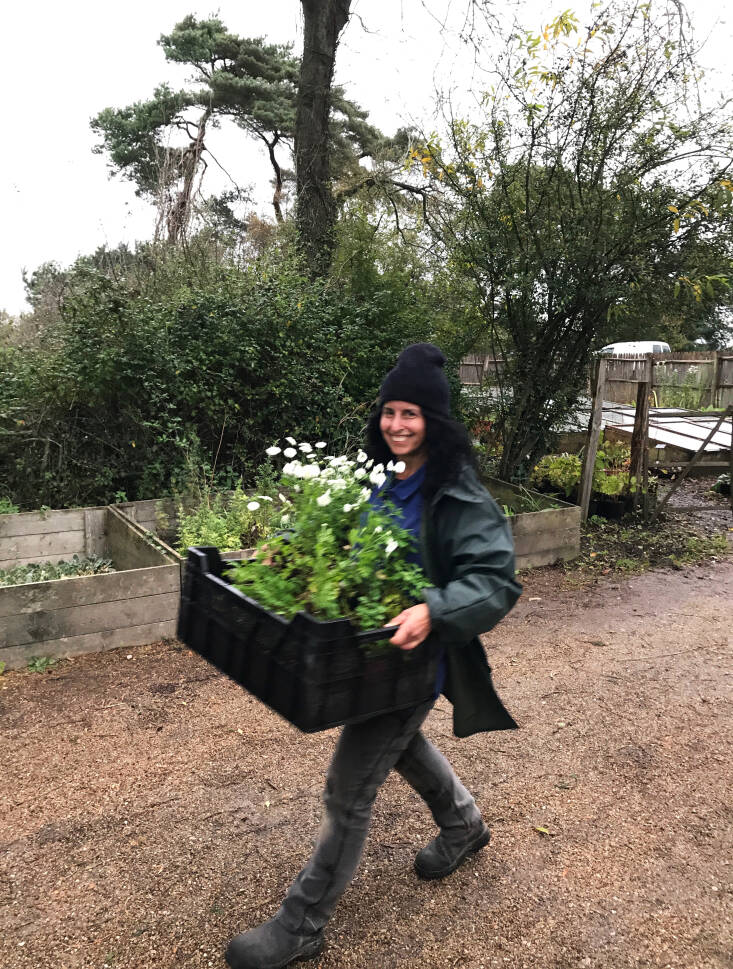
Just to be with plants and to be outside connected with the outdoors. I love trying to make something beautiful and interesting that is alive, while also providing for wildlife—that is more important than anything to me these days. And being with other gardeners is really fun. Maybe the best part. I am a team person!
Thanks so much, Julie! (You can follow her on Instagram @julieaweiss.)
For our full archive of Quick Takes, head here.



Have a Question or Comment About This Post?
Join the conversation