

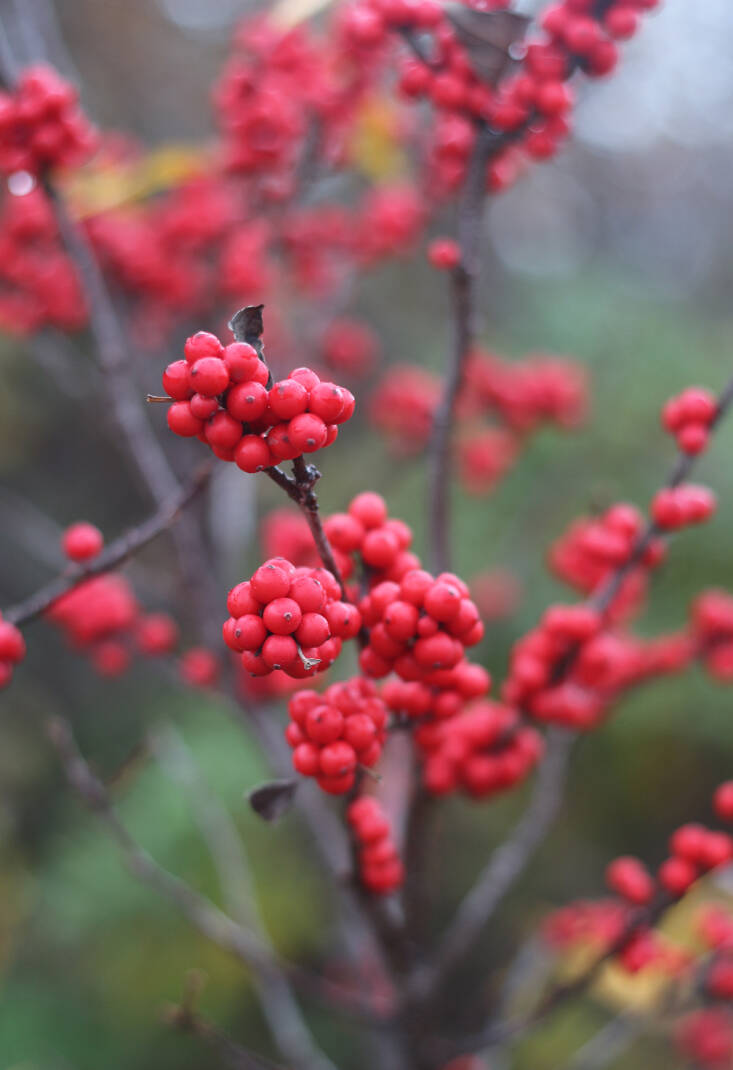
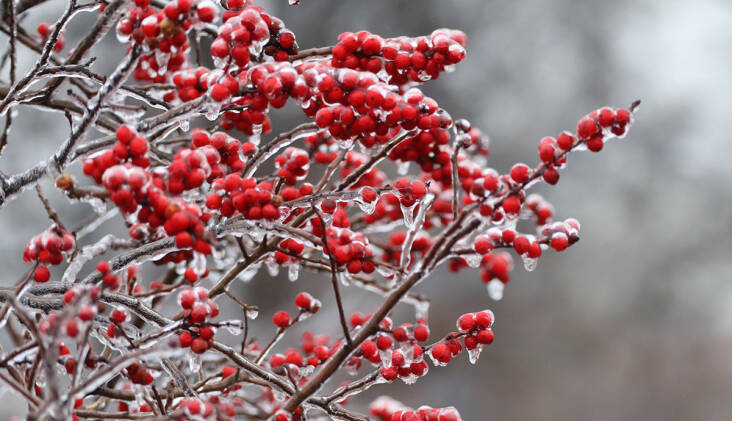
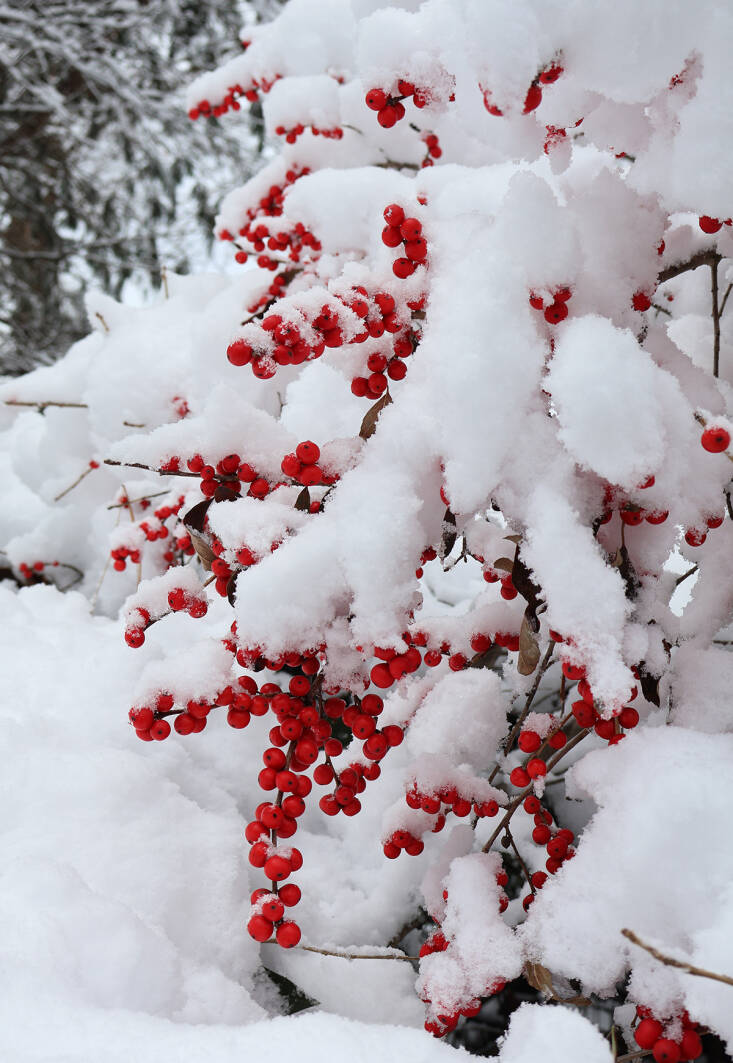
Despite being natively at home in bogs and on the edges of kettle ponds and other wetlands, winterberry, a native holly species, does not require wet feet in order to thrive. Ilex verticillata is a deciduous shrub that escapes notice until late in the season when its rounder-than-round fruit turn scarlet. When its leaves drop, and the fruit blazes on bare branches, it is suddenly the star of any landscape and garden.
Here’s how to grow it.
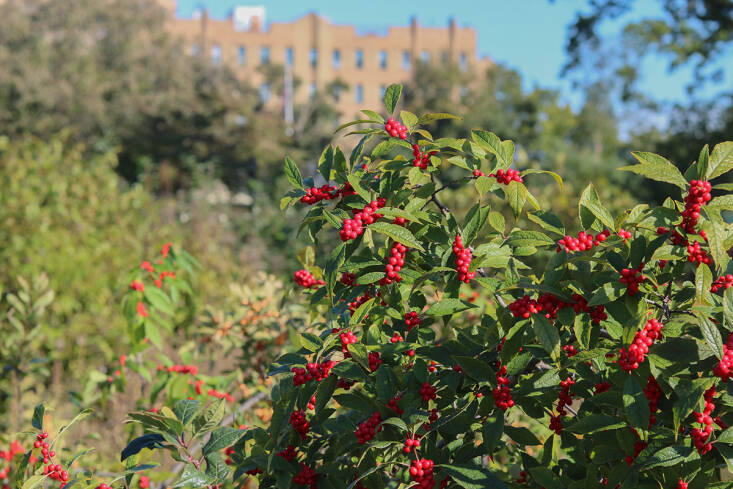
Native to the damp and boggy bits of eastern North America, winterberry has been cultivated since at least the late 18th century for its dramatically attractive fruit. It is surprisingly adaptable in terms of its water requirements, though, flourishing in sites that are not moist as long as the soil is acidic. High pH soils will cause chlorosis in the leaves and shrubs may die, while periods of real drought may cause the fruit to drop.
While winterberry will grow well in high and semi shade, full sun produces more fruit on female plants. Yes, you need a male, too. But one boy shrub is sufficient to provide pollen for several female plants.
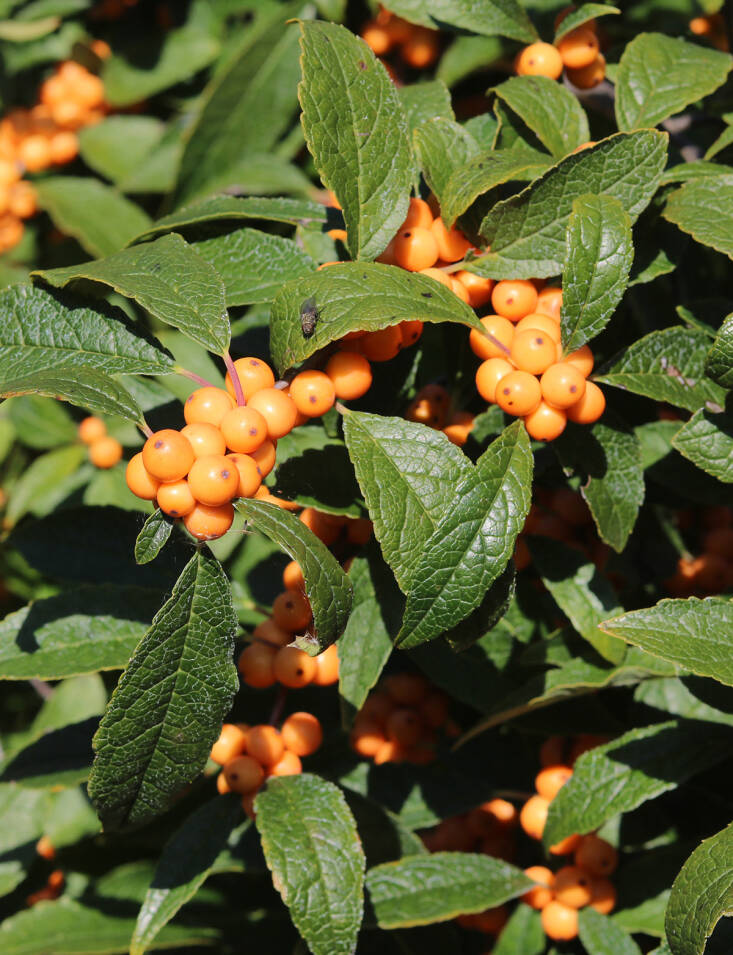
Winterberry fruit are an important food for resident bird populations as well as small animals who tend to eat them after they have softened, well into winter and often through early spring
Cheat Sheet
- Winterberry’s native range is from Alabama to Newfoundland.
- It grows naturally near streams, and in swamps and bogs.
- The leaves of winter berry are larval food for the pawpaw sphinx, a native butterfly that also feeds on pawpaw (Asimina triloba) leaves.
- The tiny summer flowers are a food source for small pollinators.
- The shrubs are dioecious, and you need a male in order for the females to set fruit.
Keep It Alive
- Winterberry is hardy from USDA zones 3 to 9.
- It requires acidic soil (low pH) and tolerates wet soil, clay, and very urban conditions.
- The shrubs will not thrive—and may die—in alkaline soils.
See also:
- Help Birds in the Winter: 12 Tips for Food, Lodging, and Bird Safety
- Here’s How You Can Help Save Nature With Your Yard
- What’s That Berry? Test Your Knowledge of Fall’s Red Fruits




Have a Question or Comment About This Post?
Join the conversation